Tag Archives: Miniature Donkeys

Donkey Diets

Donkeys are known to get a little chunky and by chunky I mean fat deposits externally and internally which are detrimental to their health and wellbeing. Further, keeping your donkey at an ideal weight is of the utmost importance for the prevention of laminitis.

Here is some nutritional information for caring for your donkey:

  1. Feed 1.5-2% of body weight in forage per day.

Generally, once the energy (calorie) requirement has been met, their protein requirement will have also been met. Donkeys also only require about 75% of the calories that a horse of a similar weight would need which is why they are often referred to as “super keepers.”

Donkeys have rather large intestines, which they use to full capacity, and will retain forage longer to digest their intake more thoroughly. Due to their increased capacity and retention, donkeys often have a “hay belly” appearance, or an “A” frame appearance.

  • 1. Feed roughly 75% straw and 25% hay ,except during the winter when you can feed 50/50 straw and hay.
  • 2. Barley straw is ideal, followed by wheat straw and then oat.
  • 3. Vitamin / Mineral supplement or Ration Balancer • Use a low sugar/starch carrier for supplements such as Timothy Pellets or Non-Molasses Beet Pulp. Ration balancing supplements with a 3- to 4-ounce serving size are typically a better choice.

4. Access to water 24/7 despite the belief that they do not need as much water as horses, they DO!

  • 5. Avoid sugary treats.

6. Muzzle. Muzzle. Muzzle. OR Dry Lot. Once your donkey gains weight not only is it difficult to lose, the fat deposits (the fallen crest, lumps) may never go away. It is easier to be proactive than it is to be reactive. Even if the grass looks sparse, due to their “desert” ancestry, any grass is considered “lush.”

To compare feeds and ration balancer visit https://madbarn.com/compare-horse-feeds/?f=529642,1023346,387889&a=150,1000,450&u=g,g,g

For more in-depth information please visit:

https://www.platinumperformance.com/articles/feeding-donkeys-and-mules.html

https://ulster.cce.cornell.edu/agriculture/livestock-production/livestock-360/donkey-s-unique-nutritional-needs

https://ker.com/equinews/answer/balancer-pellets-miniature-donkeys/
White line Disease (or Seedy Foot) in Donkeys

White Line Disease is extremely common in donkeys and can cause major issues if severe or left untreated.

What is White Line Disease or Seedy Toe?:

The white line is seen on the underside of the foot. It is where the unpigmented horn of the inner hoof wall joins the horn of the sole. Degeneration of the horn at the white line leads to separation of the hoof wall from the underlying structures and weakening of the hoof wall.

Risk Factors:

The reason why WLD occurs isn’t fully known, but anaerobic bacteria and fungi alongside poor foot hygiene play an important role in the development of the disease.


Some of the risk factors associated with the development of this condition are;

  1. 1. The presence of horn digesting microbes (Pseudoallscheria boydii, Scopulariopsis spp., Aspergillus spp, Fusobacterium necrophorum, penicillium spp.)
  2. 2. A wet and humid environment, poor foot hygiene,
    3. Pre-existing laminitis resulting in a stretched white line
    4. Hereditary factors.

  3. Donkeys seem to be more susceptible to WLD than horses. It can affect any of the four feet and recurrence is common. Generally donkeys with WLD will not be lame, but depending on the severity of the pathology or the presence of other associated diseases, lameness could be present.

Prevention:

Maintaining good foot hygiene and regular foot care will help to prevent the occurrence of WLD. The following are best practice for prevention of this condition:

  • 1. Clean the hooves daily, monitoring the integrity of the white line and the rest of hoof structures.
  • 2. Change bedding frequently, avoiding humidity and accumulation of faeces and urine, especially in wet seasons.
  • 3. Arrange for your farrier to check and trim the feet every six to ten weeks depending on the amount of exercise/wear, the age of the donkey and/or the presence of hoof pathology.
  • 4. Avoid grease or similar products as they reduce horn oxygenation and can create an environment that encourages proliferation of horn digesting microbes.
  • 5. Monitor animals with a history of WLD closely as they will be more susceptible to recurrence.
  • 6. Good, clean hard standing and dry bedding are important for the health of all donkeys’ feet, but for animals with recurrent WLD it is very important.

Treatment Options:

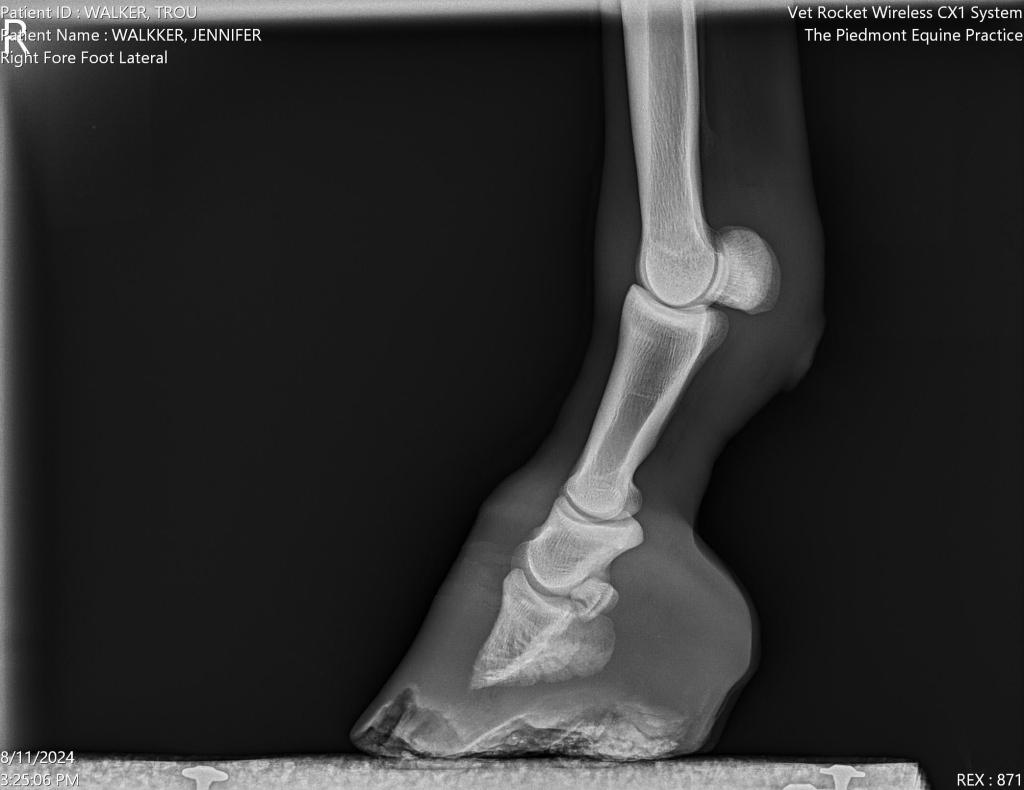
1. Resection: Your farrier or vet will remove all the damaged horn. This procedure should not be painful but it may be necessary to remove a lot of hoof wall if the disease has progressed. In some circumstances it may be necessary to take an x-ray before removing a large amount of hoof wall to check the stability of the pedal bone.

2. Cleaning and Medicine: Once all the damaged horn has been removed, the hoof needs to be kept clean with daily hoof picking and brushing to remove as much organic matter as possible. Once the foot is clean topical disinfectants (eg povidone iodine, hydrogen peroxide or zinc sulfate) in solutions or sprays are useful to reduce microbial contamination.

3. Other Treatments: Removing all the abnormal horn, ensuring good oxygenation to the area and maintaining good foot hygiene may be enough to manage the problem. However, if the amount of wall that has been removed is substantial, your vet or farrier may decide to refill the defect with acrylic material to give more stability to the hoof capsule. In these cases it is vital that all the affected horn is removed to ensure the acrylic material bonds to healthy horn.

More Information:

https://ker.com/equinews/white-line-disease-requires-early-diagnosis-and-aggressive-treatment/

https://donkeyrescue.org/news/pvdr-ears/donkey-hoof-care-preventing-thrush-whiteline-abscesses-and-other-issues/

https://www.merckvetmanual.com/musculoskeletal-system/disorders-of-the-foot-in-horses/white-line-disease-in-horses

Fat Little Donkey

I have been desperately trying to get my miniature donkey, Lucky, to drop some lbs.  The thing with Lucky- he literally gained weight overnight.  One day he was a skinny mini and the next he had a potbelly.  I was really concerned that the weight suddenly appeared and had the vet run a heptic panel to ensure he wasn’t experiencing some sort of liver dysfunction.  Sort of like how humans can develop Ascites when they have liver related disease.  Anyways, his blood work came back and all was okay….he was just fat!  

Unlike horses, donkeys develop “fat deposits” around their neck, abdomen, and butt and even once the weight has been lost the deposits stay for life!  


The Dangers of Obesity in Donkeys


According to the Scarsdale Vets;

“Obesity increases the risk of developing hyperlipaemia and laminitis, both of which can be fatal. Prevention of obesity is better than cure, because rapid loss of condition in overweight donkeys can trigger hyperlipaemia.

Hyperlipaemia is a condition in which triglycerides (fats) are released into the circulation which can result in organ failure and death unless treated rapidly. The early signs of dullness and reduced appetite can be difficult to detect. Hyperlipaemia can be triggered by anything that causes a reduction in food intake e.g. stress, transport, dental disease.


Laminitis is a condition in which there is inflammation in the laminae of the foot that connect the pedal bone to the hoof wall. This can progress to rotation or sinking of the pedal bone within the foot. The cause is not fully understood and many factors are involved but obese animals are more prone to develop the disease.”

Equine Metabolic Syndrome: “Overweight donkeys often develop a fat, crest neck and fat pads around their tail base. When this occurs the donkey can develop a metabolic disease known as ‘Equine Metabolic Syndrome’. This causes insulin resistance and increased levels of blood glucose (blood sugar) in the blood stream. In equids this can lead to recurrent episodes of laminitis or founder. This disease involves inflammation of the white lining or laminar junctions of the feet, extreme foot pain and difficulty walking. In severe cases this can also cause changes in the bone of the foot and hoof wall” (Yarra Ranges Animal Clinic)


How To Help Your Donkey Lose Weight Safely


  1. Use a muzzle
  2. Limit grazing
  3. Ask your vet to do blood work to ensure your donkey is healthy
  4. Have the dentist come out and examine the donkey’s teeth
  5. Engage in an exercise routine


Donkey Related Resources and Information


donkeyscoring

DonkeyBCS3posterDonkey Body Scoring by Dr_ Judy Marteniuk

Donkey BCScoring

A Guide to Weight Management and Body Score

Care of the Miniature Donkey

Donkey Health and Welfare

Feed_Donkey_Flyer