
Author Archives: Dr. Jennifer Kaufman Walker
Ideal Horse Stable
Tilly Days


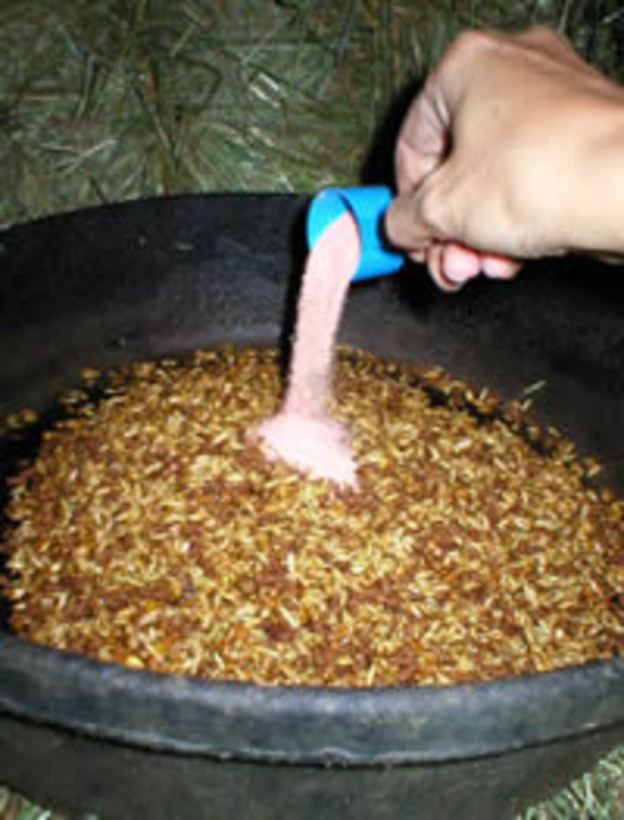
Does Your Horse Need Electrolytes?
By. Casie Bazay
It’s summer, aka the sweatiest time of the year. Hooray!
And while sure, there are things to enjoy (like swimming, ice cubes, and air conditioning), outdoor activities such as barn chores and riding often leave us reaching for a Gatorade. But what about our horses? Do they need the equine equivalent of a sports drink full of electrolytes too?
First off, let’s discuss what electrolytes are exactly and a little bit about how they function in the body. Electrolytes are minerals that help to regulate many bodily processes. The main ones include Sodium (Na), Chloride (Cl), Potassium (K), Magnesium (Mg), and Calcium (Ca).
In solid form, electrolytes bond into salts (such as sodium chloride) but when dissolved in water, they break down into individual ions, which carry a positive or negative charge. These charges allow them to conduct electricity and assist in electrochemical processes such as regulating heartbeat and muscle contraction.
But wait, electrolytes do more! They also aid in moving fluids in and out of cells and help the body to absorb nutrients. Without electrolytes, the water your horse drinks cannot be properly retained or utilized by the body.
In short, electrolytes are super important.
Like us, horses lose electrolytes through sweat, urine, and feces. Most of these minerals are replaced when your horse consumes grass, hay, and/or feed, with the exception being sodium and chloride, which should always be supplemented with either a salt block or loose salt.
So let’s get back to the question at hand: do horses need added electrolytes in the summer?
The answer depends on how much they’re sweating. If your horse sweats for a prolonged period of time, either because of high temperatures and/or humidity, intense exercise, or all of the above, electrolyte losses can be high and therefore will need to be supplemented.
This goes for endurance horses and those competing in three-day eventing or possibly long-distance trail riding. Electrolyte supplementation is also a good idea if a horse is being shipped long distance in hot weather and for those with Cushing’s disease who may sweat more just standing in the pasture.
How to feed electrolytes
Electrolytes can generally be supplemented in feed, added to water, or in paste or gel form. After a period of prolonged sweating, it’s recommended that electrolytes be provided for several days to make up for losses. You can even give electrolytes to your horse before a big event if you know he’s likely to be sweating a great deal. Continue to give electrolytes during the event as well.
When looking for an electrolyte supplement, make sure that sodium chloride is first on the list of ingredients, followed by potassium chloride. Many electrolytes are sugar-based and while horses may prefer them, they aren’t as effective.
With that said, it’s not a good idea to over-supplement with electrolytes, especially if your horse isn’t sweating much as they may irritate the digestive tract or even throw your horse’s mineral balance out of whack.
Many horses won’t need electrolytes at all in summer, but if your horse does, remember to supplement wisely!
What’s In Your Tack Trunk?
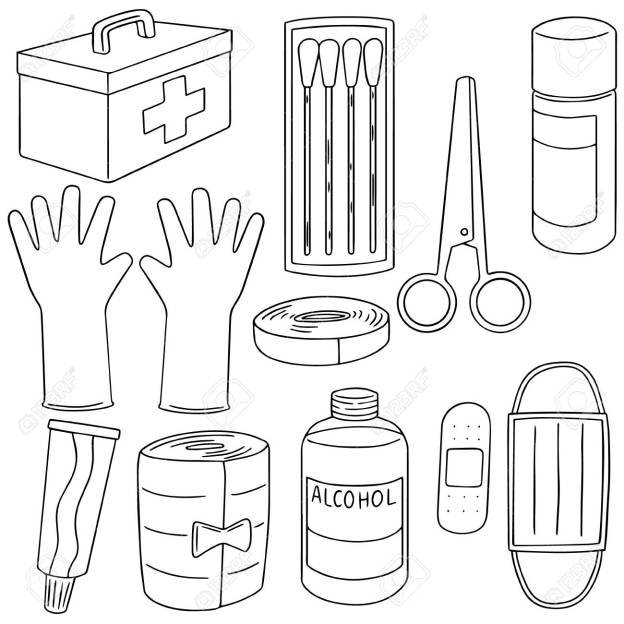
Equine First Aid Kit
All horse owners should have an equine first aid kit & know how to use all of the supplies. At least twice yearly, examine & replenish outdated supplies. Store your first aid kit in your home or temperature controlled space. Leaving it in a trailer or uninsulated tack room will quickly degrade the supplies. Talk to your veterinarian about customizing your first-aid kit for your horse’s particular needs.
FUNDAMENTALS
Thermometer, Mercury or Digital
Stethoscope (good quality)
Headlight (good quality)
Proper Fitting Halter & Lead Rope
Latex Gloves (12)
Watch or Timepiece with Second Hand
BASIC EQUIPMENT
Bandage Scissors
Suture Scissors
Tweezers or Forceps (smooth jaws)
Non-Sterile Gauze – 4″x4″ Squares (1 package)
Conform® or Kling® Gauze 4″ (2 rolls)
Elastic Adhesive Bandage (Elasticon®) 3″ (2 rolls)
Cohesive Bandage (Vetrap®) 4″ (2 rolls)
Non-Adhesive Wound Dressing (Telfa® pads) 3″x4″ (2) & 3″x8″ (2)
Povidone Iodine (Betadine®) Solution (4 oz)
Antiseptic Scrub, Chlorhexidine or Povidone Iodine (Betadine®) Scrub (4 oz)
Sugardine
Small Plastic Containers for Mixing or Storage (2)
Wound Lavage or Cleaning Bottle, Saline (250 ml)
Tongue Depressors (6)
Alcohol Wipes (10)
Spray Bottle for Water (1)
Paper Towels (1 roll)
Multi-Purpose Tool, Leatherman® or Equivalent
Cotton Lead Rope (3/4″ – 1″ in diameter)
Electrolytes (paste or powder)
Fly Repellent Ointment (1)
Heavy Plastic Bags (2 – gallon & 2 – pint size)
SECONDARY EQUIPMENT
Cotton, Rolled Sheets, Leg Cottons (2)
Standing Wrap & Quilt or Shipping Boots
Easy Boot or Equivalent in Appropriate Size
Baby Diapers (2) (size 4 to 6 depending on hoof size)
Triple Antibiotic Ointment (1 tube)
Extra Halter & Lead Rope
Lariat
Syringe 35 cc (1)
Syringe 12cc (3)
Syringe 3 cc (3)
Syringe 3cc with 20gauge needle (3)
Syringe – 60 cc cath tip (2)
Needles – 18gauge – x 1.5″ (4)
Needles – 20 gauge – x1.5″ (4)
Eye Wash, Saline (1 bottle)
Opthalmic Ointment or Drops (1 bottle or tube)
Magnesium Sulfate, Epsom Salts (1 package)
Duct Tape (1 roll)
Clippers with #40 Blade (good quality)
Shoe Puller
Crease Nail Puller
Hoof Pick
Hoof Knife
Hoof File, Rasp
Clinch Cutters
Farrier’s Driving Hammer
Collapsible Water Bucket
Ice Wraps
Twitch
Bute Banamine Bordered
Talk to your veterinarian about dispensing a few medicines that you may use in an emergency. In most, if not all states, a veterinarian cannot legally dispense prescription items without a valid Veterinary Client Patient Relationship (VCPR).
• Flunixin Meglumine (Banamine®) (injectable or paste)
• Phenylbutazone, Bute Paste (1)
• Trimethoprim-Sulfa Tablets SMZ-TMP in small container (75#)

Work Horse Won’t Move Forward?!
I decided to get on Tilly and see how she was under saddle.
The saddle fit nicely and I chose a bit-less bridle. Tilly was calm throughout tacking her up and getting on her back. One hiccup….she would not respond to my leg or move forward at all. My friend decided to lead her and Tilly walked easily forward. I decided to end with that for the day. A few days later I got on her back again. Same thing happened- she would just stand there. Small spurs, leg, a crop (which I hit gently against my leg)…none of them worked. I was frustrated despite it not being my sweet girl’s fault so I ended our ride. I knew nothing could be accomplished with me being frustrated. I decided to do some research on work horses and posted on some Facebook forums about my situation. I received some awesome advice!
The advice I received is below.
“If she was used in harness you will probably have to use driving commands as you teach her.Walk on, or get up to go forward. Gee to turn right, Ha to turn left. May have to tap her hind quarter with the crop.”
“Get someone to lead her after you give her forward cues”
“She may never have been ridden, on driven. I would find a good trainer who works with starting horses, even though she’s not young. It will take months but if she’s started correctly she’ll be lovely and at her age will help to keep her sound once she begins to WTC, as driving horses only walk.”
“Probably a driving horse. Try “Step up” or “walk on” look up the Amish terms. Gee, Haw, Gee around, Haw around, etc…See if that helps. If she was a driving or plow horse it also helps to hold your hands wider at first.”
“Patients little at a time he or she needs to know you love them first ground work is good he may be sore see if he’s stiff arthritis meds or joint supplements he may only know driving commands such a gee or has or come and get good luck”.
“Sounds like she hasn’t been ridden but is a good girl! She may need a bit in her mouth to understand what you are asking since she was driven. If she understands words, perhaps say them for what you want. Looks like others know those words better than me! I know my horse that logged has a nice “whoa”. Just can’t say “good boy” – sure, sounds like whoa! I saddled and sat on a driving horse, Belgian (no history known) with a leader for walk only. I felt that he was sore – even though there was no outward sign – perhaps the way he held himself. Not saying this is the case for you – just a thought. I like the other advice here as well!”
“I rescued my 18 year old boy in November  Same history as your mare. As workhorses, they were not trained to ride, and they don’t know the commands or how to respond to leg pressure or the bit (other than pulling). So you need to start with groundwork and then at the very beginning, because basically they are green. I do not use a crop on my boy. Never will.”
Same history as your mare. As workhorses, they were not trained to ride, and they don’t know the commands or how to respond to leg pressure or the bit (other than pulling). So you need to start with groundwork and then at the very beginning, because basically they are green. I do not use a crop on my boy. Never will.”“I would never give her spur or crop. You don’t want to punish her for not understanding your cues.”
“My Belgian was not broke either but she did walk out just fine unlike your mare. Get a driving bit…that’s what she’ll be familiar with. Check all voice commands to see if she knows any of them. If not I’d teach her voice commands lunging her and then get back on once she’s responding well.”
“Because they came from Amish, a friend told me to learn the commands in that specific language (version of German). Worth a try. BUT, I will say, I have tried to avoid anything that would remind my boy of his previous owner.”
“Haw & Gee. These are commands used to ask what direction to turn by the horse by voice command. It works well when they’re in harness working. Gee means go right, haw means go left. The Amish use “step up” to take a step or two forward and “ walk on” to walk. “Whoa” to stop. Try these commands while mounted. Slowly add in the ques you want to use in addition to the verbal ques your mare already knows.”
“She might have never been used alone, which could mean she’s looking for a cue from someone else, (it would explain why someone needs to lead her) amish usually use a oring bit, she might do better with blinders at first, and she’s probably voice activated. She won’t have any clue about leg cues. Start ground driving her, she still might be a little confused being single but she figure it out. good luck.”
” when you are on her wanting her to go sometimes turning her to one side or the other where she has to step to move is a good way to start her momentum.”
The Truth About Equine Cruelty in Lancaster, PA
Fix the Horse That Refuses to Go Forward: Tips from Heather Smith Thomas to Beat the Balk
The horse that won’t move forward

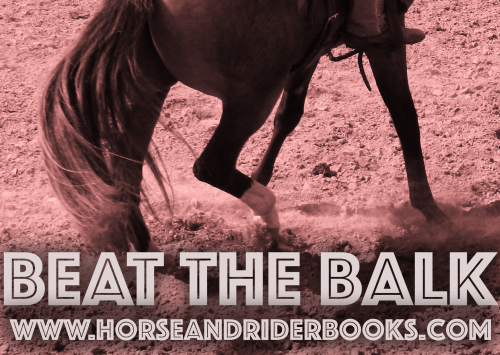
Remember those stubborn ponies of your past whose fat bellies deflected your thumping heels like a bug guard on the front of a pickup truck? I can recall more than one incident when “Misty,” “Sweetpea,” or “Katrina” just decided they would do no more (and really, looking back, who could blame them?) Most of us are a long way from ponies now and a child’s willingness to spend an hour or two negotiating three steps forward. But still, if you ride at all, you’re likely to face a balk or two in your time in the saddle, and having the techniques to negotiate the issue quickly and peacefully is key.
Note: Many horses balk when approaching something strange or “scary.” This is a different issue and can be successfully dealt with in a layered, progressive fashion using desensitization. According to lifelong rancher, horse trainer, and author Heather Smith Thomas, horses…
View original post 657 more words

The History of the Draft Horse
When It’s Time
When It’s Time
— Read on horsenetwork.com/2020/06/when-its-time/

Living Her Best Life
In the evening I take Ottille for a walk and set her free. Her carefree happiness is palpable and her beauty takes my breathe away every time. I still can not fathom how anyone would work this sweet girl until she reached 17 only to send her to a slaughter auction. Welcome to the rest of your life, sweet girl! Like I promised the first day we met, you can trust me to take care of you the rest of your days. ❤️
Fungal Infections in Horses

What a Difference 3 Weeks Can Make
Tilly came to me from a slaughter auction in Texas after 17-ish years as an Amish workhorse. She was thin (she still is), sick (upper respiratory infection) had cracked hooves, had never had her teeth floated (they made a horrible grinding and clicking sound when she ate), and apparently had never been clipped or bathed or worn a blanket. I do not think she had ever even had a treat (she still won’t take an apple or carrot).
SYMPTOMS:
- Rumbling gut
- Cow pie stools
- Grinding/clicking teeth
- Cracked hooves
- Dull coat
- Underweight
- Running nose
PROFESSIONALS:
- Farrier for evaluation and trimming
- Dentist for power float of teeth
- Vet for physical, blood work, and fecal
TESTING/RESULTS:
- CBC: all in normal range aside from her creatinine and protein suggesting dehydration. These values normalized after about 1 week)
- Fecal: Minimal
FEED:
- Triple Crown Senior Feed (Low sugars, low starch, high fat)
- Tons of water with Horse Quencher added
- Salt block
MEDICATIONS:
- Exceed injections (2 total a week apart) then SMZ for 2 weeks
- Banamine
- Brewer’s Yeast (Stomach)
- BioSponge (Gut health and to tackle her loose stools)
- Electrolytes (To help with dehydration)
- Strongid wormer

Tilly on her way from Texas slaughter auction

When Tilly arrived in Virginia

Tilly’s feet when she arrived


Top to bottom:
Tilly on her way from Texas
Tilly when she first arrived in Virginia
Her feet upon arrival
Getting her teeth and feet done
Tilly after being clipped and bathed!

Medication for Ulcers in Horses

 The Chances We Take