Donkeys are known to get a little chunky and by chunky I mean fat deposits externally and internally which are detrimental to their health and wellbeing. Further, keeping your donkey at an ideal weight is of the utmost importance for the prevention of laminitis.
Here is some nutritional information for caring for your donkey:
Feed 1.5-2% of body weight in forage per day.
Generally, once the energy (calorie) requirement has been met, their protein requirement will have also been met. Donkeys also only require about 75% of the calories that a horse of a similar weight would need which is why they are often referred to as “super keepers.”
Donkeys have rather large intestines, which they use to full capacity, and will retain forage longer to digest their intake more thoroughly. Due to their increased capacity and retention, donkeys often have a “hay belly” appearance, or an “A” frame appearance.
1. Feed roughly 75% straw and 25% hay ,except during the winter when you can feed 50/50 straw and hay.
2. Barley straw is ideal, followed by wheat straw and then oat.
3. Vitamin / Mineral supplement or Ration Balancer • Use a low sugar/starch carrier for supplements such as Timothy Pellets or Non-Molasses Beet Pulp. Ration balancing supplements with a 3- to 4-ounce serving size are typically a better choice.
4. Access to water 24/7 despite the belief that they do not need as much water as horses, they DO!
5. Avoid sugary treats.
6. Muzzle. Muzzle. Muzzle. OR Dry Lot. Once your donkey gains weight not only is it difficult to lose, the fat deposits (the fallen crest, lumps) may never go away. It is easier to be proactive than it is to be reactive. Even if the grass looks sparse, due to their “desert” ancestry, any grass is considered “lush.”
White Line Disease is extremely common in donkeys and can cause major issues if severe or left untreated.
What is White Line Disease or Seedy Toe?:
The white line is seen on the underside of the foot. It is where the unpigmented horn of the inner hoof wall joins the horn of the sole. Degeneration of the horn at the white line leads to separation of the hoof wall from the underlying structures and weakening of the hoof wall.
Risk Factors:
The reason why WLD occurs isn’t fully known, but anaerobic bacteria and fungi alongside poor foot hygiene play an important role in the development of the disease.
Some of the risk factors associated with the development of this condition are;
1. The presence of horn digesting microbes (Pseudoallscheria boydii, Scopulariopsis spp., Aspergillus spp, Fusobacterium necrophorum, penicillium spp.)
2. A wet and humid environment, poor foot hygiene, 3. Pre-existing laminitis resulting in a stretched white line 4. Hereditary factors.
Donkeys seem to be more susceptible to WLD than horses. It can affect any of the four feet and recurrence is common. Generally donkeys with WLD will not be lame, but depending on the severity of the pathology or the presence of other associated diseases, lameness could be present.
Prevention:
Maintaining good foot hygiene and regular foot care will help to prevent the occurrence of WLD. The following are best practice for prevention of this condition:
1. Clean the hooves daily, monitoring the integrity of the white line and the rest of hoof structures.
2. Change bedding frequently, avoiding humidity and accumulation of faeces and urine, especially in wet seasons.
3. Arrange for your farrier to check and trim the feet every six to ten weeks depending on the amount of exercise/wear, the age of the donkey and/or the presence of hoof pathology.
4. Avoid grease or similar products as they reduce horn oxygenation and can create an environment that encourages proliferation of horn digesting microbes.
5. Monitor animals with a history of WLD closely as they will be more susceptible to recurrence.
6. Good, clean hard standing and dry bedding are important for the health of all donkeys’ feet, but for animals with recurrent WLD it is very important.
Treatment Options:
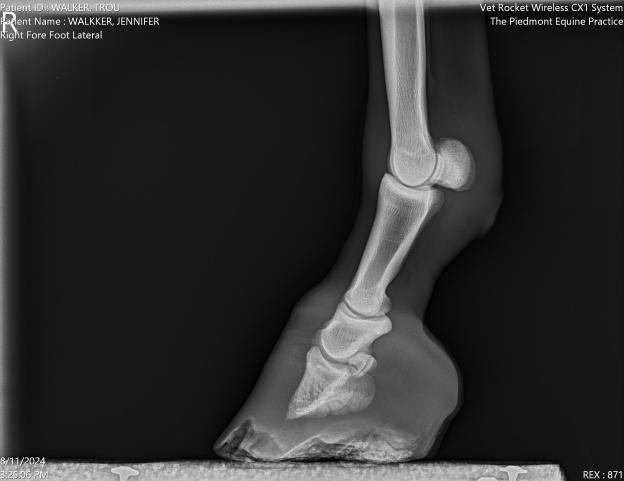
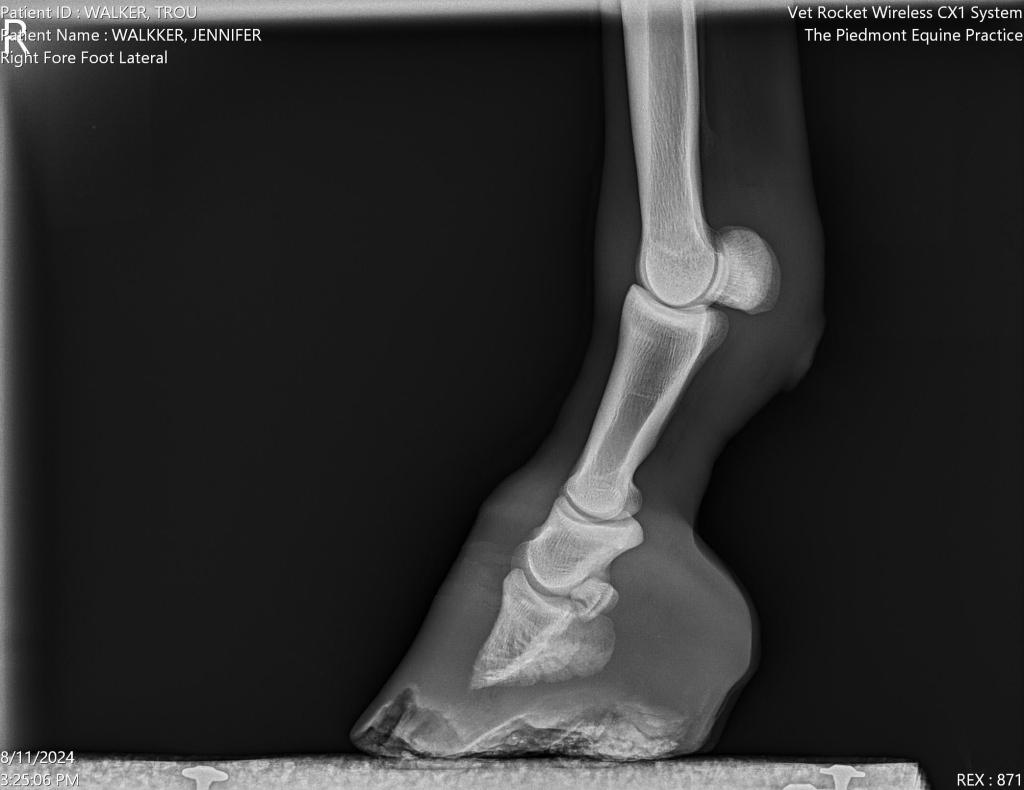
1. Resection: Your farrier or vet will remove all the damaged horn. This procedure should not be painful but it may be necessary to remove a lot of hoof wall if the disease has progressed. In some circumstances it may be necessary to take an x-ray before removing a large amount of hoof wall to check the stability of the pedal bone.
2. Cleaning and Medicine: Once all the damaged horn has been removed, the hoof needs to be kept clean with daily hoof picking and brushing to remove as much organic matter as possible. Once the foot is clean topical disinfectants (eg povidone iodine, hydrogen peroxide or zinc sulfate) in solutions or sprays are useful to reduce microbial contamination.
3. Other Treatments: Removing all the abnormal horn, ensuring good oxygenation to the area and maintaining good foot hygiene may be enough to manage the problem. However, if the amount of wall that has been removed is substantial, your vet or farrier may decide to refill the defect with acrylic material to give more stability to the hoof capsule. In these cases it is vital that all the affected horn is removed to ensure the acrylic material bonds to healthy horn.
So, I wish I did not have to start this process again…but unfortunately, I do. Once again I have a senior horse with a variety of acute and chronic conditions that all hit at the same time. Right now I am trying to make her comfortable while also trying to figure out what is what and how to best respond.
Three months ago Tilly was tested for EPM due to muscle wasting and weight loss.The first time she was in the lower end of an active infection. We started a compounded medicine for 1 month and her numbers decreased. We decided to do another round as she responded well to the first round. However, the numbers remained the same. We also tested her for Lyme which showed a chronic and an active infection but the numbers were in the high normal range and the vet felt that it was not treatment worthy at the time.
Last month Tilly began “crab walking” out of the blue. Called the vet. They came out. Her ataxia was bilateral- both her left and right hind- whereas EPM tends to be unilateral. Further, her presentation was not suggestive of Lyme.
We started steroids (dexamethasone oral power) for 5 days with Banamine, tapering as we went, and she seemed to recover. The consensus was it was an acute attack that may have occurred given she is a senior with a history of being an Amish workhorse and perhaps, she pulled something in her neck.
Treatment was complete and another week went by and again, she showed some ataxia. This time less severe. The vet felt that since she responded well to the first round of steroids that it was not EPM-related as you would not see improvement. Further, if it were Lyme related the presentation would be more consistent. Again, a round of Dex and improved quickly. The next week we had her neck x-rayed and there were some arthritic changes. However, she was running around and moving well so the vet felt injections in her neck would not be necessary at that time.
Seventy two hours later, she had some trouble getting up but eventually succeeded. The next morning my sweet girl was spinning, crab walking, and falling over. It was absolutely terrible to see. I immediately gave her 10cc IV Banamine and she calmed down and stopped spinning. The vet came out and administered Dex IV and thought that due to her inflammatory bowel disease we should try Dex IM to ensure absorption. We also decided to pull blood to test for Cushings as she seemed to lose weight overnight and was not shedding out well. The next day she was lame on her right front. Panicked I called the vet fearing that if she did have Cushings, she was trying to founder due to the steroid use. Thankfully, the vet came out, did a nerve block on her right front (this helps to see if the horse has laminitis as they will improve once blocked) and checked for pulses (if a horse has laminitis typically they will have pulses in their hooves) and Tilly did not have any. So, the vet did not feel we were dealing with founder. However, the lameness presented a major challenge due to her still being ataxic on the hind end. The vet did cortisone injections into her neck hoping to help with inflammation due to arthritis. Tilly did great and suddenly, began freaking out. Spinning, knocking into the doors, etc. The vet explained that the injections likely added more pressure on her spinal cord causing her to react. Again, once the vet was able to safely administer Banamine and some Dorm, she calmed and laid down for the first time in over a week for a good 45 minutes. We decided to make sure she was able to get back up. Although she had some trouble, after a couple tries, she was able to do so. Her breathing was heavy, wheezy, almost like she was having a panic attack and hyperventilating. A few minutes later, her breathing returned to normal.
Tilly’s Cushing’s text level was about 100 pg/mL (it should be about 30 pg/mL during mid-November to mid-July) meaning, she does have Cushings. The vet decided to wean her off of the steroid as to not increase the risk of Laminitis even more but also to give neck injections time to work (5-7 days). We also immediately began Prescend (2 tabs) a day to treat her Cushings.
We are on day 5 since the 3rd ataxic episode and day 3 post neck injection and she is still lame on her right front along with ataxic on her hind end. However, she is still eating, engaging, and is bright and alert. She does not seemed distressed or in pain thankfully. Due to Tilly not showing much improvement (even though it can take 5-7 days to see improvements from the neck injections) I decided to start her on a non-compounded EPM medication, Protazil. According to the vet, Protazil should not cause any harm whether her symptoms are EMP related or not. I also began 10cc of Vitamin E oil. Tilly was previously on pelleted Vitamin E but due to her inflammatory bowel disorder, she may struggle to absorb the pelleted form of the supplement. Further, there are a number of studies showing the benefits of Vitamin E and the connection between Vitamin E and ataxia.
On a positive note, since starting Prescend for her Cushings, I have noticed that she is drinking less water. Increased water intake is a symptom of unmanaged Cushings. I am hopeful that means the medication has started to work at regulating her hormones. We are now at a wait and see point. I continue to try to make her comfortable. Tons of bedding in her huge foaling stall, hay everywhere, fans on, doors open. She has been a trooper. My hope is that she recovers from this and enjoy whatever time she has left and fights this as she has so many other things- the reason she was given the name, Ottilie.
My senior Belgian Draft mare has a chronic condition where her stools are relatively solid but after having a stool, she passes fecal liquid separately, Her tail and hind end, and legs are covered. Initially when she came to me she had loose stools and the vet did a fecal and we put her on Biosponge. Her Fecal Sample showed minimal infestation and the Biosponge did not do much. Over time, her stools became more solid but the liquid continued. Now, after being with me for about 6 months we are still having this issue.
So, I did some research and came across an article on something I had never heard of before- Fecal Water Syndrome. According to an article on SmartPak.com, Fecal Water Syndrome is typically caused by the following;
The underlying cause of FWS in horses is not known at this time and there are many theories as to why some horses develop it. A group of researchers in Germany set out to explore some of the proposed theories and discovered that neither dental disease nor a heavy parasite burden seemed to be associated with FWS. However, it was found to be more likely to occur:
in horses of low rank or “pecking order” in the social hierarchy of a herd
in winter when subordinate horses were confined to a smaller space, leading to anxiety
in geldings vs mares, which are usually more dominant than geldings
in paint horses
However, the article also noted that due to FWS being a relatively new diagnosis, more studies are needed to look at the role stress, nutrition, and potentially, other factors in the development and management of FWS.
Diagnosis of FWS
Most veterinarians approach the diagnosis of a horse with FWS similar to one with diarrhea or loose stool. That is, they start by taking a thorough history from the owner, then perform a complete physical examination with special emphasis on the digestive system, and finally may recommend specific tests to evaluate the health of the horse in general and the GI tract in particular. It can be helpful to confirm the presence of soiled hind limbs and tail as well as dirty stall walls and bedding. While on the farm, the vet may want to walk through the regular feeding and management programs including turnout and herd status.
Treatment and Management of FWS
Although there is no standard treatment or set of recommendations for the care and feeding of horse suffering from FWS, all potential causes for disruption in the GI system should be addressed, including social stress.
Making adjustments to the horse’s turn-out time and group.
Making adjustments to the diet (with the input of a veterinarian and nutritionist.)
Trying out various medications and supplements one at a time on the passage of fecal water. For example, adding omega 3 fatty acids for a normal inflammatory response in the gut, and to the stabilizing effects of “baker’s yeast” or Saccharomyces cerevisiae.
Make sure to keep the hindquarters clean and dry to prevent any sores for forming.
It’s summer, aka the sweatiest time of the year. Hooray!
And while sure, there are things to enjoy (like swimming, ice cubes, and air conditioning), outdoor activities such as barn chores and riding often leave us reaching for a Gatorade. But what about our horses? Do they need the equine equivalent of a sports drink full of electrolytes too?
First off, let’s discuss what electrolytes are exactly and a little bit about how they function in the body. Electrolytes are minerals that help to regulate many bodily processes. The main ones include Sodium (Na), Chloride (Cl), Potassium (K), Magnesium (Mg), and Calcium (Ca).
In solid form, electrolytes bond into salts (such as sodium chloride) but when dissolved in water, they break down into individual ions, which carry a positive or negative charge. These charges allow them to conduct electricity and assist in electrochemical processes such as regulating heartbeat and muscle contraction.
But wait, electrolytes do more! They also aid in moving fluids in and out of cells and help the body to absorb nutrients. Without electrolytes, the water your horse drinks cannot be properly retained or utilized by the body.
In short, electrolytes are super important.
Like us, horses lose electrolytes through sweat, urine, and feces. Most of these minerals are replaced when your horse consumes grass, hay, and/or feed, with the exception being sodium and chloride, which should always be supplemented with either a salt block or loose salt.
So let’s get back to the question at hand: do horses need added electrolytes in the summer?
The answer depends on how much they’re sweating. If your horse sweats for a prolonged period of time, either because of high temperatures and/or humidity, intense exercise, or all of the above, electrolyte losses can be high and therefore will need to be supplemented.
This goes for endurance horses and those competing in three-day eventing or possibly long-distance trail riding. Electrolyte supplementation is also a good idea if a horse is being shipped long distance in hot weather and for those with Cushing’s disease who may sweat more just standing in the pasture.
How to feed electrolytes
Electrolytes can generally be supplemented in feed, added to water, or in paste or gel form. After a period of prolonged sweating, it’s recommended that electrolytes be provided for several days to make up for losses. You can even give electrolytes to your horse before a big event if you know he’s likely to be sweating a great deal. Continue to give electrolytes during the event as well.
When looking for an electrolyte supplement, make sure that sodium chloride is first on the list of ingredients, followed by potassium chloride. Many electrolytes are sugar-based and while horses may prefer them, they aren’t as effective.
With that said, it’s not a good idea to over-supplement with electrolytes, especially if your horse isn’t sweating much as they may irritate the digestive tract or even throw your horse’s mineral balance out of whack.
Many horses won’t need electrolytes at all in summer, but if your horse does, remember to supplement wisely!
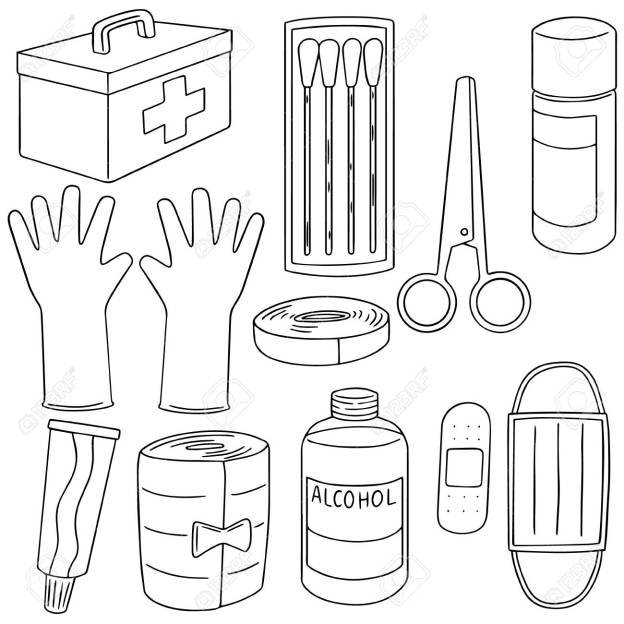
Equine First Aid Kit All horse owners should have an equine first aid kit & know how to use all of the supplies. At least twice yearly, examine & replenish outdated supplies. Store your first aid kit in your home or temperature controlled space. Leaving it in a trailer or uninsulated tack room will quickly degrade the supplies. Talk to your veterinarian about customizing your first-aid kit for your horse’s particular needs.
FUNDAMENTALS Thermometer, Mercury or Digital Stethoscope (good quality) Headlight (good quality) Proper Fitting Halter & Lead Rope Latex Gloves (12) Watch or Timepiece with Second Hand BASIC EQUIPMENT Bandage Scissors Suture Scissors Tweezers or Forceps (smooth jaws) Non-Sterile Gauze – 4″x4″ Squares (1 package) Conform® or Kling® Gauze 4″ (2 rolls) Elastic Adhesive Bandage (Elasticon®) 3″ (2 rolls) Cohesive Bandage (Vetrap®) 4″ (2 rolls) Non-Adhesive Wound Dressing (Telfa® pads) 3″x4″ (2) & 3″x8″ (2) Povidone Iodine (Betadine®) Solution (4 oz) Antiseptic Scrub, Chlorhexidine or Povidone Iodine (Betadine®) Scrub (4 oz) Sugardine Small Plastic Containers for Mixing or Storage (2) Wound Lavage or Cleaning Bottle, Saline (250 ml) Tongue Depressors (6) Alcohol Wipes (10) Spray Bottle for Water (1) Paper Towels (1 roll) Multi-Purpose Tool, Leatherman® or Equivalent Cotton Lead Rope (3/4″ – 1″ in diameter) Electrolytes (paste or powder) Fly Repellent Ointment (1) Heavy Plastic Bags (2 – gallon & 2 – pint size)
SECONDARY EQUIPMENT Cotton, Rolled Sheets, Leg Cottons (2) Standing Wrap & Quilt or Shipping Boots Easy Boot or Equivalent in Appropriate Size Baby Diapers (2) (size 4 to 6 depending on hoof size) Triple Antibiotic Ointment (1 tube) Extra Halter & Lead Rope Lariat Syringe 35 cc (1) Syringe 12cc (3) Syringe 3 cc (3) Syringe 3cc with 20gauge needle (3) Syringe – 60 cc cath tip (2) Needles – 18gauge – x 1.5″ (4) Needles – 20 gauge – x1.5″ (4) Eye Wash, Saline (1 bottle) Opthalmic Ointment or Drops (1 bottle or tube) Magnesium Sulfate, Epsom Salts (1 package) Duct Tape (1 roll) Clippers with #40 Blade (good quality) Shoe Puller Crease Nail Puller Hoof Pick Hoof Knife Hoof File, Rasp Clinch Cutters Farrier’s Driving Hammer Collapsible Water Bucket Ice Wraps Twitch Bute Banamine Bordered
Talk to your veterinarian about dispensing a few medicines that you may use in an emergency. In most, if not all states, a veterinarian cannot legally dispense prescription items without a valid Veterinary Client Patient Relationship (VCPR).
• Flunixin Meglumine (Banamine®) (injectable or paste) • Phenylbutazone, Bute Paste (1) • Trimethoprim-Sulfa Tablets SMZ-TMP in small container (75#)
Due to Draft horses being prone to certain diseases such as, metabolic ailments like PSSM (Polysaccharide storage myopathy), laminitis, Cushings, founder, tying-up, and shivers diet is imperative. Based on these ailments, starch and sugar calories should be replaced by fiber and fat calories.
It is recommended that these guys have high quality forage and some concentrates while working due to their slower metabolism (similar to ponies). Meaning that the less energy they use, the more weight they gain. High carbohydrate feed should be avoided, as a forage with a rational balancer and/or a low NSC feed.
Breakdown of How To Feed A Draft Horse
Calorie Breakdown:
15% daily calories from sugar
20-25% daily calories from, fat
No less than 1% of horse’s body weight in forage
Calculating Fat Content:
Pounds of feed per day x % of fat
For example,
3 lbs of feed= 3 x 0.25= 0.75 lb fat
Feed Brands:
Feeds should have no more than 33% sugar and starch (low carb).
Low in starch and sugars: soy, beat pulp, wheat bran, wheat middlings
Feeds with 20%+ of fat should be supplemented with rice bran (20% fat). Feed with anything less than 20% should be supplemented with 100% additional fat source.
Nutrena Compete
Purina Strategy
Blue Seal Hunter, Demand, Vintage Gold
Southern States Legend
Supplements:
Oil: soy oil, canola, corn oil, rice bran
Vitamin E & Selenium supplement (be careful when adding in selenium as high levels can be toxic)
The Plan
Either Purina Strategy or Southern States Legend: No more than 5-6 lbs of feed per 1000 lbs
Rice Bran Oil: begin with 1/4 cup and increase by 1/4 cup every few days until 2 cups are reached. Continue with 3-4 cups per day.
Vitamin E with Selenium: 1-2 oz per day
Forage: Alfalfa pellets mixed or substituted with Purina or Southern States feed
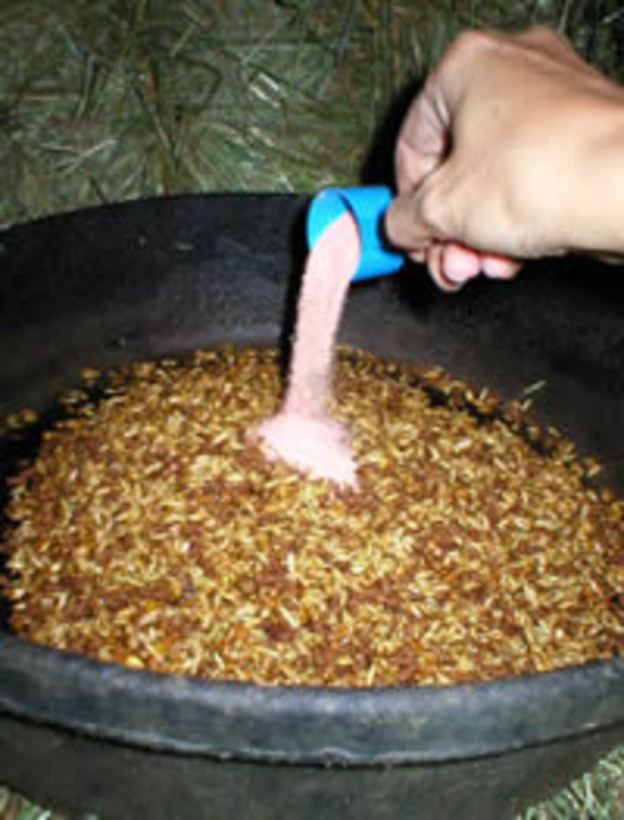
Mix 12 parts alfalfa (or Purina or Southern States Feed or mix of the two) with 1 part water. Soak for 10 minutes. Add in oil. Let it sit for 2+ hours. Right before feeding add in the supplement (Vet E/Selenium).










 The Chances We Take