Category Archives: Equine supplies

Donkey Diets

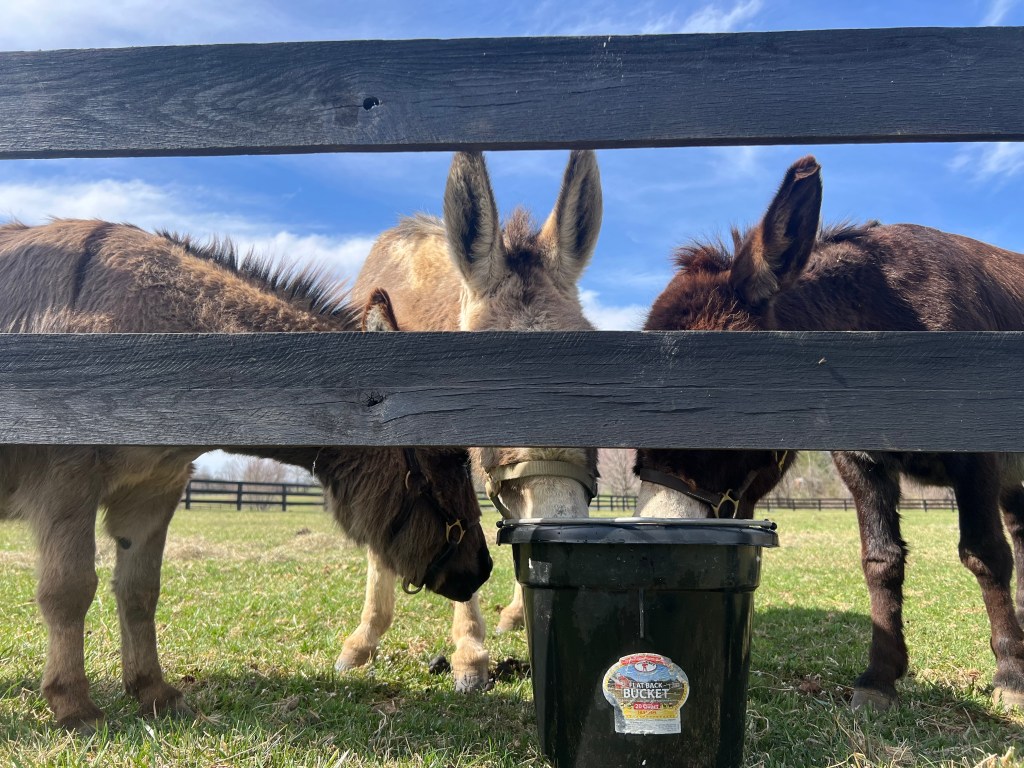
Donkeys are known to get a little chunky and by chunky I mean fat deposits externally and internally which are detrimental to their health and wellbeing. Further, keeping your donkey at an ideal weight is of the utmost importance for the prevention of laminitis.

Here is some nutritional information for caring for your donkey:

  1. Feed 1.5-2% of body weight in forage per day.

Generally, once the energy (calorie) requirement has been met, their protein requirement will have also been met. Donkeys also only require about 75% of the calories that a horse of a similar weight would need which is why they are often referred to as “super keepers.”

Donkeys have rather large intestines, which they use to full capacity, and will retain forage longer to digest their intake more thoroughly. Due to their increased capacity and retention, donkeys often have a “hay belly” appearance, or an “A” frame appearance.

  • 1. Feed roughly 75% straw and 25% hay ,except during the winter when you can feed 50/50 straw and hay.
  • 2. Barley straw is ideal, followed by wheat straw and then oat.
  • 3. Vitamin / Mineral supplement or Ration Balancer • Use a low sugar/starch carrier for supplements such as Timothy Pellets or Non-Molasses Beet Pulp. Ration balancing supplements with a 3- to 4-ounce serving size are typically a better choice.

4. Access to water 24/7 despite the belief that they do not need as much water as horses, they DO!

  • 5. Avoid sugary treats.

6. Muzzle. Muzzle. Muzzle. OR Dry Lot. Once your donkey gains weight not only is it difficult to lose, the fat deposits (the fallen crest, lumps) may never go away. It is easier to be proactive than it is to be reactive. Even if the grass looks sparse, due to their “desert” ancestry, any grass is considered “lush.”

To compare feeds and ration balancer visit https://madbarn.com/compare-horse-feeds/?f=529642,1023346,387889&a=150,1000,450&u=g,g,g

For more in-depth information please visit:

https://www.platinumperformance.com/articles/feeding-donkeys-and-mules.html

https://ulster.cce.cornell.edu/agriculture/livestock-production/livestock-360/donkey-s-unique-nutritional-needs

https://ker.com/equinews/answer/balancer-pellets-miniature-donkeys/

The Perfect storm

So, I wish I did not have to start this process again…but unfortunately, I do. Once again I have a senior horse with a variety of acute and chronic conditions that all hit at the same time. Right now I am trying to make her comfortable while also trying to figure out what is what and how to best respond.

Three months ago Tilly was tested for EPM due to muscle wasting and weight loss.The first time she was in the lower end of an active infection. We started a compounded medicine for 1 month and her numbers decreased. We decided to do another round as she responded well to the first round. However, the numbers remained the same. We also tested her for Lyme which showed a chronic and an active infection but the numbers were in the high normal range and the vet felt that it was not treatment worthy at the time.

Last month Tilly began “crab walking” out of the blue. Called the vet. They came out. Her ataxia was bilateral- both her left and right hind- whereas EPM tends to be unilateral. Further, her presentation was not suggestive of Lyme.

We started steroids (dexamethasone oral power) for 5 days with Banamine, tapering as we went, and she seemed to recover. The consensus was it was an acute attack that may have occurred given she is a senior with a history of being an Amish workhorse and perhaps, she pulled something in her neck.

Treatment was complete and another week went by and again, she showed some ataxia. This time less severe. The vet felt that since she responded well to the first round of steroids that it was not EPM-related as you would not see improvement. Further, if it were Lyme related the presentation would be more consistent. Again, a round of Dex and improved quickly. The next week we had her neck x-rayed and there were some arthritic changes. However, she was running around and moving well so the vet felt injections in her neck would not be necessary at that time.

Seventy two hours later, she had some trouble getting up but eventually succeeded. The next morning my sweet girl was spinning, crab walking, and falling over. It was absolutely terrible to see. I immediately gave her 10cc IV Banamine and she calmed down and stopped spinning. The vet came out and administered Dex IV and thought that due to her inflammatory bowel disease we should try Dex IM to ensure absorption. We also decided to pull blood to test for Cushings as she seemed to lose weight overnight and was not shedding out well. The next day she was lame on her right front. Panicked I called the vet fearing that if she did have Cushings, she was trying to founder due to the steroid use. Thankfully, the vet came out, did a nerve block on her right front (this helps to see if the horse has laminitis as they will improve once blocked) and checked for pulses (if a horse has laminitis typically they will have pulses in their hooves) and Tilly did not have any. So, the vet did not feel we were dealing with founder. However, the lameness presented a major challenge due to her still being ataxic on the hind end. The vet did cortisone injections into her neck hoping to help with inflammation due to arthritis. Tilly did great and suddenly, began freaking out. Spinning, knocking into the doors, etc. The vet explained that the injections likely added more pressure on her spinal cord causing her to react. Again, once the vet was able to safely administer Banamine and some Dorm, she calmed and laid down for the first time in over a week for a good 45 minutes. We decided to make sure she was able to get back up. Although she had some trouble, after a couple tries, she was able to do so. Her breathing was heavy, wheezy, almost like she was having a panic attack and hyperventilating. A few minutes later, her breathing returned to normal.

Tilly’s Cushing’s text level was about 100 pg/mL (it should be about 30 pg/mL during mid-November to mid-July) meaning, she does have Cushings. The vet decided to wean her off of the steroid as to not increase the risk of Laminitis even more but also to give neck injections time to work (5-7 days). We also immediately began Prescend (2 tabs) a day to treat her Cushings.

We are on day 5 since the 3rd ataxic episode and day 3 post neck injection and she is still lame on her right front along with ataxic on her hind end. However, she is still eating, engaging, and is bright and alert. She does not seemed distressed or in pain thankfully. Due to Tilly not showing much improvement (even though it can take 5-7 days to see improvements from the neck injections) I decided to start her on a non-compounded EPM medication, Protazil. According to the vet, Protazil should not cause any harm whether her symptoms are EMP related or not. I also began 10cc of Vitamin E oil. Tilly was previously on pelleted Vitamin E but due to her inflammatory bowel disorder, she may struggle to absorb the pelleted form of the supplement. Further, there are a number of studies showing the benefits of Vitamin E and the connection between Vitamin E and ataxia.

On a positive note, since starting Prescend for her Cushings, I have noticed that she is drinking less water. Increased water intake is a symptom of unmanaged Cushings. I am hopeful that means the medication has started to work at regulating her hormones. We are now at a wait and see point. I continue to try to make her comfortable. Tons of bedding in her huge foaling stall, hay everywhere, fans on, doors open. She has been a trooper. My hope is that she recovers from this and enjoy whatever time she has left and fights this as she has so many other things- the reason she was given the name, Ottilie.


RESOURCES

https://www.horseillustrated.com/horse-health-equine-cushings-disease-24321

https://www.horseillustrated.com/horse-experts-horse-vet-advice-cushings-disease-diet

https://cvm.msu.edu/vdl/laboratory-sections/endocrinology/equine-endocrine-testing

https://www.horseillustrated.com/horse-experts-horse-vet-advice-cushings-horse-treats

https://resources.integricare.ca/blog/cushings-disease-in-horses

https://equine-vets.com/health/l/laminitis-is-one-of-the-most-common-causes-of-lameness-in-horses-and-ponies/

Alfalfa or Grass Hay: Which is better for winter warmth?

thehorse.com/181582/alfalfa-or-grass-hay-which-is-better-for-winter-warmth/

How Long Will A Riding Helmet Last?

How Horses Stay Warm

www.horsesinsideout.com/post/how-your-horse-stays-warm

4 Low-Tech Ways to Fight Frozen Water Troughs

By Kelly Munro

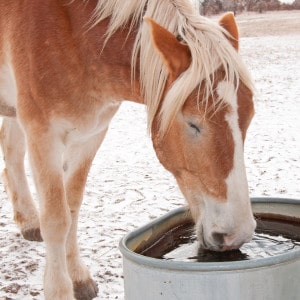
Frozen stock tanks and water troughs in our paddocks and pastures not only pose a dehydration risk to horses, they create a lot of extra work for us. In order to keep fresh water available to our horses at all times, we are constantly breaking and removing ice, hauling hot water from the barn, or installing costly electric systems.

Wouldn’t it be nice if there was an easy and inexpensive, low-tech way to eliminate or at least reduce this burden? Well, good news! Here are some simple #barnlifehack tricks that do a surprisingly good job of keeping the water ready to drink, even in the single digits, without constant management.

1: The Floating Object

Just as a river rarely freezes compared to a lake, moving water stays liquid longer. How can we use that to our advantage without leaving a hose running all night long? The answer is as simple as placing some large floating objects in our stock tanks.

A basketball, tennis ball, or other non-sinking object bobs and floats around in the water, agitating the surface and making it difficult for an ice skin to form over the top of the tank. Plus there’s an added benefit in really cold weather! If an ice skin does manage to form, the floating object creates a weak spot in the ice that your horse can more easily break by pushing down on the ball to create a drinking hole.

Be careful that the object you use isn’t imparting a funny flavor to the water or scaring your horse away from drinking deeply. If you don’t see horses comfortably approaching the trough, stay with them and use treats and kind words to show them that the new floating objects are safe to drink next to.

2: The Salt Water Bottle

An old cowboy trick is to fill milk jugs, or other sealed plastic containers, with salt water and place a few in the stock tank. Saltwater has a lower freezing point than freshwater and tends to stay liquid even in the coldest weather.

In fact a water to salt mixture of about 3:1 won’t freeze until around -5 Fahrenheit. That’s the cold! So a saltwater bottle can easily last all night in the single digits without freezing.

But what good does this really do? While this scientific property of saltwater is fascinating, it’s not actually particularly useful to us since horses can’t drink saltwater, and freshwater freezes at 32 degrees Fahrenheit no matter what.

Does this bottle of unfrozen saltwater make it warmer in the tank water? No! The temperature of the liquid saltwater is just as cold as the freezing freshwater. The idea that the proximity to the saltwater somehow keeps the freshwater from freezing is a myth. However, the floating bottle does agitate the surface which helps prevent and ice skin from forming and horses can push the bottle down with their nose to break a hole in the iced over tank.

Myth busted? Well, sort of… the saltwater bottle does work well to prevent stock tanks from icing over, but not necessarily because of the salt. It works in the same way as any floating object would, by agitating the surface of the water. A partially filled saltwater bottle does float especially nicely in the tank and is more difficult for horses to remove than a lighter bottle.

3: The Insulated Side Walls

Insulating the sides of our water tanks can keep them warmer which delays or prevents freezing. How does this work? Heat is lost from your horses’ water to the surrounding atmosphere primarily via the principle of conduction. Heat energy is transferred from the warmer substance to an adjacent cooler one where they are touching. In our case, the air is cooler than the water as temperatures drop outside – at night, for example.

On the side walls of the stock tank, the air first touches the material of the stock tank and heat transfer occurs between those two media. Then the heat transfers between the water and the walls of the tank. Some materials are more conductive than others. For this reason, a plastic stock tank freezes more slowly than a metal one.

To prevent this type of heat loss through the sides of your water vessel, you can insulate it to create an even slower transfer of heat to the surrounding air. There are insulated buckets available to purchase. You can wrap the tank in foam, partially bury it in dirt, manure, or bedding, or use large tires filled with spray foam to surround a round bucket or tank. The tire and foam materials are not very conductive and the black tires warm easily in the sun creating more heat to hold in.

In your efforts to insulate, be careful that there is nothing a horse could get trapped in or easily ingest and that no sharp edges were created. Drink responsibly!

4: The Floating Lid

This is the same principle as putting on a hat to keep from losing heat from the top of your head. You can do this with your horse’s water by using a floating piece of foam the size and shape of your vessel to insulate the surface of the water from direct contact with the air, which prevents heat loss much like a pool cover.

When the horse pushes his curious nose on the floating foam, it sinks a bit and water flows over the top for him to drink. Some commercially available foam water covers even have a bowl shape in the top that water pools in for easy drinking. If you are making your own, be sure to use a stronger structural foam that is difficult to damage by biting. You don’t want your horse ingesting little bits of styrofoam or other material as he plays with the water.

Alright, technically this is just two low-tech methods for keeping your horse’s water available to him in freezing conditions: agitation and insulation. To recap, you can try to prevent the ice from skinning over by agitating the surface with a floating object, or you can insulate your water to prevent conductive heat loss. Within these two principles are many ways to accomplish your goals, so be creative and have fun designing your own #barnlifehack that will keep your horse watered and your chore list short!

Does Your Horse Need Electrolytes?

By. Casie Bazay

It’s summer, aka the sweatiest time of the year. Hooray!

And while sure, there are things to enjoy (like swimming, ice cubes, and air conditioning), outdoor activities such as barn chores and riding often leave us reaching for a Gatorade. But what about our horses? Do they need the equine equivalent of a sports drink full of electrolytes too?

First off, let’s discuss what electrolytes are exactly and a little bit about how they function in the body. Electrolytes are minerals that help to regulate many bodily processes. The main ones include Sodium (Na), Chloride (Cl), Potassium (K), Magnesium (Mg), and Calcium (Ca).

In solid form, electrolytes bond into salts (such as sodium chloride) but when dissolved in water, they break down into individual ions, which carry a positive or negative charge. These charges allow them to conduct electricity and assist in electrochemical processes such as regulating heartbeat and muscle contraction.

But wait, electrolytes do more! They also aid in moving fluids in and out of cells and help the body to absorb nutrients. Without electrolytes, the water your horse drinks cannot be properly retained or utilized by the body.

In short, electrolytes are super important.

Like us, horses lose electrolytes through sweat, urine, and feces. Most of these minerals are replaced when your horse consumes grass, hay, and/or feed, with the exception being sodium and chloride, which should always be supplemented with either a salt block or loose salt.

So let’s get back to the question at hand: do horses need added electrolytes in the summer?

The answer depends on how much they’re sweating. If your horse sweats for a prolonged period of time, either because of high temperatures and/or humidity, intense exercise, or all of the above, electrolyte losses can be high and therefore will need to be supplemented.

This goes for endurance horses and those competing in three-day eventing or possibly long-distance trail riding. Electrolyte supplementation is also a good idea if a horse is being shipped long distance in hot weather and for those with Cushing’s disease who may sweat more just standing in the pasture.

How to feed electrolytes

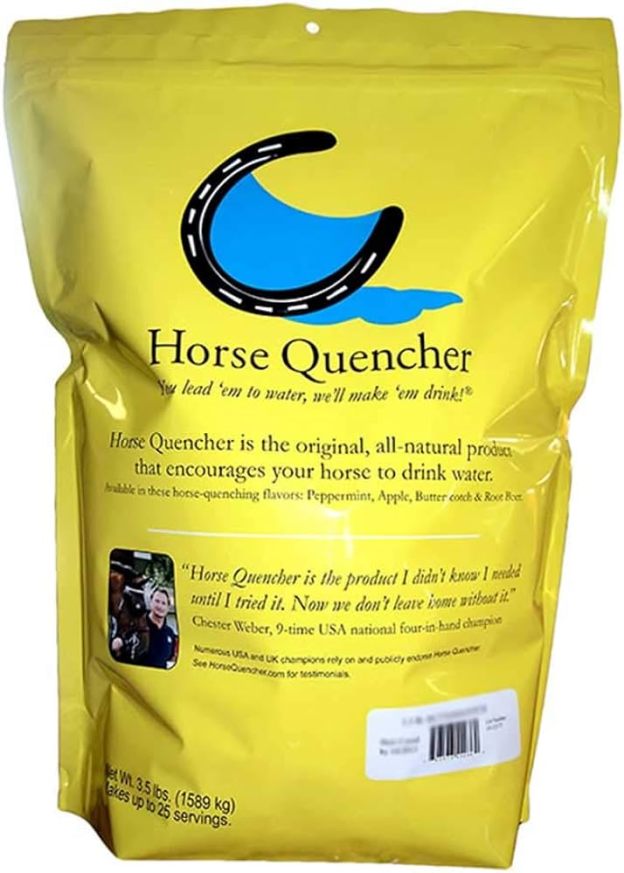
Electrolytes can generally be supplemented in feed, added to water, or in paste or gel form. After a period of prolonged sweating, it’s recommended that electrolytes be provided for several days to make up for losses. You can even give electrolytes to your horse before a big event if you know he’s likely to be sweating a great deal. Continue to give electrolytes during the event as well.

When looking for an electrolyte supplement, make sure that sodium chloride is first on the list of ingredients, followed by potassium chloride. Many electrolytes are sugar-based and while horses may prefer them, they aren’t as effective.

With that said, it’s not a good idea to over-supplement with electrolytes, especially if your horse isn’t sweating much as they may irritate the digestive tract or even throw your horse’s mineral balance out of whack.

Many horses won’t need electrolytes at all in summer, but if your horse does, remember to supplement wisely! 

What’s In Your Tack Trunk?

Equine First Aid Kit
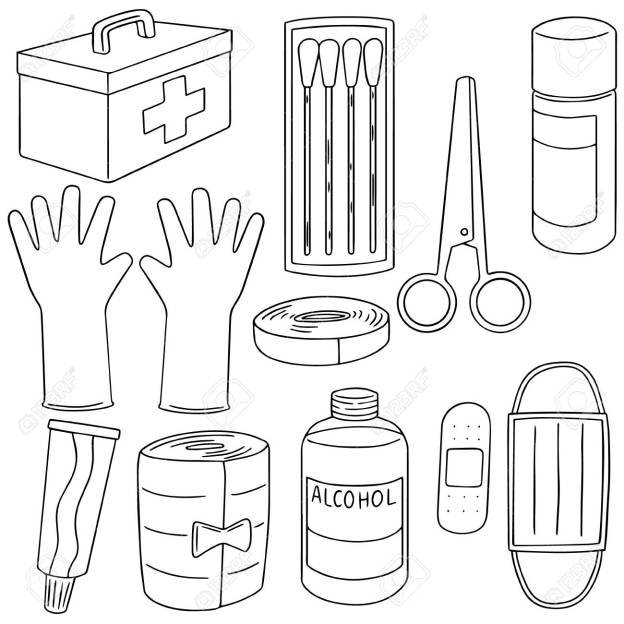
All horse owners should have an equine first aid kit & know how to use all of the supplies. At least twice yearly, examine & replenish outdated supplies. Store your first aid kit in your home or temperature controlled space. Leaving it in a trailer or uninsulated tack room will quickly degrade the supplies. Talk to your veterinarian about customizing your first-aid kit for your horse’s particular needs.

FUNDAMENTALS
Thermometer, Mercury or Digital
Stethoscope (good quality)
Headlight (good quality)
Proper Fitting Halter & Lead Rope
Latex Gloves (12)
Watch or Timepiece with Second Hand
BASIC EQUIPMENT
Bandage Scissors
Suture Scissors
Tweezers or Forceps (smooth jaws)
Non-Sterile Gauze – 4″x4″ Squares (1 package)
Conform® or Kling® Gauze 4″ (2 rolls)
Elastic Adhesive Bandage (Elasticon®) 3″ (2 rolls)
Cohesive Bandage (Vetrap®) 4″ (2 rolls)
Non-Adhesive Wound Dressing (Telfa® pads) 3″x4″ (2) & 3″x8″ (2)
Povidone Iodine (Betadine®) Solution (4 oz)
Antiseptic Scrub, Chlorhexidine or Povidone Iodine (Betadine®) Scrub (4 oz)
Sugardine
Small Plastic Containers for Mixing or Storage (2)
Wound Lavage or Cleaning Bottle, Saline (250 ml)
Tongue Depressors (6)
Alcohol Wipes (10)
Spray Bottle for Water (1)
Paper Towels (1 roll)
Multi-Purpose Tool, Leatherman® or Equivalent
Cotton Lead Rope (3/4″ – 1″ in diameter)
Electrolytes (paste or powder)
Fly Repellent Ointment (1)
Heavy Plastic Bags (2 – gallon & 2 – pint size)

SECONDARY EQUIPMENT
Cotton, Rolled Sheets, Leg Cottons (2)
Standing Wrap & Quilt or Shipping Boots
Easy Boot or Equivalent in Appropriate Size
Baby Diapers (2) (size 4 to 6 depending on hoof size)
Triple Antibiotic Ointment (1 tube)
Extra Halter & Lead Rope
Lariat
Syringe 35 cc (1)
Syringe 12cc (3)
Syringe 3 cc (3)
Syringe 3cc with 20gauge needle (3)
Syringe – 60 cc cath tip (2)
Needles – 18gauge – x 1.5″ (4)
Needles – 20 gauge – x1.5″ (4)
Eye Wash, Saline (1 bottle)
Opthalmic Ointment or Drops (1 bottle or tube)
Magnesium Sulfate, Epsom Salts (1 package)
Duct Tape (1 roll)
Clippers with #40 Blade (good quality)
Shoe Puller
Crease Nail Puller
Hoof Pick
Hoof Knife
Hoof File, Rasp
Clinch Cutters
Farrier’s Driving Hammer
Collapsible Water Bucket
Ice Wraps
Twitch
Bute Banamine Bordered

Talk to your veterinarian about dispensing a few medicines that you may use in an emergency. In most, if not all states, a veterinarian cannot legally dispense prescription items without a valid Veterinary Client Patient Relationship (VCPR). 

• Flunixin Meglumine (Banamine®) (injectable or paste)
• Phenylbutazone, Bute Paste (1)
• Trimethoprim-Sulfa Tablets SMZ-TMP in small container (75#)

Medication for Ulcers in Horses

GREAT Guide for All Ulcer Related Information

2020 Best Ulcer Treatment for Horses

Resources for Chronic Loose Stools in Horses


BEST Guide to all Things Colitis, Diarrhea, and Intestinal Health

Age-Defying Equines

Diarrhea and Fecal Water Syndrome in Horses

What Comes Out, What Goes In

Horse First-Aid Kit

What to Include in a First-Aid Kit for a Horse

The Horse: Barn First-Aid

Medicine Chest Clean Out

Anti-Inflammatory Medications to have on Hand

Feeding a Draft Horse

Due to Draft horses being prone to certain diseases such as, metabolic ailments like PSSM (Polysaccharide storage myopathy), laminitis, Cushings, founder, tying-up, and shivers diet is imperative. Based on these ailments, starch and sugar calories should be replaced by fiber and fat calories.

It is recommended that these guys have high quality forage and some concentrates while working due to their slower metabolism (similar to ponies). Meaning that the less energy they use, the more weight they gain. High carbohydrate feed should be avoided, as a forage with a rational balancer and/or a low NSC feed.

Breakdown of How To Feed A Draft Horse

Calorie Breakdown:

  • 15% daily calories from sugar
  • 20-25% daily calories from, fat
  • No less than 1% of horse’s body weight in forage

Calculating Fat Content:

Pounds of feed per day x % of fat

For example,

3 lbs of feed= 3 x 0.25= 0.75 lb fat

Feed Brands:

Feeds should have no more than 33% sugar and starch (low carb).

Low in starch and sugars: soy, beat pulp, wheat bran, wheat middlings

Feeds with 20%+ of fat should be supplemented with rice bran (20% fat). Feed with anything less than 20% should be supplemented with 100% additional fat source.

  • Nutrena Compete
  • Purina Strategy
  • Blue Seal Hunter, Demand, Vintage Gold
  • Southern States Legend

Supplements:

  • Oil: soy oil, canola, corn oil, rice bran
  • Vitamin E & Selenium supplement (be careful when adding in selenium as high levels can be toxic)

The Plan

  1. Either Purina Strategy or Southern States Legend: No more than 5-6 lbs of feed per 1000 lbs
  2. Rice Bran Oil: begin with 1/4 cup and increase by 1/4 cup every few days until 2 cups are reached. Continue with 3-4 cups per day.
  3. Vitamin E with Selenium: 1-2 oz per day
  4. Forage: Alfalfa pellets mixed or substituted with Purina or Southern States feed

Mix 12 parts alfalfa (or Purina or Southern States Feed or mix of the two) with 1 part water. Soak for 10 minutes. Add in oil. Let it sit for 2+ hours. Right before feeding add in the supplement (Vet E/Selenium).