Category Archives: Treatment

I pray that gentle hands may guide my feet; I ask for kind commands from voices sweet; At night a stable warm with scented hay, Where, safe from every harm, I’ll sleep til day. -Author Unknown.

Today I met with a “new” vet, Vet7, who was Chance’s very first vet over 15 years ago, when he was vetted at purchase. She came out to do a chiropractic and acupuncture consultation, along with a general check-up. Vet7, while she has a more holistic approach to vetrinary medicinw, she also practices Western medicine.

Vet7 looked at Chance from head to hoof and took a thorough medical history, and ran some tests. She mostly did some balancing and acupressure type diagnostics, and declared that while Chance may have had EPM, she felt that his ataxia was due to his cervical spine….

She explained her reasoning:

1. EPM diagnostics are sub par at best. Even the spinal fluid testing. And, like I previously posted, about 50% of horses in the USA are EPM positive while only 1% are symptomatic.

2. Vet7 did a stretch test with Chance’s neck- to the left, while he compensated by bending at the top instead of the bottom, he showed little flexibility and increased ataxia while doing so. The right side bend was easier. Typically, horses with Cervical issues have issues with the hind-end on the opposite side. Chance has issues with his right leg.

3. Typically horses with EPM respond to treatment. Chance is on his second round of EPM treatment and while his symptoms have had moments where they are less noticeable, there are other moments when his symptoms are prominent; mostly at times of stress. (ie: trailering, new donkey friends, etc).

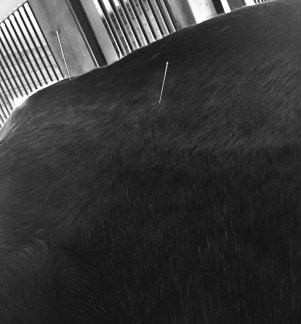
4. Vet7 put a needle in one of the points in Chance’s tail. He responded immediately showing that he has feeling and strength in his tail, which is something most EPM horses do not exhibit. Typically, an EPM horse will have weakness in his tail, and a times their tail is too weak to lift when they goto the bathroom resulting in having dried manure along their backside.

Vet7 made some adjustments and stuck Chance with a handful of needles. At one point he fell asleep with his head in my arms. She proceeded to inject different points along his cervical spine and hips with B-12.  She taught me some stretches and massage techniques, exercises he and I could do together to increase his hind-end and neck muscles, and gave me some weight gaining instructions.

Chance will have Rice Bran added to his feed beginning with 1 cup for a week and slowly increasing to 2 cups. This will aid in getting his weight up. Apparently, horses are able to tolerate up to 30% fat in their daily diets.

She also suggested adding a Probiotic to increase his Immune system since the gut is the control center. There were other supplements that she felt maybe helpful as well, Cervical Formula, to help with his neck flexibility and overall health.

As for the exercises, in conjunction with turning him out daily, he and I will do stretches to help increase his neck flexion and balance, and I will hand walk him. We will walk on flat land, up and down small hills, and do serpentines. Eventually, increasing to twice a day and adding ground poles and lunging. This will help to develop the muscles, increase his flexion, decrease the ataxia, and aid in his overall health.

acupuncture

Vet7 will come back out in two weeks to see how he is doing…I’m hoping that we have finally found some answers and are closer to a solution.

IMG_2245  IMG_2249  11021196_860336367174_5928889682290861303_n  IMG_2226

Last night, I was mucking out Chance’s stall when suddenly I saw a little black fluffy creature skeet by followed by my dog.  I stick my head out of the stall, thinking (or hoping) it was the barn cat, only to see that my dog has cornered a skunk!  I yelled for her to “come”, but it was too late.

The pungent smell wafted towards me; it was so thick that I literally felt that the skunk had sprayed me in my mouth.  I grabbed Sadie, and with the help of the farm owner’s son, began to wash her.  I poured tomato juice all over her, followed by Dawn soap, and lots of water.  Thankfully, due to having her Rambo jacket on, she did not get much on her and the tomato and Dawn concoction worked!  The next thing was to tackle the corner of the barn where the skunk sprayed- tomato juice, Dawn, water, and due to the freezing temperatures, salt.

That was an interesting start to my evening at the barn!

The low temperatures has caused the 6+ inches of snow, surrounding the barn, to have a thick layer of ice on top.  Poor Chance has been stall bound for almost a week.  Even on a sunny day, when we try to let him outside or hand walk him, he goes straight back into his stall after a few laps.  However, his legs are looking good, he is full of personality, and his eyes are bright.

This week is his second week on the Marquis.  I have noticed that the twisting is not as prominent when I am walking him but that could be due to Chance concentrating more on walking due to the ice and snow- fingers crossed that it is due to the Marquis though.

I started him on a new blend of hay- an alfalfa mix- and he can not stop eating it.  I am hoping that the blend will help him gain some weight back especially since he is unable to access any grass right now.

I am hoping for some warmer days to melt this ice and enable Chance to get some exercise!

How To Prepare For An Equine Emergency

Be Prepared for an Equine Emergency

You don’t want to waste time in an equine emergency! The American Association of Equine Practitioners (AAEP) offers these tips to keep you organized and calm in your horse’s time of need.


If you own horses long enough, sooner or later you are likely to confront a medical emergency. From lacerations to colic to foaling difficulties, there are many emergencies that a horse owner may encounter. You must know how to recognize serious problems and respond promptly, taking appropriate action while awaiting the arrival of your veterinarian.

Preparation is vital when confronted with a medical emergency. No matter the situation you may face, mentally rehearse the steps you will take to avoid letting panic take control. Follow these guidelines from the American Association of Equine Practitioners (AAEP) to help you prepare for an equine emergency:

    1. Keep your veterinarian’s number by each phone, including how the practitioner can be reached after hours.
    1. Consult with your regular veterinarian regarding a back-up or referring veterinarian’s number in case you cannot reach your regular veterinarian quickly enough.
    1. Know in advance the most direct route to an equine surgery center in case you need to transport the horse.
    1. Post the names and phone numbers of nearby friends and neighbors who can assist you in an emergency while you wait for the veterinarian.
    1. Prepare a first aid kit and store it in a clean, dry, readily accessible place. Make sure that family members and other barn users know where the kit is. Also keep a first aid kit in your horse trailer or towing vehicle, and a pared-down version to carry on the trail.First aid kits can be simple or elaborate. Here is a short list of essential items:
        • Cotton roll
        • Cling wrap
        • Gauze pads, in assorted sizes
        • Sharp scissors
        • Cup or container
        • Rectal thermometer with string and clip attached
        • Surgical scrub and antiseptic solution
        • Latex gloves
        • Saline solution
        • Stethoscope
        • Clippers

Many accidents can be prevented by taking the time to evaluate your horse’s environment and removing potential hazards. Mentally rehearse your emergency action plan. In an emergency, time is critical. Don’t be concerned with overreacting or annoying your veterinarian. By acting quickly and promptly, you can minimize the consequences of an injury or illness.

For more information about emergency care, ask your equine veterinarian for the “Emergency Care” brochure, provided by the AAEP in partnership with Bayer Corporation, Animal Health. More information can also be obtained by visiting the AAEP’s horse health web site, www.myHorseMatters.com.

The American Association of Equine Practitioners, headquartered in Lexington, Kentucky, was founded in 1954 as a non-profit organization dedicated to the health and welfare of the horse.

– See more at: http://practicalhorsemanmag.com/article/eqemergenc2576#sthash.YFzhhSOX.dpuf

Stem Cell Therapy

Cutting Edge Cell-Based Therapies for Horses

Regenerative therapies, such as stem-cell therapy and platelet-rich plasma, can help speed up healing in equine tendon and ligament injuries and make the repairs stronger.


By Elaine Pascoe

Microscopic view of stem cells
Stem cells
Your horse has torn a major tendon in his leg, and the news from your veterinarian is not good. Even after months of rest and rehabilitation, she says, his tendon likely won’t be as strong as it was before the injury. It may limit what you can do with him. But then she mentions a new treatment: stem-cell therapy. It’s cutting edge?and costly. Could it help your horse?

Stem-cell therapy is one of several treatments that fall under the umbrella of regenerative medicine, a fast-growing field that’s creating major buzz in veterinary and human medical circles. These treatments use the body’s own repair tools with the goal of better healing. In this article you’ll find what you need to know about two regenerative treatments being used in horses, stem-cell therapy and platelet-rich plasma. For guidance we turned to Alison Stewart, DVM, an equine surgeon and stem-cell researcher at the University of Illinois, and Jamie Textor, DVM, an equine surgeon who is researching PRP at the University of California at Davis.

These treatments are exciting, but they are very much works in progress. Researchers are searching for the most effective ways to use them, and there are many questions about how?and how well?they work in different situations. They require specialized facilities and know-how that may not be available in every private veterinary practice. But they’re becoming more widely used, and if they live up to their promise, that trend will continue.

Stem-Cell Therapy
Stem cells are cells that have the potential to develop into some or many of the different specialized cells that make up body tissues, such as muscle, bone, blood and nerves. There are different kinds of these chameleonlike cells:

    • Embryonic stem cells are derived from fertilized embryos. Taken early enough they are totipotent?they can develop into any tissue type, Dr. Stewart says. They go through several stages, becoming less able to differentiate as they mature.
    • Induced pluripotent cells are adult cells that have been genetically reprogrammed in the lab so they behave like embryonic stem cells. Like embryonic stem cells, they proliferate readily and can differentiate into multiple tissue types. Researchers generated the first iPSCs less than five years ago and the first from horses only last year. They’re still exploring the potential of these cells.
    • Adult stem cells are found in many organs and tissues, typically in small numbers. They are multipotent?not as versatile as embryonic stem cells but able to differentiate into at least three specific cell types. These cells seem to remain at rest for many years until called on to generate replacements for cells that are lost through normal wear and tear, injury or disease. They also produce a range of bioactive proteins, including growth factors and other agents that help repair damaged tissue.

The commercial stem-cell treatments available for horses ?today make use of adult mesenchymal stem cells, or MSCs, which can differentiate into bone, cartilage, fat and fibrous connective tissue. The cells are autologous?derived from the horse being treated. (Experimental treatments have also been done using donor, or allogenic, stem cells.)

“The commercial treatments are ?mainly being used for soft-tissue injuries??tendons and ligaments,” Dr. Stewart says. They are used less for joint problems generally, although some veterinarians think that they can be helpful for stifle injuries that involve a lot of soft-tissue damage.

Tendons and ligaments have different functions?tendons transfer the action of muscles to the skeleton, while ligaments lash bone to bone and keep joints from wobbling. But both are made up mostly of organized networks of dense, elastic connective tissue, rich in a tough protein called collagen. And they basically heal in the same way?that is, slowly and often poorly, with disorganized scar tissue in place of organized collagen fibers. This leaves your horse prone to reinjury.

MSC therapy may allow better repair, with more organized collagen and less scarring, Dr. Stewart says. Your horse will still need a lengthy layup and rehab period, though. The therapy seems to help most when it’s given in the first few weeks after an injury, during the time when healing is getting underway. It’s much less effective for longstanding or chronic conditions.

MSC Treatment. If you and your veterinarian decide to try stem-cell treatment for your horse’s injured tendon, the first step will be to collect MSCs. The cells are harvested from bone marrow or fat, depending on the treatment method used. This is done with your horse standing and sedated, with local anesthesia.

    • For marrow-derived stem cells, a sample of bone marrow is aspirated (drawn with a special needle) from the horse’s sternum or hip. The marrow contains stem cells along with serum that’s rich in growth factors. It’s couriered to a laboratory where stem cells are extracted, cultured to expand the numbers, recombined with the serum and returned for injection. Usually 10 million cells are used to treat a tendon, Dr. Stewart says, and expansion can take two to three weeks. (VetCell, www.vetcell.com, a British company, developed the process and now offers it in North America through Equine Partners America, LLC, www.vetcellamericas.com.)
    • For fat-derived stem cells, the veterinarian makes an incision, usually near your horse’s tailhead, and collects a sample of fat tissue. The sample goes to a lab where it’s treated with enzymes and spun in a centrifuge to separate nucleated cells from the fat that makes up most of the tissue. The nucleated cell fraction (which may include MSCs and some adult fat cells) can be sent back for use within three days or kept and cultured to get a higher concentration of MSCs. (Vet-Stem, www.vet-stem.com, in Poway, California, is a leading provider of this service in the United States.)

Does it matter where stem cells are collected and how they’re processed? “Some would say yes, but there has been no head-to-head comparison of the long-term effects,” Dr. Stewart says. The various stem-cell products are handled in much the same way when they come back from the lab:

Stem cells being injected into an injured tendon
After stem cells are havested and processed, they are injected directly into the injury site.

In most cases the veterinarian injects the stem-cell product directly into the injured tissue, using ultrasound to guide the injection into the lesion. The treatment also can be delivered into the blood supply around the site (regional limb perfusion), but this may not be as effective. “A study comparing the two methods found many more MSCs at the lesion when they were injected directly at the site than when ?injected using regional limb perfusion,” says Dr. Stewart.

The cost varies. “In most cases, from harvesting to reinjection, you’re looking at $1,200 to $2,000 to treat a tendon ?injury,” Dr. Stewart says.

Side effects are rare. As with any injection, there’s a small risk of transient inflammation or infection. But with autologous cells there should be no immunogenic reaction?that is, your horse’s immune system won’t target the cells as foreign and try to destroy them. “Even with cells from another horse, MSCs should be less immunogenic than adult cells,” Dr Stewart says. “But studies are still being done on this.”

Will It Help? Stem-cell success stories abound, but there’s not much peer-reviewed scientific research comparing outcomes with stem cells and traditional treatments. Researchers have done postmortem tissue studies that show good results in tendon and ligament injuries, ?including better alignment of fibers and less disorganized scar tissue?but benefits are hard to track in living horses because of individual differences in their injuries and care, Dr. Stewart says.

Ultrasound Scans of Injured Tendon
Four ultrasound sacans of an injured superficial digital tendon. You can see a large lesion in the scan at the time the bone-marrow aspiration takes place. There is some degradation a month later when the stem cells are implanted and then clear improvement two and four months post-implantation as the tendon regenerates.
A recent follow-up study showed lower rates of injury after MSC treatment. Dr. Roger Smith, a professor of equine ?orthopedics at the Royal Veterinary College in Britain and developer of the VetCell technique, reviewed outcomes in 113 racing Thoroughbreds with core lesions in the superficial digital flexor tendons and found that treatment with marrow-derived MSCs cut reinjury rates by more than half. Horses who returned to training after stem-cell treatment and were followed up for three years had a reinjury rate of 27 percent, compared to 57 percent in conventionally treated horses. No comparable follow-up study has been done with fat-derived cells, Dr. Stewart says.

Stem cell therapy is evolving, and researchers are still trying to determine exactly what the cells do after they’re ?injected. “Early research evaluated MSCs for their potential to replace damaged tissue,” Dr. Stewart says. “More research now is directed at their ability to modulate inflammation and encourage healing.”

How long they hang around the injection site varies with the cell type and the tissue. “In tendon, bone-marrow-derived MSCs seem to be present up to two weeks, and then the numbers drop off. We don’t know if they’ve migrated somewhere else, died or divided so that the dye marking them no longer shows up,” Dr. Stewart says. “Embryoniclike stem cells seem to persist longer at the site of injection and travel farther, but they’re not yet commercially available.”

The cells don’t always behave as ?expected. Veterinarians at Cornell University tracked bone-marrow-derived MSCs injected into the fetlock or stifle joints of healthy and arthritic horses. They hoped the stem cells would migrate into damaged cartilage, where they might help repair it. Instead, the cells went to the synovial membrane, which surrounds the joint.

Platelet-Rich Plasma

Platelet-Rich Plasma
Platelet-rich plasma is blood plasma that has been enriched with platelets. PRP contains and releases several types of growth factors that stimulate soft-tissue healing.
PRP is plasma (the straw-colored liquid portion of blood) with a high concentration of platelets, small cell fragments that circulate in the blood. Platelets are best known for their role in helping blood clot, but they also release high concentrations of growth factors that encourage healing. Injected into injured tissue, the premise is, PRP delivers a potent cocktail of these healing proteins to help stimulate tissue repair. This treatment has been used in dentistry for jaw repair and in human sports medicine. In horses, it’s being used primarily for tendon and ligament injuries, both alone and along with MSC therapy.

“We think acute lesions are most likely to benefit from PRP,” says Dr. Textor. “Chronic, degenerative tendon conditions are less likely to respond.” The ideal time for treatment isn’t known, she adds, “but three to four weeks after an injury is probably a good target.”

PRP has been tried as a way to spur wound healing in horses, but it doesn’t appear to help and may actually increase proud flesh formation, Dr. Textor says. It has also been tried as an equine joint treatment; but another blood-derived treatment, IRAP, is more often used there. (IRAP stands for interleukin-1 receptor antagonist protein, a substance that blocks a specific inflammatory agent involved in the erosion of cartilage.)

PRP Treatment. If you opt for this treatment, the PRP will be prepared in the clinic from your horse’s own blood.

A sample of blood is drawn and spun in a centrifuge to separate the plasma and platelets from the red blood cells and most of the white blood cells. The plasma is then concentrated so it contains higher-than-normal blood levels of platelets.

It’s ready for injection into the injury the same day, often in less than an hour.

The cost of a single treatment typically ranges from $400 to $1,000, depending on the veterinarian’s preparation method, Dr. Textor says.

As with stem-cell therapy and any other injection, there’s a small risk of infection or a brief flare of inflammation?but because PRP is derived from your horse’s own blood, the risks of an immunogenic reaction to the treatment are low.

Will It Help? PRP has several advantages?it’s easy to collect and prepare, the turnaround time (from harvest to reinjection) is short and the treatment is cheaper than stem-cell therapy. Those plusses are helping PRP gain acceptance in the horse world.

As with stem cells, though, there’s little published research on effectiveness. In a study of horses with experimentally created tendon lesions, Dutch researchers showed that a single PRP injection resulted in improved healing and increased tendon strength at six months. In a clinical study of racing Standardbreds with severe suspensory ligament lesions, Ohio State University researchers found that one PRP injection helped horses recover and return to racing. On the other hand, some studies in human medicine have cast doubt on PRP’s effectiveness in shoulder and Achilles tendon injuries.

The reasons for different outcomes may emerge with answers to some of the many questions about how the treatment works and how it should be given. For example:

    • Do tendon injuries benefit from more than one injection? “We don’t know,” Dr. Textor says. “Many vets are using multiple injections.”
    • Do injected platelets stay at the injury site after injection, pumping out growth factors as they do when activated naturally? They might be quickly cleared from the site by macrophages, the cells that “eat” other dying cells or tissue debris, Dr. Textor says. “We are looking into this question now to find out whether the physical presence of platelets is required at the site or whether we can just administer the growth factors derived from them.”
    • How do different preparation and treatment methods affect outcomes? “There is so much variety in methods of PRP use, both in humans and in horses, that the results are becoming more and more difficult to interpret,” Dr. Textor says. For example, the platelets must be activated to release growth factors. That can be done in different ways?by exposing them to the clotting protein thrombin or to calcium, or by freezing and thawing, for example.

“The main focus of my research is in trying to identify all the variables that go into PRP preparation and administration and figuring out what is the best way to do things so we can standardize our methods and be consistent as practitioners,” Textor says. “It may be that better results are achievable once we figure out how to maximize the benefit of PRP.”

Looking Ahead
Here’s one thing that seems certain: There will be new developments in this rapidly growing field.

    • “Researchers will continue to work on treatments for soft-tissue damage,” Dr. Stewart says. They’ll explore different preparation and delivery techniques and look for ways to prove the action and ?retention of stem cells in injured tissue.
    • Cell-based therapies also hold promise for use against osteoarthritis, in which the cartilage lining the joint surfaces breaks down. So far stem-cell therapy has been less ?effective than hoped for this problem, Dr. Stewart says. Researchers are still investigating how to coax the cells to stimulate cartilage repair. One technique being ?explored combines them with PRP. Research is also being done on the use of stem cells for fracture repair, but practical treatments aren’t yet available for that.
    • Also on the horizon?or maybe a bit beyond it?are potential regenerative treatments for other diseases, including laminitis. “Studies haven’t been done yet, but there are some reports of successful laminitis treatment with high doses of MSCs. There’s interest, so it’s likely that research will be done,” Dr. Stewart says. “There is also interest in looking at MSC use in neurologic conditions.”
    • New sources of stem cells may come into use. For example, MSCs can be ?obtained from the umbilical cord ?moments after a foal is born. These cells are not yet used commercially, but forward-thinking horse owners can bank foal cord blood and tissue at the UC Davis Regenerative Medicine Laboratory.

Interest in human regenerative medicine is helping to fuel (and fund) a lot of the research into cell-based treatments for horses. People, like horses, heal slowly and often poorly after damage to tendons, ligaments, cartilage and bone?so the horse is an excellent research model for these treatments. That means research underway now may one day benefit you as well as your horse.

Learn more about tendon and ligament injuries.

Reprinted from the February 2012 issue of Practical Horseman magazine.

– See more at: http://practicalhorsemanmag.com/article/cutting-edge-cell-based-therapies-for-horses#sthash.UPnO5o1D.dpuf

USEF Equine Drugs and Medications Program

Understand the USEF Equine Drug Testing Rules

If you compete in rated shows, here’s what you need to know to keep your horse healthy and maintain a level playing field.


By Elaine Pascoe

Drugs and medications
Your trainer meets you at the out-gate and starts to critique your round as you hop off your horse. That’s when a total stranger walks up and says, “Hi. I’m with the U.S.Equestrian Federation, and your horse has been selected for testing.”

If you’re like 99 percent of horse-show competitors, you don’t dope your horse. But you can’t help gulping when you hear those words?it’s like being called to the principal’s office in junior high. Did you or your trainer make a mistake? Are you in trouble?

The USEF regulations for drugs and medications can seem complicated, and changes this year may affect you. In this article Stephen Schumacher, DVM, chief administrator of the USEF Equine Drugs and Medications Program, explains the changes and tells you how to make sure you stay on the right side of the rules.

The goal of the USEF program is to protect horses from abuse and maintain a level playing field, so no competitor gains an unfair advantage through chemistry. And it’s working, Dr. Schumacher says. Of the 10,000 to 12,000 horses that the USEF tests annually (not a huge number, considering how often horses compete and the number of disciplines that the federation oversees), anywhere from 50 to 100 may test positive in a given year?1 percent or less.

“The low rate of positives doesn’t mean the program isn’t needed,” Dr. Schumacher says. “The numbers are low because the program is there?deterrence is its main effect. We would rather educate than adjudicate.”

Education starts with understanding what is and isn’t legal. It’s all spelled out in the USEF Rule Book.

Read All About It
General rules 401 through 413 outline the procedures for testing and enforcement and explain in general what is and isn’t permitted. These rules are carefully (and sometimes densely) worded but definitely worth the read. Anyone who signs an entry form at a USEF-recognized show needs to understand them because that person (usually the trainer, acting as the agent of the owner) has the primary responsibility for making sure the rules are followed. The separate “2012 Guidelines for Drugs and Medications,” available on the USEF website or in a pamphlet from the federation, provide a roadmap for staying out of trouble.

The rules allow different breeds and divisions to adopt different standards for permitted medications; endurance horses, for example, are subject to strict “no foreign substances” requirements. Here we’ll focus on the rules and guidelines that apply to hunter, jumper, eventing and dressage ?divisions. These rules don’t give you a list of every substance that is and isn’t allowed, although they do mention some specifics. New drugs are always being developed, and there will always be a few people willing to try new ways to gain an advantage.

To cover all cases, the rules classify substances based on their actions and uses. Permitted substances, which are not regulated by USEF, include vitamins, minerals, electrolytes, dewormers and most antibiotics (except procaine penicillin?penicillin is OK, but procaine is a local anesthetic that can linger in the horse’s system). They can be given to a horse at any time, including at a competition. Other drugs are sorted into two groups, restricted and forbidden.

Restricted Substances
These drugs can be used for therapeutic reasons?that is, to treat an injury or disease?but they’re subject to strict limits on the amount of the drug or its metabolites (breakdown products) that can be in blood or urine at the time of competition, as set out in Rule 410. They include the muscle relaxant methocarbamol (Robaxin), the corticosteroid dexamethasone (Azium) and seven nonsteroidal anti-inflammatory drugs: phenylbutazone, flunixin meglumine (Banamine), ketoprofen (Ketofen), meclofenamic acid (Arquel), naproxen (Equiproxen), diclofenac (Surpass, a topical) and firocoxib (Equioxx). Theobromine, a metabolite of caffeine and related substances, is also in this category; the limit is just enough to account for any the horse might get through diet.

You should know:

    • The “2012 Guidelines for Drugs and Medications” provide detection times for restricted substances, to help you judge when blood and urine levels are likely to be within legal limits. For example, if your horse breaks out in hives and you give him oral dexamethasone at the dosage listed in the guidelines, his blood levels should be OK in six hours.
    • The times listed in the guidelines are recommendations, not rules, and the drug clearance times vary with dosage rates, the form of the drug and how it’s delivered. If your horse tests over the limit, he’s in violation whether or not you followed the guidelines.
    • Compounded medications (made up to order by compounding pharmacies) call for special care because ingredients may vary more than they do in manufactured drugs.

New this year:

    • Only one NSAID can be present in a sample; previously the rules allowed two. “This is probably the most significant change this year,” Dr. Schumacher says. The change, which took effect December 1, 2011, was made to end the potentially harmful practice of “stacking” these drugs.
    • With just one NSAID allowed, detection times have been reduced from seven days to 72 hours for these drugs. If your horse has been getting two NSAIDs, you need to stop one of them at least 72 hours before competing. Only one can be administered in the 72 hours before a competition, and that one must be within the limits set by the rules.
    • Although only one NSAID is allowed, there’s a new emergency provision for therapeutic use of Banamine (flunixin meglumine) for colic or eye problems, conditions for which this drug is particularly helpful. Suppose your horse was given phenylbutazone before a competition and you stopped the drug to allow for the recommended withdrawal time. Then, at the show, he colics. Under the new rule, he can have Banamine?a single dose, limited quantity?and return to competition in 24 hours. “Under the old rules he couldn’t have Banamine unless he waited seven days to compete, so the change is an improvement.” Schumacher says. “The caveat is that you must have a veterinarian administer the drug and submit a medication report to show officials.”

Forbidden Substances
These are drugs that can affect performance, give an unfair advantage, pose a danger to your horse or interfere with drug testing by masking the presence of other drugs. They include stimulants, ?depressants, painkillers and local anesthetics, and tranquilizers and psychotropic drugs, such as reserpine and fluphenazine. Prednisolone, bethamethasone, triamcinolone acetate (Vetalog, often used in joint injections) and other corticosteroids except dexamethasone are in this category. So are NSAIDs other than the seven listed in the restricted group. Although many of these drugs have legitimate therapeutic uses, they should not turn up in a horse-show drug test.

You should know:

    • Some of these drugs can still be ?detected weeks after the last dose; reserpine and fluphenazine can persist for 90 days. The guidelines list detection times for a number of the drugs, and the USEF Equine Drugs and Medications Department can provide times for more.
    • Herbal and other supplements sometimes lead to positive drug tests, so be sure you know what’s in a product ?before you feed it to your horse. ?”Natural” doesn’t mean drug-free?plants are the source of many potent drugs, and some can produce metabolites like those of forbidden substances. For ?example, the herb rauwolfia (Indian snakeroot) is the source of reserpine.

New this year:

    • USEF has changed the way it handles some forbidden-substance violations in the eight disciplines governed by the ?International Equestrian Association (FEI), including dressage, eventing and show jumping. See the box on page 57 for more about this change.
    • Anabolic steroids have been added to the “forbidden” list for all USEF disciplines; previously they were banned only in some halter divisions for Arabians, Half-Arabians and Anglo-Arabians. These drugs have therapeutic uses?they can help in recovery from colic surgery and in cases of muscle wasting, for example?but they’ve been widely misused in race training as a short-cut to building muscle mass and stamina in young horses. They’re not widely used in sporthorses, according to Dr. Schumacher, because such shortcuts aren’t needed, and the drugs can produce undesirable behavior.

“We’ve run surveillance across the ?disciplines and never had an issue with anabolic steroids. But we’ve made them forbidden and provided withdrawal guidelines for the most commonly used ones to recognize their potential for ?unfair use and to be consistent with other groups,” he says. “We are actually the last horse-sport group to abolish their use in competition.”

Bending the Rules
The USEF rules are clear: If you give your horse something to calm him or make him less sore in competition, you’re in violation?even if the same something might be permitted for a legitimate therapeutic reason. But intent can be hard to judge, so it’s not always clear when someone steps over the line.

For example, you might see dexamethasone in horse-show medicine chests. Some competitors administer “dex” in the belief that it will calm a nervous horse, although the rules expressly forbid that use and there’s not much evidence that it works.

“Based on work done years ago, the level permitted under the rules would not be expected to sedate a horse,” Dr. Schumacher says. “Some people feel differently. I don’t think there’s any peer-reviewed scientific literature to support that, but there’s a racetrack mentality?people think it works so they use it.” The USEF Drugs and Medications committee will likely be reviewing the guidelines and recommendations for dex, he adds.

Magnesium is also used to quiet horses, something that Dr. Schumacher says is based on a misconception. ?”Hyperexcitability is a sign of hypomagnesia?magnesium deficiency?and giving therapeutic doses of magnesium corrects it. Based on that, some people conclude that giving any horse more magnesium will make him calmer even if he isn’t deficient, but there’s no evidence for that,” he says. Even if it were so, oral magnesium is not a concern because it’s unlikely that a horse could consume enough orally to be affected, he notes. But some competitors administer magnesium sulfate intravenously, which is dangerous. “Given this way, magnesium can affect cardiac rhythm and have a depressant effect, and it’s a horse-welfare issue,” he says.

As of this writing, USEF had no prohibition on magnesium, although the substance is on the association’s radar. One problem is that magnesium is naturally present in horses and in all animals. “To regulate it, you first have to establish a threshold level that’s acceptable. It’s a different situation with drugs like NSAIDs that aren’t naturally present,” Dr. Schumacher says. Nevertheless, he adds, injected magnesium sulfate has been added to the FEI prohibited list this year, and administration will no longer be permitted at FEI show treatment areas.

If Your Horse Is Tested
How likely is your horse to be tested? The choice is pretty much random. “We test at 20 to 25 percent of competitions each year,” Dr. Schumacher says. “There is a focus on upper levels, where more is at stake and violations may be more likely to occur, but we test lower levels as well.” He selects the shows and then asks one of the veterinarians who works with the program to test perhaps one day out of four, at his or her convenience. The odds of being tested are greater for horses who display unusual behavior or place in the top five of their classes, but anyone can be selected. For example, in a dressage class, horses are picked randomly as they leave the ring before the placings are decided.

If your horse is tapped, be polite and take him promptly to the testing area. Arguing or stalling (by cooling out, bandaging and other delays) may be considered “noncooperation,” as much a violation as a positive test. Be helpful as the veterinarian draws blood and the technician working with the vet collects a urine sample.

The samples are handled according to standards set by the World Anti-Doping Agency. Both blood and urine are separated into A and B samples; the A samples are sent to the designated USEF lab for testing, and the B samples are held. If the A samples test clean, the B samples are discarded. But if the test is positive, the trainer (or whomever is responsible) has the right to have the B sample tested to confirm or disprove the result.

A positive test leads to an investigation and a decision on whether the rules were violated. The trainer usually has the choice of accepting an administrative penalty or responding at a hearing before a USEF committee, with or without legal representation. If the committee finds a violation occurred, it will weigh several factors?the type and (for drugs covered by Rule 410) the quantity of drug found, prior violations and how similar cases have been handled. Violators forfeit winnings and any points earned, and under USEF rules they face penalties that include fines ($750 to $5,000) and suspension (one to six months). The violation and the penalty are published, in itself a strong deterrent.

There are trends in violations, Dr. Schumacher says, like a recent spike in reserpine positives. “Medications pop up, but after a few positives, word gets around and the use tails off,” he says. Still, the most common violations ?involve NSAID levels over the limits set by the rules.

“These are ?speeding ticket’ violations, not as serious as, say, doping the horse with an antipsychotic medication,” Dr. Schumacher says. “In most cases we can identify the reason for the violation, and it’s a mistake. Maybe a groom dosed the horse, and the trainer was unaware and gave a second dose.”

To guard against such mistakes, he suggests, make sure your horse’s treatment program is secure, defined and documented:

    • Lock up medications and restrict access to them, at home and at shows.
    • Be sure only designated people (for safety, just one person at a competition) can give medications to your horse.
    • Write down the treatment program and document every dose.
    • Clean out the feed buckets (they could harbor traces of medications or supplements), and don’t swap buckets among horses.

Last fall, the American Association of Equine Practitioners published a set of guidelines for veterinarians treating nonracing performance horses, and they included several tips that may also help you stay out of trouble:

    • No medication should be administered to a horse within 12 hours of a competition.
    • Nontherapeutic or nonprescribed medications or substances should not be administered to performance horses by anyone.

Maybe some competitors will always be ready to bend the rules (or ignore accepted ethics), even when doing so puts a horse’s health at risk. But statistics suggest these folks are a very small minority. Care and common sense will keep you out of their group.

This article originally appeared in the April 2012 issue of Practical Horseman magazine.

– See more at: http://practicalhorsemanmag.com/article/understand-the-usef-equine-drug-testing-rules#sthash.NzwSH6FR.dpuf

Weight Gain- The Good Kind

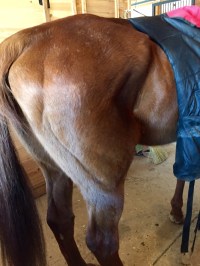
While Chance’s hind-end is still sunken, especially on the right side, he is looking much better than he did almost a year ago.  In the last year, he has gained a significant amount of weight (and still needs to keep gaining) and muscle mass.  This was achieved by upping his feed to 4 quarts and adding hay stretcher with each meal, along with Chance walking up and down small hills during the day.

IMG_9300

Chance 6 months ago (August 2014) Pre-EPM diagnosis or treatment.

IMG_2103

February 2015: Second round of EPM treatment and 6 months of upped feed with higher fat and protein content.

.

The weather has been unrelenting over the last week. We got about 7 inches of snow and another 7+ inches 4 days later, with low temperatures and hail to boot! Poor Chance has been stall bound due to the slippery conditions. Some days it has even been too icy to hand walk him.

Regardless, Chance has been in good spirits and his back legs look great! He hasn’t stocked up and he is putting weight on the back right hind. I’m hoping that when he is able to go outside, his back right twist will have disappeared! Maybe wishful thinking, but I can still hope.

IMG_2047

Ataxia in Horses

Assigning a Grade Level to your Horse after the Neurologic Exam

After the neurological exam is complete, the degree of ataxia your horse showed is assigned a grade. This grade uses the Mayhew system and assigns a number 0 to 5. This grade will usually be expressed as “2 out of 5”, which means grade 2 or “<3/5” which means less than a grade 3. The characteristics of each grade are as follows;

  • Grade 0 – normal
  • Grade 1 – minimal neurological deficits noted with normal gaits and requires manipulative tests (crossing legs, tail sways, tight circles, walking up and down hills, blind folding, backing, response to a dull object)
  • Grade 2 – mild abnormal gaits seen at a walk (walks like a patient that has been sedated) and more obvious response to the manipulative tests. Patients can be performing successfully but when asked, they have trouble with lead changes, going down hills at a trot or gallop, stumble, are heavy on the fore hand, require a lot of leg to maintain propulsion, knuckle over when stopping, bunny hop behind when cantering, and drag hind toes a lot at a trot.
  • Grade 3 – Easy to see at a walk, look like a drunken camel at a trot, very obvious at a canter but they do not fall.
  • Grade 4 – Very ataxic – will fall especially in tight circles or backing. Usually will refuse to go any faster than a walk.
  • Grade 5 – Recumbent – may not even be able to become sternal even with encouragement.

Below is a Journal article about Ataxia in horses- symptoms, causes, and treatment options.

ataxia

The Equine Spa Treatment

This cold weather does a number on my joints, so I can only imagine what it must do to my old and arthritic horse. The last few days, Chance has been inside due to the single digit temperature outside, the strong winds, and the ice and snow.  (He used to “stock-up” when left inside, even for only one day, and now he no longer has this reaction).  The stall rest and hand walking will probably do him some good anyways!

Chance has always had Cervical Spine issues and over the years, you can feel the “knots” (for lack of a better word) on his neck.  Due to that, and his EPM, I decided to contact a massage therapist, chiropractor, and acupuncturist to come and work their magic on Chance!  Basically, a full day at the spa:).

I contacted one vet that incorporates run of the mill equine healthcare with chiropractic and acupuncture work, along with holistic medicine as well.  One review stated that she looked at/worked with the “whole horse” in order to assess, diagnose, and treat. Interestingly, I believe that this vet used to work on Chance about 10-12 years ago when he lived in Lorton, VA.  I sent her an email and I hope she has some availability.

I also found an equine massage therapist, who was certified through Equissage, and I will be contacting her tomorrow.

And, I have found Chance a dentist, and once again, he is Chance’s previous dentist from over a decade ago!

The equine world is a small one- at least in Virginia!

4 Horses Die Due to EPM Treatment

4 Horses Die After Receiving Compounded EPM Drug

Adverse events were reported in two Kentucky horses and eight Florida horses that received a pyrimethamine-toltrazuril combination.

Adverse events such as seizures, fever and death were reported in two Kentucky horses and eight Florida horses that received a pyrimethamine-toltrazuril combination. Four of the horses died or were euthanized and six horses are recovering, FDA reported.The U.S. Food and Drug Administration on Thursday issued an advisory about compounded veterinary medications after four horses being treated for equine protozoal myeloencephalitis (EPM) died.

Wickliffe Veterinary Pharmacy of Lexington, Ky., compounded two lots—one paste and one oral suspension—containing pyrimethamine and toltrazuril.

“At this time, FDA testing indicates that one lot of product contained higher levels of pyrimethamine than the labeling indicates,” the agency stated.

“All of the products in these lots are accounted for and are no longer in distribution,” FDA added.

The usual dose of pyrimethamine in horses is 1 mg/kg when combined with sulfadiazine as an FDA-approved treatment for EPM.

Toltrazuril is not approved for use in horses, the agency noted. Bayer Animal Health offers toltrazuril as the active ingredient in Baycox, an approved anticoccidial parasiticide used with poultry, piglets and cattle.

“In general, FDA has serious concerns about unapproved animal drugs, including certain compounded animal drugs,” the agency reported. “These drugs are not evaluated by FDA and may not meet FDA’s strict standards for safety and effectiveness.”

Drugs approved for the treatment of EPM, a neurological disease caused by a protozoal infection, include ponazuril, diclazuril and the pyrimethamine-sulfadiazine combination.

Wickliffe Response

Wickliffe Veterinary Pharmacy, a high-quality provider of customized medicinal solutions for veterinarians, is working cooperatively with federal health officials to learn more about the cause of the adverse events involving horses that received a compounded product from the pharmacy. We wish to extend our deepest sympathies to the owners of, and equine professionals associated with, the horses that have died or been euthanized.

The medication prepared by Wickliffe was specifically made for and dispensed to the horses for which the medication was prescribed. No other animal patients received the prescribed medication in question. The FDA has confirmed that all of the preparations are accounted for and secured. Accordingly, any risk of further adverse effects has been eliminated. There is no indication that any other products prepared by the pharmacy are unsafe in any way.

Wickliffe adheres to the highest safety and quality standards of the compounding pharmacy profession and follows all applicable state and federal guidelines. The pharmacy has a strong reputation and extensive history of providing excellent preparations to the equine industry. Wickliffe pledges its full dedication to ensuring the quality of its procedures.

Previous: Tips for Better Equine Radiographs
Want more Veterinary Practice news? Go here.

Another Try

Yesterday, while at the farm, Chance’s medications arrived at my house instead of the farm.  I drove home, grabbed the meds, and began my drive back to the farm.  A winter storm was just beginning.  4 hours later, I dropped off the medication and turned back around to head home.

Thankfully, Chance began his second round of EPM treatment this morning.

I decided to try a different type of treatment this time around- round one: Protazil and round two: Marquis.  Marquis has been around longer and has similar potential side effects and outcomes as Protazil.

Rebalance recently was linked to the death of 4 horses in 2014.

Or

Oraquin-10 which is a 10 day treatment that is more cost effective.  However, it is a newer medication and the vets that I have spoken to were not as comfortable with the outcomes in the horses with EPM.

IMG_1843

EPM Treatment Research

Ohio State University

College of Veterinary Medicine 

Treatment

Several regimens have been described previously for the treatment of EPM and >60% of horses respond to treament, and that clinical signs completely regress in 55-60% of the cases. The treatment most commonly used employs a combination of potentiated sulphonamides (Trimethoprim/Sulfas) and pyrimethamine. This combination causes a sequential blockade of folate metabolism in apicomplexan protozoa. Based on a recent pharmacokinetic study of pyrimethamine in horses, the dose required to reach the minimum inhibitory concentration (MIC) for Toxoplasma gondii in CSF is 1.0 mg/kg. The recommended dose of pyrimethamine is 1 mg/kg once a day for 60 to 90 days. However, it has been suggested that high dose pyramethamine therapy over this extended time period can result in anemia. Previous work using the 1 mg/kg dose of pyrimethamine once daily did not result in anemia, but the drug was only administered for 10 days to these normal horses. The trimethoprim/sulfa combinations have been recommended at a dose of 15 to 20 mg/kg bid per os for the full treatment period. If sulfonamides are used without the trimethoprim, the dose recommended is 20 mg/kg per os once or twice per day. Most of the treatments are administered for at least 12 weeks, but must sometimes be extended to 16 weeks or more. After initial therapy has been completed, some clinicians recommend periodically placing horses back on treatment if animals undergo some unusual stress. Other intermittent treatment therapies have also been used, such as treatment once every two to four weeks, or daily during the first week of every month. Intermittent treatment may increase the risk that parasites infecting a horse develop drug resistance. Therefore, we do not recommend intermittent or periodic treatments. Recent problems with the response to current therapy has led to increasing the dose of the sulfa/pyrimethamine mixture. Earlier, the only product applied at an increased dosage was the pyrimethamine; it was administered at 1.5 mg/kg, and sometimes even 2.0 mg/kg once a day. These increased dosages were used in cases that appeared to not respond within the first 30 to 60 days. A practice currently used by some clinicians for horses that do not respond to 30 days of treatment is to increase medication dosages. For example, if using the mixture from Mortar & Pestle, the dose for a 1,000 lb. horse is 30cc. Some clinicians are increasing it to 45cc. If no response is seen after 30 days of this dosage, the amount given is further increased to 60cc per day. This should only be done in consultation with your regular veterinarian. This also increases the importance of monitoring for signs of folic acid deficiency by evaluating CBC’s at least every two weeks. Recent discussions concerning EPM have led to reports of using tetracyclines in some cases that continue to be CSF+ even after many months (six months or longer) with the sulfa/pyrimethamine combination. This use is based upon tetracycline’s inhibitory effect on protein synthesis, however, no controlled trials have been performed at this time. The only reported antiprotozoal use of tetracycline was documented in sheep which received 30 mg/kg to treat a differentSarcocystis spp. infection. This an extremely high dosage, and is not recommended for use in horses. Some clinicians have experimented with administration of 6.6 mg/kg once or twice daily for one week. It is not clear why using tetracycline, a bacteriostatic agent, for one week would be curative. We would recommend that this therapy not be used or used with extreme caution until controlled clinical trials have been completed. Additional therapies are also being used by some clinicians. These therapies include the use of immune stimulants such as Eqstim, Equimune, alpha-interferon, or levamisole. These compounds may boost non-specific cell-mediated immunity. Cell-mediated immunity is necessary to rid the body of these parasites. The efficacy of these compounds has been established in humans with leishmaniasis. A new therapy (Diclazuril) has been receiving a lot of press recently and has been under study by the University of Kentucky. This new compound is a triazine derivative that has been used as a coccidiostat in other countries for a number of years. The site at which these compounds exert their effect is called a chloroplast which do not exist in mammals. For this reason, the compound should not be toxic to mammals, however, the toxicity studies have not been completed to date. The efficacy of this compound is very similar to the standard therapy discussed above, however, the treatment period is much shorter (four weeks) and therefore less costly. This compound has been used primarily in horses that have relapsed after the standard therapy with reasonably good success. This compound is available through the AAEP and the FDA by special permit. An additional triazine derivative (Toltrazuril) is available through the same sources as the Diclazuril. Current clinical trials are being performed at several sites throughout the US to establish efficacy against Sarcocystis neurona. A new therapy called Nitazoxanide (NTZ) is being investigated by Blue Ridge Pharmaceuticals. NTZ is a thiazolide derivative that demonstrates a wide spectrum of activity against bacteria, protozoa, and intestinal helminths. The drug is in development for humans to treat parasitic infections that are common in developing countries and to treat immunocompromised patients afflicted with cryptosporidiosis. Veterinarians may obtain more details on NTZ. The area is password protected. Please call 800-870-4264 to obtain the password to enter this area. We will need your name, your clinic address, your state veterinary license number, and your DEA number. When the horse has an acute onset of EPM which results in dramatic and progressive clinical signs, the use of antiinflammatory medications has been recommended. Use of antiinflammatory medications such as banamine phenylbutazone may be helpful. Intravenous administration of medical grade dimethyl sulfoxide (DMSO) at a dose of 1.0 ml/kg (approximately 1 gm/kg) in a 10% solution once daily for three days in a row. Some clinicians use dexamethasone parenterally in severely affected horses at a dose rate of 0.05 mg/kg bid or sometimes empirically at 50 mg. bid. However, we believe corticosteroids should be used judiciously. The exacerbation of signs in stressed patients and reports of horses with EPM showing a worsening of signs following the use of these medications suggest immunosuppression should be avoided. Ancillary treatments may include padded helmets, slings, good supportive care and a deeply bedded stall.Many horses appear to relapse days, weeks or months after treatment has stopped. Some apicomplexans have latent stages, however, Sarcocystis spp. are not known for this phenomenon. Sarcocystis faculata encephalitis in birds may persist for several months without reinfection, but this phenomenon may simply represent a low level infection and not the development of a true latent parasitic stage. A great deal concerning the life cycle of coccidia remains unknown. Now with the ability to produce experimental infections, we may be able to determine if S. neurona forms a latent stage or maintains a persistent, low level foci of infection. Re-infection may also be responsible in some cases. Reports at the EPM workshop in March of 1996 indicate that relapses occur approximately 10% of the time. More recently, it has been suggested that the relapse rate may be as high as 28%. However, this may be compounded by the premature withdrawal of medication or irregularities during medication administration. The efficacy of preventive therapies is open to debate.Because of the suspicion that protozoal infections occur more commonly in immunocompromised patients, immunomodulators or other therapies which may have a non-specific enhancement of the immune system may be helpful. The use of these products may have merit but further investigation is necessary. It is possible that these drugs may also enhance the immunopathologic effects associated with CNS infection.Prolonged therapy with antifolate medications should be monitored for signs of bone marrow suppression with resultant anemia, thrombocytopenia and/or neutropenia. Frequent blood samples for CBC’s is suggested on a biweekly basis. All horses that are receiving antifolate medications should have their blood tested for folate levels on a monthly basis. Antifolate medications may also cause reduced spermatogenesis in stallions and may be teratogenic to the fetus in mares. There is evidence to suggest that combinations of pyrimethamine and folic acid in the pregnant animal may lead to congenital defects in the fetus. This has been demonstrated in humans, rats, mice, hampsters, and pigs. There is also some evidence to suggest that this also happens in horses, therefore, we do not recommend the use of folic acid supplementation in horses, particularly in pregnant mares. The authors also recommend supplementation with vitamin E at the rate of 8,000 to 9,000 IU per day. Due to the role of vitamin E as an antioxidant, we feel that adding this to the treatment may aid in the healing of the nervous tissue. Acute colitis has also been associated with use of trimethoprim/sulfa combinations.It appears with the increased dosage of pyrimethamine that is being utilized for today’s treatment of EPM as well as the experimental medication usage, there is an increased incidence of what some people term a “treatment crisis”. This is a real problem that is a concern for many clinicians. It would appear this is related to a large dose of medication and subsequent development of an inflammatory response to the killing of large numbers of parasite at one time. The spinal canal is a very narrow space with limited room for expansion due to inflammation. Therefore it would seem prudent to start horses on EPM treatment with NSAID therapy at the same time to reduce inflammation and perhaps prevent this so-called crisis.

Where to go from here…

Over the last couple weeks, I have seen moments where C looks like a healthy 8 year old, who can do anything, and other days, he looks like he did when we began treatment for EPM. The entire journey is daunting and heart wrenching…but how can I give up hope when, according to the numerous veterinarians and the countless journals, he is not in pain? And when his eyes light up when he sees me? And when he rolls around in the snow? Or is laying in the sunshine? Or when he gobbles up his food? Or when I see him close his eyes and hear him let out a sign while I groom him? Or hear him whinny? Or run around in the field? I can’t. I won’t. Not after the 15 years he gave me- doing the work, moving with me, being my buddy. I owe him. So, the endless hours of research will continue, as it has with each hurdle over the many months. Fingers crossed.

10632734_814940790274_4349419538848481117_n