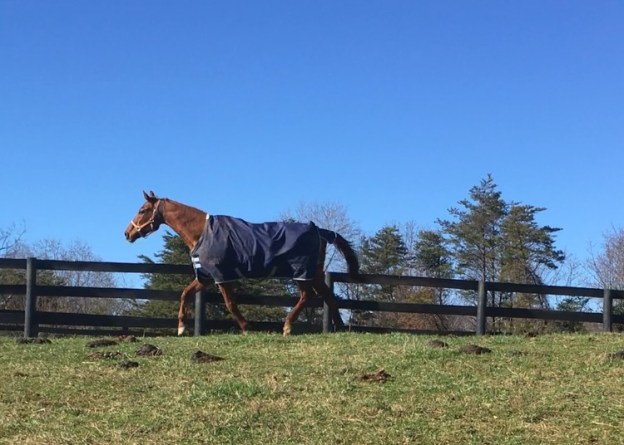


I had the vet run some blood work on Luck and Chance as a precaution, because of the “Panic Grass” in Virginia has been causing liver failure in horses, and because I like to do a full work up every 6-12 months.
Chance’s Blood Work
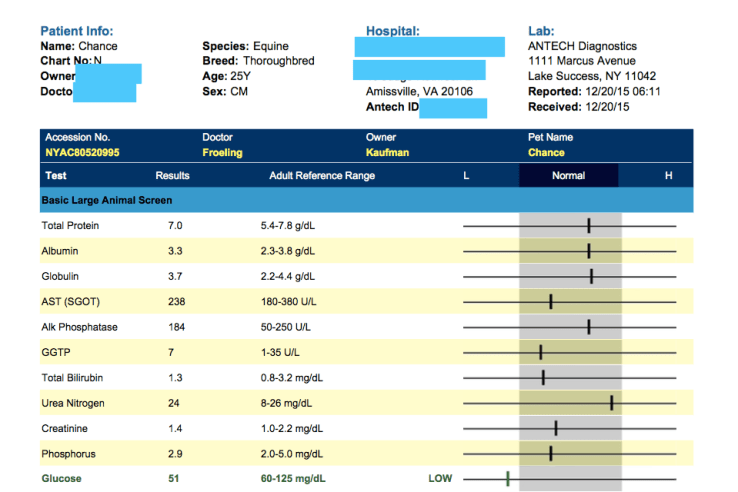
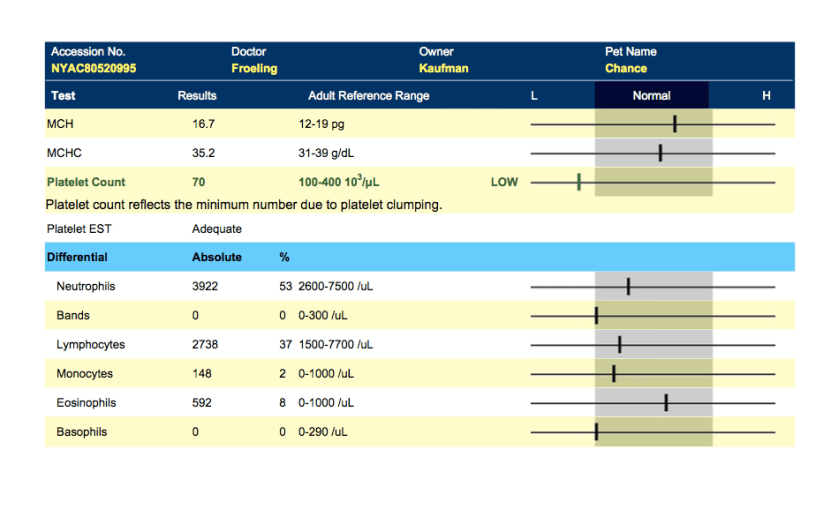
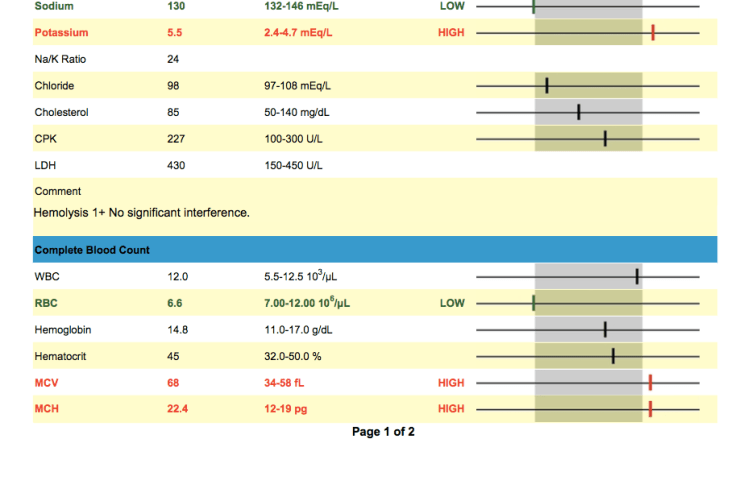
INTERPRETATION OF RESULTS
Elevated Potassium (6.6 mEq/L):
Low Sodium:
“Low levels commonly indicate loss through excessive sweating, or through kidney or intestinal disease. Low levels may also be found in young foals with bladder damage. Increased sodium levels are usually a sign of dehydration” (http://www.minstervets.co.uk).
Low Platelets:
This was the most worrisome in regards to the potential immediate issues that could ensue because of the low platelet count.
Low Glucose:
“Glucose is the source of the body’s energy. It is measured in suspected cases of equine metabolic syndrome and sometimes in cases of equine Cushing’s disease. Blood glucose may also be measured as part of a glucose tolerance test, assessing small intestinal function” (http://www.minstervets.co.uk).
Levels 2-3x the highest number in range are considered significant according to vetstream.com. Levels are easily increased due to poor handling techniques as well as lab error.
According to Dr. Christine Woodford and Carla Baumgartner on vipsvet.com, “Elevations of CPK and SGOT are indictors of muscle inflammation–tying-up or rhabdomyolysis. The term “rhabdo” means muscle and “myolysis” means rupture of muscle cells. The CPK and SGOT are very sensitive indicators of skeletal muscle damage, and they rise in concentration proportionally with the amount of damage. A bit of timing is required in order to obtain the most sensitive results; CPK rises (due to its leakage from muscle cells into the blood system) approximately six to eight hours after the onset of muscle inflammation, and SGOT rises after approximately 12-14 hours. The absolute peak of CPK concentration and the time it takes to return to normal are important indicators of the severity of muscle damage and the response to therapy.”
Elevated MCV: Is the average volume of red blood cells.
According to Vetstream.com, “Macrocytosis (increased MCV) resulting from release of immature RBC from the bone marrow during regeneration is very rare in the horse therefore the MCV is less useful in the horse than in other species.”
Elevated MCH: Is the average amount of hemoglobin in an individual red blood cell.
Low RBC:
Luck’s blood work

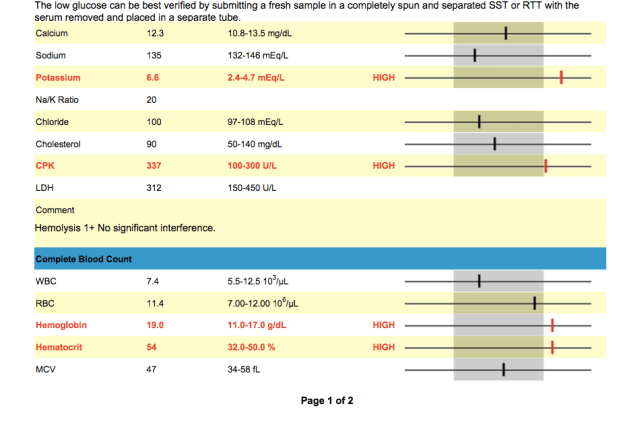
Elevated Potassium: Potassium can become elevated for a number of reasons.
According to Vetstream.com,
In combination with clinical signs and results of other tests results could signify the following;
Elevated GGTP:
* Donkeys tend to have 3x higher levels then horses. This means that in stead of the typical equine range being 1-35 U/L a typically donkey’s range would be up to ~105 U/L. Lucky’s test showed he had 120 U/L which is still elevated but not much. It took sometime to get Luck from the field when the vet arrived- he ran around non stop. The excitement and anxiety could be the cause of the elevated levels.
RBC:
Katherine Wilson, DVM, DACVIM, of the Virginia–Maryland Regional College of Veterinary Medicine (See more at: http://equusmagazine.com/article/decode-horses-bloodwork-27122#sthash.sc4J1ISJ.dpuf) explains “RBC count is probably the least helpful information because horses usually don’t have big changes in red blood cell numbers. It is not uncommon for horses to have an RBC count a little lower than normal range, however. The term we use for low RBC is anemia, but unless the count gets very low, a horse doesn’t necessarily need to be treated for that condition. A lot of diseases or any chronic long-term disease can cause mild anemia. Usually if we see mild anemia on the bloodwork and the horse has other issues, the anemia is just an indication that we need to fix/treat another problem.”
Low or Elevated Values
Low Bilirubin:
Elevated Hemoglobin (19 g/dL):
According to vetstream.com, Thoroughbred and other “hot-blooded” horses Hemoglobin range differs from other equine- the thoroughbred range = 11.0-19.0g/l.
Elevated Hematocrit (54 %):
Elevated levels could be due to;
“A measurement of the relative amount of red blood cells present in a blood
sample. After blood is drawn, a small tube is filled and centrifuged to separate the heavier
blood cells from the lighter white blood cells and the even lighter fluid (plasma or serum)
portion. A higher than normal reading generally indicates dehydration (same number of
cells in less plasma volume) or may be due to splenic contraction secondary to
excitement or the demands of exercise. A low reading may indicate anemia, though not
invariably. Highly fit athletic horses may normally have a slightly lower hematocrit at
rest due to an overall more efficient cardiovascular system. Evaluation of true anemia in
horses requires several blood samples over a 24-hour period” (Susan Garlinghouse, 2000/ http://www.equinedoc.com/PrideProjectInfo.html).
It took sometime to get Luck from the field when the vet arrived- he ran around non stop. The excitement and anxiety could be the cause of the elevated levels.
Low Sodium:
According to horseprerace.com, “Low levels indicate depletion and are often a predisposing factor, along with dehydration, in fatigue, muscle cramps, colic, synchronous diaphragmatic flutter (“thumps”), diarrhea and other symptoms of exhausted horse syndrome. Even seemingly normal or high-normal levels may in reality be lower, but appear higher due to concentration secondary to dehydration as measured by total protein and albumin levels. Therefore, levels at the lower end of the normal range should be evaluated relative to concurrent dehydration.”
More information on your horse’s blood work
Decoding your horse’s blood work
A Better Understanding of the Results
The vet suggested that I add water to Luck’s and C’s feed in case their values are due to dehydration. She also explained that some of the values may be a result of running around in the field right before drawing them along with anxiety.
The anxiety and running around seemed fair but I am hesitant on the dehydration portion. Yes, I know it is winter and that horses are less likely to drink as much water. But if it were due to dehydration then the Albumin would be low as well. But, the blood work revealed that the Albumin was 2.8 (Luck) and 3.2 (Chance). These values are within the normal range…. that being said, the results could also be due to lab handling especially the Potassium levels.
While speaking with my uncle Jerry (the horse whisperer), he suggested adding a salt block to the horse’s feed. This will increase the horse’s thirst which will get them drinking more. I also added heated water buckets so that the water won’t freeze and in case they are less inclined to drink when the water is cold.
In order to feel comfortable about my horse and donkey being healthy, I will have more blood work done this week to make sure everything is in fact okay.

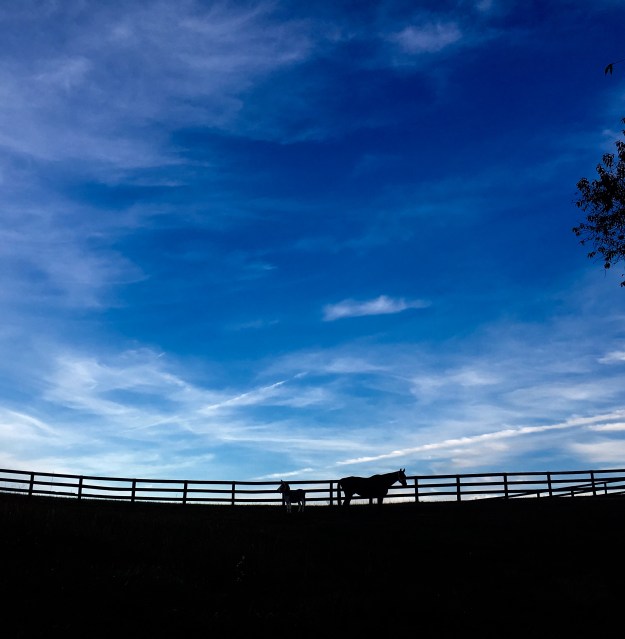



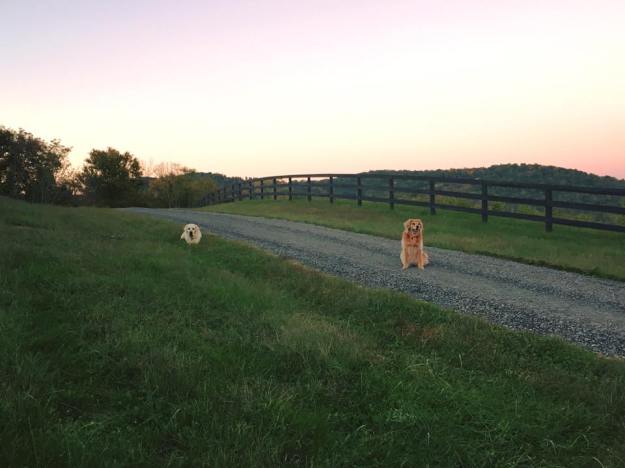

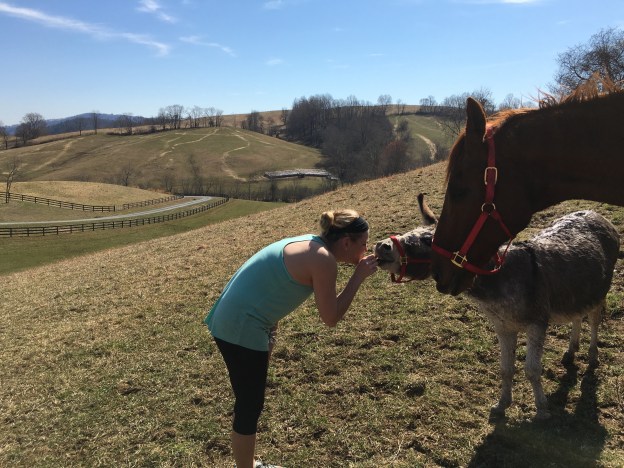
Every time I come to the barn and the guys are outside, I will go and sit in the field with them. Lucky will undoubtedly walk up to me and nuzzle his face against me. He gets so close to me that I am waiting for him to try and climb into my lap like a dog. He is such a sweetheart.

Chance was a bit jealous 🙂


A while ago, one of my good girlfriends, sent me an article about perseverance; why some are able to withstand tremendous adversity while others can’t? The article referred to this concept of an individual’s strength to endure life’s obstacles, to succeed in the face of adversity, to remain positive and continue to move forward despite what is thrown ones way, as Grit. Those who are able to endure the obstacles-have it- and those who are unable to endure- don’t.
I can’t help but wonder if the concept of Grit may also apply to our four-legged friends? Because I am pretty sure that Chance has it. What makes living things able to remain positive and enthusiastic and continue to persevere despite being in tremendous pain?
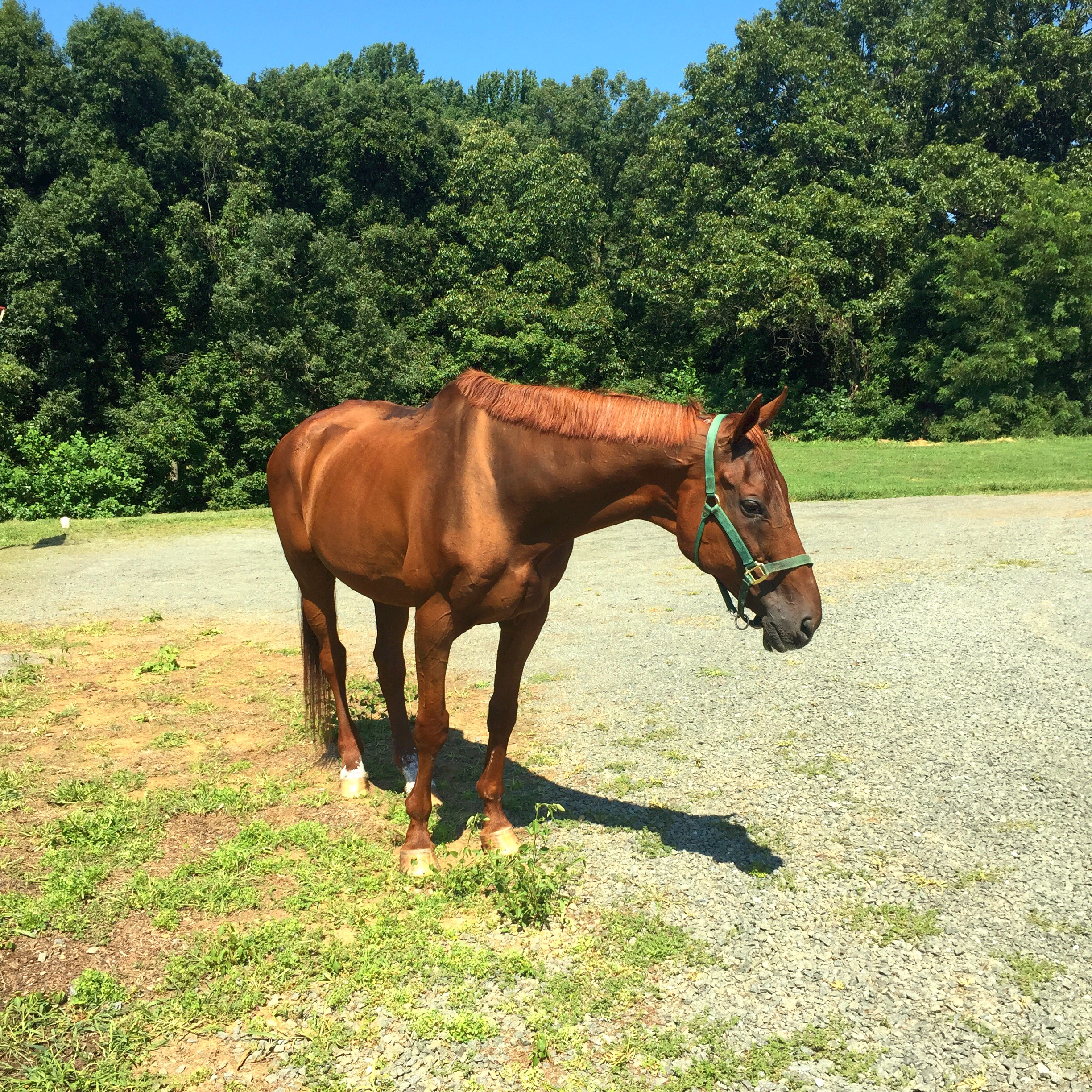
I am truly humbled every time I look at Chance and I see a 25+ year old horse who has lived for years with painful flare-ups without a known cause…yet even at his absolute worse, he was still engaged in life…eating, whinnying, trying to run and play, giving kisses for treats…and now, after a year of ups and downs, triumphs and tribulations, stumbles and falls, medications and supplements, pokings and probings, needles and adjustments, samples and tests, and changes in just about every aspect of his life, he is finally in a healthy place! (He is no longer on pain medications daily. He maybe gets a dose a month or so. And does not have bouts of lameness or swelling).
What enables him to remain his calm and happy self despite all of the above? How was he not biting and kicking with every prick of a needle? How is his soul still gentle? How was he determined to walk up a small hill a year ago and now is able to run up that very same hill? He loves every second of his life. This may sound odd, but my old guy revels in every single second of his day.
He whinnies the moment I pull up into the driveway and greets me. He devours every ounce of grass he can. He often follows his friend and co-caretaker, John, to feed the chickens in the morning. He yells for his buddy, Lucky, when he can’t find him. He runs every where he is able to including back and forth from the house to the barn- racing with Lucky. He rolls around in the grass, the snow, or mud. He will lay in the green grass basking in the sunshine. He investigates everything around him. And each and every time he stumbles, or even falls, he gets right back up and tries again.
To me, that is the essence of Grit…to keep on trucking through life with a soft heart and grateful and determined soul.
Duckworth, A. Peterson, C. Matthews, M., Kelly, D. (2007) “Grit: Perseverance and Passion for Long-Term Goals”, Journal of Personality and Social Psychology, Vol. 92(6), 1087-1101.

Today was an absolutely beautiful day. There was a slight breeze and barely any humidity. Needless to say, we took full advantage!
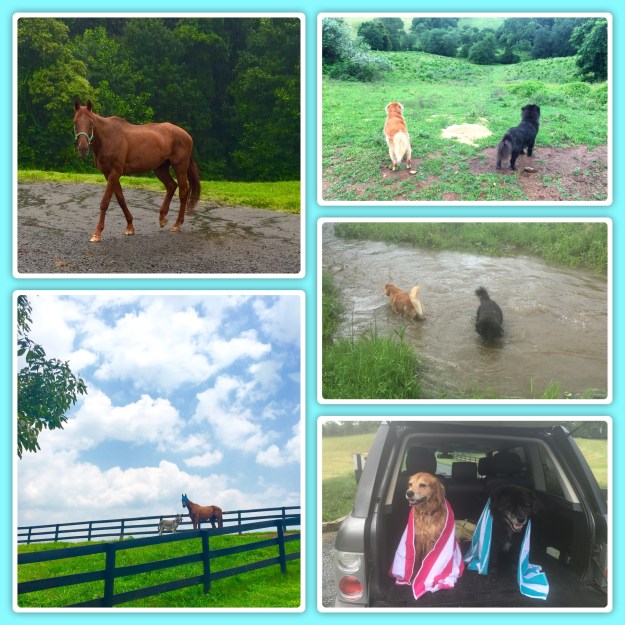

Well, after months and months of trying to make Luck and Chance BFFs, they are now inseparable!
The other night Chance and Luck were roaming around the outside of the farm when suddenly I hear Chance running, full spreed, around the barn screaming. I run outside and Chance is visibly upset, searching around frantically for Luck. Suddenly, Luck comes trotting down the hill to Chance. He settles down and I put them into their neighboring stalls for the night. Chance continues to pace in his stall, looking down through the bars at Luck. I decide, after about ten minutes of him circling in his stall, to put Luck into the stall with him. As soon as Luck walked into Chance’s stall, he immediately relaxed and the two of them just stood together eating hay.
 Looking outside together…or Chance looking outside and Luck trying to
 Kisses!
I was able to throw on a saddle and get on Chance! He is finally strong enough for me to “ride”….and by “ride” I am referring to walking around in a ring. We walked in circles and figure eights and over some ground poles for about 15 minutes. It was absolute bliss!
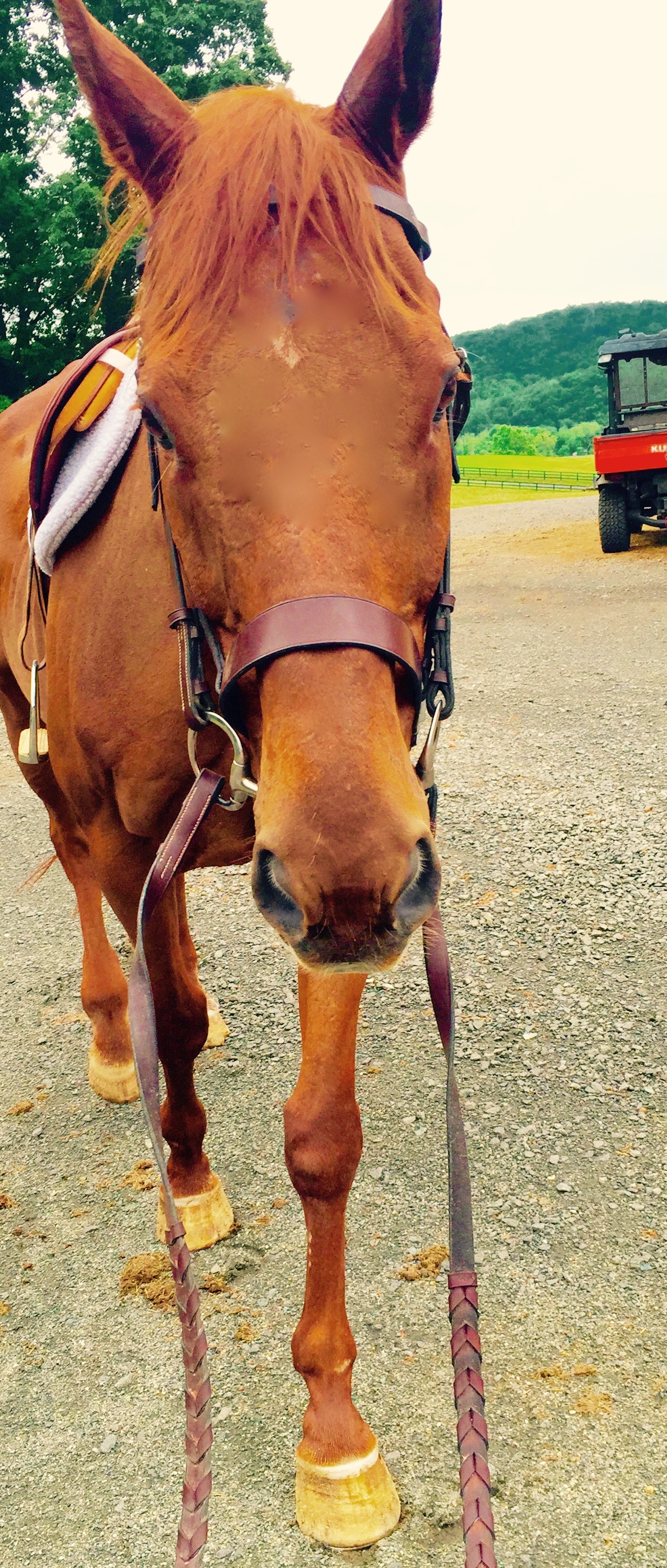
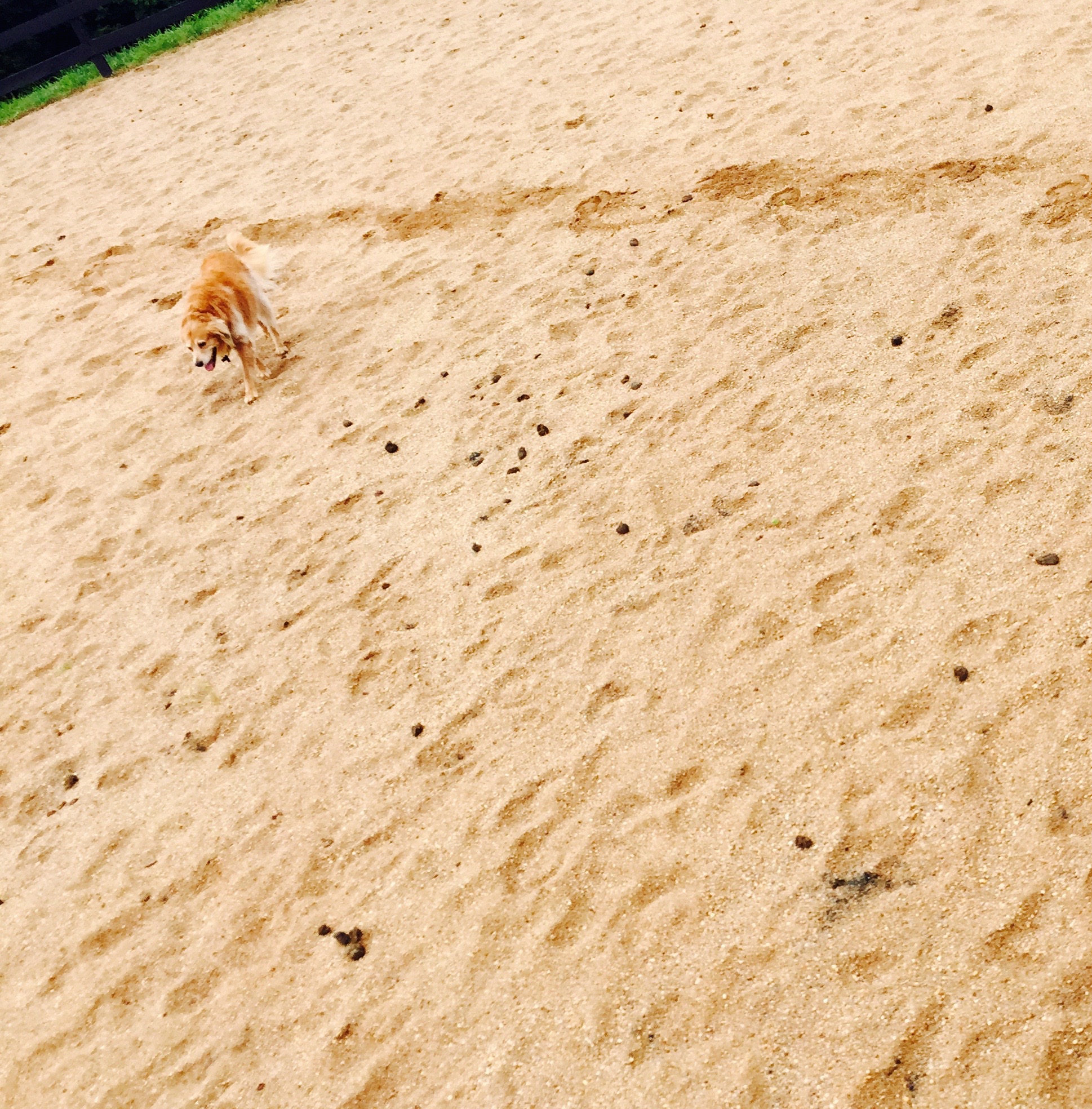
Sadie followed us around the ring the entire time…

and Lucky stood by and watched!


Where is Lucky?

My favorite marking on Chance


Lucky got a bubble bath
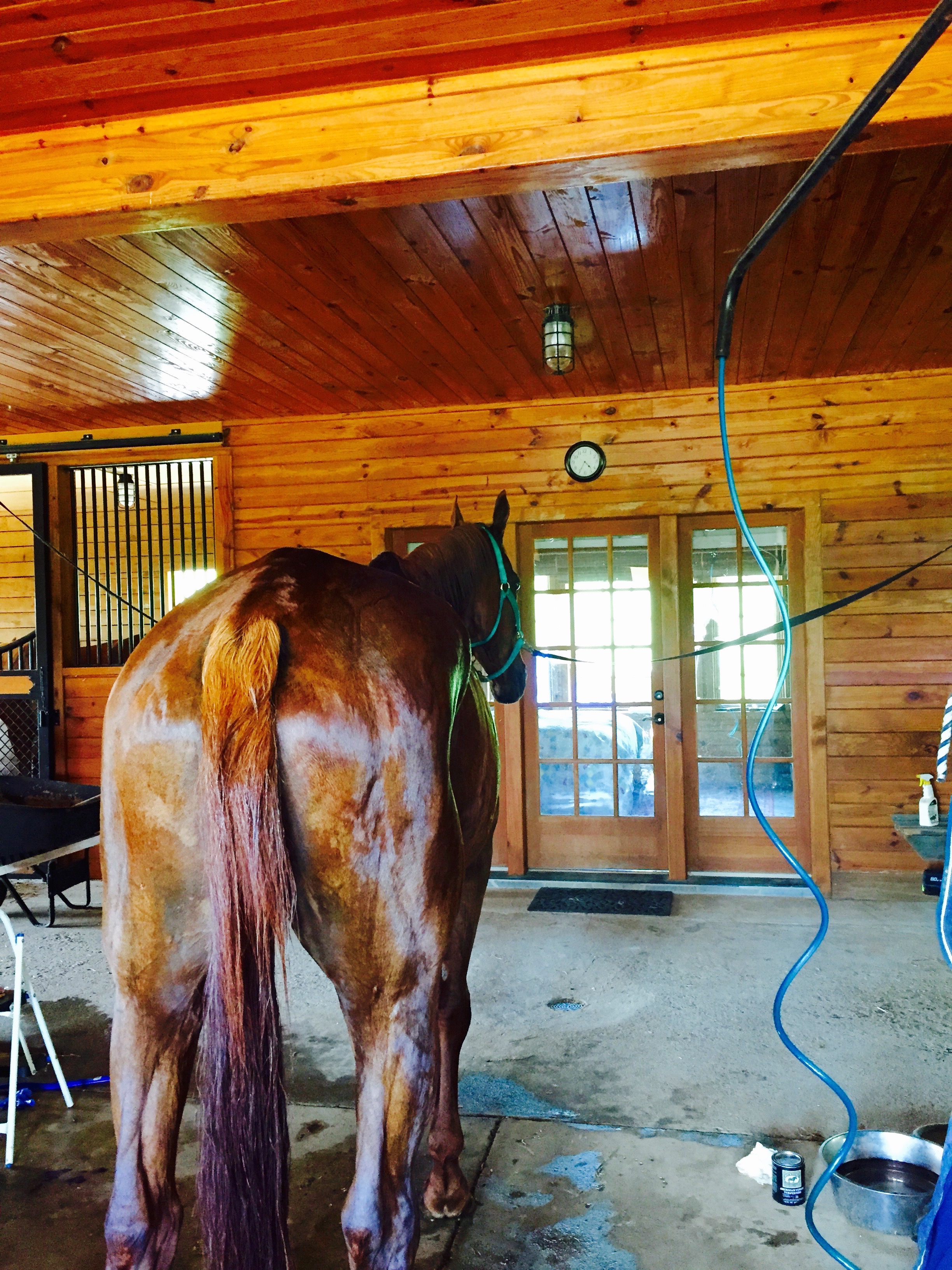
Chance is gaining muscle on his hind end!
“Enjoy The Little Things In Life-
For One Day You Will See They Were In Fact The Big Things.”
This weekend I had the opportunity to admire the night sky full of stars while being able to spend time with my two favorite guys. I did not have anywhere else to be, or anything else to do…I could fully enjoy the “here and now” as Yalom so eloquently coined.
I was able to experience the warm breeze and truly appreciate it. To watch my two guys slowly grazing and hear them taking deep and relaxed breathes, with the moonlight reflecting against their backs. I could smell the scent of hay and fresh grass. I felt my shoulders drop from their semi-permanent place next to my ears and my mind quieted. I was able to sit back in the grass, look at the millions of stars, and 100% appreciate my surroundings- how lucky I am to not only have a place like this to visit, but also have the two beautiful souls (Luck and Chance) in my life.
Below is the sunrise the next morning….


The guys waiting to come in for their breakfast
Apparently, Chance & Lucky decided to take full advantage of the beautiful weather after almost a week’s worth of rain, and go gallivanting around the farm.
They began their jaunt by galloping up the driveway towards the house, stopping to graze for a second, continuing to walk in front of a workman’s truck (who was trying to leave the house), and finally running full force back down towards the barn.
However, as you can see, Chance was not as prepared for the difficulty that comes with galloping downhill after 7 days of rain….but he held his own and continued to run despite the potential set back.
 The Chances We Take