The barn party was a hit and Lucky & Chance, adorn with their flowers, were the stars of the night!


The barn party was a hit and Lucky & Chance, adorn with their flowers, were the stars of the night!

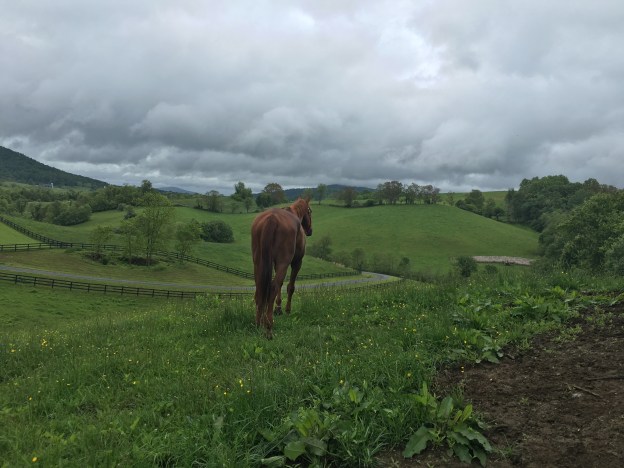
The horses saw the hunt riding in the distance…


Medical History
Past Treatments Tried
Initial Consultation
Chance showed decreased movement in his right hip and a audible cracking noise at the suspensory joint. He has edema of both hind fetlocks, Pastern, and Pastern Dermatitis. Chance was unshawed on both hinds due to his inability to stand for long periods of time and his decreased mobility. However, his front adorned clips.
Due to the length of Chance’s front toes and the height of his heels he was unable to evenly distribute his weight (60/40) to his front and hind ends. This would most likely cause increased tension on the DDFT tendons and corresponding ligaments resulting in an increased likelihood of tendon and ligament related injuries. The uneven distribution of weight could also inhibit the horse’s range of motion through his hips resulting in his body compensating for this injury and causing ataxia (balance issues), pain, arthritic changes, and cervical spine misalignment.
By shortening the toe of both front feet, the heel will rise allowing a more even distribution of his weight.
Front


Final Product: Front
Trimmed feet to corrected to the following specifications:
Foot Beginning Angle & Toe Corrected Angles & Toe Total P.C.
L/F 47 Degrees at 3 7/8 inches 53 Degrees at 3 inches 6 Degrees
R/F 45 Degrees at 3 3/4 inches 54 Degrees at 3 inches 9 Degrees
Hind

Final Product: Hind

| Return visit to trim and shoe Chance’s hind feet with #2 OBRHB Wedge shoes.Trimmed hind feet and corrected to the following specifications:
Foot Beginning Angle & Toe Corrected Angles & Toe Total P.C. L/H 48 Degrees at 3 7/8 inches 54 Degrees at 3 1/4 inches 6 Degrees R/H 46 Degrees at 4 1/4 inches 55 Degrees at 3 1/4 inches 9 Degrees Note: Chance needed to be sedated by veterinarian to complete the trim and shoe his hind feet due to preexisting hip and DDFT issues. |


I have been trying for years to read Chance’s tattoo. Unfortunately, the tattoo was faded even back in 2000 and has become that much more over the years.
I have tried everything I can think of to figure out his tattoo or gain any information that I can about his racing name- video, photos, lots of light, a flashlight, a blue light, red light, asking vets and dentists, emailing his previous owner, the farm where I purchased him, my past trainers, rummaging through my old files…nada!
I have searched for hours on Jockey Club using his markings (white marks on his face and legs, different letter and number combinations based on his age, and different variations of what I thought was his “racing name”). I have even done a guided search that came back with nothing.
Chance’s racing records do not matter in the grand scheme of things…it is more curiosity then anything else. Plus, I think it would be pretty cool to find out more about my guy.
So far all I have is;
GENERAL IDENTIFICATION:
Horse Name:
Tattoo Number: T_____
Foaling Year: 1990
Color: Chestnut
Sex: Gelding
OTHER IDENTIFICATION:
Head: Patch of white hairs mid to top of eye level
Head Cowlick(s): Median cowlick at top of eye level.
Neck Cowlicks(s): Middle of front of neck
Left Fore Leg: cornet white left side of heel white
Left Hind Leg: none
Right Hind Leg: some white on cornet band
Right Fore Leg: none
Body: top of head off center/right behind right ear small white patch
Other: left foreleg inside firing markings
Resources

Equine Emergency Preparedness in Virginia
The 2006 Virginia Equine Survey reported approximately 215,000 horses – a 26 percent increase since 2001 – that was accompanied by a 41 percent increase in the number of horse operations. The equine industry is growing, and there should be adequate emergency preparedness training and documentation for both emergency responders and horse owners or service providers. In nearly every emergency or disaster situation, preparing before the event is the key.
There are a variety of emergency and disaster situations that could affect horses in Virginia. Acts of nature include such things as hurricanes, tornadoes, and winter weather, as well as floods and fires (both barn and wildfires). Other emergencies include loose horses on roadways, horses – alone or with riders – hit by cars, and horses trapped in overturned or wrecked trailers. This publication includes methods of assessing risk for the types of natural disasters that are most common in a given area, as well as other types of emergencies that may be encountered. It discusses how to work with emergency management personnel and presents tools to help people prepare before an incident, including setting up emergency plans and having appropriate first-aid and emergency kits gathered. It also covers how to respond during an incident, including when to evacuate, where to go, what to take, how to contact friends and family, and how to return or recover after an incident.
Emergency Contact Information
Listed below are some state and local agencies that you might want or need to contact in case of an emergency or disaster. Fill in the contact information for your local agencies for faster reference.
Virginia State Animal Response Team: (804) 346-2611; http://www.virginiasart.org
Virginia Department of Agriculture and Consumer Services: (804) 786-2042; http://www.vdacs.virginia.gov
Office of the State Veterinarian/Veterinary Services: (804) 692-0601; http://www.vdacs.virginia.gov/animals/vetservices.shtml
Local fire department:
Local animal control:
Local feed store/hay dealer:
Local emergency veterinarian or regular veterinarian:
General Disaster Preparation
In the event of a disaster, it’s very important for you as a horse owner to have preplanned actions and proper information to enable you to make rapid decisions that may save your horses and even your own life. The following general guidelines will help you become better prepared.
There are a wide variety of accidents or disasters that could affect different areas of the country. Take time to evaluate the region in which you live and assess which risks you are more likely to encounter. Examples of widespread disasters include floods, fires, tornadoes, hurricanes, nuclear accidents, disease threats, chemical spills, and ice storms. Typical accidents or other emergency situations may include escaped animals and horses – with or without riders – hit by a car or stuck in ditches, mud, or water. For each type disaster, ask yourself the following questions:
• What are your major vulnerabilities?
• What can you do to minimize the damage?
• What plans do you have in place?
• Who do you need to contact?
Plan ahead. Hopefully it will be the best wasted time of your life and you’ll never have to enact your emergency plan. However, if you do need to take action, you’d rather be prepared. Start by taking a careful look at your property and identifying the best place to locate your animals for each type of disaster you consider. Check for alternate water sources. You want to be able to have enough fresh water and hay available to last for at least 48-72 hours.
Prepare for the possibility that you might need to evacuate both yourself and your horses. Check with your local law enforcement, animal control, or agricultural Extension agent for routes and recommendations. Several locations should be identified ahead of time, and you will want to know the entry requirements for each. Be sure to have agreements arranged for your animals in advance.
Nothing is worse than needing to move your horses and having no way to get them out. Keep trailers and vans well maintained and full of fuel, ready to go. If you don’t have enough trailer space to move all your animals at one time, make arrangements with a neighbor or professional horse hauling company. You will want to have contracts in place in advance, because making arrangements at the last minute in an emergency situation is often impossible. Make sure to keep current and adequate insurance coverage on all vehicles.
Animal identification: Prepare an identification packet for each horse, including information on their age, sex, breed, color, registrations, unique identifying marks, photos, microchip numbers, etc. Write down any special feeding instructions, list any medications with dosage, and record the name and phone number of your prescribing veterinarian. Be sure all vaccinations and medical records are in writing and up to date. Have a current Coggins test, which you will need if your horse has to be moved to get to safety. If you’re going across state lines, you may need a health certificate along with a copy of your Coggins test. If you leave, take your records with you. Records left at home may be damaged or destroyed during a disaster.
If you become separated from your horse in a disaster or emergency, permanent identification such as a tattoo, microchip, or brand will help reunite you, as well as provide proof that the animal is yours. If disaster strikes before you can do this, find another way to get your information onto the animal. Use leg or break-away neck bands with your contact information or braid a waterproof luggage tag into the mane or tail to help identify your horse. You can also paint or etch the hooves; write the information down, seal it in a Ziplock-type plastic bag, and then secure it to the halter with duct tape; or paint your telephone number on the side of the animal using livestock paint.
Finally, consider an event where you might by unable to evacuate all your animals. Make a priority list and familiarize both family and farm personnel with the list in case you are not present when the disaster occurs.
Seventy-two-hour emergency kit, first-aid kit, and emergency tools: The 72-hour emergency kit is designed to help you ride out the immediate impact of a disaster, making certain that essentials are provided for. A plastic trash barrel with lid can be used for a multitude of things and can store many of the items in the kit when it’s not needed. Pack one or two tarpaulins for protection and a couple of water buckets. If you have time to prepare, make sure to have enough hay, feed, and water for each horse for at least three days stored safely – though a week would be better. It is very possible that roads will be closed because of downed power lines and trees, limiting access to feed stores. Cover hay with waterproof tarps and place it on pallets to reduce the chance of the hay sitting in water and keep grain in water-tight containers.
Each horse will need 12-20 gallons of water per day. Fill all the water troughs and buckets. Additional water can be stored in garbage cans with plastic liners. You might want to consider purchasing a generator to run the well if you have a large number of horses.
Have a packed first-aid kit in the emergency supplies and consider one for the trailer as well.
Your basic first-aid kit should include the following:
* To purify water, add eight drops of chlorine bleach per gallon of water and let it stand for 30 minutes before consuming.
Emergency tools include such things as:
Buddy system: Talk with a neighbor or friend and make arrangements to check on each other after a disaster. Tell one another if you are evacuating and to where so someone else will know where you are going. Buddies may agree to pool resources for such items as generators, water tanks, trailers, etc. You will also want to have a network of people outside the disaster area that you and your friends and neighbors can contact to check on each other, because the local communication infrastructure may be compromised and not available.
Putting the plan into practice: When facing a potential disaster, remain calm and follow your plan! Remember: It is vitally important to evacuate early in any mandatory evacuation to avoid getting stalled in traffic and create unnecessary hardships.
Notify family, friends (your buddy), and officials that you are OK – whether you stayed or evacuated. Use phones, radios, the Internet, signs, or word of mouth. As soon as possible, take pictures or videotape of storm-damaged property for insurance claims.
Inspect your premises carefully before turning out horses. Look for foreign materials such as tin, glass or nails, downed trees or limbs, and damaged fences or power lines. Be careful leaving your animals unattended outside. Familiar scents and landmarks may be altered, and your horses could easily become confused and lost.
Check with your local veterinarian or the state veterinarian’s office for information of any disease threats that may exist because of the situation. If your animals have been lost, or if you find someone else’s horses, you have several options. By contacting local horse owners, farriers, veterinarians, animal control, or the local disaster response team or by listening to the Emergency Broadcast System, you’ll most likely find out how to log lost or found animals. If you have lost horses, be prepared to identify them and document ownership. This is where your identification packet comes in handy. In the event that you find lost animals, use extreme caution in handling them. If possible, work in pairs for safety. Keep the lost horse(s) contained and isolated, and notify authorities as soon as possible.
Hurricanes bring a variety of weather-related dangers with them, particularly tornadoes and flooding. Leading causes of death in large animals related to hurricanes include animals killed in collapsed barns, electrocution, complications secondary to dehydration, animals hit and killed on roadways, and horses tangled in barbed wire after escaping from their pasture. As noted in the general disaster preparation section, each farm should have a written disaster plan to optimize the safety and survival of all animals.
Horses should be current on their vaccinations, particularly their tetanus toxoid vaccine. Some veterinarians will also recommend vaccinating against eastern or western equine encephalitis at the beginning of hurricane season due to the potential increase in the number of mosquitoes after a storm. All horses should also have a negative Coggins test, if only because the horse may need to be evacuated to a community shelter or cross state lines. A health certificate is also required to cross state lines, so one may be necessary for evacuation of coastal areas. Review the section on general disaster preparations for other details.
Farm considerations: In addition to the general disaster preparation recommendations, be sure to secure all movable objects and remove all items from hallways. Jumps and lawn furniture should be secured in a safe place. Place large vehicles, tractors, or trailers in an open field where trees cannot fall on them. Finally, turn off electrical power to barn.
Evacuation plans: Evacuation of flood plains and coastal areas is usually recommended, and should occur 48 hours before hurricane-force winds occur in the area. Transportation of horses when wind gusts exceed 40 mph is dangerous, and trailers may not be allowed across bridges for safety reasons.
If you can’t evacuate or choose not to, what is the best method for keeping your horses safe? Should horses be left in the pasture or placed in the barn? If the pasture has good fencing and limited trees, it is probably best to leave the horses outside. Do not keep horses in barbed wire or electric fencing during a storm. Trees with shallow roots will fall easily under hurricane-force winds and can injure the horse or destroy the fencing. Fire ants and snakes will search for higher ground during flooding. Carefully look over the premises and the feed for these potential dangers. Well-constructed pole barns or concrete block barns may provide safety from flying debris, but the horses may become trapped if wind collapses the building. Keep horses out of pastures with power lines.
Use the information under general disaster preparations to pick up the pieces and carry on.
Many of the preparations noted earlier apply to winter storms as well. The main consideration during winter is ensuring that the horses have shelter to help them keep warm. Horses should at least have access to adequate shelter, but in cases of severe storms you may want to bring them inside a solid barn. The same consideration for trees and power lines in hurricanes holds true during winter storms: Be cautious leaving horses in fields where these may come down and either cause harm to the animals or damage fences, allowing the horses to escape. Pay special attention to young or senior horses, as their ability to adapt to the colder weather may be compromised.
Keeping extra hay, feed, and water on hand is also appropriate. Feeding extra hay can help the horse to stay warm, and they will still require approximately 10 gallons of liquid water each day.
Fire prevention and safety are the duty of every person involved with and around horses. Safety involves common sense and a trained response and should be taught along with basic equitation by trainers, organizations, and parents. Preventative measures apply whether the facility is a track, training barn, summer camp stable, or backyard barn. Rehearse the necessary course of action to be followed in the event of a fire with members of your family, boarders, youth in training, and others directly involved with the animals in the barn. Fire is the most terrible death that can befall an animal, especially a horse penned within a corral or stable.
Be safety conscious at all times. Fires give little warning. Know where fire alarms, if present, are located. Know where water sources and fire equipment is located, and how to use it properly. Conspicuously post the number of the local fire department (even if it’s 911) by all telephones. Fire prevention is easier to preach than practice, but it is a vital part of horse ownership and management.
In the barn area, clean up and dispose of debris (especially flammable debris) regularly. Also, make sure to mow and spray for weeds near the barn. Avoid storing feed and bedding in the top of the barn. Preferably it should be located in another building. The alleyway in front of stalls must be kept free of debris and open at all times to give easy access to each stall door in case of fire. Tack rooms should not be locked unless occupied – there are many flammable items in a tack room.
Do not allow smoking in the barns, stalls, tack rooms, or sheds. No open fires should be allowed anywhere in the stable area, nor should you allow the use of oil- or gas-burning lanterns or lamps. Install an adequate number of water outlets and have hoses attached to each. It can also be handy to have an outside phone with the fire department’s number prominently displayed. Finally, check all electrical wiring periodically for frayed ends, doubled-up extension cords, and so forth, and replace them as needed. All electrical appliances used in stable areas must be in safe working condition. When in use, they must be kept a safe distance from walls, bedding, and other furnishings. They should not be left unattended when they’re on. Also, electrical wiring should be contained in a metal conduit to prevent rodents from chewing on them and creating a fire hazard.
The official records of the National Fire Protection Association show that the majority of fires in stables (figures compiled from reported fires at racetracks, breeding farms, and fairgrounds) are caused by misuse of electrical apparatus, heaters, and careless smoking. Other causes of fires are lightning, arson, and spontaneous combustion.
Also of note is the fact that almost all horse barns have the following in common:
The burning rate of loose straw is approximately three times that of the burning rate of gasoline. The horse in a stall where the fire originates has only 30 seconds to escape. Compare this to the fact that it takes anywhere from 30 seconds to more than a minute to halter a horse and lead him out of the barn. These startling statistics dramatically emphasize the fact that a stable fire, once underway, does not give much time for horse evacuation. There have been situations where people were in the barn when the fire started, yet most of the horses were lost because the fire spread so quickly.
Automatic sprinkler systems are advocated for commercial facilities such as racetracks, large breeding establishments, and other commercial-type enterprises. Water-type fire extinguishers (see combating a fire below) are effective if used within the first minute. Because stable fires develop rapidly due to the abundance of combustible materials, fire extinguishers are of little or no use once the fire has gained burning time.
Transporting horses: Quick-release snaps should be used to secure the horse in the trailer or truck in order to facilitate the safe handling of horses in case of an accident with possible danger of fire. Lead ropes should remain on horses while they’re traveling. Fire extinguishers should be readily accessible (i.e., in the truck), not locked in a trailer tack compartment.
Horse shows: Follow proper parking procedures so you don’t block fire hydrants or street entrances in case fire-fighting apparatus is needed to access the barns or buildings. Never, ever padlock your horse in a stall.
Assuming you have only 30 seconds to put your plan into action, you have little time to stand around. First things first:
Fire extinguishers are good for controlling a small fire before it can get out of control, limiting property damage and preventing injuries to people and horses. However, using the wrong type of extinguisher or using one incorrectly can cause more problems. Learn about fire extinguishers and how to properly use them.
Finding the right extinguisher: Flammable materials are grouped into several classes based on how they burn, and each group has a particular type of fire extinguisher that’s appropriate. These three types of extinguishers represent the fires that would most commonly be encountered in a barn or stable area:
Another note: Most home extinguishers are designed for a single use and should then be discarded. Industrial extinguishers can be recharged. Know which ones you have and maintain them as recommended. Have them inspected annually to be certain they’re functioning properly.
Fire extinguisher location: Place extinguishers near locations where flammable materials are kept. Keep them near exits, away from heat sources. Also, keep them at an accessible location but not easily reached by small children.
Using an extinguisher: Contact your local fire department to see if they will offer a short course or session on proper use of a fire extinguisher. It may be useful to have a session with your horse or pony club so multiple people can receive the training.
If you decide it’s appropriate for you to fight the fire, remember the word PASS:
Knowing when to fight the fire: Fire extinguishers are not appropriate in all situations. If the fire is small and contained, and you know what materials are burning and have the right class of extinguisher, you may want to try to put the fire out. Be sure to call the fire department first and make sure all people and animals are evacuated to safety.
If the fire spreads outside the original, contained area or if smoke fills the barn, it is time to get out. Also, if the fire is still burning when the extinguisher empties, you need to leave the area. Finally, if you’re feeling overwhelmed or confused, get out. Firefighters are trained to deal with fire. Let them handle it.
Ask yourself the following questions to see if you’re ready in case of a fire in your barn:What’s the phone number for the fire department?
Other emergencies involving horses can happen in the aftermath of the previously described emergencies or in isolation. Your plan for those situations will also help prepare you for the other things that can arise.
An unfortunate consequence of horses becoming loose – either from downed fences or a gate accidentally left open – is the possibility they may be struck by a motor vehicle. Being hit by a car is often catastrophic for the horse, vehicle, and people involved. The types of injuries are variable but often are quite severe. Injuries to the musculoskeletal system predominate and may include wounds, lacerations, tendon injuries, joint injuries, fractures, or any combination of these.
If a horse is involved in an automobile collision, call both 911 and a veterinarian. Emergency respondents are essential to help control the scene and deal with any human injuries. The veterinarian will be able to assess and deal with the horse’s injuries. Until the veterinarian arrives, you will want to move the horse (if possible) out of the roadway and provide first aid to any injuries. It is important to keep the horse quiet until he can be assessed by the veterinarian.
Trailer accidents include overturned trailers or trailers being struck by another vehicle. Injuries to horses in trailer accidents can vary, even when overturned. Horses, being prey animals, will often struggle and panic when these accidents occur. However, some horses will be very quiet, resulting in less self-induced injury. In both situations, emergency personnel should be contacted first. They will be essential in scene control. Additionally, fire and rescue personnel have the skills and equipment necessary to extricate humans and animals from damaged trailers and vehicles.
The veterinarian should also be contacted, which will usually be done by first respondents or the dispatchers in the area in which the accident occurs. You can help assure this happens by asking the first respondents on the scene to be sure to contact a veterinarian to respond to the accident. Occasionally, a veterinarian will be needed prior to extrication for sedation or assessment of the animal, but veterinary assistance is generally not needed until the horses are removed from the trailer. Then the veterinarian can provide the necessary care when the horse is in a safer environment.
Horses can become down or trapped following natural disaster, accident, or illness. Ditches, sink holes, and septic tanks are potential hazards that you can have on your own property. Assessing your farm for potential areas that horses could get stuck in and subsequently blocking off these areas will help prevent such accidents. With natural disasters, water or mud may sweep horses into areas they can’t get out of. Some illnesses, such as West Nile virus, can affect a horse’s nervous system such that he is unable to get up and stand on his own.
Each of these situations has unique challenges that are worsened by the large size of the horse and the horse’s temperament. Again, fire and rescue personnel will be an essential component of removing your horse from the situation. They have the training, skills, and equipment to move heavy objects. There are also technical large-animal rescue courses that fire and rescue personnel may have taken to provide them with an even more advanced skill set.
If you find your horse in a situation where he is trapped, contact your local fire and rescue service and your veterinarian. While you are waiting for assistance, make sure there is access for people and equipment into the area. Any other horses should be moved from the scene.
Extricating the horse can be a long process and it will take good planning to make sure things go smoothly. If the horse is in a position where he can drink (i.e., in a standing or sternal position), you can offer water to help prevent dehydration. Food can usually wait, unless it would help keep the animal quiet. Be sure that first responders are in charge of moving the horse and the veterinarian is present to provide supportive care, first aid, or sedation, if necessary.
In conclusion, while you can’t always predict when an emergency or disaster is going to occur, the best way to be ready is to plan ahead. Consider now – when you have the time to think and practice – what you would do if a fire starts in your barn or a hurricane is approaching your farm. Stock up on appropriate supplies and check your emergency and first aid kits at least once a year to make sure nothing has expired and everything is still in its place. Plan for where you will go if you have to evacuate and know whom to contact for more information.
Plan ahead. If you never have to enact your emergency plan, the preparation will still be the best waste of time you ever spend.
The authors would like to thank Watson Lawrence, ANR Extension agent, Virginia Cooperative Extension Chesapeake City Office; Crystal Smith, ANR Extension agent, Virginia Cooperative Extension Warren County Office; and Karen Iovino, D.V.M., Blue Ridge Veterinary Associates, for reviewing this document.
Virginia Cooperative Extension materials are available for public use, reprint, or citation without further permission, provided the use includes credit to the author and to Virginia Cooperative Extension, Virginia Tech, and Virginia State University.
Issued in furtherance of Cooperative Extension work, Virginia Polytechnic Institute and State University, Virginia State University, and the U.S. Department of Agriculture cooperating. Edwin J. Jones, Director, Virginia Cooperative Extension, Virginia Tech, Blacksburg; M. Ray McKinnie, Interim Administrator, 1890 Extension Program, Virginia State University, Petersburg.
April 16, 2010
RESOURCES
Disaster Preparedness By The Humane Society
PREPARATION PRINTABLE PDFS
managing-emergencies-aaep-convention-2012-31569
equine-emergency-evacuation-kit-checklist-35917
emergency-evacuation-contacts-35939
identification-methods-for-horses-30016
My poor guy was eating the other night and began to choke. Scary doesn’t even begin to cover it. I immediately removed his feed and began to rub his neck to feel for any lumps (feed stuck in his esophagus). I administered 10cc of Banamine into his butt cheek, which helps the horse’s muscles to relax, thus allowing the food to move through. I called my vet who said to call her back in 20 min (once the Banamine had time to take effect) if I felt that he was still having issues. Well, me being the overprotective person I am, I called and asked her to come out to check on Chance and make sure he was okay. The vet came out and flushed his mouth twice with water and said that she felt that he was okay and had passed whatever feed had been stuck. Thank God!
Resources on Choke
How To Tell If Your Horse Is Choking and How You Can Help
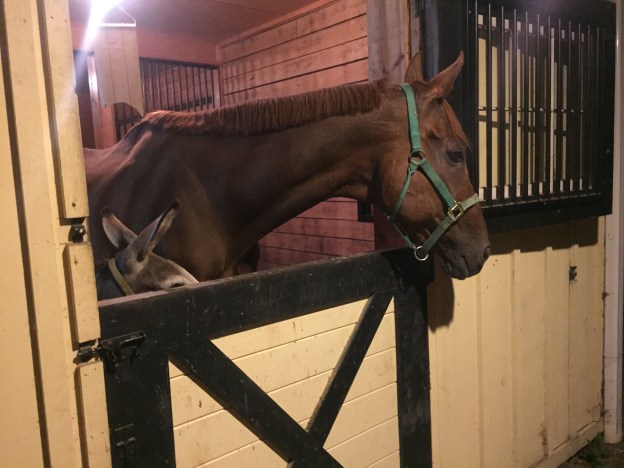
we break the rules, explore, have hour long grooming sessions, eat hay wherever we want, and snuggle in the stall together!

Chance was not acting like himself near the end of the snow storm. He seemed lethargic and gloomy…his appetite was good but the light in his eyes was not as strong.
I called the vet and asked her to please come out. She came out that day and ran a CBC along with going some acupuncture and chiropractic adjustments. The vet also gave Chance B12 (or as our previous vet called “the old man shot”).
She contacted me after seeing Chance and informed me that she was diagnosing him with an ulcer and thinks that he may have either slipped on the snow and hurt (bruised) his hip or hurt it while rolling.
I asked about the diagnostics that lead to the ulcer diagnosis. She explained that with horses there are 7 “acupuncture points”. When they are all reactive 85% of the time the horse has a gastric ulcer. She also went on to explain that with the lethargy and the change in patterns due to the snow a gastric ulcer would be plausible. They are apparently common when there are changes in the horse’s routine and fairly easy to cure. She prescribed “Nux” (give 1 teaspoon until gone) and Ranitidine.
I am suppose to let her know if he stops eating or becomes more lethargic. She felt that he was not at risk for colic because he is eating well and on a high quality feed. Fingers crossed.

Resources on Gastric Ulcers and Prescribed Medications
I went to stock up on feed for Chance and Lucky before the snow storm hit…thankfully I had preordered feed in bulk (Tractor Supply is always out).


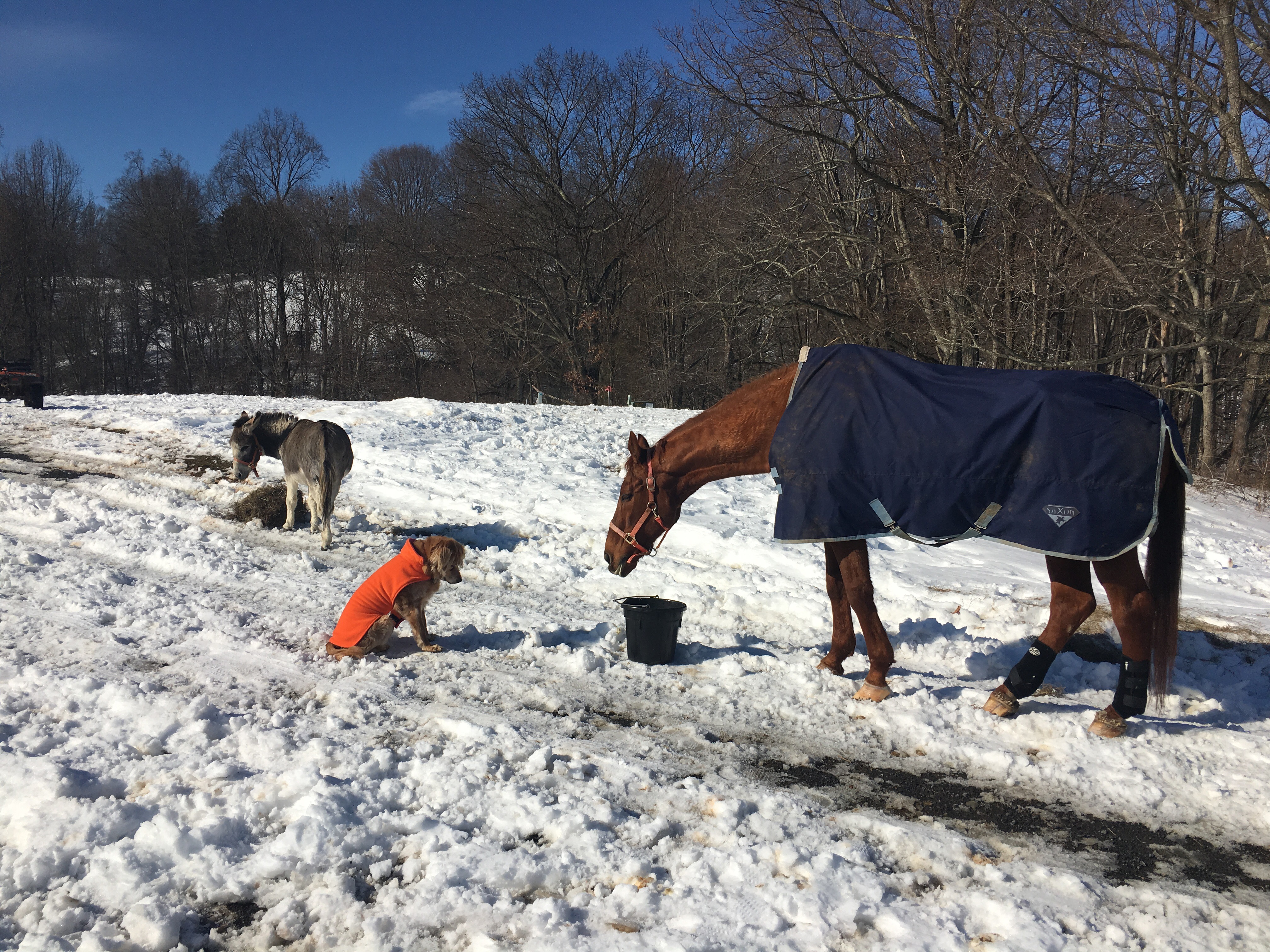 Can I have some?


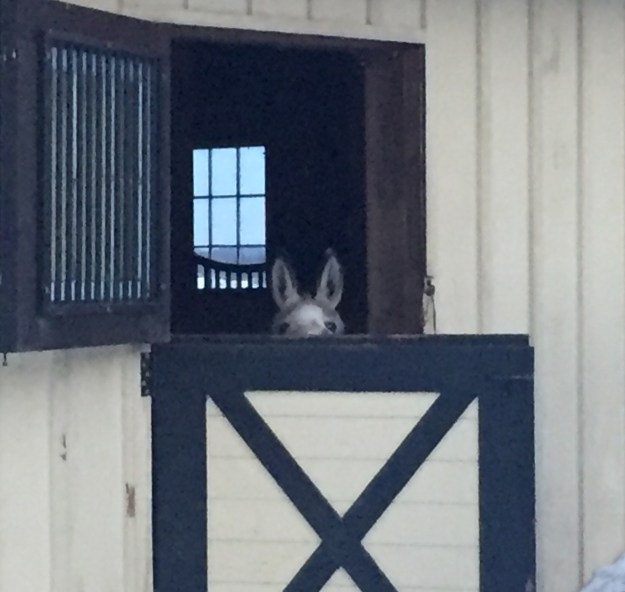
Do I really have to go out there?!
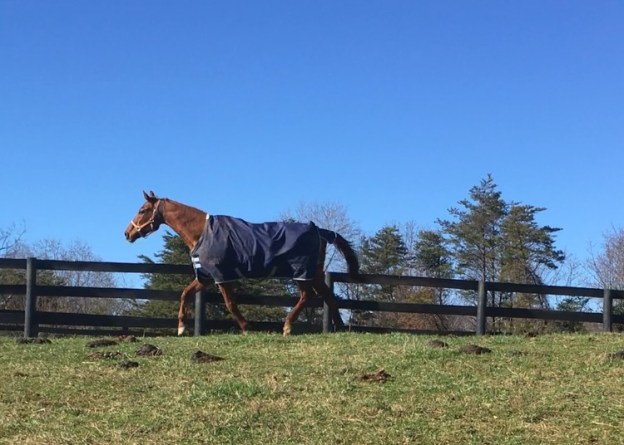


 The Chances We Take