Category Archives: Equine health

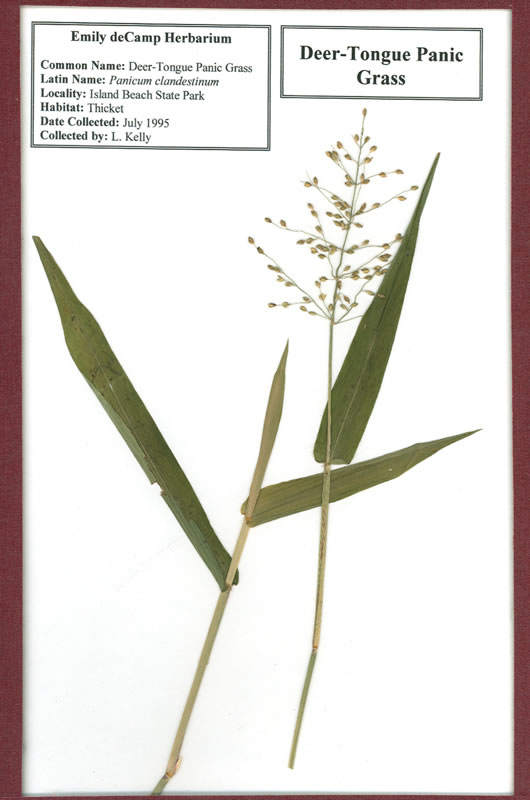
Horses in Virginia are at risk of Liver failure due to Panicgrass or Panicum.

Horses in Virginia are at risk of Liver failure due to Panicgrass or Panicum.

IMG_1763-1030x773

According to Haymarket Vet (http://haymarketvet.com/fall-panicum-grass-and-liver-disease/) Panicgrass is causing Fall Panicum Toxicosis in horses.

“In 2004, our practice was involved in documenting an important toxin for horses—fall Panicum (Panicum dichotomiflorum) grass.  This common native grass has been fed to horses in hay and in pasture probably since the Europeans first brought horses to our area.  But, while we know that it doesn’t cause illness all the time, certain growing conditions can cause it to become toxic, as it did in Nokesville, VA in 2004.  We don’t know what triggers the grass to become toxic, but we do know that it sometimes does become toxic, and the conditions are right this year. This study proved the hepatotoxicity: http://www.ncbi.nlm.nih.gov/m/pubmed/17186859/

Currently, there are several cases of liver disease in Fauquier, Clark and Loudon counties that appear to be from grazing Panicum grass in the pasture. Some signs of toxicity from eating the grasses includes: decreased appetite, lethargy, somnolence (unusual periods of sleepiness), mild colic, or neurological signs. Some horses have no symptoms at all.

If you have this plant in your pasture or if you find it in your hay cut this year, you may want to have your horses tested for liver disease; this involves a simple blood draw.”

Below is a link on more information about Liver Disease, symptoms, and treatment options.

http://www.tsln.com/agliving/equine/7614069-111/liver-horse-says-disease

Chance’s Face Lift

I brought Chance in from his turn out this evening and immediately noticed this flap of skin hanging off of his forehead.  Another emergency vet visit…yay!  Unfortunately, due to the skin flap being to the side and not hanging downward from the top, Chance needed staples…I believe it was 14 staples in the end and two cuts.

IMG_0492

IMG_0494IMG_0495

Needless to say, the vet did a phenomenal job stapling his poor forehead.

“But Baby It’s Cold Outside…”

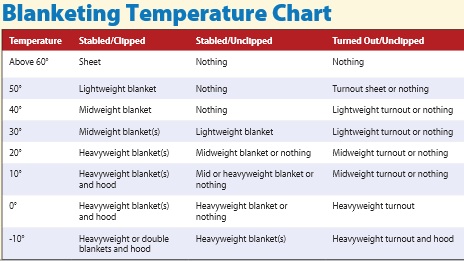
Here are some helpful ways to know when you should blanket your horse and what type of blanket to use.

BlanketTempChart_0 Untitled 2 Temperature-Chart* Sources: Weatherbeeta.com, Auburn University

Santa Is Coming To Town!

ChristmasHorse(In order from top left to right) SmartPak monthly supplements- A New Waterproof Blanket- Professional Horseman Boots- A bright orange halter to keep him safe during hunting season- DuraLactin an all natural anti-inflammatory and pain medication- Equine Edibles Candy Can Bran Mash- Epson Salt Poultice for sore muscles- Transfer Factor to boost your horse’s immune system during the winter months- Acupuncture- A massage- Kinesio Tape for sore muscles or stiffness-  a complete first aid kit because you can never be overly prepared!

Floating Away

Lately, I have noticed that Chance is eating more on the left side of his mouth and is taking a longer time finishing his meal.  I booked an appointment with the dentist and he came out to take a look.

Chance showed discomfort while being floated on the right side of his mouth.  However, upon taking a closer look the dentist did not see or feel any loose teeth nor did he smell an odors (indicating a broken or infected tooth).  I asked if Chance could have a tooth that was cracked near the root?  The dentist explained that this could be the case and we would need to do an x-ray to know more.  He suggested that we see how he does after being floated, due to one of his teeth on the upper right side being higher than the others, and go from there.

The dentist did say that Chance’s teeth were sturdy and in good shape especially given his age! Yay!

“I Guess I’ll Eat Some Worms…”

It was time for me to deworm my guys and I misplaced my “schedule”, so I decided to go online and print one.  Bad idea!  There are so many deworming schedules out there…it is easy to get overwhelmed.

I found a deworming  quiz that was incredibly helpful when deciding what schedule and dewormers are right for my horse.  The quiz  & the below information was written by Karen Hayes (an Idaho-based equine practitioner) and was published in the June 1999 issue of Horse & Rider magazine. –

See more at: http://www.equisearch.com/artic/eqdeworm321#sthash.7cTzzRGc.dpuf

QUIZ: Now see how you score on the following eight questions to determine which program is right for your horse.
1. Does your horse graze on pasture all year, increasing his chances of exposure to parasite larvae? (Yes=2. No=0.)
2. Do other horses, on different or unknown deworming programs, graze on the same pasture, increasing your horse’s chances of ingesting parasite larvae? (Yes=3. No=0.) – See more at: http://www.equisearch.com/article/eqdeworm321#sthash.7cTzzRGc.dpuf
3. Does your horse nibble grass at other stables or public horse facilities-such as show grounds, fairgrounds, campgrounds, and/or highway rest stops-increasing his chances of ingesting parasite larvae? (Yes=5. No=0.)
4. Has your horse ever shown signs of heavy worm infestation? (Symptoms include a poor haircoat, weight loss, recurrent colic, or sloppy manure; or a fecal egg count of more than 100 eggs per gram.) (Yes=4. No=0.)
5. Is the collected manure at your horse’s facility spread on the pasture as fertilizer, increasing the chance of parasite larvae in his grazing pastures? (Yes=3. No=0.)
6. Is “dropped” manure in your horse’s grazing areas spread out with a harrow at least once a year? (Yes=3. No=0.)
7. Do you have a hard time keeping track of which dewormers can be used in a rotation program-possibly disrupting a purge program?(Yes=2. No=0.)
8. Do you delay scheduling your horse’s regular-care appointments, such as farriery, dentistry, vaccinations, and deworming? (Yes=3. No=0.)
Here’s what your total score means:
0-8: Your horse’s management and general condition are good enough that a well-timed purge program probably is adequate. It’ll minimize parasite eggs in his manure, and his risk of internal damage from worm larvae picked up in the environment is probably minimal. (Exception: If you answered “yes” to questions 3, 4, and/or 5, risk of damage increases; consider a daily dewormer.)
8-15: You’re in a gray area. Although a well-timed purge program will minimize worm eggs in your horse’s manure, other factors- such as a high concentration of parasite larvae in his environment- may expose him to internal damage.
15-25: Your horse is exposed to high levels of parasite eggs and larvae in his environment. Use a daily dewormer to protect him from internal damage caused by larvae migration. – See more at: http://www.equisearch.com/article/eqdeworm321#sthash.7cTzzRGc.dpuf
Target Troublemakers
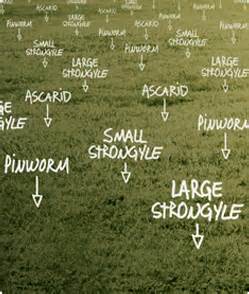
Whether you choose purge or daily deworming, you won’t kill some dangerous parasites unless you take additional steps. These troublemakers are bots, tapeworms, and encysted cyathostomes (one of the most destructive immature forms of small strongyles).

Here’s a general program to fight these parasites, but check with your vet to develop a program right for your horse and your particular area.

Bots. Ivermectin and moxidectin are the only available products effective against bots. In a purge deworming program, you can kill two birds with one stone by using one of these products on your regular late-fall and spring treatment dates. Time of year is critical, because fall’s’ first frost kills bot flies, giving you a leg up on reducing their population-especially if you follow up in the spring. Here’s what to do: After first frost, remove/kill any remaining bot eggs or larvae on your horse’s legs with a bot block or knife. Then use a purge dewormer to get rid of adult bots in his system. In spring, remove/kill any external eggs or larvae you may’ve missed in the fall, and deworm him again to zap any adult bots in his stomach before they lay eggs. Then you’ll start bot season (spring through early fall) with a clean slate.

If your horse is on a daily program, give him a dose of ivermectin or moxidectin in early spring and again in late fall, in addition to the daily dewormer.

Tapeworms. Some investigators believe daily deworming effectively controls tapeworms, but the evidence is conflicting. As an extra measure, you have three options:

1) give pyrantel pamoate (Strongid P or T), at twice the usual dose, 2 days in a row;
2) give pyrantel tartrate (daily dewormer), at 10 times the usual daily dose, 2 days in a row; or
3) use of the canine tapeworm medication prazi-quantel (Droncit), which your vet can prescribe for oral use in your horse (about $45 a dose).

You can use options one or two to replace your horse’s regular deworming treatments in spring and fall. Give Droncit in addition to the regular deworming treatment, but on a different day, to avoid possible drug interactions.

Encysted cyathostomes. Prevent encysted cyathostomes by putting your horse on a daily deworming program, or kill them by:

1) using moxidectin as a spring and/or fall treatment in your purge deworming program; or
2) replacing a regular spring and/or fall purge treatment with fenbendazole at twice the usual dose, for five days in a row.

Daily verses Purge Programs

For daily programs, it’s critical that your horse gets his daily dose daily, as missed doses will decrease the levels of dewormer in his system, rendering it less effective- See more at: http://www.equisearch.com/article/eqdeworm321#sthash.7cTzzRGc.dp

For purge programs, timing is key. If you treat too early, targeted worms will be too immature to be affected by the dewormer. If you treat too late, adult worms will have the opportunity to produce eggs, infesting your horse’s environment and raising his (and other horses’) risk of exposure.

I hope the information was as helpful for you as it has been for me.  For more information on worming and a  comparison of the products available click the link below.

PHHWV Equi Info Note – Equine Worming.

So Fresh & So Clean Clean

Step 1: Completely empty all shavings from the stall and all buckets, hay, feed, etc.

Step 2: Mix a 1/2 a cup of outdoor bleach with warm water

Step 3: Pour onto the mats

Step 4: Use a wide broom to scrub the liquid evenly

Step 5: Place fan in stall to dry the mats

Step 6: Once completely dry, add new shavings

Now you have a clean and sanitized stall!

clean barn

Pump, Pump, Pump It Up!

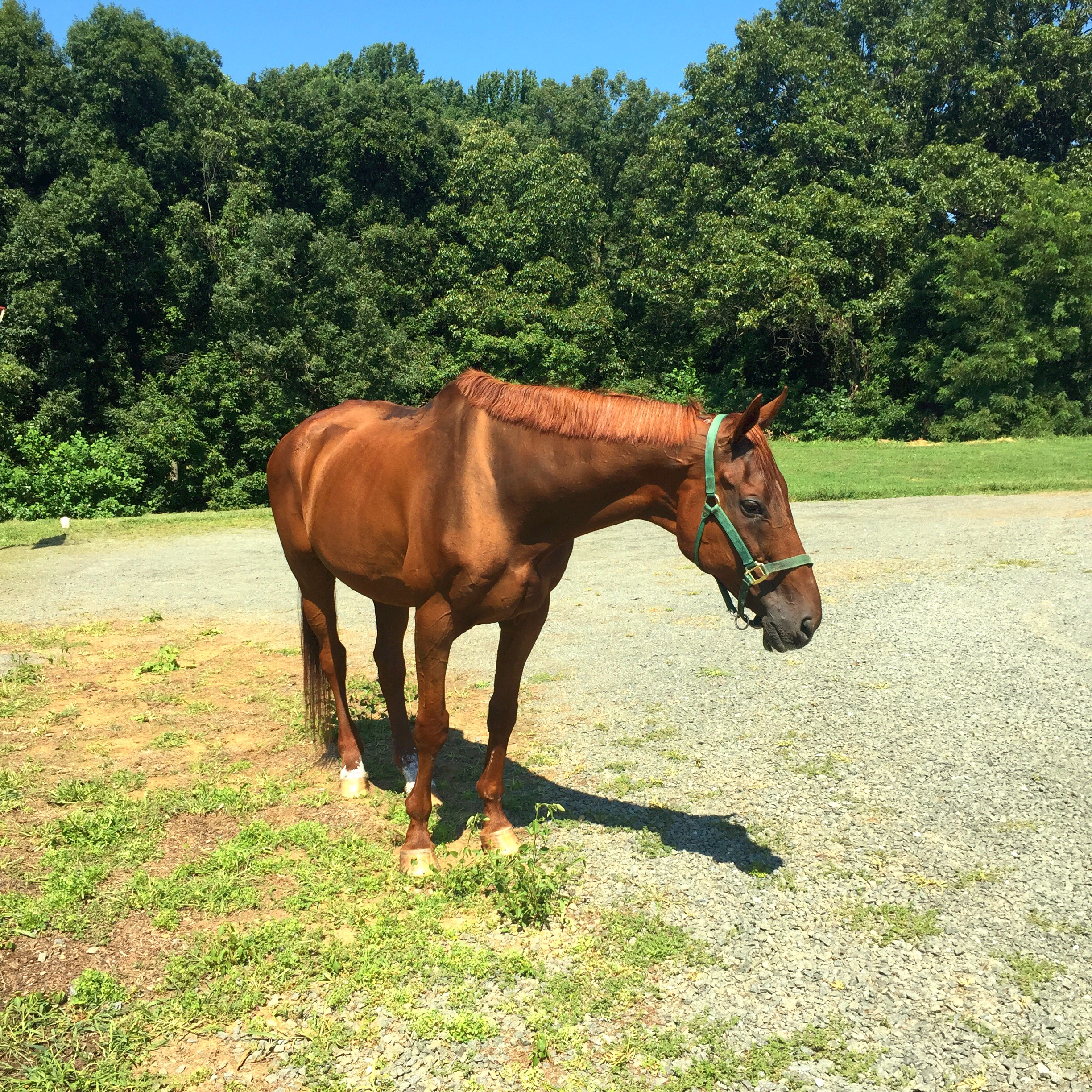
The vet came out to give Chance and Lucky their fall shots and do some follow up acupuncture on Chance.  The vet said that Chance has increased flexibility especially in his cervical spine and has gained weight and muscle mass!!!!!!

His feeding regiment is as follows:

AM:

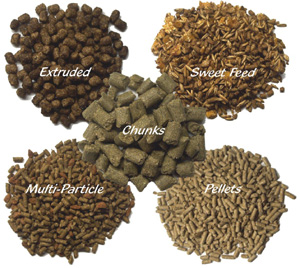
  1. 6 quarts of Nutrina Safe Choice Senior Feed
  2. 3 quarts hay stretcher
  3. Alfalfa hay mix (as much as he wants through out the day)

PM:

  1. 6 quarts of Nutrina Safe Choice Senior Feed
  2. 3 quarts hay stretcher
  3. Alfalfa hay mix (as much as he wants through out the day)
  4. 1 Scoops of DuraLactin (Natural anti-inflammatory and pain supplement)
  5. 1 SmartPak (Senior Flex, Immune Boost)

He is out all day when it is cool and all night when it is hot during the day. So he has tons of green grass to eat.  He walks constantly- up and down the hills- and runs around with Lucky.  We also walk ground poles and do stretches and massage every time I come out to the barn.

IMG_9796

We still need to continue upping his weight and muscle mass preferably before winter.  Fingers crossed.

Save

Rubber. And aluminum. And plastic. Oh My!

What type of shoe should I use on Chance’s back feet?

I am looking for something that is glue-on, provides support and comfort, that has good grip, while providing protection for his hoof from the rocky terrain.

After some research, I found GluShus- a company out of England. Their shoes sound fantastic. They have an aluminum shoe set in rubber that glues onto the hoof.  Read more about these shoes by clicking the link below.

GluShu

I’ll let you know how it goes!

GRIT

A while ago, one of my good girlfriends, sent me an article about perseverance; why some are able to withstand tremendous adversity while others can’t? The article referred to this concept of an individual’s strength to endure life’s obstacles, to succeed in the face of adversity, to remain positive and continue to move forward despite what is thrown ones way, as Grit. Those who are able to endure the obstacles-have it- and those who are unable to endure- don’t.

“In a recent article published by People in Aid, Scott Breslin argues that grit, and not just resilience, is a key component for aid workers. Grit is defined ‘as perseverance and passion for long-term goals. Grit entails working strenuously toward challenges, maintaining effort and interest over years despite failure, adversity, and plateaus in progress’ (Duckworth, et al. 2007: 1087-1088). Resilience instead is the human capacity to bounce back from difficult experiences.” (See more at: http://mindfulnext.org/aid-work-is-not-a-survival-contest/#sthash.OsqxZNnG.dpuf)

I can’t help but wonder if the concept of Grit may also apply to our four-legged friends? Because I am pretty sure that Chance has it. What makes living things able to remain positive and enthusiastic and continue to persevere despite being in tremendous pain?

I am truly humbled every time I look at Chance and I see a 25+ year old horse who has lived for years with painful flare-ups without a known cause…yet even at his absolute worse, he was still engaged in life…eating, whinnying, trying to run and play, giving kisses for treats…and now, after a year of ups and downs, triumphs and tribulations, stumbles and falls, medications and supplements, pokings and probings, needles and adjustments, samples and tests, and changes in just about every aspect of his life, he is finally in a healthy place!  (He is no longer on pain medications daily.  He maybe gets a dose a month or so. And does not have bouts of lameness or swelling).

What enables him to remain his calm and happy self despite all of the above?  How was he not biting and kicking with every prick of a needle?  How is his soul still gentle? How was he determined to walk up a small hill a year ago and now is able to run up that very same hill?  He loves every second of his life.  This may sound odd, but my old guy revels in every single second of his day.

He whinnies the moment I pull up into the driveway and greets me.  He devours every ounce of grass he can.  He often follows his friend and co-caretaker, John, to feed the chickens in the morning. He yells for his buddy, Lucky, when he can’t find him.  He runs every where he is able to including back and forth from the house to the barn- racing with Lucky.  He rolls around in the grass, the snow, or mud.  He will lay in the green grass basking in the sunshine.  He investigates everything around him.  And each and every time he stumbles, or even falls, he gets right back up and tries again.

To me, that is the essence of Grit…to keep on trucking through life with a soft heart and grateful and determined soul.

Duckworth, A. Peterson, C. Matthews, M., Kelly, D. (2007) “Grit: Perseverance and Passion for Long-Term Goals”, Journal of Personality and Social Psychology, Vol. 92(6), 1087-1101.

One Very Lucky Horse

I spoke to John- my right hand man- who said Chance was fine this am. No stiffness, swelling, or lameness! Chance went outside for a bit. When John came to let him back inside, Chance apparently was ready to go and ran up the hill to the barn!

Chance is one very lucky guy!

Lessons learned- get break away cross ties ASAP, don’t use cross ties while the farrier is working on my horse, and invest in a huge pad 😉 for Chance to stand on at all times!

The Luckiest Unlucky Day Ever

Today was not the greatest of days….but I will say that we had the luckiest unlucky day ever!  And, of course, it was a full moon tonight which means I should just stay inside.

Today we met with a new farrier.  I have been doing some research on shoes that provide comfort, support, and do not mess up Chance’s hooves like nails tend to especially when a horse is on rockier terrain.  I spoke with my vet who suggested to,   “put shoes on all 4 hooves with a 1 degree wedge pad on both hind shoes.  Set all 4 shoes back from the toe of the foot by at least a 1/4th an inch.”

I went to the farm a bit early and gave Chance a bath, some Equinox for pain, and got ready for the farrier.  The farrier arrived and Chance was great!  He stood on the cross ties and ate hay like a champ.  For some reason I decided to lengthen the cross ties.  I am not sure why exactly but thank God I did.

My dad and the farrier were with Chance while I went to feed Lucky his dinner.  Well, after I fed Luck, I turned the corner and saw that Chance was on the ground!  Yes, you read correctly, he was on the freaking ground…all 17.1 hands of him!  The moment I saw him our eyes met- I know it sounds like the beginning of a love story- and he immediately took a deep breath and calmed down.  I walked up to him and he slowly got up and stood there right in front of me with his head resting under my arm- breathing heavily and he had the beginnings of sweat covering his body.

I stood there and just spoke to him- calmly- telling him he was okay.  Once a few minutes had passed, and he was calm, I walked him forward to make sure he was okay.  Sure enough, he was fine…aside from some surface scrapes.  I cleaned his scrapes up and walked him outside to eat some grass.  After about ten minutes, I walked him back into the aisle for the farrier to finish up.

According to both my dad and the farrier, Chance was having his back left shoe nailed in when the nail hit a nerve and he flinched.  I guess the farrier didn’t realize this because he hit the nail once more.  That was when Chance reacted and went down.  Thankfully, the farrier got out of the way & removed the nail midair (so that Chance wouldn’t go down on the foot with the nail and drive it deeper).  Think of a splinter going under your nail…and then hitting it again, deeper under your nail….ouch!

However, he landed somewhat gracefully, but due to the cross ties not being break away and the concrete not allowing Chance to gain any “grip” with his newly shod feet, he began to panic.  Upon seeing me, he calmed down, and he was able to get back up.  I can’t help but thank my lucky stars that I had lengthened the cross ties so that he had some slack, and that I came back inside when I did…had I not, he would have kept flailing.  Had I been in there when the nail hit the nerve it may not have happened because I would have said something to the farrier.  However, had I been in there when it occurred, things may have also been far worse…since my dog, Sadie, is always right by Chance’s or my side at all times.

We ended up deciding to forgo putting hind shoes on until later (a few weeks) and the farrier removed the one evil hind shoe and trimmed up the other hoof.  Chance stood quietly and allowed him to complete his job.  I was so impressed with my old guy!

I have emailed my vet to see if she is able to come check on Chance tomorrow just in case…hopefully, Chance will just be a bit sore in the morning and nothing worse….:(

Untitled 2