Category Archives: Disease

Why Not?

While agreeing to save the ponies from slaughter, I saw a beautiful, senior mare. She is a 17 hand, 17-year old, Belgian mare who was an Amish workhorse until put into the auction. She is visibility underweight and her coat is dull and patchy but her eyes bright and soulful. I watched to see if she got rescued as her slaughter date was for 5/7/2020. Well, last night, I took the plunge and purchased the sweet girl.

Ever since losing Chance I have not had a desire to get another horse. Over a year ago a neighbor gave me a thoroughbred mare but shortly after she arrived I realized I was not ready and I had just learned I was pregnant. Fortunately, I was able to find her a wonderful forever home. However, upon coming across this Belgian I knew she was my next heart horse. The thing is I only have one paddocked fenced in that holds three miniature donkeys. So I am quickly getting things in order- scheduled to have another paddock fenced in, a large run-in dropped off, and everyones vaccinations up-to-date. One of my neighbors has a barn and paddocks and no other horses on the property and generously offered to allow my new mare and friend’s two ponies quarantine there for 30 days. By the time quarantine is over, the fence and run-in will be up and ready for the new members of the family!

There is also a ton of research that I need to do about owning a draft horse. They are a special breed and more susceptible to metabolic disorders and a ton of hoof issues. Once again I will be using this platform as a way to organize my ongoing research. Wish me luck!

Practical Biosecurity Tips to Protect Your Horses – The Horse

Learn equine biosecurity basics for the farm, horse show, and breeding shed to protect your horses from infectious diseases.
— Read on thehorse.com/features/practical-biosecurity-tips-to-protect-your-horse/

10 Common Horse Emergencies & the Skills You Need to Help – Horse Side Vet Guide

#1 Abdominal Pain, Colic Signs Perform Whole Horse Exam™ (WHE) Assess Color of Mucous Membranes Assess Demeanor or Attitude Assess Gut or Intestinal Sounds Assess Manure Assess Capillary Refill Time (CRT) by examining Gums Give Intramuscular (IM) Injection Give Oral Medication Sand Sediment Test…
— Read on horsesidevetguide.com/Common+Horse+Emergencies+and+the+Skills+You+Need+to+Help

EQUINE BOTULISM: An unknown threat

Equine Botulism

Written by Dr. Tom Lenz on behalf of AQHA 

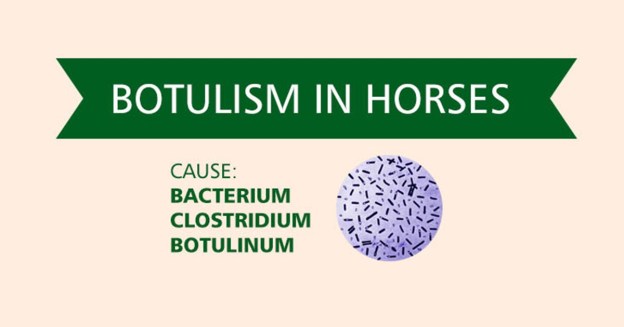
Few horse owners are aware of this disease which is a progressive, paralyzing disease that is 80-100% fatal in affected horses.  Botulism is sometimes referred to as “forage poisoning” in adult horses or “shaker foal syndrome” in foals. The disease is caused by a potent toxin that is produced by the bacterium Clostridium botulinum. This bacterium lives in the soil as well as the intestinal tract of many normal birds and mammals, including the horse. It produces dormant spores that can be found in 18.5% of soil samples tested in the United States. The disease is most prevalent in Kentucky, Ohio, Maryland, Pennsylvania, California, and Tennessee although it can occur in any state in the U.S. Clostridium botulinum produces several different toxins. Type A toxins are often implicated in human infant botulism and are most often found west of the Rocky Mountains. Types B, C, and D toxins are usually involved in cases of equine botulism, with Type B responsible for 85% of horse cases in the U.S.

Horses of any age are susceptible to botulism which may be initiated by one of three ways. In the case of “forage poisoning” the horse ingests toxins that are contaminating feedstuffs such as grain or hay. Feed contamination is most often due to putrefied carcasses of birds or rodents. A Type C botulism outbreak that killed a number of horses in California several years ago was traced back to hay that contained the infected carcass of a rabbit. The bacteria can also enter a horse’s body via contamination of a wound, especially a deep puncture wound. A good example is “Shaker foal syndrome” which is most frequently caused by the bacteria entering the newborn foal’s body through the foal’s moist navel. Something that can be minimized by dipping the foal’s navel in mild iodine solution soon after birth. The third method in which the disease can be initiated is by ingestion of the spores in the soil. The ingested spores activate in the horse’s intestinal tract where they produce potent toxins that are then absorbed. Regardless of the route, once the bacteria have entered the horse’s body they produce toxins that block transmission of nerve impulses to the horse’s muscles. This results in a progressive paralysis of all the major muscle groups and is concluded with paralysis of the diaphragm, which results in death. Once symptoms develop, death may ensue in several hours or take up to a week.

The disease is difficult to diagnose because it resembles several other medical conditions and diseases such as choke, colic, rabies, EPM, and sleeping sickness. Blood samples very rarely contain toxin and necropsy following the death of the horse usually does not provide a conclusive diagnosis. Because the bacteria often occur naturally in the horse’s intestinal tract, isolation of the organism from the sick horse’s intestine is not diagnostic.

Clinical signs of the disease in adult horses suffering from “forage poisoning” initially include loss of facial expression, a sleepy appearance, saliva drooling from the corner of the mouth, loss of tongue control and loss of tail tone. The horse’s appetite is good, but it has a great deal of difficulty in chewing food and appears to be “playing” in their feed and water buckets. As muscular weakness becomes more profound, the horse will experience muscle trembling, generalized sweating and labored breathing. A weakened, shuffling gait may develop and the horse may take stiff, short steps as if walking on eggs. Eventually, the horse goes down and death results due to paralysis of the respiratory muscles. “Shaker foal syndrome” is usually seen in foals one to two months of age but can develop as early as two weeks or as late as 8 months of age. Early signs in foals are similar to those seen in adults in that the foal shows generalized weakness, poor tail tone, and loss of tongue control. The foal will often dribble milk from the mouth and nostrils because of an inability to swallow. Because of muscle weakness, the foal will lie down frequently. When it does rise, it soon develops muscle tremors and collapses. Affected foals may die within 12 hours of exhibiting symptoms or may linger for as long as a week.

Botulism is usually fatal if left untreated. Prior to the advent of antitoxin, the death rate among affected foals was greater than 90%. With the use of antitoxins in conjunction with antibiotics and supportive therapy, the mortality rate can be reduced to less than 25%. Animals unable to swallow should be fed through a nasogastric tube and placed on IV fluids. Once the toxin produced by the bacteria is attached to the nerve ending it cannot be neutralized by the antitoxin. Therefore, early treatment is critical. Even with aggressive therapy, recovery is slow and may require up to two weeks before the affected horse recovers.

Because of the high death rate and the difficulty in diagnosing this disease, prevention through vaccination is critical. A Type-B Toxoid vaccine is available and is quite effective in preventing the disease. In areas where the disease is prevalent, pregnant mares should be initially vaccinated at the 8th, 9th and 10th month of gestation and thereafter at the 10th month of each pregnancy. Yearly vaccination of adults in areas where the disease frequently occurs is also recommended. If unable to vaccinate the mare prior to foaling, limited information suggests that foals vaccinated with the toxoid at 2 weeks, 4 weeks and at 8 weeks of age developed adequate protection, even in the presence of passive maternal antibodies. Currently, no licensed vaccines are available for preventing botulism due to Cl. botulinum types A or C or other subtypes of toxins. Cross-protection between subtypes does not occur.

As in all horse health issues, your local veterinarian is your best source of information.

ABOUT THE AUTHOR: Thomas R. Lenz, DVM, M.S., Diplomate of the American College of Theriogenologists, is a trustee of the American Horse Council, past chairman of AQHA’s research committee and past president of the American Association of Equine Practitioners. This article is provided courtesy of AAEP Alliance Partner, AQHA.

 
Reviewed and updated by original author in 2016.

Spotting Lameness: The Game Plan

Spotting Lameness: The Game Plan
— Read on horsenetwork.com/2018/10/spotting-lameness-game-plan/

Core Vaccination: Protecting Horses From 5 Deadly Diseases – The Horse

Learn about the diseases veterinarians recommend protecting your horse against and how vaccination could save your horse’s life.
— Read on thehorse.com/features/core-vaccination-protecting-horses-from-5-deadly-diseases/

When it rains…

ker.com/equinews/white-line-disease-requires-early-diagnosis-and-aggressive-treatment/

Botulism: It Takes Less to Kill a Horse than a Mouse!

Register now for Ask TheHorse Live “Botulism: Deadly to Horses” Thursday, Aug. 9, 8 p.m. EST!

For more information click the link below!

Botulism in horses

Fact: It takes less botulism toxin to kill a horse than a mouse. Yet, it might lurk in your horse’s hay. Find out why horses are at risk and how to protect them.


Wobbler Syndrome: Proof At Last!

CT Scans Allows Quantitative Wobbler Syndrome Evaluation | TheHorse.com

Study Finds ‘Horse Bug’ in People is Caused by Actual Virus

Being obsessed with horses isn’t ‘a passion’ reveal researchers.

It’s a disease.

©Umberto Salvagnin/Flickr CC

Researchers at the Johns Hopkins University School of Medicine in Baltimore have found that a heightened interest in horses and the compulsion to be around them at all times, is linked to the virus Ecus solidamentum.

“We’ve nicknamed the disease the ‘horse bug’,” says the study’s lead author, Dr. Ivan Toride. “But all joking aside, it seems to be a serious affliction that has real repercussions for sufferers.”

The study reports that people infected with Ecus solidamentum lose all rational thought processes when exposed to equines. Sufferers will ignore physical injuries, strained personal relationships and financial troubles just to spend more time with horses. Dr. Toride admits it’s a startling discovery to find a physical cause behind what was once thought to be only a mental affliction.

People generally become infected through mosquito bites, which is why those who already spend time in barns and outdoors with horses seem to be more susceptible. Interestingly, the researchers found infection rates are higher among middle-age women and that they are the most symptomatic when infected. Teenage girls also have a high susceptibility to the virus, but the disease seems to resolve itself in many by the time the girls reach their 20s.

“It’s a multi-faceted disease that will require much more investigation,” says Dr. Toride. “We still don’t understand the exact viral mechanism that affects the brain’s functioning, or why women in particular seem to be more susceptible.”

Anita Notherpony, who was infected with Ecus solidamentum last year, participated in Dr. Toride’s study. In the last 12 months, her behaviour around horses has become more erratic as the virus has spread through her body. “I lost my job because I couldn’t stay away from the barn. When I did go to work, all I did was read articles about horses or look at horses for sale,” she says.

“It started slowly, I thought it was just a new interest at first. But when I spent my entire pay check at the tack store, I began to suspect there was something deeper was at play.”

When Notherpony read about Dr. Toride’s research in an article in a horse magazine, a lightbulb went off. “I just said, ‘this is me.’”

Notherpony immediately contacted the research team for help. “Dr. Toride diagnosed me. At least I now have an explanation for what is happening. I know this disease is ruining my life, but it’s a compulsion I can’t control. I just hope they find a cure.”

Recently, Notherpony secretly sold her husband’s car for a third horse. At the time of this writing, it was unclear if her husband would be able to continue his employment without a way to get to work, leaving them both in a precarious financial situation.

Betraying the seriousness of her disease, a rapidly deteriorating Notherpony didn’t seem to be able to grasp the severity of the situation during an interview with Horse Network. “He’ll just have to find some other way to get to work. I need to buy another saddle next week,” she said.

It’s situations like these that are pushing Dr. Toride and his team to work overtime to find a cure for Ecus solidamentum. “It’s frightening to see how this disease can affect a mind. We can only hope we stumble across a cure soon,” he says.


Current Breakthroughs in Equine Research

Over the past 30 years the Grayson-Jockey Club Research Foundation has funneled nearly $20 million into studies aimed at improving horse health. This year the effort continues with funding for a dozen new projects in fields ranging from laminitis to lameness diagnosis. A sampling:

Detecting lameness at the gallop: Kevin Keegan, DVM, of the University of Missouri, is developing an objective method (using a calibrated instrument) for detecting obscure, subtle lameness in horses at the gallop. The goal is a low-cost method that can be used in the field to increase understanding of lameness in racehorses.

Deworming and vaccines: While it’s not unusual to deworm and vaccinate horses on the same day, recent findings have raised concerns about possible interactions. Martin Nielsen, DVM, of the University of Kentucky and Gluck Equine Research Center, is investigating whether deworming causes an inflammatory reaction that affects vaccination.

Imaging injured tendons: Horses recovering from tendon injuries are often put back to work too soon and suffer re-injury. Sabrina Brounts, DVM, of the University of Wisconsin–Madison, is exploring a new method developed at the university to monitor healing in the superficial digital flexor tendon. The technique, called acoustoelastography, relates ultrasound wave patterns to tissue stiffness: Healthy tendon tissue is stiffer than damaged tissue.

Detecting laminitis early: Hannah Galantino-Homer, VMD, of the University of Pennsylvania, is investigating possible serum biomarkers (molecular changes in blood) that appear in the earliest stages of laminitis. The goal is to develop tests for these disease markers so that treatment can start when laminitis is just developing, before it’s fullblown and damages the foot.

Other new studies include evaluations of a rapid test for salmonella; investigation of how neurologic and non-neurologic equine herpesvirus 1 (EHV-1) spreads cell-to-cell in the body; an effort to map the distribution of stem cells after direct injection into veins; and more.

This article originally appeared in the June 2013 issue of Practical Horseman.

Gut Check: A New View from the Inside

Researchers are testing an endoscopic camera, contained in a small capsule and placed directly into the horse’s stomach, to gather imagery of the equine intestinal tract. The capsule sends images to an external recorder, held in place by a harness.

Researchers are testing an endoscopic camera, contained in a small capsule and placed directly into the horse’s stomach, to gather imagery of the equine intestinal tract. The capsule sends images to an external recorder, held in place by a harness.

Courtesy, Western College of Veterinary Medicine

Traditionally, veterinarians’ and researchers’ view of the equine intestinal tract has been limited. Endoscopy (inserting through the horse’s mouth a small camera attached to a flexible cable to view his insides) allows them to see only as far as the stomach. While ultrasound can sometimes provide a bigger picture, the technology can’t see through gas—and the horse’s hindgut (colon) is a highly gassy environment.

These limitations make it hard to diagnose certain internal issues and also present research challenges. But the view is now expanding, thanks to a “camera pill” being tested by a team at the University of Saskatchewan, led by Julia Montgomery, DVM, PhD, DACVIM. Dr. Montgomery worked with a multi-disciplinary group, including equine surgeon Joe Bracamonte, DVM, DVSc, DACVS, DECVS, electrical and computer engineer Khan Wahid, PhD, PEng, SMIEEE, a specialist in health informatics and imaging; veterinary undergraduate student Louisa Belgrave and engineering graduate student Shahed Khan Mohammed.

In human medicine, so-called camera pills are an accepted technology for gathering imagery of the intestinal tract. The device is basically an endoscopic camera inside a small capsule (about the size and shape of a vitamin pill). The capsule, which is clear on one end, also contains a light source and an antenna to send images to an external recording device.

The team thought: Why not try it for veterinary medicine?

They conducted a one-horse trial using off-the-shelf capsule endoscopy technology. They applied sensors to shaved patches on the horse’s abdomen, and used a harness to hold the recorder. They employed a stomach tube to send the capsule directly to the horse’s stomach, where it began a roughly eight-hour journey through the small intestine.

The results are promising. The camera was able to capture nearly continuous footage of the intestinal tract with just a few gaps where the sensors apparently lost contact with the camera. For veterinarians, this could become a powerful diagnostic aid for troubles such as inflammatory bowel disease and cancer. It could provide insight on how well internal surgical sites are healing. It may also help researchers understand normal small-intestine function and let them see the effect of drugs on the equine bowel.

The team did identify some challenges in using a technology designed for humans. They realized that a revamp of the sensor array could help accommodate the horse’s larger size and help pinpoint the exact location of the camera at any given time. That larger size also could allow for a larger capsule, which in turn could carry more equipment—such as a double camera to ensure forward-facing footage even if the capsule flips.

With this successful trial run, the team plans additional testing on different horses. Ultimately, they hope to use the information they gather to seek funding for development of an equine-specific camera pill.

“From the engineering side, we can now look at good data,” Dr. Wahid explained. “Once we know more about the requirements, we can make it really customizable, a pill specific to the horse.”

This article was originally published in Practical Horseman’s October 2016 issue. 

Misunderstood, Misused, & Misdiagnosed Disease #2: Lyme Disease

I hope you enjoyed reading about Misunderstood, Misused, & Misdiagnosed Disease #1: EPM.  In that post I explained how some horse enthusiasts (trainers, owners, etc) have used this disease to e…

Source: Misunderstood, Misused, & Misdiagnosed Disease #2: Lyme Disease