

Category Archives: Donkey
Why Not?
While agreeing to save the ponies from slaughter, I saw a beautiful, senior mare. She is a 17 hand, 17-year old, Belgian mare who was an Amish workhorse until put into the auction. She is visibility underweight and her coat is dull and patchy but her eyes bright and soulful. I watched to see if she got rescued as her slaughter date was for 5/7/2020. Well, last night, I took the plunge and purchased the sweet girl.
Ever since losing Chance I have not had a desire to get another horse. Over a year ago a neighbor gave me a thoroughbred mare but shortly after she arrived I realized I was not ready and I had just learned I was pregnant. Fortunately, I was able to find her a wonderful forever home. However, upon coming across this Belgian I knew she was my next heart horse. The thing is I only have one paddocked fenced in that holds three miniature donkeys. So I am quickly getting things in order- scheduled to have another paddock fenced in, a large run-in dropped off, and everyones vaccinations up-to-date. One of my neighbors has a barn and paddocks and no other horses on the property and generously offered to allow my new mare and friend’s two ponies quarantine there for 30 days. By the time quarantine is over, the fence and run-in will be up and ready for the new members of the family!
There is also a ton of research that I need to do about owning a draft horse. They are a special breed and more susceptible to metabolic disorders and a ton of hoof issues. Once again I will be using this platform as a way to organize my ongoing research. Wish me luck!
Save A Horse and Gain A Friend
My friend called me late last night, “Lets save these two miniature ponies from slaughter!” Intrigued, I clicked on the videos and saw these adorable little guys prancing around. Shaggy, needing a bit of weight, and a ton of love. Price was $460.00. Basically, the price for their meat. I reached out to another one of my girlfriends to convinced her to buy one of the three we were looking at- she agreed!
The next morning, I went to the website and one of the three had already been rescued but the other two were still available. I clicked “add to cart” and checked out via PayPal. We were actually buying ponies the same way I purchased paper towels off Amazon. We later contacted the livestock auction to arrange shipping from Texas to Virginia and I have to say, the woman we spoke to was beyond helpful and you could tell she truly cared about these horses. So for now, we are anxiously awaiting their arrival to their forever homes. These horses are priced to sell. Some are put up for sale by individuals who plan to take them back if they are not sold- basically like consignment. Whereas other horses are put up for sale and if they are not sold they are slaughtered. Our two were going to be sent for slaughter if they were not sold. 😦
For more information and to see available horses, donkeys, ponies and mules visit Bowie Auction Horses.
https://bowieauctionhorses.com/current-horses?olsPage=products

Equine Teeth Do What?!
The other day I was outside with a girlfriend and her two boys (6 ft apart) as they were feeding one of my miniature donkeys, Trou, a carrot. They turned and said, “That one is missing a tooth!” I smiled and upon realizing that they said went over to look for myself. Sure enough my Trou has a cracked, half missing tooth! I did a quick check- no cuts, swelling, abrasions, no puffiness, heat, and he did not seem to be in any pain. I called the vet and explained what was going on and that I needed them to come out to pull my donkey’s tooth since it was cracked so close to the gum line (like a human would have done). They came out two days later and simply said “it will grow back.” I was completely shocked! “It will what?!” The vet explained that equine (horse, mule, donkey) teeth grow. They have a very long root that as the tooth wears down, it continues to grow. I asked why a horse that cribs ends up having nubs for teeth. The vet explained that due to cribbing a horse will use up their “reserve” faster than most other horses so by the time they hit their late 20’s they no longer have any growth left. Sure enough, a week later, I checked on Trou’s tooth and it was almost back to normal!
For more information on equine teeth click on the link below:
https://www.thesprucepets.com/learn-about-your-horses-teeth-1885784
Passion For Horses Is Not A Learned Behavior – We Are Born With It! –
Passion For Horses Is Not A Learned Behavior – We Are Born With It! –
— Read on horses-world.com/2018/09/01/passion-for-horses-is-not-a-learned-behavior-we-are-born-with-it/
Quit horsin’ around: 10 top facts you probably didn’t know about donkeys – Horsetalk.co.nz
It’s Donkey Week and there is probably a lot you don’t know about hese gentle and highly intelligent animals.
— Read on www.horsetalk.co.nz/2018/05/09/donkey-week-facts/
Practical Biosecurity Tips to Protect Your Horses – The Horse
Learn equine biosecurity basics for the farm, horse show, and breeding shed to protect your horses from infectious diseases.
— Read on thehorse.com/features/practical-biosecurity-tips-to-protect-your-horse/
Everyone needs a mini donkey

Microscopic Parasites in Equine
https://microscope-microscope.org
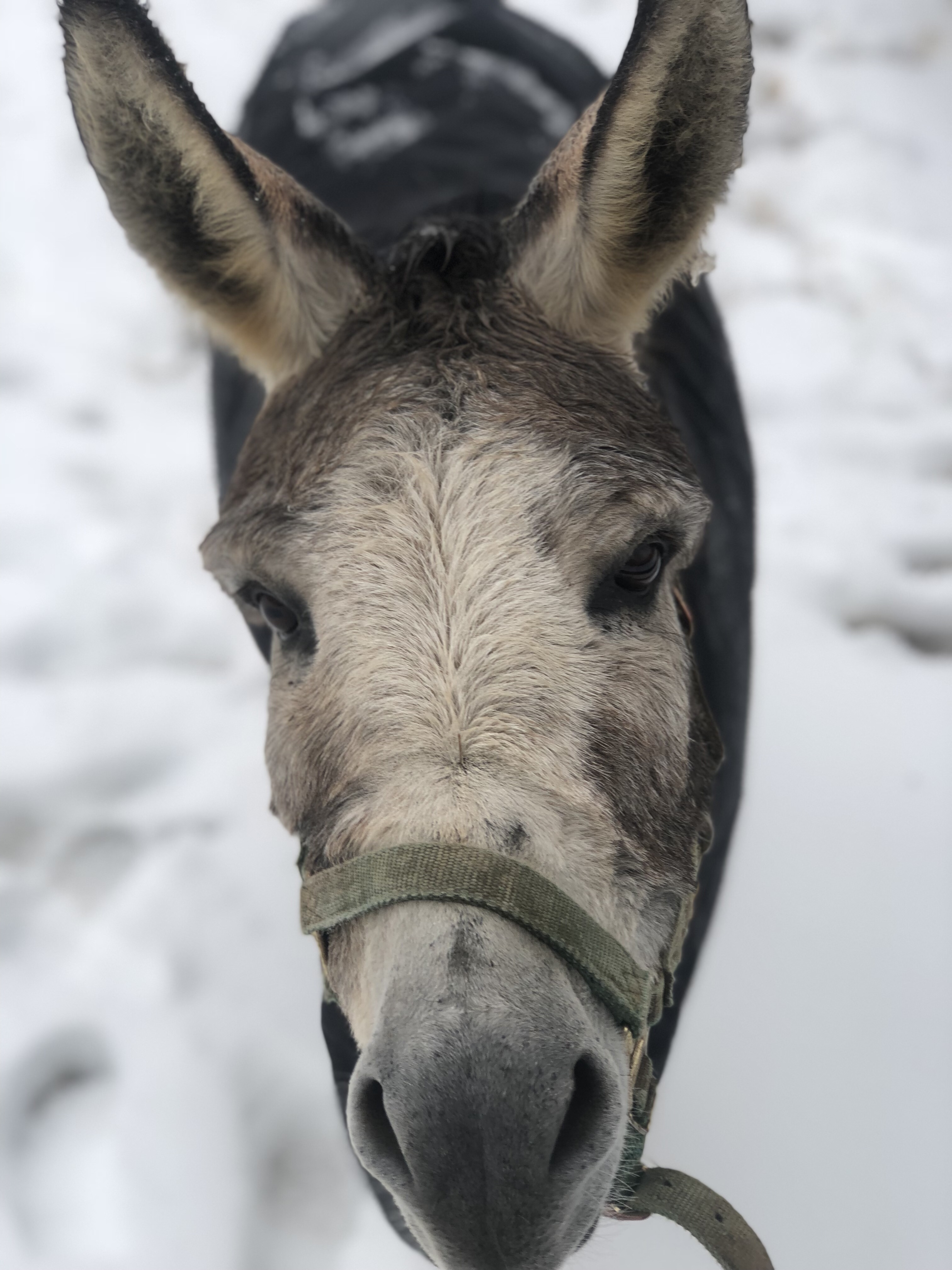
Donkeys Need Blankets

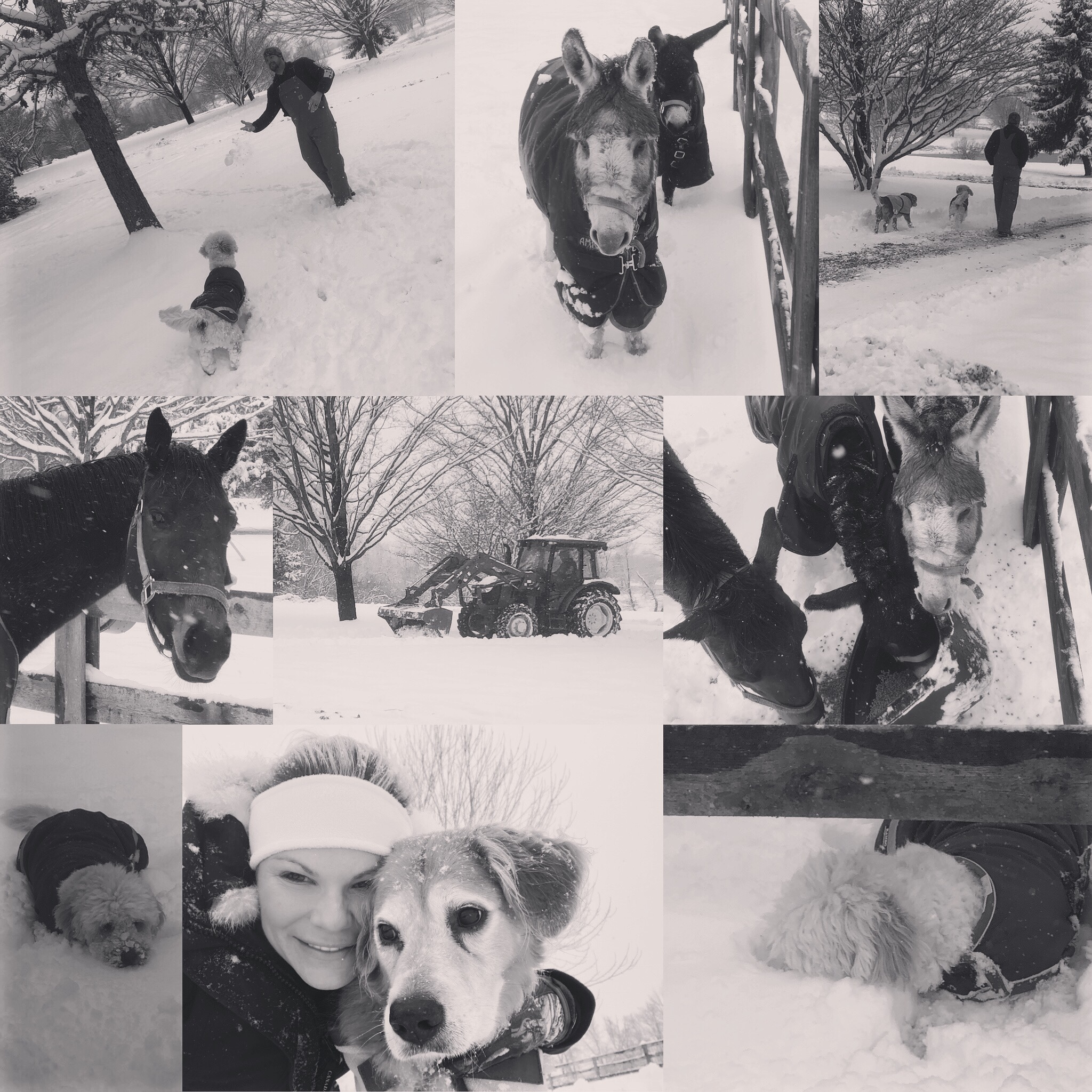
Another Day In the Snow!



Snow Days in Bluemont

Don’t Bury an Animal with Botulism
The facts of life and death – correct carcass disposal an essential part of biosecurity plans
By Dr Sarah-Jane Wilson, Livestock Biosecurity Network Northern Regional Manager
Death, unfortunately, is one of the most inescapable elements of life and one that, when it occurs within the livestock production chain, raises a litany of biosecurity issues.
Animal carcasses can pose a serious risk to both human and animal health, can jeopardise biosecurity and impose a range of environmental impacts if not properly disposed of. These risks can include polluting water courses, spreading disease and interfering with community amenity.
The old practice of simply leaving a carcass anywhere in the paddock to rot simply does not stack up in a modern livestock industry where the implications of incorrect carcass management are better understood.
In fact, depending on where you live, there may be local, state or national regulatory requirements that relate to your on-farm waste management procedures and I encourage you to make yourself familiar with these obligations.
We strongly recommend carcass disposal is integrated into your on-farm biosecurity plan and that you consider the methods available to dispose of animal carcasses or animal waste products including hide, gut or bones after home slaughter or wool that is not suitable for baling. Another important consideration is the equipment you may need to assist in this disposal.
If you live on a small farm, your best alternative may be to engage a specialist disposal service as opposed to burial or on-site burning. Again, there may be some regulatory requirements for producers in higher density areas and I encourage you to seek the advice of your local council or departmental staff to ensure you adhere to any applicable guidelines. Generally speaking burial is often the most practical and preferred method of disposal on a small farm if you do not have access to a disposal service.
For all producers, your geographic location and common endemic diseases should be taken into consideration. For example, if you live in a botulism affected area, burning is the recommended and preferred method. Botulism spores can live in the soil for many years, so simply burying the carcass will not suffice.
If you have multiple sudden deaths in your herd or flock, and/or do not know the cause of death, then it is best practice to investigate. Your local veterinarian or animal health/biosecurity officer may be able to provide further information. If you suspect an emergency or unusual disease, you should report this as soon as possible to your local animal health authority.
For more information, the NSW Environmental Protection Agency and the Tasmanian Environmental Protection Agency provide some good advice, as do most of the other applicable state departments, on how to effectively and responsibly dispose of the livestock carcasses on your property.
Top tips
Choosing a site (Source: NSW EPA)
If the carcasses must be disposed of on-site, it is preferable to have:
- A burial area at least 100m away from houses or watercourses
- The pit base at least 1m above the level of the watertable
- Heavy soil of low permeability and good stability
- Good access to the site for earthmoving machinery and stock transport unless the stock are to be walked in for slaughter.
Other pit considerations (Source: Tas EPA)
- Sawdust can be added to the bottom of pits to reduce risk of leachate generation
- It is not recommended that lime be added to pits unless there is a biosecurity reason for doing so as this will reduce the decomposition rate of the carcasses
- Surface drainage should be directed away from the pit location by setting up diversion drains up slope of the pit location
- When full, the pit must be covered with a minimum of 1m soil. The soil should be mounded over the pit to prevent rain collecting and it should be remembered the pit cover will subside as the carcasses break down.
If you need to burn (Source: NSW EPA)
- To reduce swelling during decomposition, the abdomens and paunches of all the carcasses should be opened to allow gases to escape.
- The carcasses should be sprayed with sump oil if immediate burial or burning is impractical.
- They should be heaped in a secluded spot away from watercourses and sump oil should be spread liberally over the heap. The oil discourages flies and scavenger and the heap can then be burned later.
Planning ahead for what to do with a carcass or, multiple carcasses in the event of a natural disaster, can substantially reduce the stress of the moment. It can also make a dramatic contribution to the biosecurity soundness of your property and our greater livestock industries.
Here at LBN we’ve designed a small template to assist producers in thinking through the options that best work for them. This can be found at: http://www.lbn.org.au/farm-biosecurity-tools/on-farm-biosecurity-planning-tools/.
- Dr Sarah-Jane Wilson is the Livestock Biosecurity Network’s regional officer for Northern Australia. She can be contacted or 0437 725 877 or email sjwilson@lbn.org.au.
Ends
EQUINE BOTULISM: An unknown threat
Equine Botulism
Written by Dr. Tom Lenz on behalf of AQHA
Few horse owners are aware of this disease which is a progressive, paralyzing disease that is 80-100% fatal in affected horses. Botulism is sometimes referred to as “forage poisoning” in adult horses or “shaker foal syndrome” in foals. The disease is caused by a potent toxin that is produced by the bacterium Clostridium botulinum. This bacterium lives in the soil as well as the intestinal tract of many normal birds and mammals, including the horse. It produces dormant spores that can be found in 18.5% of soil samples tested in the United States. The disease is most prevalent in Kentucky, Ohio, Maryland, Pennsylvania, California, and Tennessee although it can occur in any state in the U.S. Clostridium botulinum produces several different toxins. Type A toxins are often implicated in human infant botulism and are most often found west of the Rocky Mountains. Types B, C, and D toxins are usually involved in cases of equine botulism, with Type B responsible for 85% of horse cases in the U.S.
Horses of any age are susceptible to botulism which may be initiated by one of three ways. In the case of “forage poisoning” the horse ingests toxins that are contaminating feedstuffs such as grain or hay. Feed contamination is most often due to putrefied carcasses of birds or rodents. A Type C botulism outbreak that killed a number of horses in California several years ago was traced back to hay that contained the infected carcass of a rabbit. The bacteria can also enter a horse’s body via contamination of a wound, especially a deep puncture wound. A good example is “Shaker foal syndrome” which is most frequently caused by the bacteria entering the newborn foal’s body through the foal’s moist navel. Something that can be minimized by dipping the foal’s navel in mild iodine solution soon after birth. The third method in which the disease can be initiated is by ingestion of the spores in the soil. The ingested spores activate in the horse’s intestinal tract where they produce potent toxins that are then absorbed. Regardless of the route, once the bacteria have entered the horse’s body they produce toxins that block transmission of nerve impulses to the horse’s muscles. This results in a progressive paralysis of all the major muscle groups and is concluded with paralysis of the diaphragm, which results in death. Once symptoms develop, death may ensue in several hours or take up to a week.
The disease is difficult to diagnose because it resembles several other medical conditions and diseases such as choke, colic, rabies, EPM, and sleeping sickness. Blood samples very rarely contain toxin and necropsy following the death of the horse usually does not provide a conclusive diagnosis. Because the bacteria often occur naturally in the horse’s intestinal tract, isolation of the organism from the sick horse’s intestine is not diagnostic.
Clinical signs of the disease in adult horses suffering from “forage poisoning” initially include loss of facial expression, a sleepy appearance, saliva drooling from the corner of the mouth, loss of tongue control and loss of tail tone. The horse’s appetite is good, but it has a great deal of difficulty in chewing food and appears to be “playing” in their feed and water buckets. As muscular weakness becomes more profound, the horse will experience muscle trembling, generalized sweating and labored breathing. A weakened, shuffling gait may develop and the horse may take stiff, short steps as if walking on eggs. Eventually, the horse goes down and death results due to paralysis of the respiratory muscles. “Shaker foal syndrome” is usually seen in foals one to two months of age but can develop as early as two weeks or as late as 8 months of age. Early signs in foals are similar to those seen in adults in that the foal shows generalized weakness, poor tail tone, and loss of tongue control. The foal will often dribble milk from the mouth and nostrils because of an inability to swallow. Because of muscle weakness, the foal will lie down frequently. When it does rise, it soon develops muscle tremors and collapses. Affected foals may die within 12 hours of exhibiting symptoms or may linger for as long as a week.
Botulism is usually fatal if left untreated. Prior to the advent of antitoxin, the death rate among affected foals was greater than 90%. With the use of antitoxins in conjunction with antibiotics and supportive therapy, the mortality rate can be reduced to less than 25%. Animals unable to swallow should be fed through a nasogastric tube and placed on IV fluids. Once the toxin produced by the bacteria is attached to the nerve ending it cannot be neutralized by the antitoxin. Therefore, early treatment is critical. Even with aggressive therapy, recovery is slow and may require up to two weeks before the affected horse recovers.
Because of the high death rate and the difficulty in diagnosing this disease, prevention through vaccination is critical. A Type-B Toxoid vaccine is available and is quite effective in preventing the disease. In areas where the disease is prevalent, pregnant mares should be initially vaccinated at the 8th, 9th and 10th month of gestation and thereafter at the 10th month of each pregnancy. Yearly vaccination of adults in areas where the disease frequently occurs is also recommended. If unable to vaccinate the mare prior to foaling, limited information suggests that foals vaccinated with the toxoid at 2 weeks, 4 weeks and at 8 weeks of age developed adequate protection, even in the presence of passive maternal antibodies. Currently, no licensed vaccines are available for preventing botulism due to Cl. botulinum types A or C or other subtypes of toxins. Cross-protection between subtypes does not occur.
As in all horse health issues, your local veterinarian is your best source of information.
ABOUT THE AUTHOR: Thomas R. Lenz, DVM, M.S., Diplomate of the American College of Theriogenologists, is a trustee of the American Horse Council, past chairman of AQHA’s research committee and past president of the American Association of Equine Practitioners. This article is provided courtesy of AAEP Alliance Partner, AQHA.
Reviewed and updated by original author in 2016.
Spotting Lameness: The Game Plan
Spotting Lameness: The Game Plan
— Read on horsenetwork.com/2018/10/spotting-lameness-game-plan/
 The Chances We Take