Tag Archives: Diagnosis

White line Disease (or Seedy Foot) in Donkeys

White Line Disease is extremely common in donkeys and can cause major issues if severe or left untreated.

What is White Line Disease or Seedy Toe?:

The white line is seen on the underside of the foot. It is where the unpigmented horn of the inner hoof wall joins the horn of the sole. Degeneration of the horn at the white line leads to separation of the hoof wall from the underlying structures and weakening of the hoof wall.

Risk Factors:

The reason why WLD occurs isn’t fully known, but anaerobic bacteria and fungi alongside poor foot hygiene play an important role in the development of the disease.


Some of the risk factors associated with the development of this condition are;

  1. 1. The presence of horn digesting microbes (Pseudoallscheria boydii, Scopulariopsis spp., Aspergillus spp, Fusobacterium necrophorum, penicillium spp.)
  2. 2. A wet and humid environment, poor foot hygiene,
    3. Pre-existing laminitis resulting in a stretched white line
    4. Hereditary factors.

  3. Donkeys seem to be more susceptible to WLD than horses. It can affect any of the four feet and recurrence is common. Generally donkeys with WLD will not be lame, but depending on the severity of the pathology or the presence of other associated diseases, lameness could be present.

Prevention:

Maintaining good foot hygiene and regular foot care will help to prevent the occurrence of WLD. The following are best practice for prevention of this condition:

  • 1. Clean the hooves daily, monitoring the integrity of the white line and the rest of hoof structures.
  • 2. Change bedding frequently, avoiding humidity and accumulation of faeces and urine, especially in wet seasons.
  • 3. Arrange for your farrier to check and trim the feet every six to ten weeks depending on the amount of exercise/wear, the age of the donkey and/or the presence of hoof pathology.
  • 4. Avoid grease or similar products as they reduce horn oxygenation and can create an environment that encourages proliferation of horn digesting microbes.
  • 5. Monitor animals with a history of WLD closely as they will be more susceptible to recurrence.
  • 6. Good, clean hard standing and dry bedding are important for the health of all donkeys’ feet, but for animals with recurrent WLD it is very important.

Treatment Options:

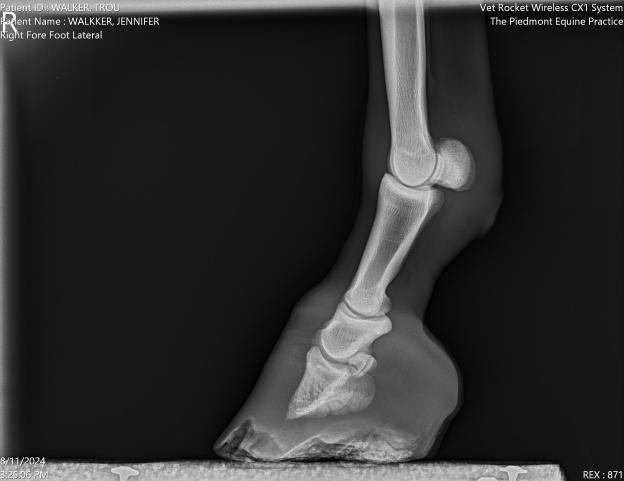
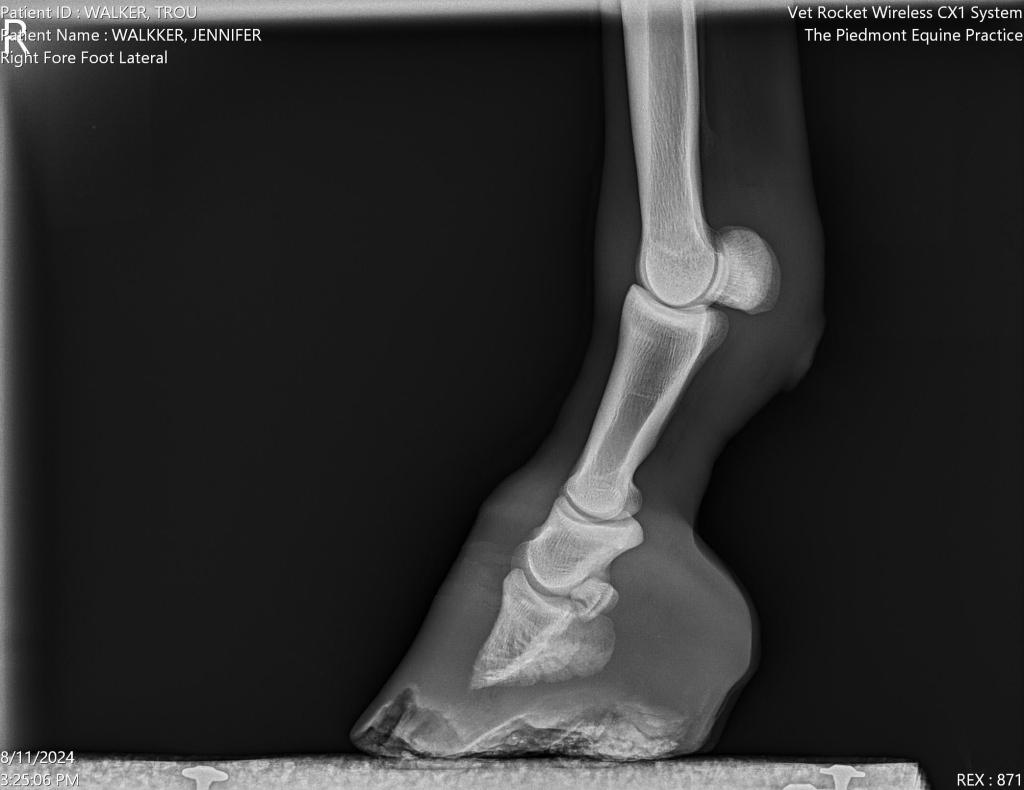
1. Resection: Your farrier or vet will remove all the damaged horn. This procedure should not be painful but it may be necessary to remove a lot of hoof wall if the disease has progressed. In some circumstances it may be necessary to take an x-ray before removing a large amount of hoof wall to check the stability of the pedal bone.

2. Cleaning and Medicine: Once all the damaged horn has been removed, the hoof needs to be kept clean with daily hoof picking and brushing to remove as much organic matter as possible. Once the foot is clean topical disinfectants (eg povidone iodine, hydrogen peroxide or zinc sulfate) in solutions or sprays are useful to reduce microbial contamination.

3. Other Treatments: Removing all the abnormal horn, ensuring good oxygenation to the area and maintaining good foot hygiene may be enough to manage the problem. However, if the amount of wall that has been removed is substantial, your vet or farrier may decide to refill the defect with acrylic material to give more stability to the hoof capsule. In these cases it is vital that all the affected horn is removed to ensure the acrylic material bonds to healthy horn.

More Information:

https://ker.com/equinews/white-line-disease-requires-early-diagnosis-and-aggressive-treatment/

https://donkeyrescue.org/news/pvdr-ears/donkey-hoof-care-preventing-thrush-whiteline-abscesses-and-other-issues/

https://www.merckvetmanual.com/musculoskeletal-system/disorders-of-the-foot-in-horses/white-line-disease-in-horses

The Perfect storm

So, I wish I did not have to start this process again…but unfortunately, I do. Once again I have a senior horse with a variety of acute and chronic conditions that all hit at the same time. Right now I am trying to make her comfortable while also trying to figure out what is what and how to best respond.

Three months ago Tilly was tested for EPM due to muscle wasting and weight loss.The first time she was in the lower end of an active infection. We started a compounded medicine for 1 month and her numbers decreased. We decided to do another round as she responded well to the first round. However, the numbers remained the same. We also tested her for Lyme which showed a chronic and an active infection but the numbers were in the high normal range and the vet felt that it was not treatment worthy at the time.

Last month Tilly began “crab walking” out of the blue. Called the vet. They came out. Her ataxia was bilateral- both her left and right hind- whereas EPM tends to be unilateral. Further, her presentation was not suggestive of Lyme.

We started steroids (dexamethasone oral power) for 5 days with Banamine, tapering as we went, and she seemed to recover. The consensus was it was an acute attack that may have occurred given she is a senior with a history of being an Amish workhorse and perhaps, she pulled something in her neck.

Treatment was complete and another week went by and again, she showed some ataxia. This time less severe. The vet felt that since she responded well to the first round of steroids that it was not EPM-related as you would not see improvement. Further, if it were Lyme related the presentation would be more consistent. Again, a round of Dex and improved quickly. The next week we had her neck x-rayed and there were some arthritic changes. However, she was running around and moving well so the vet felt injections in her neck would not be necessary at that time.

Seventy two hours later, she had some trouble getting up but eventually succeeded. The next morning my sweet girl was spinning, crab walking, and falling over. It was absolutely terrible to see. I immediately gave her 10cc IV Banamine and she calmed down and stopped spinning. The vet came out and administered Dex IV and thought that due to her inflammatory bowel disease we should try Dex IM to ensure absorption. We also decided to pull blood to test for Cushings as she seemed to lose weight overnight and was not shedding out well. The next day she was lame on her right front. Panicked I called the vet fearing that if she did have Cushings, she was trying to founder due to the steroid use. Thankfully, the vet came out, did a nerve block on her right front (this helps to see if the horse has laminitis as they will improve once blocked) and checked for pulses (if a horse has laminitis typically they will have pulses in their hooves) and Tilly did not have any. So, the vet did not feel we were dealing with founder. However, the lameness presented a major challenge due to her still being ataxic on the hind end. The vet did cortisone injections into her neck hoping to help with inflammation due to arthritis. Tilly did great and suddenly, began freaking out. Spinning, knocking into the doors, etc. The vet explained that the injections likely added more pressure on her spinal cord causing her to react. Again, once the vet was able to safely administer Banamine and some Dorm, she calmed and laid down for the first time in over a week for a good 45 minutes. We decided to make sure she was able to get back up. Although she had some trouble, after a couple tries, she was able to do so. Her breathing was heavy, wheezy, almost like she was having a panic attack and hyperventilating. A few minutes later, her breathing returned to normal.

Tilly’s Cushing’s text level was about 100 pg/mL (it should be about 30 pg/mL during mid-November to mid-July) meaning, she does have Cushings. The vet decided to wean her off of the steroid as to not increase the risk of Laminitis even more but also to give neck injections time to work (5-7 days). We also immediately began Prescend (2 tabs) a day to treat her Cushings.

We are on day 5 since the 3rd ataxic episode and day 3 post neck injection and she is still lame on her right front along with ataxic on her hind end. However, she is still eating, engaging, and is bright and alert. She does not seemed distressed or in pain thankfully. Due to Tilly not showing much improvement (even though it can take 5-7 days to see improvements from the neck injections) I decided to start her on a non-compounded EPM medication, Protazil. According to the vet, Protazil should not cause any harm whether her symptoms are EMP related or not. I also began 10cc of Vitamin E oil. Tilly was previously on pelleted Vitamin E but due to her inflammatory bowel disorder, she may struggle to absorb the pelleted form of the supplement. Further, there are a number of studies showing the benefits of Vitamin E and the connection between Vitamin E and ataxia.

On a positive note, since starting Prescend for her Cushings, I have noticed that she is drinking less water. Increased water intake is a symptom of unmanaged Cushings. I am hopeful that means the medication has started to work at regulating her hormones. We are now at a wait and see point. I continue to try to make her comfortable. Tons of bedding in her huge foaling stall, hay everywhere, fans on, doors open. She has been a trooper. My hope is that she recovers from this and enjoy whatever time she has left and fights this as she has so many other things- the reason she was given the name, Ottilie.


RESOURCES

https://www.horseillustrated.com/horse-health-equine-cushings-disease-24321

https://www.horseillustrated.com/horse-experts-horse-vet-advice-cushings-disease-diet

https://cvm.msu.edu/vdl/laboratory-sections/endocrinology/equine-endocrine-testing

https://www.horseillustrated.com/horse-experts-horse-vet-advice-cushings-horse-treats

https://resources.integricare.ca/blog/cushings-disease-in-horses

https://equine-vets.com/health/l/laminitis-is-one-of-the-most-common-causes-of-lameness-in-horses-and-ponies/

Understanding Equine Cushings

www.southernequineservice.com/doctors-say/2020/1/6/understanding-equine-cushings

Laminitis and Founder in Horses on Steroids

veterinarypartner.vin.com/default.aspx

Choke

The most common esophageal conditions in horses is choking and it is always an emergency.

Typically, there is a cause to this condition like eating too quickly, food being too dry or suck together, or even a lack of water. Some horses may choke due to their dental health as well. Further, abnormal esophagus anatomy can also contribute a predisposition to choking, Food may form a firm bolus that becomes lodged in their esophagus. However, other items can also cause an obstruction like hay or straw, hard treats, carrots, and even, nonfood objects.

How to tell if your horse is choking?

  • The most common symptoms are hyper salivation, food or foam coming out of their nose and mouth
  • Some horses may become anxious and thrash around
  • Retching
  • Not eating
  • Acting colicky
  • Coughing

What to do when you suspect your horse is choking?

  • Immediately remove access to any food or hay.
  • Call your veterinarian
  • If you are knowledgable with medication administration, and your horse is extremely agitated, you can administer a non-steroidal anti-inflammatory (NSAID) like Banamine. Make sure to check the horse’s temperature before administering as NSAIDs will mask a fever.
  • Once the vet arrives they will preform a physical exam. Typically, they will insert a tube down the horse’s throat to flush out any compaction. This may have to be done multiple times.
  • Your horse maybe required to begin antibiotics depending on the veterinarian’s advise to help treat any aspiration or potential pneumonia.
  • You may need to keep your horse confined for a few horses (or days) depending on the severity of the choke.
  • You will need to check their temperature for a few days after choke to ensure that the horse has not developed an upper respiratory infection.
  • Depending on the cause, the veterinarian may schedule a dental float procedure, or have you wet the horse’s feed and/or hay or switch the feed entirely.

Strangles Cases Climb in Florida

equimanagement.com/news/10th-confirmed-equine-strangles-case-in-florida-for-2022

Horse to Human: Transmittable Diseases

ceh.vetmed.ucdavis.edu/diseases-horse-human-transmission

Fungal Infections in Horses

www.merckvetmanual.com/horse-owners/disorders-affecting-multiple-body-systems-of-horses/fungal-infections-mycoses-in-horses

USDA Officials Confirm 63 Newly Affected Vesicular Stomatitis Premises – The Horse

Seven states remain affected by vesicular stomatitis virus.
— Read on thehorse.com/178754/usda-officials-confirm-63-newly-affected-vesicular-stomatitis-premises/

Practical Biosecurity Tips to Protect Your Horses – The Horse

Learn equine biosecurity basics for the farm, horse show, and breeding shed to protect your horses from infectious diseases.
— Read on thehorse.com/features/practical-biosecurity-tips-to-protect-your-horse/

Spotting Lameness: The Game Plan

Spotting Lameness: The Game Plan
— Read on horsenetwork.com/2018/10/spotting-lameness-game-plan/

When it rains…

ker.com/equinews/white-line-disease-requires-early-diagnosis-and-aggressive-treatment/

Dealing With Equine Colic: Here are 33 Do’s and Don’ts – The Horse

What should you do (or not do) if your horse shows signs of colic? And how do you prevent colic in the first place? Find out from our veterinary experts.
— Read on thehorse.com/features/dealing-with-equine-colic/

Wobbler Syndrome: Proof At Last!

CT Scans Allows Quantitative Wobbler Syndrome Evaluation | TheHorse.com

Fall Fever

Today Chance had swelling of his back right fetlock.  He had a fever around 104 and didn’t eat his feed.  His eyes were dull and he was lethargic.  He wasn’t limping but was walking slower than normal (he usually runs to the paddock or back to the barn).  I decided, due to the Lymphingitis flare up on his back right leg, I would give him a shot of 5 mls (or 5 cc) of Banamine and wrap his leg.  Once the medication set in, I would bring him in to give him a bath (it was 80 degrees today).  So, that is what I did.  By the time he was back at the barn he was covered in sweat.  I cold hosed him and drenched the wrap in cool water and let him roam around the barn.

Thankfully, the vet was able to meet me at her veterinary practice so that I could pick up Baytril and more Banamine.  Since Chance just had Lyme Disease (and had finished his medication less than a week ago), we are not 100% if this is a Lyme reaction or something else.  The plan is to administer 25 cc of Baytril either orally, in his feed, or via IV for 6 days and Banamine 10 mls (or a 1000 lbs) twice a day for 3 days. The vet suggested that I do 5 cc of Banamine if his fever remains between 101-103 degrees and 10 cc if his fever is 103 degrees or above.   During this time I will begin Prevacox- one 1/4 of a tablet once a day.  After 3 days, I will discontinue the Banamine and continue the Prevacox.  If his fevers are not down in two days, I will continue the Baytril but start the doxycycline as it maybe a Lyme disease symptom.

While researching Lyme Disease, I found that many people do two+ months of doxycycline instead of 30 days to ensure the disease has been erraticated completely.  However, since Chance had shown such improvement after 30 days, I decided to not do another month.  Maybe I should have…

However, Chance had similar symptoms when we found a small laceration in the DDFT tendon of his back left hind- swelling, Lymphingitis, fever, lethargy, no appetite, etc.  If he does have an issue with his tendon I will most likely do another round of Stem Cell treatments which proved to be helpful last time.  Thankfully I stored his stem cells in a Stem Cell Bank (via Vet-Stem) and can easily have them shipped.