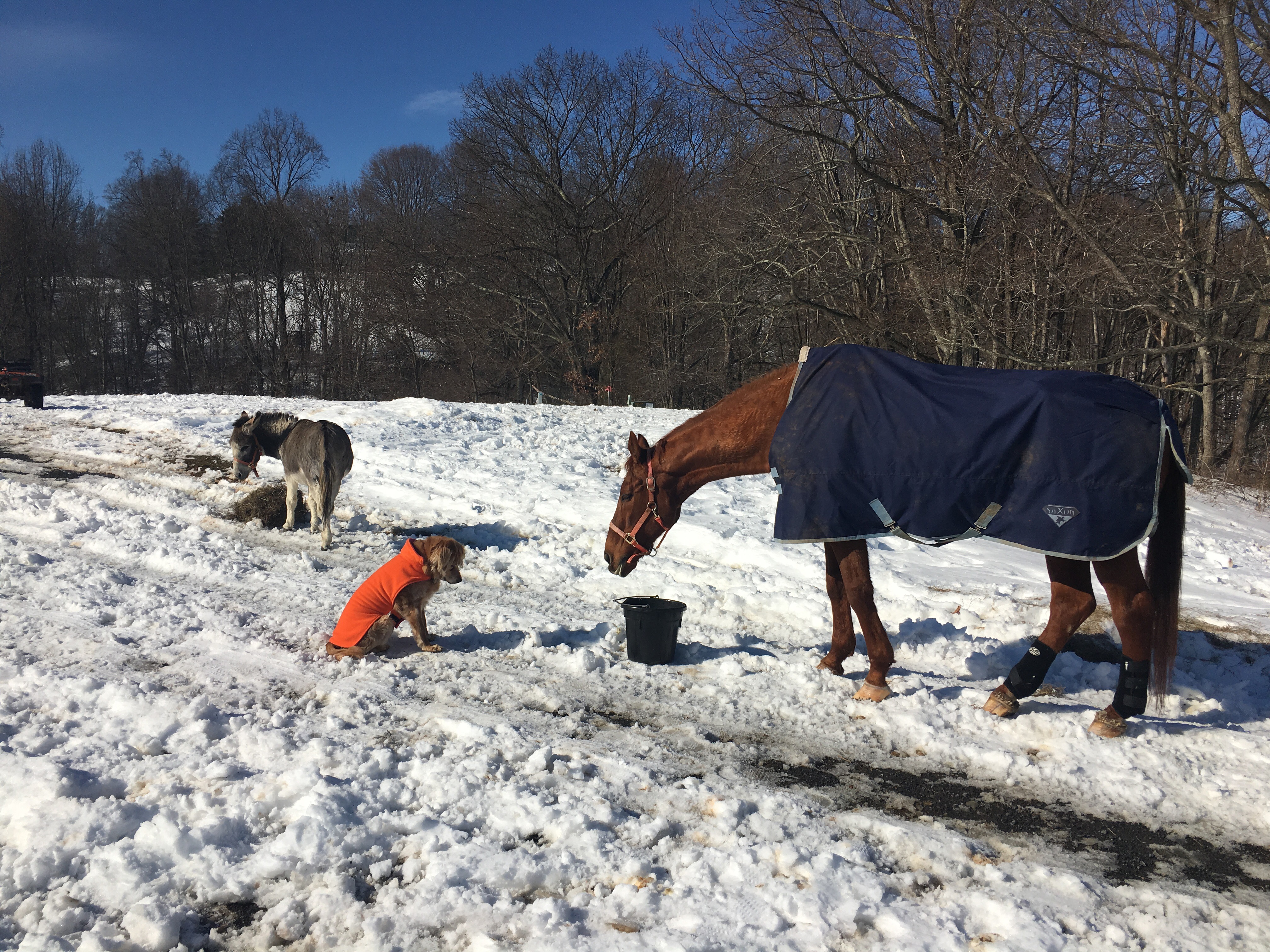
 Can I have some?


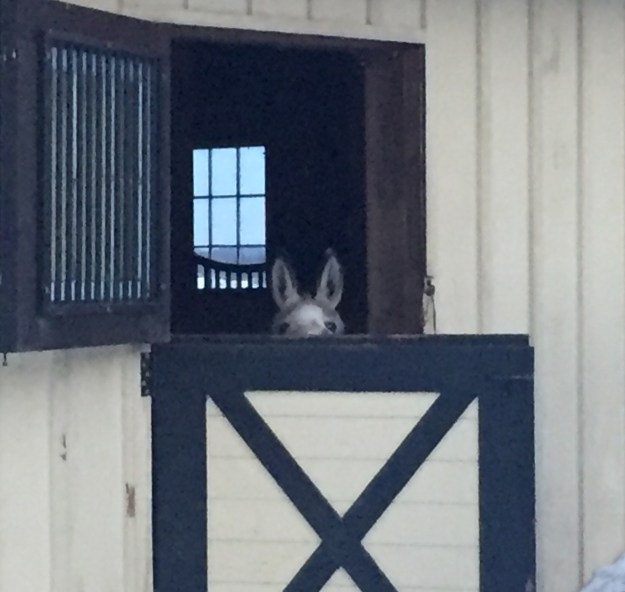
Do I really have to go out there?!


Can I have some?
Do I really have to go out there?!
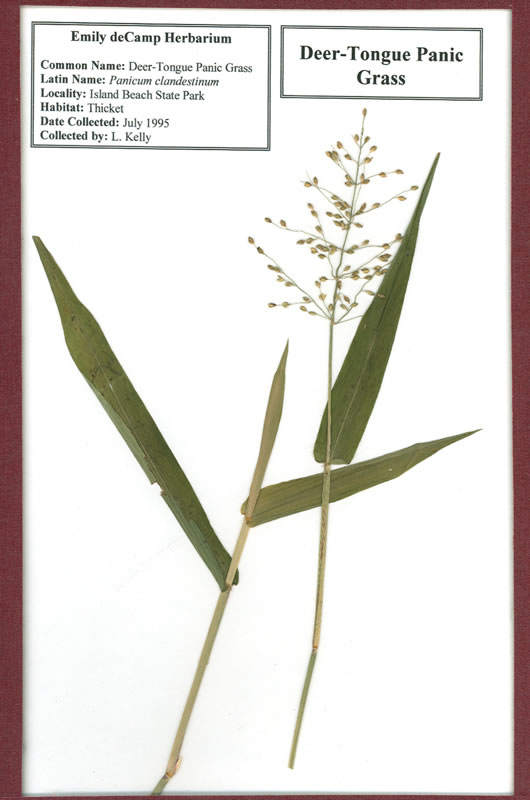
Horses in Virginia are at risk of Liver failure due to Panicgrass or Panicum.

According to Haymarket Vet (http://haymarketvet.com/fall-panicum-grass-and-liver-disease/) Panicgrass is causing Fall Panicum Toxicosis in horses.
“In 2004, our practice was involved in documenting an important toxin for horses—fall Panicum (Panicum dichotomiflorum) grass. This common native grass has been fed to horses in hay and in pasture probably since the Europeans first brought horses to our area. But, while we know that it doesn’t cause illness all the time, certain growing conditions can cause it to become toxic, as it did in Nokesville, VA in 2004. We don’t know what triggers the grass to become toxic, but we do know that it sometimes does become toxic, and the conditions are right this year. This study proved the hepatotoxicity: http://www.ncbi.nlm.nih.gov/m/pubmed/17186859/
Currently, there are several cases of liver disease in Fauquier, Clark and Loudon counties that appear to be from grazing Panicum grass in the pasture. Some signs of toxicity from eating the grasses includes: decreased appetite, lethargy, somnolence (unusual periods of sleepiness), mild colic, or neurological signs. Some horses have no symptoms at all.
If you have this plant in your pasture or if you find it in your hay cut this year, you may want to have your horses tested for liver disease; this involves a simple blood draw.”
Below is a link on more information about Liver Disease, symptoms, and treatment options.
http://www.tsln.com/agliving/equine/7614069-111/liver-horse-says-disease
Here are some helpful ways to know when you should blanket your horse and what type of blanket to use.


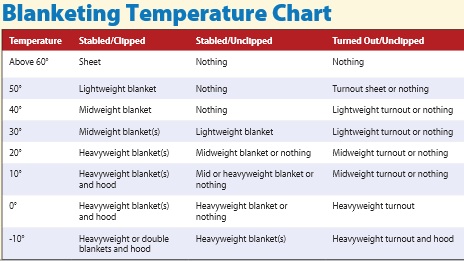 * Sources: Weatherbeeta.com, Auburn University
 (In order from top left to right) SmartPak monthly supplements- A New Waterproof Blanket- Professional Horseman Boots- A bright orange halter to keep him safe during hunting season- DuraLactin an all natural anti-inflammatory and pain medication- Equine Edibles Candy Can Bran Mash- Epson Salt Poultice for sore muscles- Transfer Factor to boost your horse’s immune system during the winter months- Acupuncture- A massage- Kinesio Tape for sore muscles or stiffness- a complete first aid kit because you can never be overly prepared!

Step 1: Completely empty all shavings from the stall and all buckets, hay, feed, etc.
Step 2: Mix a 1/2 a cup of outdoor bleach with warm water
Step 4: Use a wide broom to scrub the liquid evenly
Step 5: Place fan in stall to dry the mats
Step 6: Once completely dry, add new shavings
Now you have a clean and sanitized stall!


You don’t want to waste time in an equine emergency! The American Association of Equine Practitioners (AAEP) offers these tips to keep you organized and calm in your horse’s time of need.
If you own horses long enough, sooner or later you are likely to confront a medical emergency. From lacerations to colic to foaling difficulties, there are many emergencies that a horse owner may encounter. You must know how to recognize serious problems and respond promptly, taking appropriate action while awaiting the arrival of your veterinarian.
Preparation is vital when confronted with a medical emergency. No matter the situation you may face, mentally rehearse the steps you will take to avoid letting panic take control. Follow these guidelines from the American Association of Equine Practitioners (AAEP) to help you prepare for an equine emergency:
Many accidents can be prevented by taking the time to evaluate your horse’s environment and removing potential hazards. Mentally rehearse your emergency action plan. In an emergency, time is critical. Don’t be concerned with overreacting or annoying your veterinarian. By acting quickly and promptly, you can minimize the consequences of an injury or illness.
For more information about emergency care, ask your equine veterinarian for the “Emergency Care” brochure, provided by the AAEP in partnership with Bayer Corporation, Animal Health. More information can also be obtained by visiting the AAEP’s horse health web site, www.myHorseMatters.com.
The American Association of Equine Practitioners, headquartered in Lexington, Kentucky, was founded in 1954 as a non-profit organization dedicated to the health and welfare of the horse.
– See more at: http://practicalhorsemanmag.com/article/eqemergenc2576#sthash.YFzhhSOX.dpuf

The first round of injections provided Chance with some relief, in his ability to move around and the swelling went down a bit, but that only lasted about a week. At about day 8, Chance was swollen again and 3 legged lame. Thankfully, a family friend of the farms owner called me. She explained that the farrier was out shoeing one of the horses and saw Chance’s leg, and when he arrived to shoe her horses, he expressed his concern. I immediately contacted Vet4 an he was out the following day.
Vet4 injected the masses again as a temporary fix, until we could make some decisions. The ultrasound showed that the masses were the exact same as they were in the first ultrasound- they hadn’t increased or decreased in size.
Later that evening, Vet4 and I had a lengthy conversation about where to go from here.
We discussed the options again, at length. We could do an MRI to gain more insight into what is happening with that leg, go in with an Arthroscope and clean it out, or look into Stem Cell Therapy.
Well, I wasn’t comfortable putting Chance under anesthesia…he was too old and too frail. Plus, he could break a leg or a hip going down. So, that ruled out the MRI (unless I could find a standing one) and the surgery. The Stem Cells would run about $3000.00, plus he would need to goto the hospital to have the procedure done.
I took the night to think it over, and stayed up until sunrise reading as much as I could on leg issues, the different options vet4 and I had discussed, and other potential causes.
That next morning, I received a call that Chance was worse. Vet4 was out of town due to an emergency, so I called Vet3. She got out to the farm immediately.
Vet3 gave Chance Surpass topical to put on the leg, Banamine, Ulcer Guard, and continued with the Prevacox to keep him comfortable.
I asked her what she thought about the options- she felt, as I did, the surgery wasn’t a good idea and that an MRI should only be done without sedation.
I called Vet4 and we spoke about the current situation. What else is going on? He suggested changing the course and trying different diagnostics. He explained that TSMs (Tendon Sheath Masses) can cause swelling and pain, but they are usually relieved by the injections. The ultrasounds showed that his suspensory tendon and ligaments looked good. Could this be an infection? Soft tissue damage? A bone issue?
I asked him if he felt moving forward with more tests was a bad thing…was I being cruel keeping Chance alive like this? Something that had been weighing on me from the start. And what Vet4 said, empowered me to continue down the path I initially felt in my gut to be the right decision. He said, “I am not the kind of person to ever give up on someone or something.” I asked if we were able to manage his pain adequately and make sure he was comfortable and he said, yes. He advised me to “make a decision based on the horse” and “not to listen to the opinions of everyone else”.
The next day, I cleared my schedule, and headed to the farm.

Chance was able to come home a week later. Sam & John went to pick him up at the hospital. However, upon arriving, they soon found out that Chance did not want to get on the trailer. Sam later told me that one of my sweatshirts was in the truck, so she brought it out and let him smell it- he finally loaded.
I got his stall ready- tons of fresh shavings, hay, a new water bucket…
The moment he got off of the trailer he was shaking! I gave him a warm bath and let him out in a small, flat paddock so he could be in the sunshine.
This is what happened when I let him out! He did something he had not been capable of doing for months and months, if not longer.
One day I received a call that I needed to come out and see Chance because he wasn’t doing well and, according to Vet1, he needed to be put down. I quickly canceled my appointments and got on the road. The 4 hour drive was excruciating…once we finally arrived, my heart broke.
My old guy was skin and bones. His back right leg was swollen and he wasn’t able to bare weight on it. His eyes were dull. He could barely walk, and when he did, he wouldn’t put any weight on the right hind. There were even times when he would do this “neurologic dance” (coined by the farm’s owner and C’s other mom) where he would lift up his back right leg and hop!
But when he saw me pull up, he whinnied. He was excited to see me. He ate the pureed carrots but refused the apple puree (only my mom would make this for him). He wasn’t ready to die.
I called the vet who said that Chance should be put down to see what his thoughts were.
Me: What do you think is going on with C?
Vet1: I think he is ready to be put down.
Me: Because of what?
Vet1: Lymphangitis
Me: Okay, well, what is the cause of the Lymphangitis? Did you run any diagnostics?
Vet1: No
Me: I would like to manage his pain and run a few tests before making that decision. (I reviewed the research that I had done and asked where to go from there.) Could it be EPM?
Vet1: “It’s not EPM”
Me: How about Cushings? Or Laminitis? Lymes?
Vet1: Nope. Just old age.
Me: The journals I read said that some of the symptoms…(I was cut off)
Vet1: “I don’t care what journals you read! It’s a bunch of…”
Me: One was from VA Tech actually…
Well, that was that! Vet1 did not completely lack compassion but he was more “old school” I guess one could say. He was well respected in the horse world and up until this point, he did the job I needed. But I will say I was disheartened by our conversation.
I decided to contact the other vets that I had worked with in the past, who also knew Chance, and get second, third, fourth opinions.


I purchased Chance from a farm in Middleburg, Virginia. I remember the first time I saw him- this big 17.1 hand, 10 year old, chestnut thoroughbred gelding. He had these sad big brown eyes that made me instantly fall in love. I got on him and we cantered around a field together and over a handful of jumps.
We vetted him and trailered him back to the farm in Lorton, Virginia.
Immediately upon his arrival, we all noticed that this horse was scared of everything! He was a cribber. He was constantly hurting himself. And he refused to pick up his left lead.
We began working with our trainer- mostly on our flatwork- and he loved to rear! Yay! (note sarcasm). He hated trail riding and riding in the field. What horse dislikes being ridden in a huge green field!? We managed to jump a bit here and there. Every time we made progress, Chance would get hurt! Colic, a huge gash above his eye, a hurt leg- you name it, he had it/did it/hurt it.
After much consideration, I decided that I should lease him out so that he would have more time under the saddle. Next, we decided to try Dressage to build up his back muscles. We worked with an awesome trainer, actually two, who were pretty well known in the Dressage world. And, honestly, Chance was amazing at Dressage! And what a difference it made! I began to actually enjoy riding him! He was much calmer and easier to handle.
I left to goto college and a few weeks later Chance came to meet me. My poor trainer trailered Chance the 4 hours and it took much longer than expected because of the directions! Chance’s behaviors were all over the place. The only stable with availability was one the held a rodeo on the weekends. It was great fun, but Chance was not a fan of the bulls. We ended up moving to another facility where he was receiving training and I was receiving lessons. That soon stopped because of the frequent encounters with lameness and back issues.
That summer I went home and decided to leave him at vet2’s stable where he would have 24 hour care and someone who knew him well. Plus, maybe a break would do him some good. However, after that summer he was officially retired.
I moved him to another stable closer to school. It was a perfect place- a three stall barn, with individual runs, and big green pastures. He soon fell in love with the mare there and was content.
Thankfully, after graduation, I was able to leave him at this farm while I completed my Masters degree and almost finish my Doctorate. Without the care the farm’s owner extended to Chance (and the care extended to me as well), I have no idea what I would have done. The truth is though, I wasn’t able to make the drive as frequently as I would have liked with school and everything…4 hours there and 4 hours back in one day… I had always envisioned bringing Chance home upon graduation….
Chance lived there for almost 8 years. He had flare ups of Lymphangitis and would stock up if left inside. The symptoms were treated with each episode but the flare ups would continue and each episode would last a couples days and was manageable with medication. The mistake I made was instead of doing my own research about Lymphangitis, I took the vet’s word for it. I was under the impression that Lymphangitis was more of a disease instead of a symptom. If I had only done my homework I would have known that is was in fact the symptom of a much larger problem.
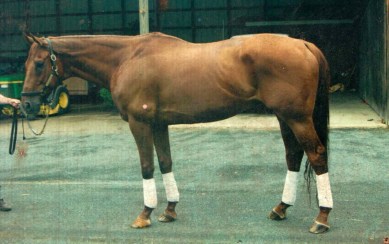
The day “Sunset Beach” became “Take A Chance”
 The Chances We Take