Category Archives: Obstacles

Miniature Donkey Impaction Colic

Sweet Vera was acting lethargic one evening. She did not show any obvious signs of colic like pawing or distress. However, she was laying down more than typical. Whenever approached she would stand up. The most obvious sign was that when she was offered a treat she was not interested. I took her temperature and it was normal. Gut sounds were present but she looked bloated. I decided to give the vet a call. The vet came and tubed her and gave her some banamine. When Vera was tubed, but due to her small stature, a smaller tube had to be used and not much came out.

The next day she continued to act off. Again, I called the vet and decided to bring her into the hospital. There the vet tubed her at intervals throughout the day and into the next. They gave her fluids via an IV and did a few ultrasounds . Thankfully they were able to get a larger tube in her and the thick, paste like substance started coming out…more and more and more. The interesting part of this was that she does not get grain. There was no sand in the substance that was removed from her belly but my guess is someone gave her treats and due to the extreme heat she was not drinking as much- basically, a perfect storm hit.

Day three she began to perk up, have bowel movements, and even started eating some mash. The next day she was able to return home and has been doing well.

How to Spot Colic in Donkeys?

  1. Dullness
  2. Lying down
  3. Lack of appetite or refusing to eat
  4. Weight shifting, usually between the hind legs
  5. Rolling and pawing at the ground (rare in donkeys, can indicate a serious problem)
  6. Fast breathing, rapid heart rate
  7. Sweating
  8. Brick red or pale gums or insides of eyelids
  9. Dry or tacky gums
  10. Lack of, or reduction in, the normal quantity of droppings
  11. Self-isolating or moving away from companions.

Types of Colic:

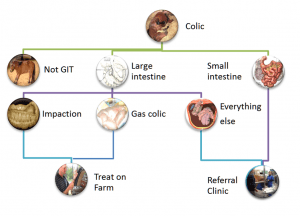
Impaction Colic: Impaction occurs when forage, sand, dirt or other material gets lodged in the colon, causing the horse to be unable to pass manure and putting a halt to the whole digestive system. Impaction can also be caused in some cases by enteroliths, naturally occurring mineral deposits that can reach up to 15 pounds in size. Impaction colic tends to occur more in the winter months, due to a lack of hydration.

Gas Colic: Gas colic is a mild, abdominal pain stemming from the result of gas buildup in the horse. This can be caused by a change in diet, low roughage consumption, parasites or administration of wormer.

Sand Colic: Sand colic is caused by the abnormal consumption of large amounts of sand while grazing or eating off dry, sandy ground. Upward of 80 pounds of sand have been found in a colicking horse’s gut. Naturally, sand colic is more common in southern regions where the ground tends to be more mineralized. One way you can help prevent sand colic is to avoid feeding horses from the ground, and instead use a feed pan, bucket or feeder.

Entrapment (or Displacement) Colic: Displacement transpires when the large colon moves to an abnormal location, often occurring at the pelvic flexure, an area where the colon narrows and makes a sharp turn. In some cases, displacement can also lead to entrapment, where something traps the gut and can cut off blood supply.

Enteritis: Abdominal pain can also be caused by enteritis, the general inflammation of the gut. This inflammation is most commonly caused by colonization of the gut by pathogens (bacteria or viruses). Learn more about this in the Importance a Balanced Gut Microbe Ratio in the Gut.

Strangulation (or Gut Torsion or Twisting) Colic: A twist occurring in the gut causes strangulation colic, which often cuts off blood supply and results in dying tissue. This type of colic is very serious and the most likely to be fatal.

Enterolith: Enteroliths are mineral accumulations of magnesium-ammonium-phosphate (struvite) around a foreign object (a piece of metal, pebble, bailing twine, hair, rubber) that form round, triangular, or flat stones inside the bowel usually over the course of multiple years. They form in the large colon of horses where they can remain for some time until they move and cause an obstruction in the large or small colon, resulting in colic.

Idiopathic or Spasmodic Colic: The majority of colic cases are idiopathic. This means the cause is unknown or unable to be determined. This is a wide-ranging term for horses presenting with colic where other abnormalities cannot be found, and, which generally have increased gut movement (and therefore gut noise if you listen over the belly). The colic signs are associated with increased gut spasm due to the increase in motility (a horse equivalent to gut cramps that we may experience after a very spicy curry for example). Rectal examination is within normal limits in these cases and, these horses often respond very favorably to drugs that decrease gut motility (see treatment of colic).


Treatment Options:

Your vet may carry out the following to try to diagnose the type of colic:

  1. Checking your donkey’s heart rate and temperature.
  2. Listening to your donkey’s abdomen with a stethoscope to check the gut sounds
  3. Checking your donkey’s teeth
  4. Taking a blood sample
  5. Performing a rectal examination
  6. Passing a stomach (nasogastric) tube to check for reflux (backed up food or fluid).
    Your vet will decide on the best treatment based on your donkey’s diagnosis and are likely to give painkillers.
  7. Depending on their findings, your vet may give your donkey fluids via a nasogastric tube or put them on a ‘drip’ (usually via the large vein in their neck). It may take multiple visits from your vet to treat your donkeys colic.
  8. Your donkey may need to be hospitalised if their case is severe. If your donkey is hospitalised, their companion must go too, as hospitalisation can be very stressful for donkeys. Some types of colic need surgery to resolve them, which will require prompt transport to a hospital. Surgery carries a high risk in most colic cases and involves considerable nursing care and cost. Check you are insured for the costs and talk to your vet about the chances of success.
  9. Euthanasia may be the kindest option if your donkey’s case is serious.

Prevention:

Colic is so dangerous because by the time your donkey lets you know it has colic, it may be too late to save it. The old adage, ‘prevention is better than cure’, definitely applies.

Observe your donkey daily, looking for any changes in behaviour. Know what typical dung looks like. Be aware of the average number of piles of droppings your donkeys pass each day and the consistency. Persistently very loose or very dry droppings could be indicative of colic, particularly if other symptoms appear. Check your donkey’s breathing pattern so you will be able to spot any change.

Colic Causes & Prevention:

  1. Feed – sudden changes to diet, poor quality feed, too much grass, feeding cereals:
    • Make any dietary changes gradually over at least a week, ideally 2-4 weeks
    • Feed good quality forage and donkey specific proprietary feeds
    • Avoid moldy feed
    • Always soak sugar beet to the manufacturer’s recommendations
    • Feed little and often, especially if your donkey has additional feed
    • Do not allow your donkey access to too much rich spring grass.
  2. Inadequate or dirty water supply:
    • Check troughs daily. Self-filling drinkers can become blocked, or the water supply can fail
    • Clean dirty water containers as donkeys will not drink dirty water
    • Check water is not frozen or too cold. Many donkeys will not drink very cold water
    • Offer several sources of water.
  3. Eating non-food items such as plastic bags, rope or bedding:
    • Ensure your donkeys cannot access non-food items
    • Change your donkey’s bedding to something less palatable, such as wood shavings
    • Do not use cardboard or paper bedding.
  4. Eating poisonous plants:
    • Know your poisonous plants and trees
    • Remove poisonous plants or fence off the problem area
    • Check pasture, boundary fences and hedgerows frequently
    • Fence off trees when fruiting to prevent your donkey gorging.
  5. Sandy soil:
    • Avoid grazing on sandy soil pasture if possible.
  6. Dental disease – failure to chew food adequately resulting in a blockage of the gut:
    • Have your donkey’s teeth checked at least annually by a qualified equine dental technician or vet
    • Dental disease is more common in older donkeys
    • Suspect dental problems if donkeys are ‘quidding’ (dropping part chewed feed) or drooling saliva
  7. Parasites – worms causing obstruction or inflammation of the gut:
    • Arrange regular faecal worm egg counts to check if your donkey needs treating for worms
    • Speak to your vet for advice
    • Clear droppings from your donkey’s paddock at least twice a week.
  8. Stomach ulcers:
    • Keep stress to a minimum
    • Trickle feed your donkey.
  9. Pain – any painful condition can lead to colic, including severe lameness:
    • Ensure your donkey has adequate pain relief if they have a painful condition.

More Information:

https://xlvets-equine.co.uk/sites/xlvets-equine.co.uk/files/XLVets-Equine-Rebranded-115-Donkey-Colic-factsheet_0.pdf

https://vetmed.illinois.edu/pet-health-columns/colic-comes-many-forms/

https://www.myhorseuniversity.com/single-post/2017/09/25/equine-colic-causes-symptoms-treatment-and-prevention

https://extension.psu.edu/colic-what-are-the-signs-and-how-to-manage
The Perfect storm

So, I wish I did not have to start this process again…but unfortunately, I do. Once again I have a senior horse with a variety of acute and chronic conditions that all hit at the same time. Right now I am trying to make her comfortable while also trying to figure out what is what and how to best respond.

Three months ago Tilly was tested for EPM due to muscle wasting and weight loss.The first time she was in the lower end of an active infection. We started a compounded medicine for 1 month and her numbers decreased. We decided to do another round as she responded well to the first round. However, the numbers remained the same. We also tested her for Lyme which showed a chronic and an active infection but the numbers were in the high normal range and the vet felt that it was not treatment worthy at the time.

Last month Tilly began “crab walking” out of the blue. Called the vet. They came out. Her ataxia was bilateral- both her left and right hind- whereas EPM tends to be unilateral. Further, her presentation was not suggestive of Lyme.

We started steroids (dexamethasone oral power) for 5 days with Banamine, tapering as we went, and she seemed to recover. The consensus was it was an acute attack that may have occurred given she is a senior with a history of being an Amish workhorse and perhaps, she pulled something in her neck.

Treatment was complete and another week went by and again, she showed some ataxia. This time less severe. The vet felt that since she responded well to the first round of steroids that it was not EPM-related as you would not see improvement. Further, if it were Lyme related the presentation would be more consistent. Again, a round of Dex and improved quickly. The next week we had her neck x-rayed and there were some arthritic changes. However, she was running around and moving well so the vet felt injections in her neck would not be necessary at that time.

Seventy two hours later, she had some trouble getting up but eventually succeeded. The next morning my sweet girl was spinning, crab walking, and falling over. It was absolutely terrible to see. I immediately gave her 10cc IV Banamine and she calmed down and stopped spinning. The vet came out and administered Dex IV and thought that due to her inflammatory bowel disease we should try Dex IM to ensure absorption. We also decided to pull blood to test for Cushings as she seemed to lose weight overnight and was not shedding out well. The next day she was lame on her right front. Panicked I called the vet fearing that if she did have Cushings, she was trying to founder due to the steroid use. Thankfully, the vet came out, did a nerve block on her right front (this helps to see if the horse has laminitis as they will improve once blocked) and checked for pulses (if a horse has laminitis typically they will have pulses in their hooves) and Tilly did not have any. So, the vet did not feel we were dealing with founder. However, the lameness presented a major challenge due to her still being ataxic on the hind end. The vet did cortisone injections into her neck hoping to help with inflammation due to arthritis. Tilly did great and suddenly, began freaking out. Spinning, knocking into the doors, etc. The vet explained that the injections likely added more pressure on her spinal cord causing her to react. Again, once the vet was able to safely administer Banamine and some Dorm, she calmed and laid down for the first time in over a week for a good 45 minutes. We decided to make sure she was able to get back up. Although she had some trouble, after a couple tries, she was able to do so. Her breathing was heavy, wheezy, almost like she was having a panic attack and hyperventilating. A few minutes later, her breathing returned to normal.

Tilly’s Cushing’s text level was about 100 pg/mL (it should be about 30 pg/mL during mid-November to mid-July) meaning, she does have Cushings. The vet decided to wean her off of the steroid as to not increase the risk of Laminitis even more but also to give neck injections time to work (5-7 days). We also immediately began Prescend (2 tabs) a day to treat her Cushings.

We are on day 5 since the 3rd ataxic episode and day 3 post neck injection and she is still lame on her right front along with ataxic on her hind end. However, she is still eating, engaging, and is bright and alert. She does not seemed distressed or in pain thankfully. Due to Tilly not showing much improvement (even though it can take 5-7 days to see improvements from the neck injections) I decided to start her on a non-compounded EPM medication, Protazil. According to the vet, Protazil should not cause any harm whether her symptoms are EMP related or not. I also began 10cc of Vitamin E oil. Tilly was previously on pelleted Vitamin E but due to her inflammatory bowel disorder, she may struggle to absorb the pelleted form of the supplement. Further, there are a number of studies showing the benefits of Vitamin E and the connection between Vitamin E and ataxia.

On a positive note, since starting Prescend for her Cushings, I have noticed that she is drinking less water. Increased water intake is a symptom of unmanaged Cushings. I am hopeful that means the medication has started to work at regulating her hormones. We are now at a wait and see point. I continue to try to make her comfortable. Tons of bedding in her huge foaling stall, hay everywhere, fans on, doors open. She has been a trooper. My hope is that she recovers from this and enjoy whatever time she has left and fights this as she has so many other things- the reason she was given the name, Ottilie.


RESOURCES

https://www.horseillustrated.com/horse-health-equine-cushings-disease-24321

https://www.horseillustrated.com/horse-experts-horse-vet-advice-cushings-disease-diet

https://cvm.msu.edu/vdl/laboratory-sections/endocrinology/equine-endocrine-testing

https://www.horseillustrated.com/horse-experts-horse-vet-advice-cushings-horse-treats

https://resources.integricare.ca/blog/cushings-disease-in-horses

https://equine-vets.com/health/l/laminitis-is-one-of-the-most-common-causes-of-lameness-in-horses-and-ponies/

Laminitis and Founder in Horses on Steroids

veterinarypartner.vin.com/default.aspx

Are Donkeys Part Woodchuck?

So, the other day, I walked into our beautiful run-in and saw all of the two by fours with chunks missing and some down to almost nothing. I stood there with my jaw dropped. Are you kidding me?!

These donkeys live in luxury. They have premium hay, mineral blocks, shelter, toys, each other, and even blankets. They have their vaccines, teeth floated, and feet done. What could possibly possess them to eat wood? They have messed with the trees before but that stopped. Frustrated, I solicited some advice from a friend of mine and also did some research. Here is what I found.

Apparently, donkeys will chew on wood for one of three reasons.

  • Boredom
  • Mineral Deficiency
  • Copying their Mates

The top reason is boredom. According to Hayfarmguy.com, this is the most common reason for donkeys to chew on wood. That being said, this boredom is often the result of not having their friends or being locked up in a stall for long periods. These two items are not applicable to my situations. They are always with each other and are outside the entire time with the option to go into a shelter; they are rarely confined. They also have a large area to run around and play.

The second reason, vitamin deficiency…good ole Pica…the craving for non-food items such as wood. This can be solved by running blood work to look at the minerals and by purchasing a mineral block.

The third reason, when there is a new horse or donkey in the pact and they possess the wood eating habit. Donkey see, donkey do!

How do you address and stop this destructive habit?

  • Spray wood surfaces with an anti-chew substance. You can purchase these sprays at a tack or local feed store. Or, you can make your own with Cayenne Pepper and water.
  • Get blood work done and provide a mineral block.
  • Provide the donkeys with things to play with- a ball, milk jug, etc.
  • Allow them time outside with their friends.

Hopefully these suggestions work!

Does Your Horse Need Electrolytes?

By. Casie Bazay

It’s summer, aka the sweatiest time of the year. Hooray!

And while sure, there are things to enjoy (like swimming, ice cubes, and air conditioning), outdoor activities such as barn chores and riding often leave us reaching for a Gatorade. But what about our horses? Do they need the equine equivalent of a sports drink full of electrolytes too?

First off, let’s discuss what electrolytes are exactly and a little bit about how they function in the body. Electrolytes are minerals that help to regulate many bodily processes. The main ones include Sodium (Na), Chloride (Cl), Potassium (K), Magnesium (Mg), and Calcium (Ca).

In solid form, electrolytes bond into salts (such as sodium chloride) but when dissolved in water, they break down into individual ions, which carry a positive or negative charge. These charges allow them to conduct electricity and assist in electrochemical processes such as regulating heartbeat and muscle contraction.

But wait, electrolytes do more! They also aid in moving fluids in and out of cells and help the body to absorb nutrients. Without electrolytes, the water your horse drinks cannot be properly retained or utilized by the body.

In short, electrolytes are super important.

Like us, horses lose electrolytes through sweat, urine, and feces. Most of these minerals are replaced when your horse consumes grass, hay, and/or feed, with the exception being sodium and chloride, which should always be supplemented with either a salt block or loose salt.

So let’s get back to the question at hand: do horses need added electrolytes in the summer?

The answer depends on how much they’re sweating. If your horse sweats for a prolonged period of time, either because of high temperatures and/or humidity, intense exercise, or all of the above, electrolyte losses can be high and therefore will need to be supplemented.

This goes for endurance horses and those competing in three-day eventing or possibly long-distance trail riding. Electrolyte supplementation is also a good idea if a horse is being shipped long distance in hot weather and for those with Cushing’s disease who may sweat more just standing in the pasture.

How to feed electrolytes

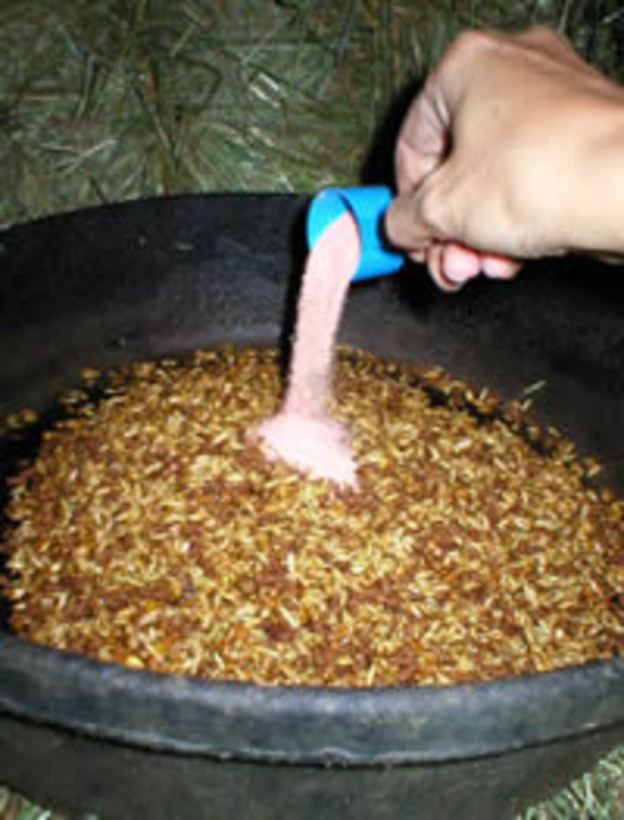
Electrolytes can generally be supplemented in feed, added to water, or in paste or gel form. After a period of prolonged sweating, it’s recommended that electrolytes be provided for several days to make up for losses. You can even give electrolytes to your horse before a big event if you know he’s likely to be sweating a great deal. Continue to give electrolytes during the event as well.

When looking for an electrolyte supplement, make sure that sodium chloride is first on the list of ingredients, followed by potassium chloride. Many electrolytes are sugar-based and while horses may prefer them, they aren’t as effective.

With that said, it’s not a good idea to over-supplement with electrolytes, especially if your horse isn’t sweating much as they may irritate the digestive tract or even throw your horse’s mineral balance out of whack.

Many horses won’t need electrolytes at all in summer, but if your horse does, remember to supplement wisely! 

Work Horse Won’t Move Forward?!

I decided to get on Tilly and see how she was under saddle.  

The saddle fit nicely and I chose a bit-less bridle. Tilly was calm throughout tacking her up and getting on her back. One hiccup….she would not respond to my leg or move forward at all. My friend decided to lead her and Tilly walked easily forward. I decided to end with that for the day. A few days later I got on her back again. Same thing happened- she would just stand there. Small spurs, leg, a crop (which I hit gently against my leg)…none of them worked. I was frustrated despite it not being my sweet girl’s fault so I ended our ride. I knew nothing could be accomplished with me being frustrated. I decided to do some research on work horses and posted on some Facebook forums about my situation. I received some awesome advice!

The advice I received is below.

“If she was used in harness you will probably have to use driving commands as you teach her.Walk on, or get up to go forward. Gee to turn right, Ha to turn left. May have to tap her hind quarter with the crop.”

“Get someone to lead her after you give her forward cues”
“She may never have been ridden, on driven. I would find a good trainer who works with starting horses, even though she’s not young. It will take months but if she’s started correctly she’ll be lovely and at her age will help to keep her sound once she begins to WTC, as driving horses only walk.”
Probably a driving horse. Try “Step up” or “walk on” look up the Amish terms. Gee, Haw, Gee around, Haw around, etc…See if that helps. If she was a driving or plow horse it also helps to hold your hands wider at first.”
“Patients little at a time he or she needs to know you love them first ground work is good he may be sore see if he’s stiff arthritis meds or joint supplements he may only know driving commands such a gee or has or come and get good luck”.
“Sounds like she hasn’t been ridden but is a good girl! She may need a bit in her mouth to understand what you are asking since she was driven. If she understands words, perhaps say them for what you want. Looks like others know those words better than me! I know my horse that logged has a nice “whoa”. Just can’t say “good boy” – sure, sounds like whoa! I saddled and sat on a driving horse, Belgian (no history known) with a leader for walk only. I felt that he was sore – even though there was no outward sign – perhaps the way he held himself. Not saying this is the case for you – just a thought. I like the other advice here as well!”
“I rescued my 18 year old boy in November 🙂 Same history as your mare. As workhorses, they were not trained to ride, and they don’t know the commands or how to respond to leg pressure or the bit (other than pulling). So you need to start with groundwork and then at the very beginning, because basically they are green. I do not use a crop on my boy. Never will.”
“I would never give her spur or crop. You don’t want to punish her for not understanding your cues.”
“My Belgian was not broke either but she did walk out just fine unlike your mare. Get a driving bit…that’s what she’ll be familiar with. Check all voice commands to see if she knows any of them. If not I’d teach her voice commands lunging her and then get back on once she’s responding well.”
“Because they came from Amish, a friend told me to learn the commands in that specific language (version of German). Worth a try. BUT, I will say, I have tried to avoid anything that would remind my boy of his previous owner.”
“Haw & Gee. These are commands used to ask what direction to turn by the horse by voice command. It works well when they’re in harness working. Gee means go right, haw means go left. The Amish use “step up” to take a step or two forward and “ walk on” to walk. “Whoa” to stop. Try these commands while mounted. Slowly add in the ques you want to use in addition to the verbal ques your mare already knows.”
“She might have never been used alone, which could mean she’s looking for a cue from someone else, (it would explain why someone needs to lead her) amish usually use a oring bit, she might do better with blinders at first, and she’s probably voice activated. She won’t have any clue about leg cues. Start ground driving her, she still might be a little confused being single but she figure it out. good luck.”
” when you are on her wanting her to go sometimes turning her to one side or the other where she has to step to move is a good way to start her momentum.”

What a Difference 3 Weeks Can Make

Tilly came to me from a slaughter auction in Texas after 17-ish years as an Amish workhorse.  She was thin (she still is), sick (upper respiratory infection) had cracked hooves, had never had her teeth floated (they made a horrible grinding and clicking sound when she ate), and apparently had never been clipped or bathed or worn a blanket.  I do not think she had ever even had a treat (she still won’t take an apple or carrot).  

SYMPTOMS:

  • Rumbling gut
  • Cow pie stools
  • Grinding/clicking teeth
  • Cracked hooves
  • Dull coat
  • Underweight
  • Running nose

PROFESSIONALS:

  • Farrier for evaluation and trimming
  • Dentist for power float of teeth
  • Vet for physical, blood work, and fecal

TESTING/RESULTS:

  • CBC: all in normal range aside from her creatinine and protein suggesting dehydration. These values normalized after about 1 week)
  • Fecal: Minimal

FEED:

  • Triple Crown Senior Feed (Low sugars, low starch, high fat)
  • Tons of water with Horse Quencher added
  • Salt block

MEDICATIONS:

  • Exceed injections (2 total a week apart) then SMZ for 2 weeks
  • Banamine
  • Brewer’s Yeast (Stomach)
  • BioSponge (Gut health and to tackle her loose stools)
  • Electrolytes (To help with dehydration)
  • Strongid wormer 


Top to bottom:

Tilly on her way from Texas

Tilly when she first arrived in Virginia

Her feet upon arrival

Getting her teeth and feet done

Tilly after being clipped and bathed!

Resources for Chronic Loose Stools in Horses


BEST Guide to all Things Colitis, Diarrhea, and Intestinal Health

Age-Defying Equines

Diarrhea and Fecal Water Syndrome in Horses

What Comes Out, What Goes In

“& I Will Know Your Name..”

I take naming seriously. Maybe too seriously. I feel like a name should mean something, stand for something, and ultimately, it should “fit” the person or animal or farm.

My new 17 year old Belgian Draft mare was rescued from slaughter after being an Amish workhorse for her entire life. She came off the trailer after traveling from Texas to Virginia, skin and bones. She had a dull coat, hip bones high, cracked hooves, a very runny nose, but her eyes were warm. This sweet girl had never had a moment of TLC and was noticeably sick. I walked her to her new temporary quarantine home. She was alert but considerably calm but weary none the less. The vet came out and gave her a physical. Her legs were in good shape as were her feet despite the cracking. She did not have a fever but did have congestion in her chest and her teeth were all sharp points. She had a worn down mark across her nose from what looked to be a harness and her tail had been lopped off, bone and all.

We began an round of Exceed and Banamine and let her rest. She drank gallons of water and as she ate her “draft safe” diet (low sugar, low starch and high fat) I could hear her teeth grinding and knocking against each other; it was painful to watch (and hear). I left for the evening to allow her to settle in. The following day I brought her a fly sheet (bright pink :)). I groomed her and she began to fall asleep. I put ointment on her raw nose, and sprayed her with fly spray. As I went to put on her flysheet, her skepticism was evident. I could tell she had never worn a blanket, or maybe she was skeptical of the color… but she allowed me to put the sheet over her skinny body. As I finished for the evening and said goodbye, she looked at me, straight in my eyes, and I could see that she knew the rest of her days would be carefree.

I took about a week to get to know her and think long and hard about what to call her. I thought about the small details I knew about her past… 17 years as an Amish workhorse. They shipped her off to a slaughter auction after her years of service. She was worn and ragged but still strong and relatively healthy.

I decided on the name Ottilie meaning strength in battle. Numerological, the Soul urge number is 11 which states that people with this number have a deep inner desire to inspire others in a higher cause. The name’s Expressive number is 9 and states that those with this name tend to be compassionate, intuitive and highly sensitive, but also have magnetic personalities and serve humanity. How fitting, her strength during her battle (workhorse to slaughter auction) lead her to me…still strong and able but worn and haggard. The other reason I chose the name Ottilie was due to my late aunt, MaryJane. Maryjane passed in the late 1990’s tragically. She loved animals and was the reason I began my journey with horses as a child. She had a dog named, Tilly, which is the perfect nickname from Ottilie.

So, I introduce, Ottilie “Tillie”, the 17 year old Belgian draft mare who has found her forever home.

Practical Biosecurity Tips to Protect Your Horses – The Horse

Learn equine biosecurity basics for the farm, horse show, and breeding shed to protect your horses from infectious diseases.
— Read on thehorse.com/features/practical-biosecurity-tips-to-protect-your-horse/

Extra Care for Horses in Cold Weather

Horses Require Extra Attention when Temperatures Plummet

With freezing temperatures comes the need for extra care and attention for horses and other equids.

Favorite

Horses Require Extra Attention When Temperatures Plummet
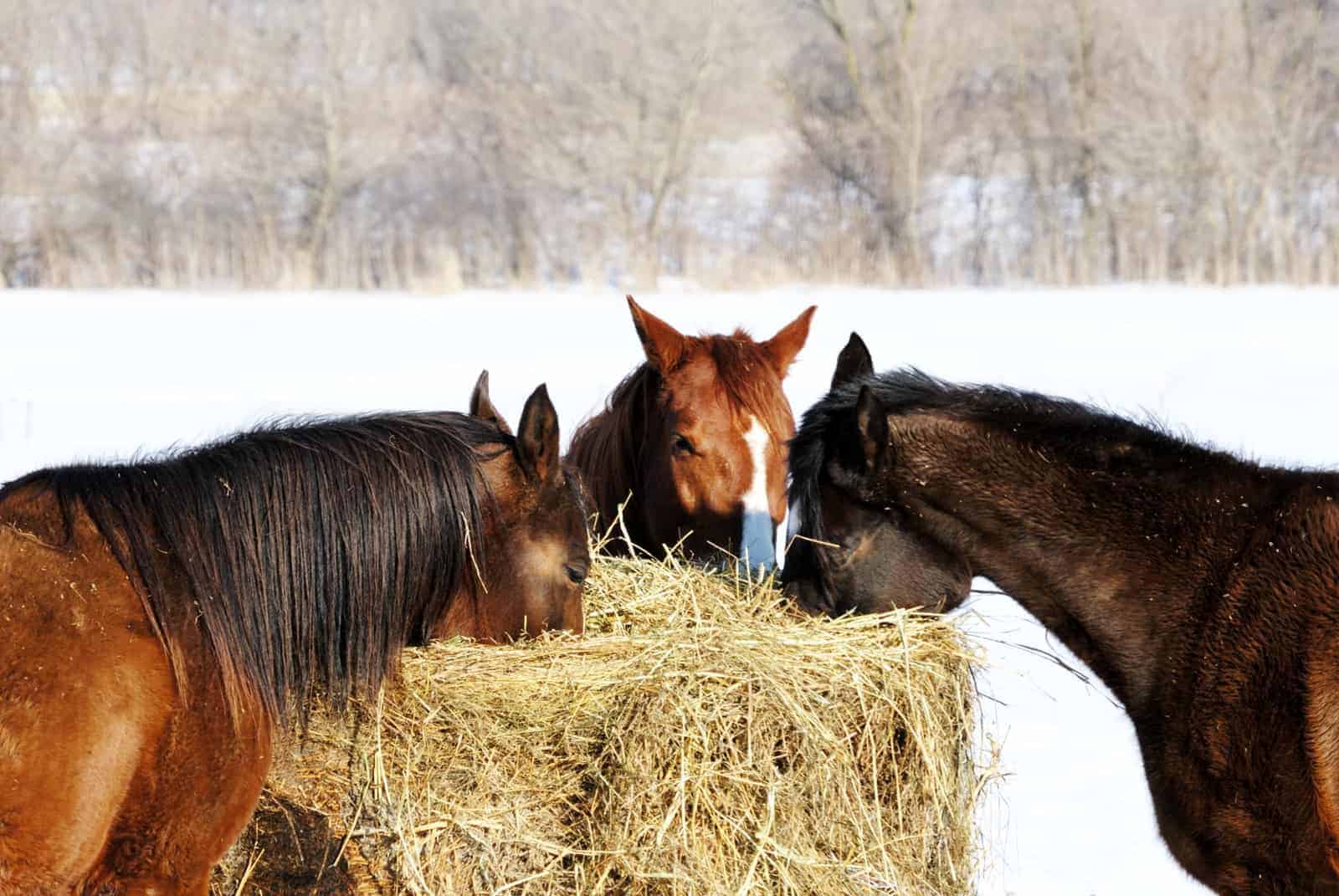
The next few days will bring freezing weather to many parts of the country, and with that comes the need for extra care and attention for horses, donkeys, ponies, mules, and any other outdoor animals.As the temperatures decrease, a horse’s feed requirements increase. Allowing horses free choice to good quality forage (hay) is the surest way to ensure that they consume enough energy, and the process of digesting forage will actually produce heat. Horses will typically consume 2 to 2.5% of their body weight in forage each day; that would be 25 pounds per day for a 1,000 pound horse. Winter pasture alone will not provide enough forage to sustain a horse and, therefore, must be supplemented with hay and/or grain.

The growing season some parts of the nation had last year produced overly stemmy or fibrous hay with a lower digestibility. As a result, making certain that horses are supplemented with grain when fed lower quality hay will help them maintain body weight and condition, a key factor in withstanding cold temperatures.

Constant access to clean, fresh water at 35 to 50°F is an absolute necessity to keeping horses healthy. This can be achieved via heated tanks or buckets, or by filling a tank, letting it freeze, cutting an access hole in the frozen surface, and then always filling the tank to below the level of the hole from that point on. This provides a self-insulating function and will typically keep the water below from freezing. Regardless of the method you choose, it’s important to check tanks frequently to ensure your horse’s water remains free of ice.

Additional ways to keep horses comfortable in cold weather include making sure they have access to shelter. A well-bedded, three-sided shed facing south or east will typically provide adequate protection from wind and snow, as can appropriate bluffs or treed areas.

When the temperatures get colder, mature horses will not typically move around much in an effort to conserve energy. Making an attempt to keep hay, shelter, and water fairly close together can limit the energy expenditure required, thus conserving body condition.

And, finally, keeping horses at a body condition score of 5 or 6 (on a 9-point scale) will help prevent surprises when horses shed their winter hair in the spring, and improve conception rates for those choosing to breed.

EQUINE BOTULISM: An unknown threat

Equine Botulism

Written by Dr. Tom Lenz on behalf of AQHA 

Few horse owners are aware of this disease which is a progressive, paralyzing disease that is 80-100% fatal in affected horses.  Botulism is sometimes referred to as “forage poisoning” in adult horses or “shaker foal syndrome” in foals. The disease is caused by a potent toxin that is produced by the bacterium Clostridium botulinum. This bacterium lives in the soil as well as the intestinal tract of many normal birds and mammals, including the horse. It produces dormant spores that can be found in 18.5% of soil samples tested in the United States. The disease is most prevalent in Kentucky, Ohio, Maryland, Pennsylvania, California, and Tennessee although it can occur in any state in the U.S. Clostridium botulinum produces several different toxins. Type A toxins are often implicated in human infant botulism and are most often found west of the Rocky Mountains. Types B, C, and D toxins are usually involved in cases of equine botulism, with Type B responsible for 85% of horse cases in the U.S.

Horses of any age are susceptible to botulism which may be initiated by one of three ways. In the case of “forage poisoning” the horse ingests toxins that are contaminating feedstuffs such as grain or hay. Feed contamination is most often due to putrefied carcasses of birds or rodents. A Type C botulism outbreak that killed a number of horses in California several years ago was traced back to hay that contained the infected carcass of a rabbit. The bacteria can also enter a horse’s body via contamination of a wound, especially a deep puncture wound. A good example is “Shaker foal syndrome” which is most frequently caused by the bacteria entering the newborn foal’s body through the foal’s moist navel. Something that can be minimized by dipping the foal’s navel in mild iodine solution soon after birth. The third method in which the disease can be initiated is by ingestion of the spores in the soil. The ingested spores activate in the horse’s intestinal tract where they produce potent toxins that are then absorbed. Regardless of the route, once the bacteria have entered the horse’s body they produce toxins that block transmission of nerve impulses to the horse’s muscles. This results in a progressive paralysis of all the major muscle groups and is concluded with paralysis of the diaphragm, which results in death. Once symptoms develop, death may ensue in several hours or take up to a week.

The disease is difficult to diagnose because it resembles several other medical conditions and diseases such as choke, colic, rabies, EPM, and sleeping sickness. Blood samples very rarely contain toxin and necropsy following the death of the horse usually does not provide a conclusive diagnosis. Because the bacteria often occur naturally in the horse’s intestinal tract, isolation of the organism from the sick horse’s intestine is not diagnostic.

Clinical signs of the disease in adult horses suffering from “forage poisoning” initially include loss of facial expression, a sleepy appearance, saliva drooling from the corner of the mouth, loss of tongue control and loss of tail tone. The horse’s appetite is good, but it has a great deal of difficulty in chewing food and appears to be “playing” in their feed and water buckets. As muscular weakness becomes more profound, the horse will experience muscle trembling, generalized sweating and labored breathing. A weakened, shuffling gait may develop and the horse may take stiff, short steps as if walking on eggs. Eventually, the horse goes down and death results due to paralysis of the respiratory muscles. “Shaker foal syndrome” is usually seen in foals one to two months of age but can develop as early as two weeks or as late as 8 months of age. Early signs in foals are similar to those seen in adults in that the foal shows generalized weakness, poor tail tone, and loss of tongue control. The foal will often dribble milk from the mouth and nostrils because of an inability to swallow. Because of muscle weakness, the foal will lie down frequently. When it does rise, it soon develops muscle tremors and collapses. Affected foals may die within 12 hours of exhibiting symptoms or may linger for as long as a week.

Botulism is usually fatal if left untreated. Prior to the advent of antitoxin, the death rate among affected foals was greater than 90%. With the use of antitoxins in conjunction with antibiotics and supportive therapy, the mortality rate can be reduced to less than 25%. Animals unable to swallow should be fed through a nasogastric tube and placed on IV fluids. Once the toxin produced by the bacteria is attached to the nerve ending it cannot be neutralized by the antitoxin. Therefore, early treatment is critical. Even with aggressive therapy, recovery is slow and may require up to two weeks before the affected horse recovers.

Because of the high death rate and the difficulty in diagnosing this disease, prevention through vaccination is critical. A Type-B Toxoid vaccine is available and is quite effective in preventing the disease. In areas where the disease is prevalent, pregnant mares should be initially vaccinated at the 8th, 9th and 10th month of gestation and thereafter at the 10th month of each pregnancy. Yearly vaccination of adults in areas where the disease frequently occurs is also recommended. If unable to vaccinate the mare prior to foaling, limited information suggests that foals vaccinated with the toxoid at 2 weeks, 4 weeks and at 8 weeks of age developed adequate protection, even in the presence of passive maternal antibodies. Currently, no licensed vaccines are available for preventing botulism due to Cl. botulinum types A or C or other subtypes of toxins. Cross-protection between subtypes does not occur.

As in all horse health issues, your local veterinarian is your best source of information.

ABOUT THE AUTHOR: Thomas R. Lenz, DVM, M.S., Diplomate of the American College of Theriogenologists, is a trustee of the American Horse Council, past chairman of AQHA’s research committee and past president of the American Association of Equine Practitioners. This article is provided courtesy of AAEP Alliance Partner, AQHA.

 
Reviewed and updated by original author in 2016.

Spotting Lameness: The Game Plan

Spotting Lameness: The Game Plan
— Read on horsenetwork.com/2018/10/spotting-lameness-game-plan/