Category Archives: Blood work

Gator Rubs

Chance was not acting like himself near the end of the snow storm.  He seemed lethargic and gloomy…his appetite was good but the light in his eyes was not as strong.

I called the vet and asked her to please come out. She came out that day and ran a CBC along with going some acupuncture and chiropractic adjustments.  The vet also gave Chance B12 (or as our previous vet called “the old man shot”).

She contacted me after seeing Chance and informed me that she was diagnosing him with an ulcer and thinks that he may have either slipped on the snow and hurt (bruised) his hip or hurt it while rolling.

I asked about the diagnostics that lead to the ulcer diagnosis.  She explained that with horses there are 7 “acupuncture points”.  When they are all reactive 85% of the time the horse has a gastric ulcer. She also went on to explain that with the lethargy and the change in patterns due to the snow a gastric ulcer would be plausible.   They are apparently common when there are changes in the horse’s routine and fairly easy to cure.   She prescribed “Nux” (give 1 teaspoon until gone) and Ranitidine.

I am suppose to let her know if he stops eating or becomes more lethargic.  She felt that he was not at risk for colic because he is eating well and on a high quality feed.  Fingers crossed.

hc-gastric-ulcers


Resources on Gastric Ulcers and Prescribed Medications


Gastric Ulcers in Horses

Ranitidine

Nux Vomica Herbal Medicine

How To Read Equine (Horse and donkey) Blood Work?

I had the vet run some blood work on Luck and Chance as a precaution, because of the “Panic Grass” in Virginia has been causing liver failure in horses, and because I like to do a full work up every 6-12 months.


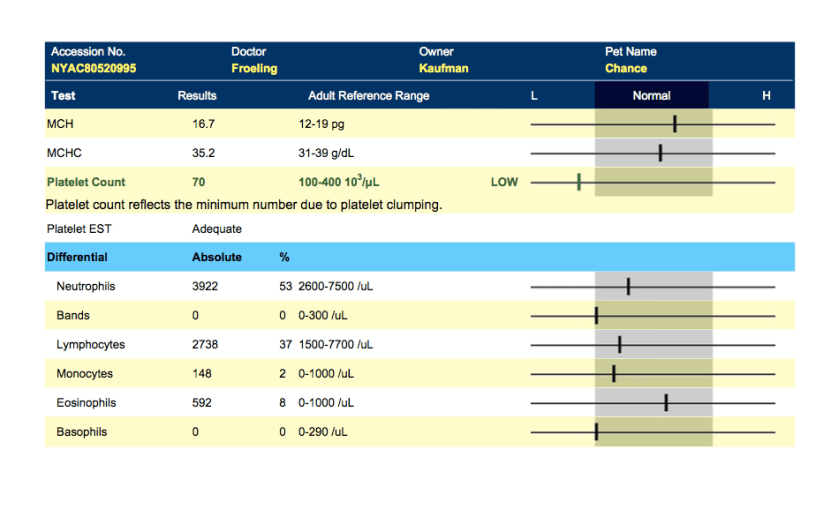
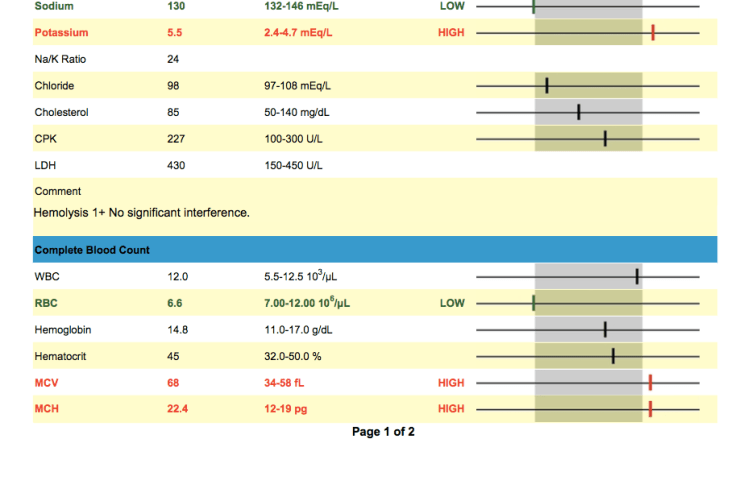
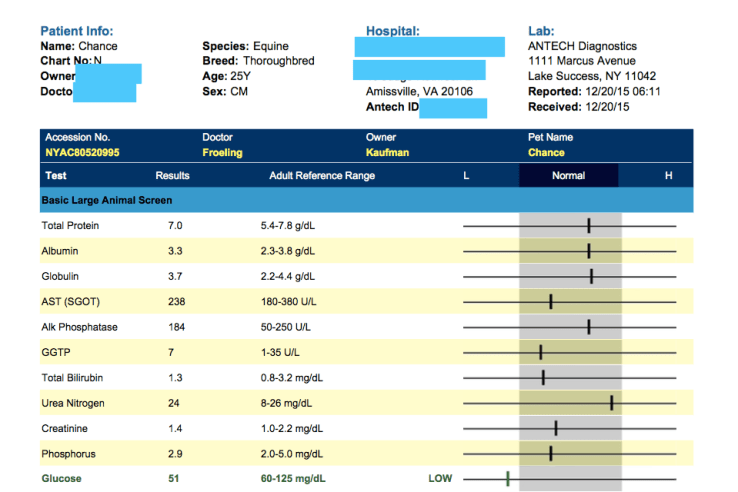
Chance’s Blood Work


C 1

C 3


L 2


INTERPRETATION OF RESULTS


Elevated Potassium (6.6 mEq/L):

“Low levels indicate depletion and are often a predisposing factor, along with
dehydration, in fatigue, muscle cramps, colic, synchronous diaphragmatic flutter (“th
umps”), diarrhea and other symptoms of exhausted horse syndrome. Even seemingly normal or high-normal levels may in reality be lower, but appear higher due to concentration secondary to dehydration as measured by total protein and albumin levels.
Therefore, levels at the lower end of the normal range should be evaluated relative to concurrent dehydration” (https://www.quia.com/files/quia/users/medicinehawk/2407-Vet/labs.pdf).

Low Sodium:

“Low levels commonly indicate loss through excessive sweating, or through kidney or intestinal disease. Low levels may also be found in young foals with bladder damage. Increased sodium levels are usually a sign of dehydration” (http://www.minstervets.co.uk).

Low Platelets: 

This was the most worrisome in regards to the potential immediate issues that could ensue because of the low platelet count. 

“The platelets are the third cellular component of blood (along with red and
white blood cells). These cells contain a number of biologically active molecules that are
critical to the blood clotting process. Low levels may indicate a number of disease
processes not necessarily directly related to a bleeding disorder. Chronic or acute blood
loss, immune disease, toxemia, liver, spleen or bone marrow disease, or even critically
reduced or increased body temperatures can also cause low platelets counts. Any
significantly low platelet counts should be further investigated by a veterinarian. High
levels are generally clinically insignificant unless the condition persists, in which case it may be indicative of bone marrow neoplastic disease” (Susan Garlinghouse).

Low Glucose:

“Glucose is the source of the body’s energy. It is measured in suspected cases of equine metabolic syndrome and sometimes in cases of equine Cushing’s disease. Blood glucose may also be measured as part of a glucose tolerance test, assessing small intestinal function” (http://www.minstervets.co.uk).

Chance was tested for Cushing’s Disease within the last year and the test showed that he did NOT have Cushings. 
Elevated CPK (337 U/L):

Levels 2-3x the highest number in range are considered significant according to vetstream.com.  Levels are easily increased due to poor handling techniques as well as lab error.

According to Dr. Christine Woodford and Carla Baumgartner on vipsvet.com, “Elevations of CPK and SGOT are indictors of muscle inflammation–tying-up or rhabdomyolysis. The term “rhabdo” means muscle and “myolysis” means rupture of muscle cells. The CPK and SGOT are very sensitive indicators of skeletal muscle damage, and they rise in concentration proportionally with the amount of damage. A bit of timing is required in order to obtain the most sensitive results; CPK rises (due to its leakage from muscle cells into the blood system) approximately six to eight hours after the onset of muscle inflammation, and SGOT rises after approximately 12-14 hours. The absolute peak of CPK concentration and the time it takes to return to normal are important indicators of the severity of muscle damage and the response to therapy.”

Elevated MCV: Is the average volume of red blood cells.

  • Macrocytosis.
  • Indicates immature RBC in circulation (suggests regenerative anemia).
  • Very rare in the horse, but may observe increasing MCV within normal range as horses increase erythropoiesis.

According to Vetstream.com, “Macrocytosis (increased MCV) resulting from release of immature RBC from the bone marrow during regeneration is very rare in the horse therefore the MCV is less useful in the horse than in other species.”

Elevated MCH: Is the average amount of hemoglobin in an individual red blood cell.

  • Hemolysis, if intravascular in nature .
  • Errors can occur during processing

Low RBC:

“You may be inclined to think that red blood cell levels need to drop significantly before they cause a problem for your horse. But the truth is that even low-grade anemia – levels hovering around that 30% range on a PCV – can impact your horse physically and may indicate a health problem. This is especially true for high performance athletes. The greater your horse’s physical condition and demand, the higher on the range of normal her red blood cell counts will typically be. Therefore, a red blood cell level low on the normal range or just below may indicate a concern for a racehorse, for example, where it wouldn’t for that pasture pet.”  See more at: http://www.succeed-equine.com/succeed-blog/2014/02/05/anemia-horses-part-1-just-equine-anemia/#sthash.JJuWN5ob.dpuf


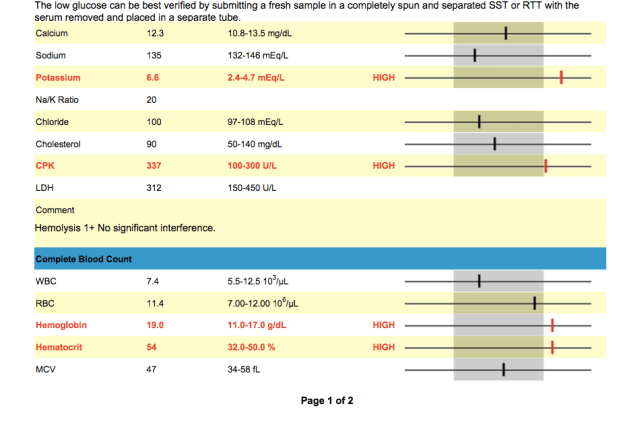
Luck’s blood work


L 1

C 2

Elevated Potassium: Potassium can become elevated for a number of reasons.

According to Vetstream.com,

  • 98% of potassium is intracellular.
  • Changes in serum or plasma potassium levels reflect fluid balance, rate of renal excretion and changes in balance between intra- and extracellular fluid.
  • Hypokalemia increases membrane potential, resulting in hyperpolarization with weakness or paralysis.
  • Hyperkalemia decreases membrane potential with resulting hyperexcitability.
Susan Garlinghouse states that, “High serum levels of potassium during an endurance ride are generally not a concern. These increases often reflect nothing more serious than a delay between blood collection (when potassium is actively sequestered inside cells) and sample measurement (after potassium has had time to “leak” from inside the cells out into the plasma or serum).”  This could also be a result of Luck and Chance running around in the heat when the vet arrived.
Increased [potassium] (hyperkalemia) can occur from;
  • Results can be false due to processing time (ie: if the lab waited too long to process blood sample)
  • Immediately after high intensity exercise.
  • In association with clinical signs in horses with hyperkalemic periodic paraysis (HYPP)    .
  • Bladder rupture (neonate)    .
  • Hypoadrenocorticism  [Pituitary: adenoma]  (rare).
  • Metabolic acidosis.
  • Acute renal failure    .
  • Extensive tissue damage (especially muscle).
  • IV potassium salts, eg potassium benzyl penicillin, potassium chloride    .
  • Phacochromocytoma (rare in the horse).
    Hypokalemia
  • Chronic diarrhea.
  • Diuretic therapy, especially potassium-losing diuretics.
  • Excess bicarbonate/lactate therapy.
  • Chronic liver disease    .
  • Acute renal failure (polyuric phase)    .
  • Recovery from severe trauma.
  • Metabolic/respiratory alkalosis.
  • Prolonged anorexia.
  • Recovery period after high intensity exercise (30-60 min after).
  • Parenteral feeding.

In combination with clinical signs and results of other tests results could signify the following;

Elevated GGTP:

* Donkeys tend to have 3x higher levels then horses.  This means that in stead of the typical equine range being 1-35 U/L a typically donkey’s range would be up to ~105 U/L.  Lucky’s test showed he had 120 U/L which is still elevated but not much.  It took sometime to get Luck from the field when the vet arrived- he ran around non stop.  The excitement and anxiety could be the cause of the elevated levels.

RBC:

Katherine Wilson, DVM, DACVIM, of the Virginia–Maryland Regional College of Veterinary Medicine (See more at: http://equusmagazine.com/article/decode-horses-bloodwork-27122#sthash.sc4J1ISJ.dpuf) explains “RBC count is probably the least helpful information because horses usually don’t have big changes in red blood cell numbers. It is not uncommon for horses to have an RBC count a little lower than normal range, however. The term we use for low RBC is anemia, but unless the count gets very low, a horse doesn’t necessarily need to be treated for that condition. A lot of diseases or any chronic long-term disease can cause mild anemia. Usually if we see mild anemia on the bloodwork and the horse has other issues, the anemia is just an indication that we need to fix/treat another problem.”

Low or Elevated Values

  • Splenic contraction.
  • Polycythemia (rare) .
  • Dehydration.
  • Consider causes of anemia
  • Blood loss    .
  • Hemolysis (i in vivo or artifact).
  • Decreased bone marrow production.
  • Poor technique at sampling.
  • Poor handling and storage of samples.
  • Poor technique in laboratory.

Low Bilirubin:

Heather Smith Thomas of Equus states,  “Another indication of liver health is a pigment called bilirubin, which is formed from the breakdown of red blood cells. Elevated levels can mean unusual loss of red cells or liver dysfunction. However, in horses, unlike other animals, elevated levels of bilirubin often isn’t serious. “This value can increase fairly rapidly when horses go off feed, and this is something that is unique to the horse,” says Wilson. “Often we get phone calls from veterinarians who don’t work on horses much or owners who see the blood work and note that the bilirubin is above normal range and are concerned about liver disease. If the horse is off feed for 24 to 48 hours, that value will increase, but this is just a temporary elevation.”

Elevated Hemoglobin (19 g/dL):

According to vetstream.com, Thoroughbred and other “hot-blooded” horses Hemoglobin range differs from other equine- the thoroughbred range = 11.0-19.0g/l.

Elevated Hematocrit (54 %):

 Elevated levels could be due to;

  • Dehydration.
  • Splenic contraction.
  • Polycythemia .

“A measurement of the relative amount of red blood cells present in a blood
sample. After blood is drawn, a small tube is filled and centrifuged to separate the heavier
blood cells from the lighter white blood cells and the even lighter fluid (plasma or serum)
portion. A higher than normal reading generally indicates dehydration (same number of
cells in less plasma volume) or may be due to splenic contraction secondary to
excitement or the demands of exercise. A low reading may indicate anemia, though not
invariably. Highly fit athletic horses may normally have a slightly lower hematocrit at
rest due to an overall more efficient cardiovascular system. Evaluation of true anemia in
horses requires several blood samples over a 24-hour period” (Susan Garlinghouse, 2000/ http://www.equinedoc.com/PrideProjectInfo.html).

It took sometime to get Luck from the field when the vet arrived- he ran around non stop.  The excitement and anxiety could be the cause of the elevated levels.

Low Sodium:

According to horseprerace.com, “Low levels indicate depletion and are often a predisposing factor, along with dehydration, in fatigue, muscle cramps, colic, synchronous diaphragmatic flutter (“thumps”), diarrhea and other symptoms of exhausted horse syndrome. Even seemingly normal or high-normal levels may in reality be lower, but appear higher due to concentration secondary to dehydration as measured by total protein and albumin levels. Therefore, levels at the lower end of the normal range should be evaluated relative to concurrent dehydration.”


More information on your horse’s blood work

Decoding your horse’s blood work

CBC and Chemistry Profile

A Better Understanding of the Results


The vet suggested that I add water to Luck’s and C’s feed in case their values are due to dehydration. She also explained that some of the values may be a result of running around in the field right before drawing them along with anxiety.  

The anxiety and running around seemed fair but I am hesitant on the dehydration portion.  Yes, I know it is winter and that horses are less likely to drink as much water.  But if it were due to dehydration then the Albumin would be low as well.  But, the blood work revealed that the Albumin was 2.8 (Luck) and 3.2 (Chance).  These values are within the normal range…. that being said, the results could also be due to lab handling especially the Potassium levels.

While speaking with my uncle Jerry (the horse whisperer), he suggested adding a salt block to the horse’s feed.  This will increase the horse’s thirst which will get them  drinking more.  I also added heated water buckets so that the water won’t freeze and in case they are less inclined to drink when the water is cold.

In order to feel comfortable about my horse and donkey being healthy, I will have more blood work done this week to make sure everything is in fact okay.


A Month Later

Luckily, after about one week of stall rest and hand walking, along with a stronger anti-inflammatory, Chance has begun to show improvements over the last couple weeks of treatment.

Chance has almost completed his first 30 days of EPM treatment and has about a day or so left of the Protazil. He is going to continue his other medications and supplements:

1. SmartPak: senior flex and immune boost
2. Vitamin E
3. MicroLactin (amazing) to help with regrowth of his cells, inflammation, and pain.

As I’m doing research, and trying to come up with a plan of action, once again I am inundated with opinions…medication, exercise, holistic, massage, acupuncture, chiropractic, organic, shoeing, etc.

I know I need to continue therapy, or start a new therapy. But which one do I choose?

Do I go the holistic approach and work with an acupuncturist, chiropractor, massage therapist, and vitamins such as Vita Royals? Do I go organic? Or do I try Marquis? Another month of Protazil? Oraquin-10? Rebalance has been linked to a number of recent deaths in the past handful of months. If I go the organic or holistic approach do I run the risk of the disease progressing? If I go with the medication do I run the risk of yet another “treatment crisis”?

I contacted Vet4 and he suggested doing another round of the Protazil or Marquis.  I decided on trying Marquis and waited for it to arrive.

Chance after a month on Protazil 

CHRONIC PROGRESSIVE LYMPHEDEMA (CPL) due to Scratches

Chance has always been fighting “scratches” on his back legs.  Frustrating, painful, and never seem to completely go away.  Could scratches have caused this?  My thoughts- scratches allowed bacteria to enter the leg, the infection settled on the DDFT sheath and caused the current flare up.  Below is some research I found on possible conditions due to scratches that caused similar symptoms Chance had been experiencing.

CHRONIC PROGRESSIVE LYMPHEDEMA (CPL) due to Scratches

A condition characterized by progressive swelling, hyperkeratosis and fibrosis of distal limbs has been characterized in Shires, Clydesdales and Belgian Draft horses and unfortunately affects numerous horses within these breeds. The disease has also been recognized in Gipsy Vanners; however, only a few horses have been evaluated at this point of time. This chronic progressive disease starts at an early age, progresses throughout the life of the horse and often ends in disfigurement and disability of the legs, which inevitably leads to the horse’s premature death. The pathologic changes and clinical signs closely resemble a condition known in humans as chronic lymphedema or elephantiasis nostras verrucosa. The condition has therefore been referred to as chronic progressive lymphedema (CPL). The lower leg swelling is caused by abnormal functioning of the lymphatic system in the skin, which results in chronic lymphedema (swelling), fibrosis, decreased perfusion, a compromised immune system and subsequent secondary infections of the skin.

The clinical signs of this disease are highly variable. It is often first addressed as a marked and “therapy-resistant” pastern dermatitis (scratches). The earliest lesions, however, are characterized by skin thickening, slight crusting and possible skin folds in the pastern area. While readily palpable, these early lesions are often not appreciated visually as the heavy feathering in these breeds covers these areas. Upon clipping of the lower legs, it becomes obvious that the lesions are far more extensive than expected. Secondary infections develop very easily in these horse’s legs and usually consist of chorioptic mange and/or bacterial infections. Pigmented and non-pigmented skin of the lower legs are affected. Appropriate treatment of the infections (pastern dermatitis) is not successful as underlying poor perfusion, lymphedema and hyperkeratosis in association with the heavy feathering present perfect conditions for repetitive infections with both chorioptic mange as well as bacterial infections. Recurrent infections and inflammation will enhance the lymphedema and hence, the condition becomes more chronic. As a result, the lower leg enlargement becomes permanent and the swelling firm on palpation. More thick skin folds and large, poorly defined, firm nodules develop. The nodules may become quite large and often are described as “golf ball” or even “baseball” in size. Both skin folds and nodules first develop in the back of the pastern area. With progression, they may extend and encircle the entire lower leg. The nodules become a mechanical problem because they interfere with free movement and frequently are injured during exercise. This disease often progresses to include massive secondary infections that produce copious amounts of foul-smelling exudates, generalized illness, debilitation and even death.

TREATMENT/MANAGEMENT

Please keep in mind that none of these treatments listed below will “heal” chronic progressive lymphedema (CPL). However, a rigorous management following our suggestions below will assist you to slow down the process and even make some of the nodular lesions disappear. Your horse will need this management the rest of its life.

• Clipping of the feathers
Long and dense feathering makes management of lymphedema more difficult. We highly recommend clipping the feathers and keep them short, if horses are not presented at shows. If you have a show horse, we still recommend to clip the feathers to initiate a rigorous treatment. As the skin condition improves and the edema is reducing – you may have a better chance to keep the horse’s legs in better condition by. careful repetitive treatment, while the feathering is growing back. The feathers are usually back to their original length in about 10-12 months.

• Treatment of skin infections
Progression of lymphedema is also associated with deposition of fibrous tissue and formation of fibrotic nodules.. As a result, these horses have a poor blood circulation and immune response in the skin of their legs. They tend to built up a thick keratin layer. The long feathering further occludes the skin surface, which then remains humid. These factors provide the perfect culture environment for infectious pathogens. This explains why horses with CPL constantly battle recurrent infections with mites (Chorioptic mange) and bacterial infections (Staphylococcus, Dermatophilus).

Horses with CPL should consistently be treated against reinfestation of mites and bacteria:

Topical treatments:

• Careful washing, cleaning and drying of the legs on a routine basis is essential. Horses with long feathering may require blow-drying of their legs. We recommend using a product manufactured by HydroSurge Inc. ( http://www.hydrosurge.com ) called Apricot Sulfur Skin Treatment Shampoo.

• Frontline spray to treat chorioptic mange (do not use Frontline on pregnant and nursing mares)

• The best and most economical topical treatment is to find a source of wettable sulfur powder (“flowers of sulfur”). This can usually be found through a vineyard supply or at your local nursery (certain “rose dust” preparations). Mix this powder with mineral oil in to form a creamy paste. You can mix a moderate amount in a plastic lidded container or glass jar so that you have enough to last 2-4 weeks at a time. Apply this mixture to the ulcerated and/or affected areas of skin daily. This preparation is the best and most economical topical treatment we have found. You can use it indefinitely. Sulfur is safe to use in pregnant mares.

Systemic antiparasitic treatment: Frequent ivermectine treatment will also assist to keep the mites away.

• Exercise
Regular exercise is crucial. It will increase the circulation and the lymph drainage.

• Manual Lymph-drainage
Manual lymph-drainage is regularly used in humans with lymphedema as long as there is no inflammation present within the tissue. MLD has been successfully used in horses with more acute lymphedema, but has not been established yet in horses with progressed CPL. A massaging coldwater stream may assist a massage. It is important to dry the skin before applying anything else after massage and rinsing. If the feathers were not clipped this may take a long time and you may have to use a hair dryer. Your horse may become more compliant to this treatment as swelling reduces over time

• Bandaging and stockings
We have some limited experience with using special bandages developed for people with lymphedema. For horses, which always move around, “short-stretch” bandages should be used (example: Rosidal ®). Short stretch bandages have been successfully used in three horses with clipped feathering; but bandaging was not as successful on horses with long feathers. Of course it is crucial to have very good padding and keeping the bandages fairly tight. If tolerated, the best results will be achieved by keeping the bandages on 24/7. Of course they need to be redone at least every other day – better every day to control the legs. At first, there will be oozing from the lymphedema through the skin – so the bandages will get wet and have to be changed every day. With the reduction of the edema – this will stop. If the horse is only walked quietly the bandages can be left on for the exercise; very likely the legs have to be rewrapped after the exercise as the swelling will somewhat reduce. For more exercise it may be better to take the bandages off, use working bandages and then switch back to the short–stretch bandages after work. Again make sure the skin is dry when you rewrap.

After the edema has been reduced by using bandages – stockings are used for people to maintain avoid recurrence of lympedema. The use of such stockings in horses are currently under investigation.

It should be noted that horses suffering from CPL often are susceptible to reapeated bouts of “Thrush”. Consequently, thorough and routine foot trimming care is an essential part of the health care management for these horses.

IMG_9814

Coming Home to Love & Peace

Chance was able to come home a week later.  Sam & John went to pick him up at the hospital. However, upon arriving, they soon found out that Chance did not want to get on the trailer.  Sam later told me that one of my sweatshirts was in the truck, so she brought it out and let him smell it- he finally loaded.

I got his stall ready- tons of fresh shavings, hay, a new water bucket…

The moment he got off of the trailer he was shaking!  I gave him a warm bath and let him out in a small, flat paddock so he could be in the sunshine.

This is what happened when I let him out!  He did something he had not been capable of doing for months and months, if not longer.

Answers

Vet4 came out immediately.  I was beyond grateful!

He did an ultrasound of the back right leg and called me.  He found that Chance has Chronic Cellulitis and that there was Vascular constriction, and masses on the tendon sheath between the superficial and deep tendon sheaths.  The Doppler showed good blood flow and a thickening of the synovial lining. Hoof testers- Negative

We spoke about my opinions- MRI, Arthroscopic surgery, Regional Diffusion, Cold Compression Therapy, Nerve Block Injections, Steroid Injections

We decided  to try the Steroid Injections into the 3 Synovial masses to hopefully reduce the size and thickening.  Thus allowing us to see behind the masses to see what is actually happening.

Injections were into the Proximal Digital Flexor Tendon Sheath with 6mg Betamethasone and d100mg of Amikacon. Leg was covered with SSD and DMSO and bandaged.

Once injected, cold compression therapy for about 5 days twice a day and stall rest. Banamine daily.

The Guessing Game

IMG_7563The month passed by slowly….I kept hitting a brick wall over and over again…with each diagnostic test we ran.

Vet2: This was Chance’s vet for many years and where Chance lived the summer I moved home.  Vet1 was used because of connivence and due to being the vet of the owner of the farm.   I called Vet2, desperate, and she came out to see him.  Vet2 had always been amazing with Chance- kind, calm, and seems to act on intuition in conjunction with science.  She ran a CBC, tested for Cushings, Lymes, an did x-rays on the back right leg.

RESULTS:

* Metabolic Syndrome- Cornell

GLUCOSE: 10mg/dl

LIPEMIA: 8mg/dl

HEMOLYSIS: 1mg/dl

ICTERUS: 2mg/dl

*Endocrinology

ACTH endo 21.4 pg/ml

INSULIN 15.22 uIU/ml

THYROXINE T4 baseline 0.77 ug/dl

*Lyme Mitpix- Cornel

OspA Value 1253- Equivocal

OspC Value 79- Negative

OspF Value 592- Negative

Temp: 99.1, HR: 42, RR: 12, No murmur

Received Potomac Rabies and Stanozanol 4ml 7 vit B12

The X-rays of his back right showed nothing that could cause his flare-ups.  While his thyroid was a bit low, it was not clinically significant.  He was negative for Lymes and Cushings.  Next step, aside from pain management, is to call Vet3- the holistic approach.

Horse's Leg

Tendon Injury Handbook

The Call

One day I received a call that I needed to come out and see Chance because he wasn’t doing well and, according to Vet1, he needed to be put down.  I quickly canceled my appointments and got on the road.  The 4 hour drive was excruciating…once we finally arrived, my heart broke.

My old guy was skin and bones.  His back right leg was swollen and he wasn’t able to bare weight on it.  His eyes were dull.  He could barely walk, and when he did, he wouldn’t put any weight on the right hind.  There were even times when he would do this “neurologic dance” (coined by the farm’s owner and C’s other mom) where he would lift up his back right leg and hop!

But when he saw me pull up, he whinnied.  He was excited to see me.  He ate the pureed carrots but refused the apple puree (only my mom would make this for him).  He wasn’t ready to die.


I called the vet who said that Chance should be put down to see what his thoughts were.

Me:   What do you think is going on with C?

Vet1: I think he is ready to be put down. 

Me: Because of what?

Vet1: Lymphangitis

Me: Okay, well, what is the cause of the Lymphangitis? Did you run any diagnostics?

Vet1: No

Me:  I would like to manage his pain and run a few tests before making that decision.  (I reviewed the research that I had done and asked where to go from there.) Could it be EPM?

Vet1: “It’s not EPM”

Me: How about Cushings? Or Laminitis? Lymes?

Vet1: Nope. Just old age.

Me: The journals I read said that some of the symptoms…(I was cut off)

Vet1: “I don’t care what journals you read!  It’s a bunch of…”

Me: One was from VA Tech actually…


Well, that was that! Vet1 did not completely lack compassion but he was more “old school” I guess one could say.  He was well respected in the horse world and up until this point, he did the job I needed. But I will say I was disheartened by our conversation.  

I decided to contact the other vets that I had worked with in the past, who also knew Chance, and get second, third, fourth opinions.  

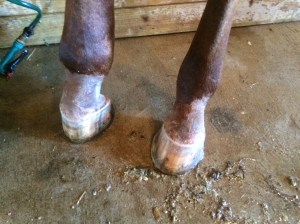
IMG_8299IMG_8296IMG_8293IMG_8300