
What should you do (or not do) if your horse shows signs of colic? And how do you prevent colic in the first place? Find out from our veterinary experts.
— Read on thehorse.com/features/dealing-with-equine-colic/
Category Archives: Preparation
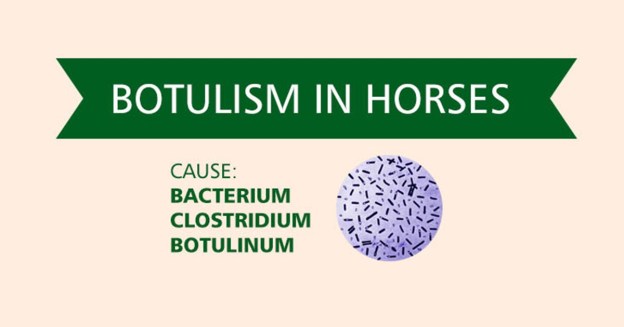
Botulism: It Takes Less to Kill a Horse than a Mouse!
|
|
|
Disaster Prep for Equine
Tornado Preparedness with Horses

You’re Always with Me
Tonight I lost my best friend, Chance. The one who whinnied the moment my car pulled up, would run away and wait for me to catch him only to turn around and run away again. He made me laugh, knew all my secrets and nuzzled me when I was sad. He taught me about unconditional love and having a positive attitude despite circumstances. He nodded when I asked if he loved me and gave kisses to get treats. He’s the 17.1 hand horse who would stand behind me and fall asleep as I did my school work and would get upset if any horse got near me but would never hurt a fly. He let children hug him and dogs run into his stall and let me dress him up with flowers. He loved rolling in the snow, laying in the sunshine, and would light up the moment he saw me. I’ll miss playing in the barn on cold nights and curling up reading in his stall when he wasn’t feeling well. I’m thankful that he waited for me to get there tonight to say goodbye so I could hold his head in my lap and talk to him while he passed. There will never be a sweeter horse with a more gentle and pure soul. Thank you, Bubba, for being with me through it all- high school, college, the break ups, the losses, the good and bad days. You gave one hell of a fight for 30+ years. Lucky and I will miss you- there will never be another you❤️ #myfavoriteredhead #chancewetake #20yearstogether #thebesthorseintheworld #myheart

Wobbler Syndrome: Proof At Last!
Home is Whereever You Are
Recently, I had to move to a new farm. And, if you are anything like me you loathe not only moving but moving your horse. The what-ifs running though my head- what if he won’t load? What if he hits his head? What if he freaks out? (Or to be completely transparent, what if I do?). What if he falls? Etc. Personally, when I am faced with a anxiety provoking situation, I need to have a sense of control however small it is. So, I did what I do best and planned and organized. Everything.
Chance had a bad prior experience with being trailered. Plus, with his age (31) and past health issues my anxiety was at an all time high. It was recommended that I plan to meet him at the new farm instead of being there for loading. Made sense. I scheduled the vet to be there in case medications were needed. And they scheduled a therapeutic trailering service with a large trailer that had an forward unloading ramp. The horse communicator was also scheduled as she knew of Chance’s past experience and did energy work.
The day arrived. I went to the farm early and wrapped Chance’s legs, brought he and Lucky inside, packed up all my stuff, and met with the horse communicator. She did some grounding exercises with Chance and myself. I left when everyone arrived and went to the new farm and unloaded our stuff. About 1 hour later the phone rang and of course, I thought the worse. Chance refused to load even after 2 rounds of medications. Lucky was on the trailer. They requested I come and try. I drove the 30 minutes back to the farm- praying to everyone and anything- that Chance would load. I read some tips on Google (yes, I’m ashamed to admit, while driving). One article suggested doing groundwork to get the horse to pay attention. For example, stop him, make him stand, back up, etc. Once he was listening that is when you try to load. The article went on to say that anger and frustration would not work. Because a horse is in sync with our emotions. And that physically, a horse has stamina that we as humans do not share. However, mentally the horse will give up quicker. Patience. Kindness. Persistence.
I arrived. I followed the advice of the article. I walked him and gave commands. I was cool, collected, firm, and kind. We tried once. He walked part way up the ramp, stopped, and backed up. Again, I did the commands. Tried once more. Same thing. The third time the lady who was there to Trailer him lightly smacked his butt with a crop and suddenly, he was on the trailer! I couldn’t believe it. We quickly shut the doors and off we went.
The trip was about 45 minutes. And, thankfully, uneventful. The trailering company was amazing and patient. I’m beyond grateful for everyone’s help!
Below is information for trailering issues, how-tos, and professionals that can make the transition 10000% easier and, almost, stress free.
Resources:
1. True North Equine in Marshall, Virginia
2. Trailering service: Always There Horsecare: 703-915-6255 or http://www.alwaystherehorsecare.com
3. Article: Think like a horse
4. Article: The hard to load horse
5. Article: Lets Get Loaded



Keeping Your Horse Safe on the 4th of July
When I think of the Fourth of July, I think of a fun time with my family and friends. Typically, I am not thinking of the potentially hazardous effects the fireworks may have on my animals…. Why would you? However, the truth is, the boom of the fireworks and the bright and sudden flashes can not only cause our horses severe anxiety but may also lead to injury.
Have you ever been in the dark and someone shines a flashlight in your eyes? What happens? You see spots. You are momentarily unable to see. Your balance gets thrown off and you can’t tell what is right in front of you. Well, imagine a horse. He is in a dark paddock and suddenly flashes of light momentarily blind him and add in the boom…recipe for disaster. Not only can he barely see but he spooks from the noise. The results could be anxiety to tripping and breaking a leg. That being said, I have included some useful information below for ways to safeguard your horse this July 4th.
Fireworks and Horses: Preparing for the Big Boom | TheHorse.com

Immune Booster Leads to Infection?
For the past 6 weeks, my horse has been receiving Ozonetherapy to aid in his chronic back leg related issues- dermatitis (“scratches”), previous DDFT tendon laceration, a history of Lymphingitis, and the residual scar tissue from his DDFT injury. Due to his age (27), he lacks proper circulation in his hind end which does not help him fight his pastern dermatitis.
According to the American Academy of Ozonetherapy, Ozonetherapy is described as;
“Ozonotherapy is the use of medical grade ozone, a highly reactive form of pure oxygen, to create a curative response in the body. The body has the potential to renew and regenerate itself. When it becomes sick it is because this potential has been blocked. The reactive properties of ozone stimulate the body to remove many of these impediments thus allowing the body to do what it does best – heal itself.”
“Ozonotherapy has been and continues to be used in European clinics and hospitals for over fifty years. It was even used here in the United States in a limited capacity in the early part of the 20th century. There are professional medical ozonotherapy societies in over ten countries worldwide. Recently, the International Scientific Committee on Ozonotherapy (ISCO3) was formed to help establish standardized scientific principles for ozonotherapy. The president of the AAO, Frank Shallenberger, MD is a founding member of the ISCO3.”
“Ozonotherapy was introduced into the United States in the early 80’s, and has been increasingly used in recent decades. It has been found useful in various diseases;
- It activates the immune system in infectious diseases.
- It improves the cellular utilization of oxygen that reduces ischemia in cardiovascular diseases, and in many of the infirmities of aging.
- It causes the release of growth factors that stimulate damaged joints and degenerative discs to regenerate.
- It can dramatically reduce or even eliminate many cases of chronic pain through its action on pain receptors.
- Published papers have demonstrated its healing effects on interstitial cystitis, chronic hepatitis, herpes infections, dental infections, diabetes, and macular degeneration.”
After doing research and speaking to one of my good friends, we determined that Chance’s flare up of Lymphingitis, after almost 3 years of not a single issue, could possibly be caused by his immune system’s response to Ozonetherapy. Let me explain.
Chance suffers from persistent Pastern dermatitis (“scratches”) since I purchased him in 2000. I have tried everything- antibiotics, every cream and ointment and spray for scratches, diaper rash ointment, iodine and vaseline mix, Swat, laser treatments, scrubs and shampoos, shaving the area, wrapping the area, light therapy…you name it, I have tried it. So, when we began Ozonetherapy to help break down the left over scar tissue from his old DDFT injury, I noticed that his scratches were drying up and falling off. We continued administering the Ozonetherapy once a week for about 6 weeks. The improvement was dramatic!
However, one day Chance woke up with severe swelling in his left hind leg and obviously, he had difficulty walking. He received Prevacox and was stall bound for 24 hours. The vet was called and she arranged to come out the following day. The next morning, Chance’s left leg was still huge and he was having trouble putting weight on it. I did the typical leg treatments- icing, wrapping. The swelling remained. I tried to get him out of his stall to cold hose his leg and give him a bath but he would not budge. He was sweaty and breathing heavily and intermittently shivering. So, I gave him an alcohol and water sponge bath and continued to ice his back legs. I sat with him for 4 hours waiting for the vet to arrive. He had a fever and wasn’t interested in eating and his gut sounds were not as audible. He was drinking, going to the bathroom, and engaging with me. I debated giving him Banamine but did not want it to mask anything when the vet did arrive.
The vet arrived, gave him a shot of Banamine and an antihistamine and confirmed that Chance had a fever of 102 degrees and had Lymphingitis. There was no visible abrasion, puncture, or lump… I asked the vet to do x-rays to ensure that he did not have a break in his leg. The x-rays confirmed that there was no break. The vet suggested a regiment of antibiotics, steroids (I really am against using steroids due to the short-term and long-term side effects but in this case, I would try anything to make sure he was comfortable) , prevacox, and a antacid to protect Chance from stomach related issues from the medications. It was also advised to continue to cold hose or ice and keep his legs wrapped and Chance stall bound.
The following day, Chance’s legs were still swollen but his fever had broken. The vet called to say that the CBC had come back and that his WBC was about 14,00o. She suggested that we stop the steroids and do the antibiotic 2x a day and add in Banamine. I asked her if she could order Baytril (a strong antibiotic that Chance has responded well to in the past) just in case. And that is what we did.
Being as Chance had such a strong reaction to whatever it was, I did some thinking, discussing, and researching…first and foremost, why did Chance have such an extreme flare up of Lymphingitis when he was the healthiest he has ever been? And especially since he had not had a flare up in 3+ years…plus, his scratches were getting better not worse. The Ozonetherapy boosted his immune system and should provide him with a stronger defense against bacteria, virus’, etc. So why exactly was he having a flare up? And that is when it hit me!
In the past when Chance began his regiment of Transfer Factor (an all natural immune booster), he broke out in hives. The vet had come out and she felt it was due to the Transfer Factor causing his immune system to become “too strong” and so it began fighting without there being anything to fight, thus the hives. My theory- Chance started the Ozonetherapy and his body began to fight off the scratches by boosting his immune system. As the treatments continued, his immune system began to attack the scratches tenfold. This resulted in his Lymphatic system to respond, his WBC to increase, and his body temperature to spike. Makes sense…but what can I do to ensure this is not going to happen again?
My friend suggested attacking the antibiotic resistant bacteria by out smarting them…okay, that seems simple enough…we researched the optimal enviroments for the 3 types of bacteria present where Chance’s scratches are (shown in the results of a past skin scape test). The bacteria – E. Coli, pseudomonas aeruginosa and providencia Rettgeri. The literature stated that PA was commonly found in individuals with diabetes…diabetes…SUGAR! How much sugar was in Chance’s feed? I looked and Nutrina Safe Choice Senior feed is low in sugar…so that is not it. What else can we find out? The optimal temperature for all three bacteria is around 37 degrees celsius (or 98.6 degrees fahrenheit), with a pH of 7.0, and a wet environment. Okay, so, a pH of 7.0 is a neutral. Which means if the external enviroment (the hind legs)pH is thrown off, either to an acidic or alkaline pH, the bacteria will not have the optimal enviroment to continue growing and multiplying. How can I change the pH?
Vinegar! An antimicrobial and a 5% acetic acid! And…vinegar is shown to help kill mycobacteria such as drug-resistant tuberculosis and an effective way to clean produce; it is considered the fastest, safest, and more effective than the use of antibacterial soap. Legend even says that in France during the Black Plague, four thieves were able to rob the homes of those sick with the plague and not become infected. They were said to have purchased a potion made of garlic soaked in vinegar which protected them. Variants of the recipe, now called “Four Thieves Vinegar” has continued to be passed down and used for hundreds of years (Hunter, R., 1894).
I went to the store, purchased distilled vinegar and a spray bottle and headed to the farm. I cleaned his scratches and sprayed the infected areas with vinegar. I am excited to see whether our hypothesis is correct or not…I will keep you posted!
References & Information
Effect of pH on Drug Resistent Bacteriaijs-43-1-174
What does my horse’s CBC mean?

Nutrena SC Senior feed ingredience
The American Academy of Ozonetherapy
Hunter, Robert (1894). The Encyclopaedic Dictionary. Toronto: T.J. Ford. ISBN 0-665-85186-3.

The Weather Outside is Frightful…
I walked outside to sit on my porch and enjoy the evening, when I realized that the time is fast approaching where I can not longer do so without bundling up first. I decided it was time to get ready for the winter months ahead especially for my equine friends.
I have included articles, lists, resources, etc to help you make sure you and your horse are ready for the dropping temperatures!
Preparing Your Horse for Winter
By: Dr. Lydia Gray
Hot chocolate, mittens and roaring fires keep us warm on cold winter nights. But what about horses? What can you do to help them through the bitter cold, driving wind and icy snow? Below are tips to help you and your horse not only survive but thrive during yet another frosty season.
Nutrition
Your number one responsibility to your horse during winter is to make sure he receives enough quality feedstuffs to maintain his weight and enough drinkable water to maintain his hydration. Forage, or hay, should make up the largest portion of his diet, 1 – 2 % of his body weight per day. Because horses burn calories to stay warm, fortified grain can be added to the diet to keep him at a body condition score of 5 on a scale of 1 (emaciated) to 9 (obese). If your horse is an easy keeper, will not be worked hard, or should not have grain for medical reasons, then a ration balancer or complete multi-vitamin/mineral supplement is a better choice than grain. Increasing the amount of hay fed is the best way to keep weight on horses during the winter, as the fermentation process generates internal heat.
Research performed at the University of Pennsylvania School of Veterinary Medicine showed that if during cold weather horses have only warm water available, they will drink a greater volume per day than if they have only icy cold water available. But if they have a choice between warm and icy water simultaneously, they drink almost exclusively from the icy and drink less volume than if they have only warm water available. The take home message is this: you can increase your horse’s water consumption by only providing warm water. This can be accomplished either by using any number of bucket or tank heaters or by adding hot water twice daily with feeding. Another method to encourage your horse to drink more in winter (or any time of the year) is to topdress his feed with electrolytes.
Exercise
It may be tempting to give your horse some “down-time” during winter, but studies have found that muscular strength, cardiovascular fitness and overall flexibility significantly decrease even if daily turnout is provided. And as horses grow older, it takes longer and becomes more difficult each spring to return them to their previous level of work. Unfortunately, exercising your horse when it’s cold and slippery or frozen can be challenging.
First, work with your farrier to determine if your horse has the best traction with no shoes, regular shoes, shoes with borium added, shoes with “snowball” pads, or some other arrangement. Do your best to lunge, ride or drive in outside areas that are not slippery. Indoor arenas can become quite dusty in winter so ask if a binding agent can be added to hold water and try to water (and drag) as frequently as the temperature will permit. Warm up and cool down with care. A good rule of thumb is to spend twice as much time at these aspects of the workout than you do when the weather is warm. And make sure your horse is cool and dry before turning him back outside or blanketing.
Blanketing
A frequently asked question is: does my horse need a blanket? In general, horses with an adequate hair coat, in good flesh and with access to shelter probably do not need blanketed. However, horses that have been clipped, recently transported to a cold climate, or are thin or sick may need the additional warmth and protection of outerwear.
Horses begin to grow their longer, thicker winter coats in July, shedding the shorter, thinner summer coats in October. The summer coat begins growing in January with March being prime shedding season. This cycle is based on day length—the winter coat is stimulated by decreasing daylight, the summer coat is stimulated by increasing daylight. Owners can inhibit a horse’s coat primarily through providing artificial daylight in the fall but also by clothing their horse as the temperature begins to fall. If the horse’s exercise routine in the winter causes him to sweat and the long hair hampers the drying and cooling down process, body clipping may be necessary. Blanketing is then a must.
Health
There are a number of health conditions that seem to be made worse by the winter environment. The risk of impaction colic may be decreased by stimulating your horse to drink more water either by providing warm water as the only source or feeding electrolytes. More time spent inside barns and stalls can exacerbate respiratory conditions like “heaves” (now called recurrent airway obstruction), GI conditions like ulcers, and musculoskeletal conditions like degenerative joint disease. Control these problems with appropriate management—such as increasing ventilation in the barn and increasing turnout time—and veterinary intervention in the form of medications and supplements.
Freeze/thaw cycles and muddy or wet conditions can lead to thrush in the hooves and “scratches,” or, pastern dermatitis, on the legs. Your best protection against these diseases is keeping the horse in as clean and dry surroundings as possible, picking his feet frequently, and keeping the lower limbs trimmed of hair. Another common winter skin condition is “rain rot,” caused by the organism Dermatophilus congolensis. Regular grooming and daily observation can usually prevent this problem, but consult your veterinarian if your horse’s back and rump develop painful, crusty lumps that turn into scabs.
Winter Resources
Preparing your horse and barn for winter
Winter Nutrition Tips for Horses
Penn State: Winter Care for Your Horses
When You Lose Your Partner

Stories from the Heart
When You Lose Your Partner

We all know the too-familiar story used in crime shows on television. A dynamic duo, perfectly paired in every way. They’re best friends who bicker like an old married couple and complete each other’s lives. That partnership is something most people long for. And it’s something a few equestrians are lucky enough to find with their four-legged half.
I was one of those few. His name was Beau. He was an off-the-track thoroughbred with a heart of gold and the chest of a draft horse. Tall, dark, handsome, loyal, always in tune with my thoughts—he was the best partner a girl could ask for.
We spent hours, days, weeks, months, training together. Athletically, we were on point. Emotionally, we were more in tune than most married couples. In every way, he was my other half. My confidence stemmed from him, and vice versa. There was nothing we couldn’t do when we were together. We literally climbed mountains.

Then, too soon, Beau passed away.

It was sudden. Unexpected. One day he was there, the next I had to make the decision to have him euthanized at the age of seven. That day I lost not only my partner, but a part of myself.
Saying goodbye to a partner is hard. For a while, there’s a hole. It never really gets filled. You keep riding, keep hopping up in that worn-out leather saddle that still smells like him. But it’s never the same. That same passion, love and commitment you shared for one another will never be replaced.
That’s a hard thing to get over. But it’s something every single equestrian will one day have to face. I hope none of you need to face it so soon. I hope your partners grow to be old and gray and pass in the most dignified and peaceful sense. I hope you have time to sit on the ground with them, no matter how hard it may be, hold their head in your lap for the last time and say goodbye.
I hope you get the chance to tell them thank you for the heart they gave you. For the confidence, experience, and love they shared with you every time you stepped into their world. But most of all, I hope you appreciate every single ride.
Go out to your barn and hug your horse.
Let them have that extra snack. Next time they decide they aren’t going to listen, or kick up their heels because they feel fresh, laugh it off. Someday you’ll miss it. You’ll miss the green stains on your white shirt from their grassy kisses. You’re going to miss braiding that mane until your arms ache. You’ll miss hitting the dirt because you couldn’t quite sit their power over that jump. Enjoy every moment of your partnership.

For those who have experienced this and said goodbye, I feel your pain. Don’t be afraid of feeling it, too. Sometimes it’s good to sit down and look at all those old photos and have a good cry over the life you had with your best friend. It’s okay for it to hurt a little bit every time you walk in the barn and they aren’t there waiting for you.
Just remember, they gave the best years of their life to you. They loved you with every ounce of their being. And you returned the favor.
About the Author
Megan Stephens is small-town equestrian from the hills of New York. She first hit the saddle at the age of four and the obsession has grown ever since. She is mom to a Hackney gelding and competes in hunter/jumper divisions for a local farm. She enjoys freelance writing about her favorite topic in her spare time.
Interviews & Profiles
Q&A: Artist Whitney Anderson Is Bringing Horses to High Fashion
Whitney Anderson was born in Alaska into a third-generation commercial fishing family and grew up in Breckenridge, Colorado, and Seattle, Washington. In 2009, she received a B.A. of…
6 days ago

Opinion
And the Sun Does Rise
It is over. Mostly. Well, except for the part about the ‘winning side’ gloating for the next year about how they were so right, and…
6 days ago

Racing
California Chrome Headed to Stud in 2017
California Chrome is heading to stud in 2017 and will stand for a fee of $40,000, Taylor Made Farm’s Duncan Taylor announced on Tuesday. The…
6 days ago

Life
The Beauty of Pony Club’s Biggest Flaw
The first six months of my riding career were spent with two trainers; one for two months, and the second for about four. Then I…
6 days ago

Uncategorized
8 Signs Your Trainer Has Adopted You
Every horse person knows the trainer/rider relationship is a little different than most coach/player relationships… About the Author Kim Ablon Whitney is a USEF ‘R’…
6 days ago
An Open Letter To The Horse Of A Lifetime
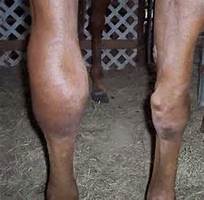
Treating Cellulitis in horses
A common and potentially hazardous infection that can be helped with combining antibiotics, cold hosing, and exercise.


On Monday night I showed up at the barn around 7:00 p.m. to ride once the day cooled off. To my dismay I found that Freedom’s knee was hugely swollen. I had wrapped his legs because he’d felt a bit stocked up the night before and because the swelling had no where to go except the knee, the effect was horrifying. Visualize a grapefruit.
Almost immediately I saw the cause: a scrape less than an inch long. Before I called the vet I scrubbed the wound to make sure it wasn’t a puncture wound (didn’t look like it to me, but a puncture would where a joint is involved can be very serious). Normally I would also shave the area around the cut but I had sent my clipper blades out to be sharpened! My guess was cellulitis but since it involved a joint I wanted to makes sure I…
View original post 499 more words
Storm Prep
I went to stock up on feed for Chance and Lucky before the snow storm hit…thankfully I had preordered feed in bulk (Tractor Supply is always out).


“But Baby It’s Cold Outside…”
Here are some helpful ways to know when you should blanket your horse and what type of blanket to use.


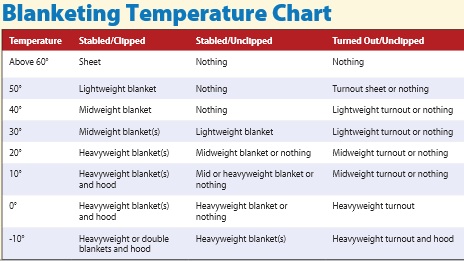 * Sources: Weatherbeeta.com, Auburn University
 The Chances We Take