
ker.com/equinews/white-line-disease-requires-early-diagnosis-and-aggressive-treatment/
Tag Archives: treatment
Core Vaccinations Every Horse Needs
Ask TheHorse Archives – The Horse
— Read on thehorse.com/topics/podcasts/ask-thehorse/
Dealing With Equine Colic: Here are 33 Do’s and Don’ts – The Horse
What should you do (or not do) if your horse shows signs of colic? And how do you prevent colic in the first place? Find out from our veterinary experts.
— Read on thehorse.com/features/dealing-with-equine-colic/
Equine Vaccination Cheat Sheet – The Horse
Equine Vaccination Cheat Sheet – The Horse
— Read on thehorse.com/137994/equine-vaccination-cheat-sheet/

EPM Tilter. What Do The Numbers Mean?
During my horse’s recent Lymphingitis flare-up, the vet advised that we run labs to test for Lyme and EPM due to his presenting symptoms (hind weakness, twisting his back leg at the walk/walking sideways I refer to it as- “Chance’s swagger”). As I noted previously, Chance’s Lyme test revealed that he was at the beginning stages of an acute infection…yay for the labs at Cornell University for their amazing ability to give you more than a positive or negative!
A little history before getting to the EPM Tilter results.
About 2ish years ago, Chance was diagnosed with EPM (and one of the reasons opossums and I are not friends since they host the disease as do a few other culprits). Chance immediately began EPM treatment- he received Protazil in his feed for one month. After hours of research I chose Protazil, although extremely expensive (if you order from http://www.drfosterandsmith.com they sometimes have promotions where you receive store credit for every $100.00 you spend…they did when I ordered and I got a “free” dog bed that my dogs adore), due to the decreased likelihood of Chance experiencing a “Treatment Crisis” (worsening of symptoms) and the ease of administration (other brands require the drug being administered 1 hour before eating or an hour after and so on). Typically, EPM treatment is done for 30 days and, depending on the residual symptoms, some may require subsequent treatments. While Chance’s symptoms improved, I wanted to ensure that we annihilated the disease and did another round of treatment but this time with Marquis. At the end of two months, Chance’s ataxia was gone!
Fast forward to September 2016…Chance, just having a Lymphingitis flare-up, has been tested for Lyme and EPM. Lyme came back positive. And….so did the EPM test..well, kind of. Wonderful. (See why I loathe opossums?)
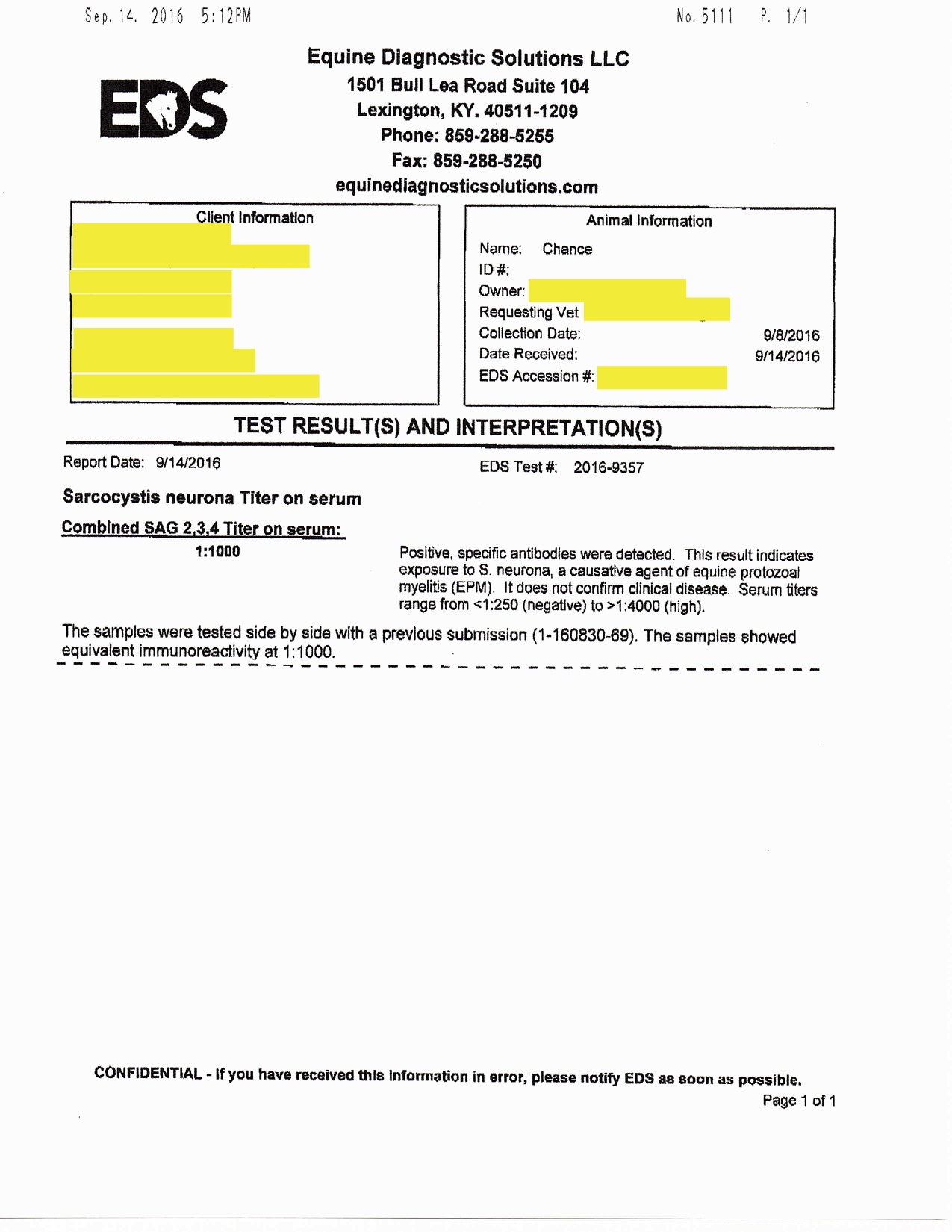
Chance’s EPM test #2 on 8/30/16 (the 1st one was 2ish years ago) showed the following:
“Combined SAG 2,3,4 Tilter on serum= 1:2000”
So, what does this mean?
The test revealed that Chance had “positive, specific antibodies” detected in the blood work. This means that he had EXPOSURE to S. Neurona, a causative agent of EPM. Serum tilters range from <1:250 (negative) to >1:4000 (high positive). S. Neurona (SarcoFluor) is one of two protozoa found in EPM infected horses, the other protazoa is N. Hughesil (NeoFluor). S. Neurona is most frequently seen, whereas N. Hughesil is not as common.
The vet ran another EPM test to confirm the findings in the 8/30/16 test. The results showed that Chance had “Combined SAG 2,3,4 Tilter on serum= 1:1000. Again, Chance showed EPM protozoa in the positive-ish range.
I initially had not seen the results but was told by the vet that he was EPM negative. So when I asked for the test results to be emailed to me and saw the numbers I sort of freaked out…I emailed the vet to ask for clarification. She explained,
“The EPM test shows that he was exposed to the organism in the first test we did which is why we did a follow-up test. Since his exposure level dropped from 1:2000 to 1:1000 this shows that he does not have the disease. There is no good one time test for EPM once they are exposed which is why we had to do the repeat to compare the two.”
While this explanation offered me comfort, I was confused…why does he have any protozoa in his blood if he doesn’t have EPM?
I spoke to another vet and she explained it in a bit more detail…I am hoping I am summarizing what she said correctly..
When a horse tests positive for EPM they either have an active disease or they may not. However, when the test does from 1:2000 down to 1:1000 this typically means that the horse’s immune system is working correctly to fight the disease off- active or not. EPM testing typically provides you with a % of the chance your horse has an active EPM infection, or at least if you send it to Cornell University. For instance, lets say a horse gets the results back and it shows that they are “positive” or have been exposed to S. Neurona (one of the two EPM protozoa)…their results are 1:647. This means that, after doing a bunch of adding and multiplying that this vet kindly did for me, the horse has a 60-70% chance of having ACTIVE EPM. Meaning, he most likely would be symptomatic (ie: behavioral changes, ataxia, weight loss, difficulty eating, changes in soundness, and a bunch of other neurological symptoms).
My hunch is that Chance’s immune system was boosted because I started him on Transfer Factor (amazing stuff… more information can be found in some of my older posts) again as soon as his results came back positive for Lyme.
Here are the 3 EPM tilters that were run on Chance (oldest to most recent) along with his Lyme test results:



I have a limp!
Resources on how to diagnose, treat, prevent, and handle lameness in horses
Your Horse Has a Swollen Leg – Why and What To Do | EquiMed – Horse Health Matters
Fetlock Lameness – It’s importance… | The Horse Magazine – Australia’s Leading Equestrian Magazine
Causes of Equine Lameness | EquiMed – Horse Health Matters
Common Causes of Lameness in the Fetlock


Equine Podiatry
Medical History
- DDFT Lesion on right hind
- Cervical Spine Arthritis
- Hip discomfort due to past fall
Past Treatments Tried
- Stem Cell Injections: Healed the DDFT lesion in right hind until recently the lesion began to reappear
- Ozone Therapy: Assists in the healing of tissues
- Shock Wave Therapy: Assists in the healing of tissue
- Chriopractic adjustments
- Acupuncture
- Supplements
Initial Consultation
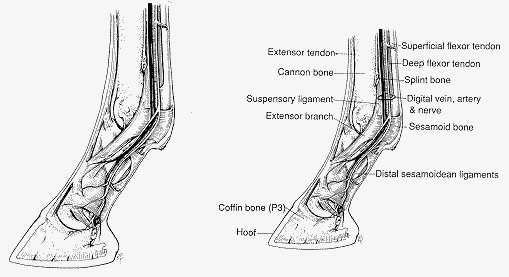
Chance showed decreased movement in his right hip and a audible cracking noise at the suspensory joint. He has edema of both hind fetlocks, Pastern, and Pastern Dermatitis. Chance was unshawed on both hinds due to his inability to stand for long periods of time and his decreased mobility. However, his front adorned clips.
Due to the length of Chance’s front toes and the height of his heels he was unable to evenly distribute his weight (60/40) to his front and hind ends. This would most likely cause increased tension on the DDFT tendons and corresponding ligaments resulting in an increased likelihood of tendon and ligament related injuries. The uneven distribution of weight could also inhibit the horse’s range of motion through his hips resulting in his body compensating for this injury and causing ataxia (balance issues), pain, arthritic changes, and cervical spine misalignment.
By shortening the toe of both front feet, the heel will rise allowing a more even distribution of his weight.
Front


Final Product: Front
Trimmed feet to corrected to the following specifications:
Foot Beginning Angle & Toe Corrected Angles & Toe Total P.C.
L/F 47 Degrees at 3 7/8 inches 53 Degrees at 3 inches 6 Degrees
R/F 45 Degrees at 3 3/4 inches 54 Degrees at 3 inches 9 Degrees
Hind

Final Product: Hind

| Return visit to trim and shoe Chance’s hind feet with #2 OBRHB Wedge shoes.Trimmed hind feet and corrected to the following specifications:
Foot Beginning Angle & Toe Corrected Angles & Toe Total P.C. L/H 48 Degrees at 3 7/8 inches 54 Degrees at 3 1/4 inches 6 Degrees R/H 46 Degrees at 4 1/4 inches 55 Degrees at 3 1/4 inches 9 Degrees Note: Chance needed to be sedated by veterinarian to complete the trim and shoe his hind feet due to preexisting hip and DDFT issues. |

If You Experience Worsening Depression…
Chance began another round of Excede to get his scratches under control- it is a never ending battle. A while back, I had a skin scrape of Chance’s scratches due to their chronic nature. The scrape results showed a number of bacteria, all commonly seen with this type of infection, that were resistant to most antibiotics. Thus why we decided to try Excede.
Administering Excede is pretty straight forward- 1 shot IM every 4 days for about a month. Easy enough….or so I thought. The first shot was administered by the vet when I was not present. The second shot the vet also administered while I was there. Thirty minutes after the shot was given to Chance I noticed he seemed off but not in his “normal” post-acupuncture relaxed state. He suddenly became lethargic, he wouldn’t eat his dinner, and the gut noises became almost nonexistent. I commented to the vet my concerns and she came over and reexamined him. Sure enough something was wrong. She proceeded to administer 10cc of Banamine (just in case it was colic) and told me to walk him around outside for about 20-30 minutes. Then see if he would eat 2 cups of feed only. We walked and Chance began to act like his normal happy go lucky self. Once inside he started to eat!
Part of me felt that his reaction was a fluke. However, the third dose proved me wrong. Four days later, Chance received his shot and went outside to enjoy the first beautiful, warm day. I sat in the field watching him. He was sluggish, lethargic, stiff..he looked 10 years older and barely moved from one spot under a tree. He wasn’t eating grass nor did he run around and play- he didn’t even run up to me like he normally would. I decided to bring him inside and give him a warm bath since it was in the high 70’s. He was non responsive to his bath- no playing with the hose or even accepting peppermints. I placed a cooler on him to ensure he stayed warm until he was out in the sunshine. I figured after a bath he would perk up- again, I was wrong. At dinner time I went to bring him in and typically I will open up the gait and he will canter into his stall- he slowly walked instead. He wouldn’t eat his feed (he normally whinnies and makes a fuss until he gets his feed and devours it) or his hay…I stayed and watched him for a while and he just slept. I spoke to John, the guy who helps me with Chance and Lucky, and he confirmed that Chance hadn’t been finishing his feed and wasn’t running when he brought him in for dinner.
My concerns grew and I decided to do some research on Excede. That strange thing is I usually do extensive research before changing or administering anything with my animals. But, for some reason I did not do so this time and I wish I had.
According to a number of reputable websites, Excede can cause significant and dangerous side-effects such as; diarrhea, severe acid reflux, blood coming from mouth, loss of appetite, lethargy, muscle and gait stiffness, and more.
The most troubling of everything that I read wasn’t what was posted on the Pfizer (the manufacturer) website but from the countless statements given by horse owners and the studies done by outside companies.
According to drugs.com, “in the PK study, several horses developed clinical signs consistent with foot pain (stiff in the front limbs when turned in tight circles, and increased pulses and heat to the front feet). One horse in the NAXCEL group and one horse in the 6.0 mg/lb (2X) EXCEDE group were euthanized due to laminitis. Clinical signs of foot pain (stiff front limbs and increased heat and pulses in feet) affected more horses, for a longer period of time, in all EXCEDE-treated groups as compared to the NAXCEL-treated group. The study housing (multi-horse pens on concrete slabs) and diet (free choice alfalfa/grass mix and once a day pellets) may have contributed to the development of foot pain. The prevalence and severity of injection site reactions in EXCEDE-treated horses may also have contributed to the development of a stiff gait. A causal relationship between ceftiofur and foot pain could not be definitively determined.”
The research has revealed that Excede should be used with caution and the horse receiving the medication must be monitored. Make sure to weigh the benefits and risks before starting Excede. This drug can be lifesaving for many horses but for others, it can be life-threatening.
Excede Resources
Straight from the Horse’s Mouth: Antibiotics, Antifungals, Antivirals
Equine Product Catalog: In depth understanding of equine medications
FINALNewMexicoEIBPetitionExhibits2908-1407_pdf

I Wish Money Grew On Trees
It is a new year. So, what better way to start off the year then to make a budget for my horse-related expenses. Yay!!!! (NO!) Owning a horse is not just like owning any other pet…it is far more expensive. Especially when you have a senior horse with maintenance vet bills and a rather large diet.
The average horse has the following expenses:
- Feed
- Hay
- Supplements
- Board
- Farrier 1x a month
- Dentist/Float about once every 6mths
- Vet
- Vaccinations and worming
- Coggins
And that is the bare minimum….
I have always known how much my guy costs to keep happy and healthy and living a life of luxury but when I added it all up on one spreadsheet and saw all of the numbers right there in front of me I almost hyperventilated! How much!???
Below is my personal budget for Chance. I set up the average cost of each item/service and set up a column for each of the upcoming months.
Below are some useful resources for making your own budget.
“Let Me Clear My Throat..”
My poor guy was eating the other night and began to choke. Scary doesn’t even begin to cover it. I immediately removed his feed and began to rub his neck to feel for any lumps (feed stuck in his esophagus). I administered 10cc of Banamine into his butt cheek, which helps the horse’s muscles to relax, thus allowing the food to move through. I called my vet who said to call her back in 20 min (once the Banamine had time to take effect) if I felt that he was still having issues. Well, me being the overprotective person I am, I called and asked her to come out to check on Chance and make sure he was okay. The vet came out and flushed his mouth twice with water and said that she felt that he was okay and had passed whatever feed had been stuck. Thank God!
(Below is a picture of Chance drugged up and waiting for the vet).

Resources on Choke
How To Tell If Your Horse Is Choking and How You Can Help

Pain in the Neck
My old guy has always had issues with his cervical spine/neck. Throughout the years he has developed arthritis which has caused symptoms which mirror EPM such as; ataxia, difficulty bending, hind end weakness, difficulty going up hills, lethargy, difficulty balancing when foot is lifted, muscle atrophy, sore back…you get the picture.
When his symptoms first came on I had the vet test for EPM. The test was positive. I did my research and found out that about 50% of horses will test positive for EPM but only 1% show actual impairment from the virus. I went ahead and completed two rounds of EPM medication therapy and still his symptoms continued. So, I sought out another vet who practiced eastern and western medicine.
After some chiropractic adjustments and acupuncture she felt that his issues were actually due to the cervical spine and not EPM. The vet also showed me how, when looking at Chance straight on, one of his eyes was lower then the other- a classic sign of cervical and jaw issues. We continued with the chiropractic and acupuncture therapy and have continued for over a year and the change has been remarkable. Along with these therapies, we upped his feed, added supplements, began stretches and different exercises, and had him walking and running up and down hills whenever he was outside. The dentist has also been of great help by floating Chance’s teeth every few months instead of once a year. This helps with the alignment of his teeth because he tends to ware one side of his teeth down more then the other; ultimately straining his jaw and neck.
He has rebuilt the muscle on his hind end, put on around 100 lbs, and is able to do stretches while someone is holding his foot up. He runs when he is outside and is no longer on pain medications (except on the rare occasion).
Here is some useful information on a horse’s back and cervical spine.
Diagnosing A Horse’s Neck Problems
Main Causes of Ataxia in Horses

Gator Rubs
Chance was not acting like himself near the end of the snow storm. He seemed lethargic and gloomy…his appetite was good but the light in his eyes was not as strong.
I called the vet and asked her to please come out. She came out that day and ran a CBC along with going some acupuncture and chiropractic adjustments. The vet also gave Chance B12 (or as our previous vet called “the old man shot”).
She contacted me after seeing Chance and informed me that she was diagnosing him with an ulcer and thinks that he may have either slipped on the snow and hurt (bruised) his hip or hurt it while rolling.
I asked about the diagnostics that lead to the ulcer diagnosis. She explained that with horses there are 7 “acupuncture points”. When they are all reactive 85% of the time the horse has a gastric ulcer. She also went on to explain that with the lethargy and the change in patterns due to the snow a gastric ulcer would be plausible. They are apparently common when there are changes in the horse’s routine and fairly easy to cure. She prescribed “Nux” (give 1 teaspoon until gone) and Ranitidine.
I am suppose to let her know if he stops eating or becomes more lethargic. She felt that he was not at risk for colic because he is eating well and on a high quality feed. Fingers crossed.

Resources on Gastric Ulcers and Prescribed Medications

Laser Time
A little over a year ago Chance was diagnosed and treated for a lesion on the Deep Digital Flexor Tendon (DDFT) of his hind fetlock. At the time, I decided to go with Stem Cell injections due to it being the least invasive treatment option. The Stem Cells worked wonders and Chance went from barely being able to walk to running up hills, from daily pain medications to a supplement (DuraLactin) to help with pain and inflammation) for arthritis.
A few months ago I wanted to see how Chance’s fetlock was holding up. He did not have any symptoms- no swelling, lameness, etc- but I wanted to make sure. The ultrasound revealed that he did still have a small lesion on his DDFT that the vet felt was “congenital” and not problematic. But due to his history I wanted to ensure that it stayed non-problematic. I invested in some protective and supportive hind boots for hi to wear when he is outside or stall bound due to weather and decided to do a round (about 5 sessions) of laser treatments on his hind leg. The laser treatments are relatively inexpensive (about $65.00), non-invasive, and pretty much risk free.
We are coming up on our 3rd treatment and due to Chance being asymptomatic it is hard to tell if they are beneficial until we do another ultrasound. Once an ultrasound is completed I will post more.
Article on Stem Cell Treatments: http://www.rossdales.com/news/new-stem-cell-trial-to-treat-deep-digital-flexor-tendon-injury.htm
Articles on Laser Treatments: Research Laser Therapy
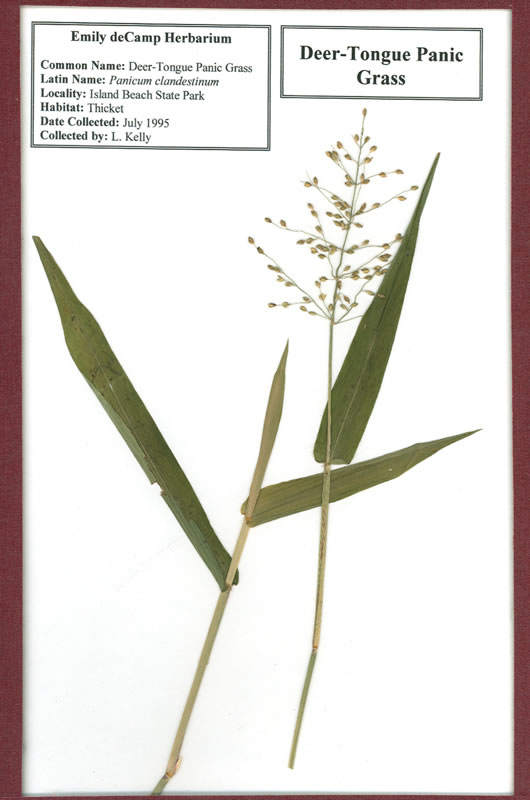
Horses in Virginia are at risk of Liver failure due to Panicgrass or Panicum.
Horses in Virginia are at risk of Liver failure due to Panicgrass or Panicum.
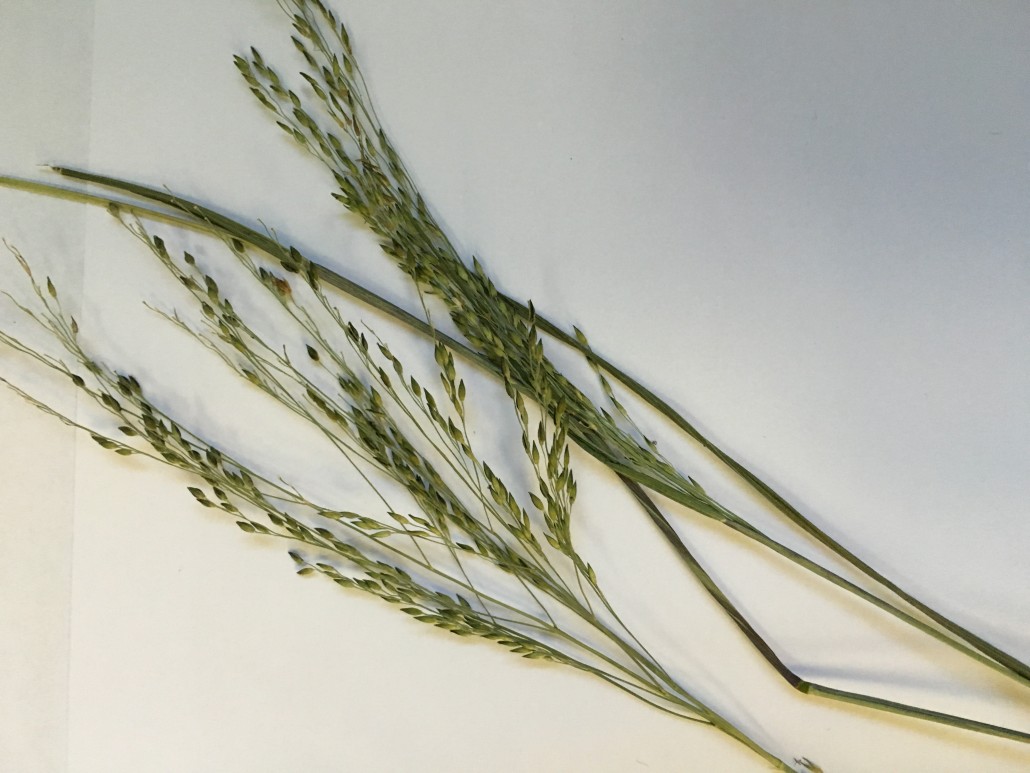
According to Haymarket Vet (http://haymarketvet.com/fall-panicum-grass-and-liver-disease/) Panicgrass is causing Fall Panicum Toxicosis in horses.
“In 2004, our practice was involved in documenting an important toxin for horses—fall Panicum (Panicum dichotomiflorum) grass. This common native grass has been fed to horses in hay and in pasture probably since the Europeans first brought horses to our area. But, while we know that it doesn’t cause illness all the time, certain growing conditions can cause it to become toxic, as it did in Nokesville, VA in 2004. We don’t know what triggers the grass to become toxic, but we do know that it sometimes does become toxic, and the conditions are right this year. This study proved the hepatotoxicity: http://www.ncbi.nlm.nih.gov/m/pubmed/17186859/
Currently, there are several cases of liver disease in Fauquier, Clark and Loudon counties that appear to be from grazing Panicum grass in the pasture. Some signs of toxicity from eating the grasses includes: decreased appetite, lethargy, somnolence (unusual periods of sleepiness), mild colic, or neurological signs. Some horses have no symptoms at all.
If you have this plant in your pasture or if you find it in your hay cut this year, you may want to have your horses tested for liver disease; this involves a simple blood draw.”
Below is a link on more information about Liver Disease, symptoms, and treatment options.
http://www.tsln.com/agliving/equine/7614069-111/liver-horse-says-disease

Chance’s Face Lift
I brought Chance in from his turn out this evening and immediately noticed this flap of skin hanging off of his forehead. Another emergency vet visit…yay! Unfortunately, due to the skin flap being to the side and not hanging downward from the top, Chance needed staples…I believe it was 14 staples in the end and two cuts.

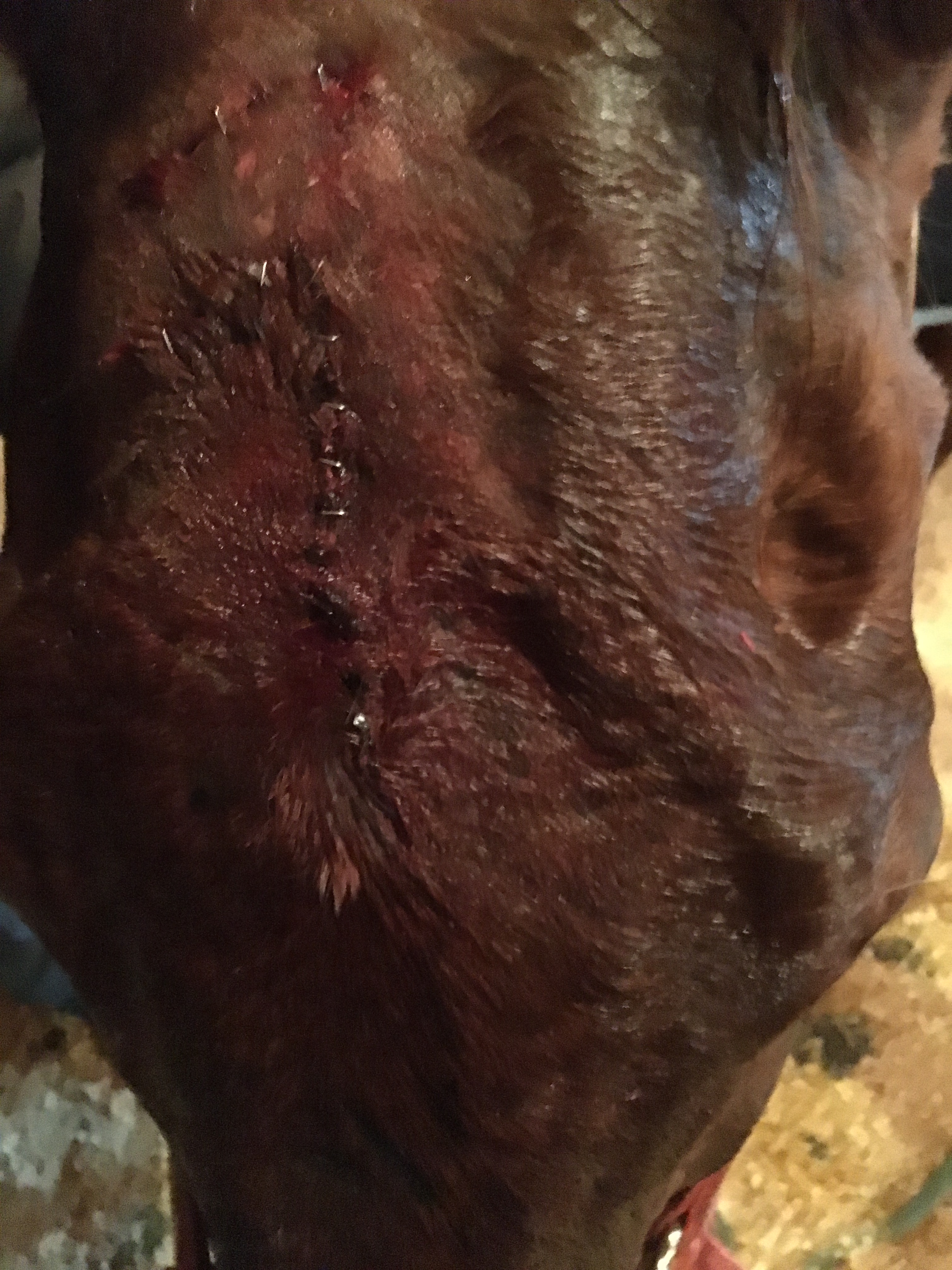
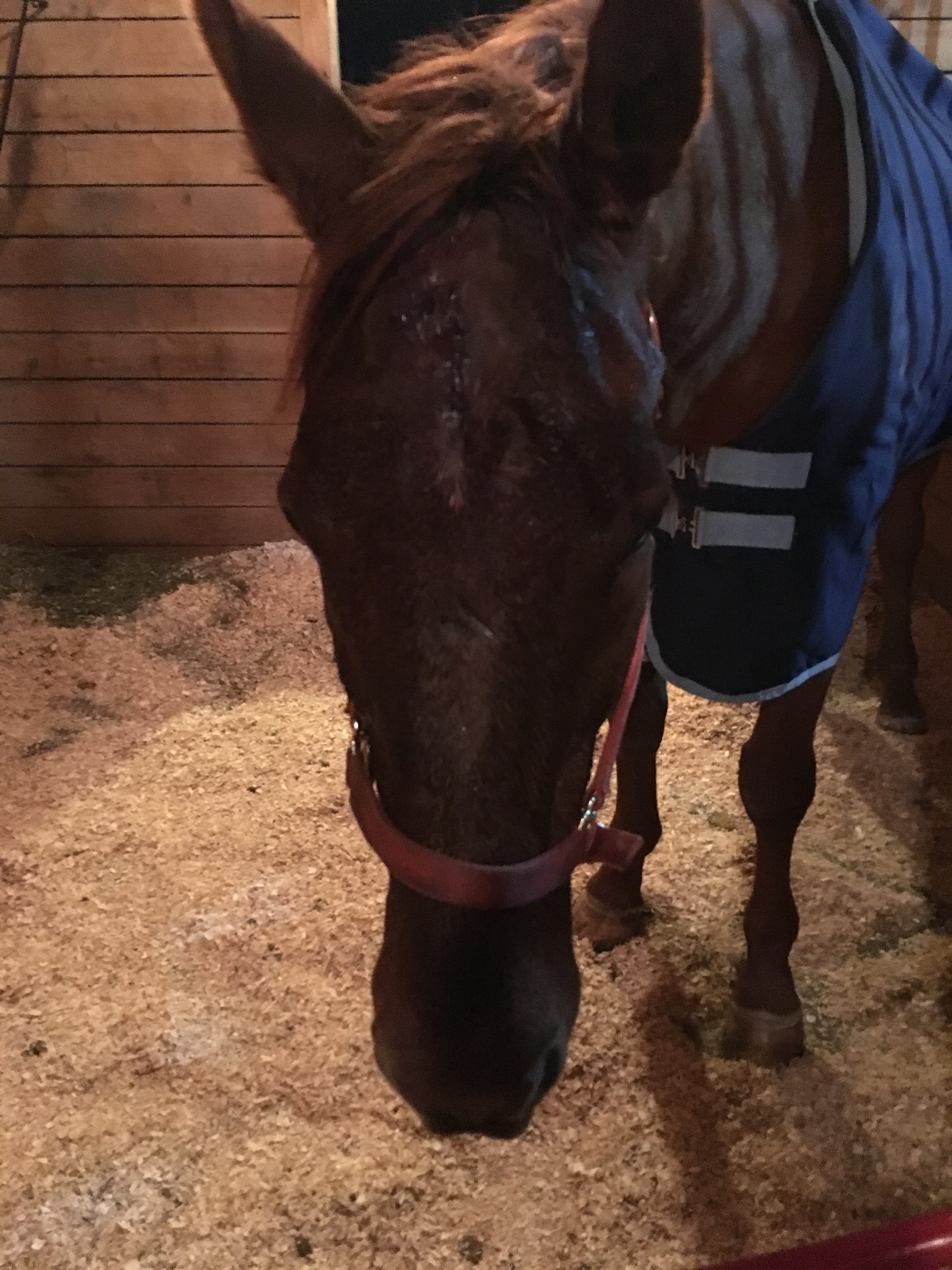
Needless to say, the vet did a phenomenal job stapling his poor forehead.
 The Chances We Take