Category Archives: Disease

Immune Booster Leads to Infection?

For the past 6 weeks, my horse has been receiving Ozonetherapy to aid in his chronic back leg related issues- dermatitis (“scratches”), previous DDFT tendon laceration, a history of Lymphingitis, and the residual scar tissue from his DDFT injury.  Due to his age (27), he lacks proper circulation in his hind end which does not help him fight his pastern dermatitis.  


According to the American Academy of Ozonetherapy, Ozonetherapy is described as;

“Ozonotherapy is the use of medical grade ozone, a highly reactive form of pure oxygen, to create a curative response in the body. The body has the potential to renew and regenerate itself. When it becomes sick it is because this potential has been blocked. The reactive properties of ozone stimulate the body to remove many of these impediments thus allowing the body to do what it does best – heal itself.”

“Ozonotherapy has been and continues to be used in European clinics and hospitals for over fifty years. It was even used here in the United States in a limited capacity in the early part of the 20th century. There are professional medical ozonotherapy societies in over ten countries worldwide. Recently, the International Scientific Committee on Ozonotherapy (ISCO3) was formed to help establish standardized scientific principles for ozonotherapy. The president of the AAO, Frank Shallenberger, MD is a founding member of the ISCO3.”

“Ozonotherapy was introduced into the United States in the early 80’s, and has been increasingly used in recent decades. It has been found useful in various diseases;

  • It activates the immune system in infectious diseases.
  • It improves the cellular utilization of oxygen that reduces ischemia in cardiovascular diseases, and in many of the infirmities of aging.
  • It causes the release of growth factors that stimulate damaged joints and degenerative discs to regenerate.
  • It can dramatically reduce or even eliminate many cases of chronic pain through its action on pain receptors.
  • Published papers have demonstrated its healing effects on interstitial cystitis, chronic hepatitis, herpes infections, dental infections, diabetes, and macular degeneration.”


After doing research and speaking to one of my good friends, we determined that Chance’s flare up of Lymphingitis, after almost 3 years of not a single issue, could possibly be caused by his immune system’s response to Ozonetherapy.  Let me explain.

Chance suffers from persistent Pastern dermatitis (“scratches”) since I purchased him in 2000.  I have tried everything- antibiotics, every cream and ointment and spray for scratches, diaper rash ointment, iodine and vaseline mix, Swat, laser treatments, scrubs and shampoos, shaving the area, wrapping the area, light therapy…you name it, I have tried it.  So, when we began Ozonetherapy to help break down the left over scar tissue from his old DDFT injury, I noticed that his scratches were drying up and falling off.  We continued administering the Ozonetherapy once a week for about 6 weeks.  The improvement was dramatic!  

However, one day Chance woke up with severe swelling in his left hind leg and obviously, he had difficulty walking.  He received Prevacox and was stall bound for 24 hours.  The vet was called and she arranged to come out the following day.  The next morning, Chance’s left leg was still huge and he was having trouble putting weight on it.  I did the typical leg treatments- icing, wrapping.  The swelling remained.  I tried to get him out of his stall to cold hose his leg and give him a bath but he would not budge.  He was sweaty and breathing heavily and intermittently shivering.  So, I gave him an alcohol and water sponge bath and continued to ice his back legs.   I sat with him for 4 hours waiting for the vet to arrive.  He had a fever and wasn’t interested in eating and his gut sounds were not as audible.  He was drinking, going to the bathroom, and engaging with me.  I debated giving him Banamine but did not want it to mask anything when the vet did arrive.  

The vet arrived, gave him a shot of Banamine and an antihistamine and confirmed that Chance had a fever of 102 degrees and had Lymphingitis.  There was no visible abrasion, puncture, or lump… I asked the vet to do x-rays to ensure that he did not have a break in his leg.  The x-rays confirmed that there was no break.  The vet suggested a regiment of antibiotics, steroids (I really am against using steroids due to the short-term and long-term side effects but in this case, I would try anything to make sure he was comfortable) , prevacox, and a antacid to protect Chance from stomach related issues from the medications.  It was also advised to continue to cold hose or ice and keep his legs wrapped and Chance stall bound.  

The following day, Chance’s legs were still swollen but his fever had broken.  The vet called to say that the CBC had come back and that his WBC was about 14,00o. She suggested that we stop the steroids and do the antibiotic 2x a day and add in Banamine. I asked her if she could order Baytril (a strong antibiotic that Chance has responded well to in the past) just in case.  And that is what we did.  

Being as Chance had such a strong reaction to whatever it was, I did some thinking, discussing, and researching…first and foremost, why did Chance have such an extreme flare up of Lymphingitis when he was the healthiest he has ever been?  And especially since he had not had a flare up in 3+ years…plus, his scratches were getting better not worse.  The Ozonetherapy boosted his immune system and should provide him with a stronger defense against bacteria, virus’, etc.  So why exactly was he having a flare up?  And that is when it hit me!

In the past when Chance began his regiment of Transfer Factor (an all natural immune booster), he broke out in hives.  The vet had come out and she felt it was due to the Transfer Factor causing his immune system to become “too strong” and so it began fighting without there being anything to fight, thus the hives.  My theory- Chance started the Ozonetherapy and his body began to fight off the scratches by boosting his immune system.  As the treatments continued, his immune system began to attack the scratches tenfold.  This resulted in his Lymphatic system to respond, his WBC to increase, and his body temperature to spike.  Makes sense…but what can I do to ensure this is not going to happen again?  

My friend suggested attacking the antibiotic resistant bacteria by out smarting them…okay, that seems simple enough…we researched the optimal enviroments for the 3 types of bacteria present where Chance’s scratches are (shown in the results of a past skin scape test).  The bacteria – E. Coli, pseudomonas aeruginosa and providencia Rettgeri. The literature stated that PA was commonly found in individuals with diabetes…diabetes…SUGAR!  How much sugar was in Chance’s feed?  I looked and Nutrina Safe Choice Senior feed is low in sugar…so that is not it.  What else can we find out?  The optimal temperature for all three bacteria is around 37 degrees celsius (or 98.6 degrees fahrenheit), with a pH of 7.0, and a wet environment. Okay, so, a pH of 7.0 is a neutral.  Which means if the external enviroment (the hind legs)pH is thrown off, either to an acidic or alkaline pH, the bacteria will not have the optimal enviroment to continue growing and multiplying.  How can I change the pH?  

Vinegar!  An antimicrobial and a 5% acetic acid! And…vinegar is shown to help kill mycobacteria such as drug-resistant tuberculosis and an effective way to clean produce; it is considered the fastest, safest, and more effective than the use of antibacterial soap.  Legend even says that in France during the Black Plague, four thieves were able to rob the homes of those sick with the plague and not become infected.  They were said to have purchased a potion made of garlic soaked in vinegar which protected them.  Variants of the recipe, now called “Four Thieves Vinegar” has continued to be passed down and used for hundreds of years (Hunter, R., 1894).

I went to the store, purchased distilled vinegar and a spray bottle and headed to the farm.  I cleaned his scratches and sprayed the infected areas with vinegar.  I am excited to see whether our hypothesis is correct or not…I will keep you posted!


References & Information


Effect of pH on Drug Resistent Bacteriaijs-43-1-174

NIH: Drug Resistant Bacteria

Vinegar

Lymphatic Conditions

Horses Side Vet Guide

What does my horse’s CBC mean?

th

Nutrena SC Senior feed ingredience
The American Academy of Ozonetherapy

Hunter, Robert (1894). The Encyclopaedic Dictionary. Toronto: T.J. Ford. ISBN 0-665-85186-3.


I Loathe Ticks! 

Your horse comes in from being outside and is barely able to move.  His legs are swollen, he has a fever, is sensitive to the touch, and has a loss of appetite.  He has chills- intermittently shaking.  He wont touch his hay, his eyes are dull, and he looks depressed and tired.  You call the vet and they run hundreds of dollars worth of tests- CBC, x-ray his legs to ensure there is no fracture; they diagnose him with Lymphingitis.  You begin a course of antibiotics.  You cold hose.  You give him Banamine.  Your wrap his legs while he is on stall rest. A week later, the swelling has subsided, his fever has dissipated, and his appetite is back.

You get a text saying that your horse “ran away” when he had been let out earlier that day.  But when you get to the barn, you notice when he turns he looks like his hind end is falling out from under him..remember when you were little and someone would kick into the back of your knees and your legs would buckle?  That is what it looks like.  So you watch him.  You are holding your breath, hoping he is just weak from stall rest.  You decide, based on the vet’s recommendation, to let him stay outside for the evening.  You take extra measures- leaving his stall open, with the light on, wrapping his legs, etc- and go home.  Every time your mind goes to “what if..”, you reassure yourself that your horse is going to be okay and that you’re following the vet’s advice and after all, your horse had been running around earlier that day.

The next morning your horse comes inside and it takes him an hour to walk from the paddock to his stall.  All four legs are swollen.  He has a fever (101.5).  He is covered in sweat.  He won’t touch his food.  He has scrapes all over his body and looks like he fell.  You call the vet- again- and they come out to look at him.  They note his back sensitivity, his fever, the swelling at his joints (especially the front).  They note that his Lymphingitis seems to have come back.  The vet draws blood to check for Lyme.  They start him on SMZs and Prevacox.  You once again wrap his legs, ice his joints, give him a sponge bath with alcohol and cool water to bring down his fever.  You brush him, change his water, put extra fans directed at his stall.  You put down extra shavings.  And you watch him.

A few days go by and you get a call saying that your horse has tested positive for Lyme…and while your heart sinks, you are also relieved that there is an explanation for your horse’s recent symptoms. You plan to begin antibiotics and pretty much not breathe for the next 30+ days while your horse is pumped with antibiotics.  You pray that he doesn’t colic.  You pray that you have caught Lymes in time.  You pray that the damage is reversible.  You research everything you can on the disease.  And you sit and wait….

Below are resources on Lyme Disease in horses- treatments, symptoms, the course of the disease, and the prognosis.

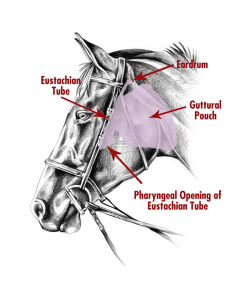
epm-diagram

Lyme Disease in Horses | TheHorse.com

Lyme Disease, testing and treatment considerations | Best Horse Practices

Microsoft Word – Lyme Multiplex testing for horses at Cornell_2-12-14 –

Lyme_Disease_Multiplex_Testing_for_Horses.pdf

Fall Fever

Today Chance had swelling of his back right fetlock.  He had a fever around 104 and didn’t eat his feed.  His eyes were dull and he was lethargic.  He wasn’t limping but was walking slower than normal (he usually runs to the paddock or back to the barn).  I decided, due to the Lymphingitis flare up on his back right leg, I would give him a shot of 5 mls (or 5 cc) of Banamine and wrap his leg.  Once the medication set in, I would bring him in to give him a bath (it was 80 degrees today).  So, that is what I did.  By the time he was back at the barn he was covered in sweat.  I cold hosed him and drenched the wrap in cool water and let him roam around the barn.

Thankfully, the vet was able to meet me at her veterinary practice so that I could pick up Baytril and more Banamine.  Since Chance just had Lyme Disease (and had finished his medication less than a week ago), we are not 100% if this is a Lyme reaction or something else.  The plan is to administer 25 cc of Baytril either orally, in his feed, or via IV for 6 days and Banamine 10 mls (or a 1000 lbs) twice a day for 3 days. The vet suggested that I do 5 cc of Banamine if his fever remains between 101-103 degrees and 10 cc if his fever is 103 degrees or above.   During this time I will begin Prevacox- one 1/4 of a tablet once a day.  After 3 days, I will discontinue the Banamine and continue the Prevacox.  If his fevers are not down in two days, I will continue the Baytril but start the doxycycline as it maybe a Lyme disease symptom.

While researching Lyme Disease, I found that many people do two+ months of doxycycline instead of 30 days to ensure the disease has been erraticated completely.  However, since Chance had shown such improvement after 30 days, I decided to not do another month.  Maybe I should have…

However, Chance had similar symptoms when we found a small laceration in the DDFT tendon of his back left hind- swelling, Lymphingitis, fever, lethargy, no appetite, etc.  If he does have an issue with his tendon I will most likely do another round of Stem Cell treatments which proved to be helpful last time.  Thankfully I stored his stem cells in a Stem Cell Bank (via Vet-Stem) and can easily have them shipped.


Recommended Equine Professionals and Services

 True North Equine Vets  www.truenorthequinevets.com   540-364-9111

Genesis Farriers: Dave Giza www.genesisfarriers.com   571-921-5822

Ken Pankow  www.horsedentistvirginia.com  540-675-3815

Full Circle Equine www.fullcircleequine.com  540-937-1754

Farriers Depot:  (Farrier related supplies) www.farriersdepot.com 352-840-0106

StemVet (Stem cell acquisition and storage) www.vet-stem.com

SmartPak Equine Supplements  www.smartpakequine.com


The Weather Outside is Frightful…

I walked outside to sit on my porch and enjoy the evening, when I realized that the time is fast approaching where I can not longer do so without bundling up first.  I decided it was time to get ready for the winter months ahead especially for my equine friends.

I have included articles, lists, resources, etc to help you make sure you and your horse are ready for the dropping temperatures! 


Preparing Your Horse for Winter

Cushings Horse

By: Dr. Lydia Gray

Hot chocolate, mittens and roaring fires keep us warm on cold winter nights. But what about horses? What can you do to help them through the bitter cold, driving wind and icy snow? Below are tips to help you and your horse not only survive but thrive during yet another frosty season.

Nutrition

Your number one responsibility to your horse during winter is to make sure he receives enough quality feedstuffs to maintain his weight and enough drinkable water to maintain his hydration. Forage, or hay, should make up the largest portion of his diet, 1 – 2 % of his body weight per day. Because horses burn calories to stay warm, fortified grain can be added to the diet to keep him at a body condition score of 5 on a scale of 1 (emaciated) to 9 (obese). If your horse is an easy keeper, will not be worked hard, or should not have grain for medical reasons, then a ration balancer or complete multi-vitamin/mineral supplement is a better choice than grain. Increasing the amount of hay fed is the best way to keep weight on horses during the winter, as the fermentation process generates internal heat.

Research performed at the University of Pennsylvania School of Veterinary Medicine showed that if during cold weather horses have only warm water available, they will drink a greater volume per day than if they have only icy cold water available. But if they have a choice between warm and icy water simultaneously, they drink almost exclusively from the icy and drink less volume than if they have only warm water available. The take home message is this: you can increase your horse’s water consumption by only providing warm water. This can be accomplished either by using any number of bucket or tank heaters or by adding hot water twice daily with feeding. Another method to encourage your horse to drink more in winter (or any time of the year) is to topdress his feed with electrolytes.

Exercise

It may be tempting to give your horse some “down-time” during winter, but studies have found that muscular strength, cardiovascular fitness and overall flexibility significantly decrease even if daily turnout is provided. And as horses grow older, it takes longer and becomes more difficult each spring to return them to their previous level of work. Unfortunately, exercising your horse when it’s cold and slippery or frozen can be challenging.

First, work with your farrier to determine if your horse has the best traction with no shoes, regular shoes, shoes with borium added, shoes with “snowball” pads, or some other arrangement. Do your best to lunge, ride or drive in outside areas that are not slippery. Indoor arenas can become quite dusty in winter so ask if a binding agent can be added to hold water and try to water (and drag) as frequently as the temperature will permit. Warm up and cool down with care. A good rule of thumb is to spend twice as much time at these aspects of the workout than you do when the weather is warm. And make sure your horse is cool and dry before turning him back outside or blanketing.

Blanketing

A frequently asked question is: does my horse need a blanket? In general, horses with an adequate hair coat, in good flesh and with access to shelter probably do not need blanketed. However, horses that have been clipped, recently transported to a cold climate, or are thin or sick may need the additional warmth and protection of outerwear.

Horses begin to grow their longer, thicker winter coats in July, shedding the shorter, thinner summer coats in October. The summer coat begins growing in January with March being prime shedding season. This cycle is based on day length—the winter coat is stimulated by decreasing daylight, the summer coat is stimulated by increasing daylight. Owners can inhibit a horse’s coat primarily through providing artificial daylight in the fall but also by clothing their horse as the temperature begins to fall. If the horse’s exercise routine in the winter causes him to sweat and the long hair hampers the drying and cooling down process, body clipping may be necessary. Blanketing is then a must.

Health

There are a number of health conditions that seem to be made worse by the winter environment. The risk of impaction colic may be decreased by stimulating your horse to drink more water either by providing warm water as the only source or feeding electrolytes. More time spent inside barns and stalls can exacerbate respiratory conditions like “heaves” (now called recurrent airway obstruction), GI conditions like ulcers, and musculoskeletal conditions like degenerative joint disease. Control these problems with appropriate management—such as increasing ventilation in the barn and increasing turnout time—and veterinary intervention in the form of medications and supplements.

Freeze/thaw cycles and muddy or wet conditions can lead to thrush in the hooves and “scratches,” or, pastern dermatitis, on the legs. Your best protection against these diseases is keeping the horse in as clean and dry surroundings as possible, picking his feet frequently, and keeping the lower limbs trimmed of hair. Another common winter skin condition is “rain rot,” caused by the organism Dermatophilus congolensis. Regular grooming and daily observation can usually prevent this problem, but consult your veterinarian if your horse’s back and rump develop painful, crusty lumps that turn into scabs.

About Dr. Lydia Gray


Winter Resources


Preparing your horse and barn for winter

Winter Horse Care Must Haves

Around the Barn Winter Prep

Winter Nutrition Tips for Horses

Penn State: Winter Care for Your Horses

Barn Tips for Winter

Horse Barn Health Checker

Cold Weather Barn Management Check List

15 Winter Tips

When You Lose Your Partner

Stories from the Heart

When You Lose Your Partner

(flickr.com/greg westfall)

We all know the too-familiar story used in crime shows on television. A dynamic duo, perfectly paired in every way. They’re best friends who bicker like an old married couple and complete each other’s lives. That partnership is something most people long for. And it’s something a few equestrians are lucky enough to find with their four-legged half.


I was one of those few. His name was Beau. He was an off-the-track thoroughbred with a heart of gold and the chest of a draft horse. Tall, dark, handsome, loyal, always in tune with my thoughts—he was the best partner a girl could ask for.

We spent hours, days, weeks, months, training together. Athletically, we were on point. Emotionally, we were more in tune than most married couples. In every way, he was my other half. My confidence stemmed from him, and vice versa. There was nothing we couldn’t do when we were together. We literally climbed mountains.

Then, too soon, Beau passed away.

(flickr.com/Janice Byer)

It was sudden. Unexpected. One day he was there, the next I had to make the decision to have him euthanized at the age of seven. That day I lost not only my partner, but a part of myself.

Saying goodbye to a partner is hard. For a while, there’s a hole. It never really gets filled. You keep riding, keep hopping up in that worn-out leather saddle that still smells like him. But it’s never the same. That same passion, love and commitment you shared for one another will never be replaced.

That’s a hard thing to get over. But it’s something every single equestrian will one day have to face. I hope none of you need to face it so soon. I hope your partners grow to be old and gray and pass in the most dignified and peaceful sense. I hope you have time to sit on the ground with them, no matter how hard it may be, hold their head in your lap for the last time and say goodbye.


I hope you get the chance to tell them thank you for the heart they gave you. For the confidence, experience, and love they shared with you every time you stepped into their world. But most of all, I hope you appreciate every single ride.


Go out to your barn and hug your horse.

Let them have that extra snack. Next time they decide they aren’t going to listen, or kick up their heels because they feel fresh, laugh it off. Someday you’ll miss it. You’ll miss the green stains on your white shirt from their grassy kisses. You’re going to miss braiding that mane until your arms ache. You’ll miss hitting the dirt because you couldn’t quite sit their power over that jump. Enjoy every moment of your partnership.

(flickr.com/Iain Smith)

For those who have experienced this and said goodbye, I feel your pain. Don’t be afraid of feeling it, too. Sometimes it’s good to sit down and look at all those old photos and have a good cry over the life you had with your best friend. It’s okay for it to hurt a little bit every time you walk in the barn and they aren’t there waiting for you.

Just remember, they gave the best years of their life to you. They loved you with every ounce of their being. And you returned the favor.


About the Author

Megan Stephens is small-town equestrian from the hills of New York. She first hit the saddle at the age of four and the obsession has grown ever since. She is mom to a Hackney gelding and competes in hunter/jumper divisions for a local farm. She enjoys freelance writing about her favorite topic in her spare time.

Guttural pouches: The hidden dangers in horses

An interesting article I came across about Guttural pouches in horses.  Must read for those who work with or around horses.


https://apple.news/AisI_D1YlPNetjlUilRFbaA

EPM Tilter. What Do The Numbers Mean?

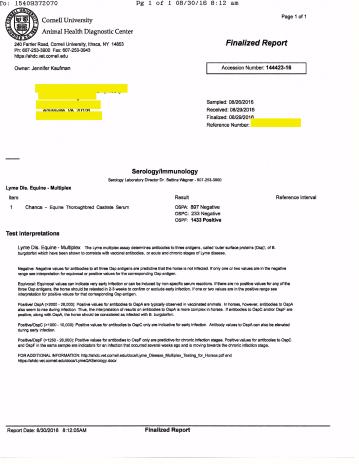
During my horse’s recent Lymphingitis flare-up, the vet advised that we run labs to test for Lyme and EPM due to his presenting symptoms (hind weakness, twisting his back leg at the walk/walking sideways I refer to it as- “Chance’s swagger”).  As I noted previously, Chance’s Lyme test revealed that he was at the beginning stages of an acute infection…yay for the labs at Cornell University for their amazing ability to give you more than a positive or negative!

A little history before getting to the EPM Tilter results.

About 2ish years ago, Chance was diagnosed with EPM (and one of the reasons opossums and I are not friends since they host the disease as do a few other culprits).  Chance immediately began EPM treatment- he received Protazil in his feed for one month. After hours of research I chose Protazil, although extremely expensive (if you order from http://www.drfosterandsmith.com they sometimes have promotions where you receive store credit for every $100.00 you spend…they did when I ordered and I got a “free” dog bed that my dogs adore), due to the decreased likelihood of Chance experiencing a “Treatment Crisis” (worsening of symptoms) and the ease of administration (other brands require the drug being administered 1 hour before eating or an hour after and so on).  Typically, EPM treatment is done for 30 days and, depending on the residual symptoms, some may require subsequent treatments.  While Chance’s symptoms improved, I wanted to ensure that we annihilated the disease and did another round of treatment but this time with Marquis.  At the end of two months, Chance’s ataxia was gone!

Fast forward to September 2016…Chance, just having a Lymphingitis flare-up, has been tested for Lyme and EPM. Lyme came back positive.  And….so did the EPM test..well, kind of.  Wonderful.  (See why I loathe opossums?)

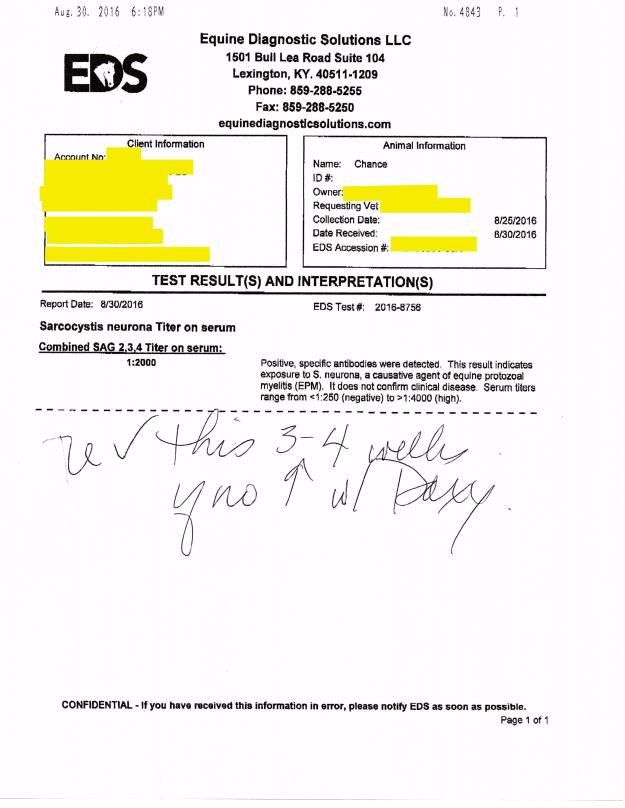
Chance’s EPM test #2 on 8/30/16 (the 1st one was 2ish years ago) showed the following:

“Combined SAG 2,3,4 Tilter on serum= 1:2000”

So, what does this mean?

The test revealed that Chance had “positive, specific antibodies” detected in the blood work.  This means that he had EXPOSURE to S. Neurona, a causative agent of EPM.   Serum tilters range from <1:250 (negative) to >1:4000 (high positive).  S. Neurona (SarcoFluor) is one of two protozoa found in EPM infected horses, the other protazoa is N. Hughesil (NeoFluor). S. Neurona is most frequently seen, whereas N. Hughesil is not as common.

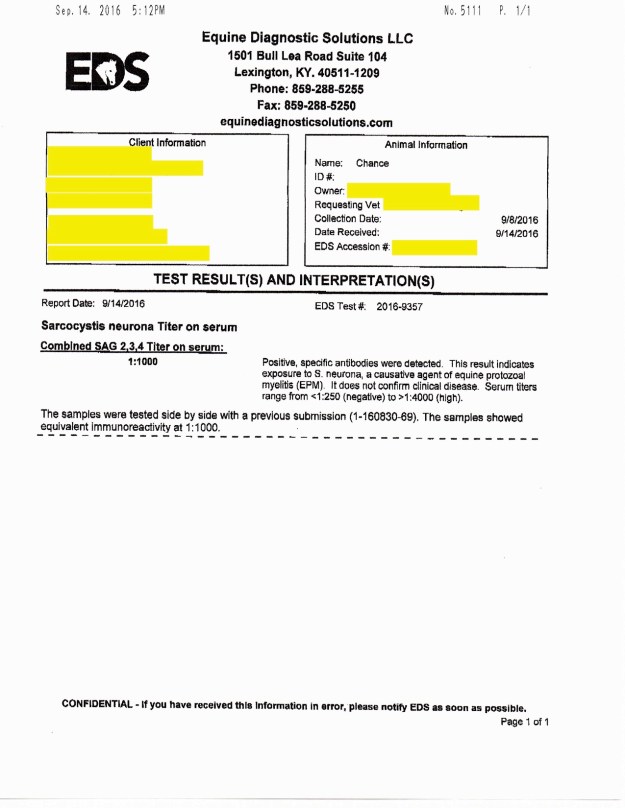
The vet ran another EPM test to confirm the findings in the 8/30/16 test.  The results showed that Chance had “Combined SAG 2,3,4 Tilter on serum= 1:1000.  Again, Chance showed EPM protozoa in the positive-ish range.

I initially had not seen the results but was told by the vet that he was EPM negative.  So when I asked for the test results to be emailed to me and saw the numbers I sort of freaked out…I emailed the vet to ask for clarification.  She explained,

“The EPM test shows that he was exposed to the organism in the first test we did which is why we did a follow-up test. Since his exposure level dropped from 1:2000 to 1:1000 this shows that he does not have the disease. There is no good one time test for EPM once they are exposed which is why we had to do the repeat to compare the two.”

While this explanation offered me comfort, I was confused…why does he have any protozoa in his blood if he doesn’t have EPM?

I spoke to another vet and she explained it in a bit more detail…I am hoping I am summarizing what she said correctly..

When a horse tests positive for EPM they either have an active disease or they may not.  However, when the test does from 1:2000 down to 1:1000 this typically means that the horse’s immune system is working correctly to fight the disease off- active or not.  EPM testing typically provides you with a % of the chance your horse has an active EPM infection, or at least if you send it to Cornell University.  For instance, lets say a horse gets the results back and it shows that they are “positive” or have been exposed to S. Neurona (one of the two EPM protozoa)…their results are  1:647.  This means that, after doing a bunch of adding and multiplying that this vet kindly did for me, the horse has a 60-70% chance of having ACTIVE EPM.  Meaning, he most likely would be symptomatic (ie: behavioral changes, ataxia, weight loss, difficulty eating, changes in soundness, and a bunch of other neurological symptoms).

My hunch is that Chance’s immune system was boosted because I started him on Transfer Factor (amazing stuff… more information can be found in some of my older posts) again as soon as his results came back positive for Lyme.

Here are the 3 EPM tilters that were run on Chance (oldest to most recent) along with his Lyme test results:

epm-2014

epm-test-results-8-31-16

EPM results 9-8-16 copy.jpg

lyme-titer-8-30-16

I have a limp!

Resources on how to diagnose, treat, prevent, and handle lameness in horses

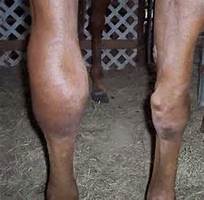
Your Horse Has a Swollen Leg – Why and What To Do | EquiMed – Horse Health Matters

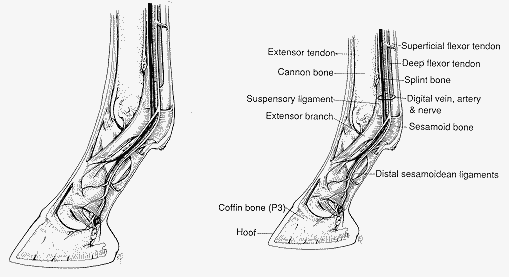
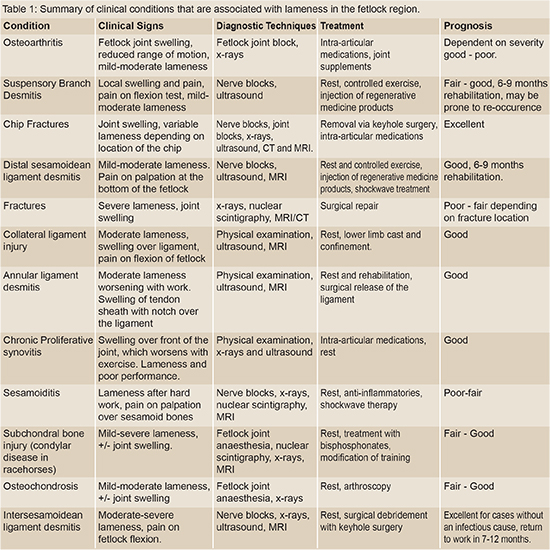
All About the Fetlock

Fetlock Lameness – It’s importance… | The Horse Magazine – Australia’s Leading Equestrian Magazine

Causes of Equine Lameness | EquiMed – Horse Health Matters


Common Causes of Lameness in the Fetlock

fetlock lame


Ozone Therapy


OZONE THERAPY – HISTORY, PHYSIOLOGY, INDICATIONS, RESULTS


 Judith M. Shoemaker, DVM 305 Nottingham Road Nottingham, PA 19362

717-529-0526 Fax 717-529-0776

http://www.judithshoemaker.com

Ozone therapy has been utilized and heavily studied for more than a century. Its effects are proven, consistent, safe and without side effects. Why is it not more universal in its use? Many of you have come with some trepidation about infusing a gas into a vessel because you are concerned about emboli, or have some dreadful fear about ozone’s toxicity since we frequently hear about the unhealthy ozone levels in the atmosphere. These fears do not apply to properly administered medical ozone, and the potential benefits of ozone therapy are profound and without associated detrimental effects.

Oxygen, in its several forms, cycles through the atmosphere and life processes just as water does. Ozone is produced in the upper atmosphere when UV light strikes the oxygen rising from plants, plankton, and algae in our forests and seas. It then falls back through the atmosphere, as it is heavier than air, combining with pollutants and water, cleaning the air and forming peroxides that benefit plants. Ultraviolet light breaking down pollutants and nitrous oxides also can produce ozone at the ground level, which is the eye and lung irritant in smog.

Medical ozone, used to disinfect and treat disease, has been around for over 150 years. Used to treat infections, wounds, and multiple diseases, ozone’s effectiveness has been well documented. Ozone has been used to disinfect drinking water since before the turn of the last century. A text on medical ozone therapy was published by Dr. Charles J. Kenworth in 1885! The best technology for producing ozone gas was designed and built by Nikola Tesla in the 1920’s. Heads of leading medical institutions in the U.S. contributed to a 1929 book “Ozone and Its Therapeutic Actions” describing the treatment of 114 diseases using ozone.

In 1933, the AMA began its systematic suppression of all modalities of treatment that did not complement its liaison with the emerging pharmacologic and diagnostic industries. Ozone therapy, along with many other useful therapies, were methodically eliminated from the educational process and exposure to the public in the U.S.

Less suppression has occurred in Europe and other countries, especially in Russia. Today in Germany, and other countries, ozone therapy is commonplace. Over 7000 doctors in Germany use it daily. In fact, in Germany, ozone generators are in ambulances for treatment of stroke victims. The incidence of permanent paralysis in these patients is much less than that in similar patients where ozone is not used.

Ozone generators are relatively simple and inexpensive. The equipment used to handle ozone is readily available but needs to be relatively non-reactive. Glass, Teflon, Kynar, silicon, and gold are completely non-reactive. Equipment made of other substances can contaminate the ozone or just deteriorate rapidly using up the ozone and becoming nonfunctional.

 Generators use several technologies to produce ozone

  • UV lamp – makes small amounts of ozone and is unreliable in making accurate concentrations. They burn out easily.
  • Corona discharge – dual dielectric sealed systems produce ozone but also lots of heat which is both destructive to ozone and to the machine.
  • Cold plasma generators – which produce ozone using low level current passed in 2 tubes of a noble gas between which an electrostatic plasma field forms that ionizes the oxygen.Ozone concentration is measured in u/ml or gms/L of oxygen, 5% or 70 u/ml is usually the maximum concentration used in clinical medical applications. High concentrations will damage red cells and inhibit growth of healthy cells.Dosage and frequency protocols vary widely. Initial high dose treatments may “jumpstart” the immune system followed by lower doses. Those who are fearful have been “starting slow and going low” with dosage and still have good results. Concentration must be carefully controlled with accurate flow rates, requiring pediatric regulators for the needed slow flow rates to produce high concentrations. Therefore, home made machines and lesser quality nonmedical devices are not appropriate.

    Ozone poteniates free radical scavenging substances and systems in the body, inducing the production of superoxide dismutase, catalase, and glutathione peroxidase. If ozone administration causes any respiratory irritation from out-gassing through the lungs, a bolus dose of 1 to 5 grams of vitamin C can be given and will eliminate any coughing instantly.

    Oxygen/ozone mixtures cannot cause emboli when injected at reasonable rates as they dissolve and diffuse very quickly in body fluids, unlike air (predominantly nitrogen) which is what forms emboli and causes the bends or decompression disease.

    The physiologic actions of ozone are many, the simplest of which is to provide sufficient oxygen to allow complete oxidation of sugars and other fuels to produce sufficient and efficient energy and to “burn clean” to CO2, water, and inert end products. If not enough oxygen is available, then incomplete oxidation occurs, producing carbon monoxide, lactic acid, and partially oxidized toxins that inhibit further oxygen metabolism and “clog the system”, tying up hemoglobin, water, and the mechanisms for function and elimination.

    Administration can be through any route with modifications:

  • Direct IV infusion – Ozone slowly administered into a major vessel.
  • Major auto-hemotherapy – Anticoagulated blood is mixed with ozone and is infused into a vessel.
  • Rectal/vaginal insufflation – Humidified ozone is administered by catheter.
  • Minor autohemotherapy – Blood mixed with ozone is injected intramuscularly.
  • Limb or body bagging – Body or parts are bathed in humidified ozone.
  • Ozonated water – Dissolves easily in water to be used topically or consumed.
  • Ozone in Saline or LRS – Can be used topically or given IV or SQ.
  • Intra-articular administration – For joint healing and prolotherapy.
  • Prolo/Sclerotherapy – Very good, less painful than other agents.
  • Acupuncture – With ozone, more effective than B12.
  • Ozonated olive oil – Ozone is bubbled through oil until the oil is thickened. This will produce ozonides that are not irritating and thus is applied topically even to eyes.
  • Inhalation – Ozone that has been bubbled through olive oil and humidified will not irritate respiratory epithelium.
  • Subconjunctival injection – For ulcers and keratitis sicca.
  • Gingival and tooth apex injection – Can eliminate infection.
  • Urinary bladder insufflation – For chronic inflammation.
  • Disc protrusions – Prolotherapy, which can be injected at interspinous space and around facets, stabilize joints and accelerate healing.
  • Auricular – Can be direct, humidified, or bagged with a homemade device made from IV bags and tubing (á la Margo Roman).As an anticancer, antiviral, antibacterial, and ant fungal agent, ozone is unsurpassed, especially since there are no appreciable side effects.Oxygen deficit is key to the development and progression of all disease processes. Dr. Otto Warburg’s work, confirmed by others, shows that this deficit and subsequent toxin buildup is the fundamental cause of all degenerative disease, especially cancers.

    Antioxidants help the body to protect itself from excessive oxidative damage caused by multiple free radicals, many of which are inactivated by ozone. The support of free radical scavenging systems is important but only oxygen can improve the deficit that makes cells vulnerable to oxidative damage in the first place. Long-term ozone therapy can be augmented by supplementation with antioxidants, but normally they should not be administered within 4 to 12 hours of ozone therapies.

    Ozone produces the same effects as exercise, which produces significantly more free radical oxygen than can be administered in any ozone treatment. Ozone equals ”exercise in a syringe” without doing joint damage.

    Ozone potentiates more complete oxidation, helps to maintain more normal body temperature and increases the effects of most hormones, vitamins, herbs, homeopathics, and drugs. Concurrent ozone administration reduces the amount of chemotherapeutic drugs needed to achieve effect by 1⁄4 to 3⁄4. It complements chelation therapies and frequently improves the affect and sense of well being in patients.

    Continued therapy will allow Herring’s Law to manifest “Healing from inside to outside, top to bottom, front to rear, and in reverse chronological order of the insults to the body.” Healing crises, however, may occur. Ozone therapy facilitates the rapid resolution of these crises.

    2005 Judith M. Shoemaker, DVM

Treating Cellulitis in horses

A common and potentially hazardous infection that can be helped with combining antibiotics, cold hosing, and exercise.

Liz Goldsmith's avatarEQUINE Ink

Freedom&#039;s left knee was very swollen. You can see the scrape on the outside of the knee.

On Monday night I showed up at the barn around 7:00 p.m. to ride once the day cooled off. To my dismay I found that Freedom’s knee was hugely swollen. I had wrapped his legs because he’d felt a bit stocked up the night before and because the swelling had no where to go except the knee, the effect was horrifying. Visualize a grapefruit.

Almost immediately I saw the cause: a scrape less than an inch long. Before I called the vet I scrubbed the wound to make sure it wasn’t a puncture wound (didn’t look like it to me, but a puncture would where a joint is involved can be very serious). Normally I would also shave the area around the cut but I had sent my clipper blades out to be sharpened!  My guess was cellulitis but since it involved a joint I wanted to makes sure I…

View original post 499 more words

If You Experience Worsening Depression…

Chance began another round of Excede to get his scratches under control- it is a never ending battle.  A while back, I had a skin scrape of Chance’s scratches due to their chronic nature.  The scrape results showed a number of bacteria, all commonly seen with this type of infection, that were resistant to most antibiotics.  Thus why we decided to try Excede.

Administering Excede is pretty straight forward- 1 shot IM every 4 days for about a month.  Easy enough….or so I thought.  The first shot was administered by the vet when I was not present.  The second shot the vet also administered while I was there.  Thirty minutes after the shot was given to Chance I noticed he seemed off but not in his “normal” post-acupuncture relaxed state. He suddenly became lethargic, he wouldn’t eat his dinner, and the gut noises became almost nonexistent. I commented to the vet my concerns and she came over and reexamined him.  Sure enough something was wrong.  She proceeded to administer 10cc of Banamine (just in case it was colic) and told me to walk him around outside for about 20-30 minutes.  Then see if he would eat 2 cups of feed only.  We walked and Chance began to act like his normal happy go lucky self.  Once inside he started to eat!

Part of me felt that his reaction was a fluke.  However, the third dose proved me wrong.  Four days later, Chance received his shot and went outside to enjoy the first beautiful, warm day.  I sat in the field watching him.  He was sluggish, lethargic, stiff..he looked 10 years older and barely moved from one spot under a tree.  He wasn’t eating grass nor did he run around and play- he didn’t even run up to me like he normally would. I decided to bring him inside and give him a warm bath since it was in the high 70’s.  He was non responsive to his bath- no playing with the hose or even accepting peppermints.  I placed a cooler on him to ensure he stayed warm until he was out in the sunshine.  I figured after a bath he would perk up- again, I was wrong.  At dinner time I went to bring him in and typically I will open up the gait and he will canter into his stall- he slowly walked instead. He wouldn’t eat his feed (he normally whinnies and makes a fuss until he gets his feed and devours it) or his hay…I stayed and watched him for a while and he just slept.  I spoke to John, the guy who helps me with Chance and Lucky, and he confirmed that Chance hadn’t been finishing his feed and wasn’t running when he brought him in for dinner.

My concerns grew and I decided to do some research on Excede. That strange thing is I usually do extensive research before changing or administering anything with my animals.  But, for some reason I did not do so this time and I wish I had.

According to a number of reputable websites, Excede can cause significant and dangerous side-effects such as; diarrhea, severe acid reflux, blood coming from mouth, loss of appetite, lethargy, muscle and gait stiffness, and more.

The most troubling of everything that I read wasn’t what was posted on the Pfizer (the manufacturer) website but from the countless statements given by horse owners and the studies done by outside companies.

According to drugs.com, “in the PK study, several horses developed clinical signs consistent with foot pain (stiff in the front limbs when turned in tight circles, and increased pulses and heat to the front feet). One horse in the NAXCEL group and one horse in the 6.0 mg/lb (2X) EXCEDE group were euthanized due to laminitis. Clinical signs of foot pain (stiff front limbs and increased heat and pulses in feet) affected more horses, for a longer period of time, in all EXCEDE-treated groups as compared to the NAXCEL-treated group. The study housing (multi-horse pens on concrete slabs) and diet (free choice alfalfa/grass mix and once a day pellets) may have contributed to the development of foot pain. The prevalence and severity of injection site reactions in EXCEDE-treated horses may also have contributed to the development of a stiff gait. A causal relationship between ceftiofur and foot pain could not be definitively determined.”

The research has revealed that Excede should be used with caution and the horse receiving the medication must be monitored. Make sure to weigh the benefits and risks before starting Excede.  This drug can be lifesaving for many horses but for others, it can be life-threatening.


Excede Resources


Straight from the Horse’s Mouth: Antibiotics, Antifungals, Antivirals

Excede Study

Equine Product Catalog: In depth understanding of equine medications

FINALNewMexicoEIBPetitionExhibits2908-1407_pdf


“I’ll Send An SOS To The World…”

Equine Emergency Preparedness in Virginia

The below was written by: Shea Porr, Ph.D., Superintendent, Middleburg Agricultural Research and Extension (MARE) Center, Middleburg, Va.; and Jennifer Brown, D.V.M., Clinical Assistant Professor of Equine Surgery, Marion duPont Scott Equine Medical Center, Leesburg, Va.

The 2006 Virginia Equine Survey reported approximately 215,000 horses – a 26 percent increase since 2001 – that was accompanied by a 41 percent increase in the number of horse operations. The equine industry is growing, and there should be adequate emergency preparedness training and documentation for both emergency responders and horse owners or service providers. In nearly every emergency or disaster situation, preparing before the event is the key.

There are a variety of emergency and disaster situations that could affect horses in Virginia. Acts of nature include such things as hurricanes, tornadoes, and winter weather, as well as floods and fires (both barn and wildfires). Other emergencies include loose horses on roadways, horses – alone or with riders – hit by cars, and horses trapped in overturned or wrecked trailers. This publication includes methods of assessing risk for the types of natural disasters that are most common in a given area, as well as other types of emergencies that may be encountered. It discusses how to work with emergency management personnel and presents tools to help people prepare before an incident, including setting up emergency plans and having appropriate first-aid and emergency kits gathered. It also covers how to respond during an incident, including when to evacuate, where to go, what to take, how to contact friends and family, and how to return or recover after an incident.

Emergency Contact Information

Listed below are some state and local agencies that you might want or need to contact in case of an emergency or disaster. Fill in the contact information for your local agencies for faster reference.

Virginia State Animal Response Team: (804) 346-2611; http://www.virginiasart.org

Virginia Department of Agriculture and Consumer Services: (804) 786-2042; http://www.vdacs.virginia.gov

Office of the State Veterinarian/Veterinary Services: (804) 692-0601; http://www.vdacs.virginia.gov/animals/vetservices.shtml

Local fire department:

Local animal control:

Local feed store/hay dealer:

Local emergency veterinarian or regular veterinarian:

 General Disaster Preparation

In the event of a disaster, it’s very important for you as a horse owner to have preplanned actions and proper information to enable you to make rapid decisions that may save your horses and even your own life. The following general guidelines will help you become better prepared.

Assess Your Risks

There are a wide variety of accidents or disasters that could affect different areas of the country. Take time to evaluate the region in which you live and assess which risks you are more likely to encounter. Examples of widespread disasters include floods, fires, tornadoes, hurricanes, nuclear accidents, disease threats, chemical spills, and ice storms. Typical accidents or other emergency situations may include escaped animals and horses – with or without riders – hit by a car or stuck in ditches, mud, or water. For each type disaster, ask yourself the following questions:

• What are your major vulnerabilities?

• What can you do to minimize the damage?

• What plans do you have in place?

• Who do you need to contact?

Before an Event

Plan ahead. Hopefully it will be the best wasted time of your life and you’ll never have to enact your emergency plan. However, if you do need to take action, you’d rather be prepared. Start by taking a careful look at your property and identifying the best place to locate your animals for each type of disaster you consider. Check for alternate water sources. You want to be able to have enough fresh water and hay available to last for at least 48-72 hours.

Prepare for the possibility that you might need to evacuate both yourself and your horses. Check with your local law enforcement, animal control, or agricultural Extension agent for routes and recommendations. Several locations should be identified ahead of time, and you will want to know the entry requirements for each. Be sure to have agreements arranged for your animals in advance.

Nothing is worse than needing to move your horses and having no way to get them out. Keep trailers and vans well maintained and full of fuel, ready to go. If you don’t have enough trailer space to move all your animals at one time, make arrangements with a neighbor or professional horse hauling company. You will want to have contracts in place in advance, because making arrangements at the last minute in an emergency situation is often impossible. Make sure to keep current and adequate insurance coverage on all vehicles.

Animal identification: Prepare an identification packet for each horse, including information on their age, sex, breed, color, registrations, unique identifying marks, photos, microchip numbers, etc. Write down any special feeding instructions, list any medications with dosage, and record the name and phone number of your prescribing veterinarian. Be sure all vaccinations and medical records are in writing and up to date. Have a current Coggins test, which you will need if your horse has to be moved to get to safety. If you’re going across state lines, you may need a health certificate along with a copy of your Coggins test. If you leave, take your records with you. Records left at home may be damaged or destroyed during a disaster.

If you become separated from your horse in a disaster or emergency, permanent identification such as a tattoo, microchip, or brand will help reunite you, as well as provide proof that the animal is yours. If disaster strikes before you can do this, find another way to get your information onto the animal. Use leg or break-away neck bands with your contact information or braid a waterproof luggage tag into the mane or tail to help identify your horse. You can also paint or etch the hooves; write the information down, seal it in a Ziplock-type plastic bag, and then secure it to the halter with duct tape; or paint your telephone number on the side of the animal using livestock paint.

Finally, consider an event where you might by unable to evacuate all your animals. Make a priority list and familiarize both family and farm personnel with the list in case you are not present when the disaster occurs.

Seventy-two-hour emergency kit, first-aid kit, and emergency tools: The 72-hour emergency kit is designed to help you ride out the immediate impact of a disaster, making certain that essentials are provided for. A plastic trash barrel with lid can be used for a multitude of things and can store many of the items in the kit when it’s not needed. Pack one or two tarpaulins for protection and a couple of water buckets. If you have time to prepare, make sure to have enough hay, feed, and water for each horse for at least three days stored safely – though a week would be better. It is very possible that roads will be closed because of downed power lines and trees, limiting access to feed stores. Cover hay with waterproof tarps and place it on pallets to reduce the chance of the hay sitting in water and keep grain in water-tight containers.

Each horse will need 12-20 gallons of water per day. Fill all the water troughs and buckets. Additional water can be stored in garbage cans with plastic liners. You might want to consider purchasing a generator to run the well if you have a large number of horses.

Have a packed first-aid kit in the emergency supplies and consider one for the trailer as well.

Your basic first-aid kit should include the following:

  • Exam gloves
  • Betadine or Nolvasan solutions for cleaning and disinfecting wounds
  • Antibiotic ointment
  • Sterile gauze pads
  • Absorbent dressings
  • Cotton leg wraps and Vetrap bandaging tape/standing wraps to secure them
  • Thermometer
  • Bandage scissors
  • Sterile saline
  • Knife and wire cutters
  • Duct tape
  • Fire-resistant leads and halters
  • Clean towels
  • Fly spray
  • Livestock markers or paint
  • Regular bleach (unscented, with hypochlorite as the only active ingredient; can be used to purify water for drinking*)
  • Lime (can be used for sanitation)
  • Portable radio
  • Flashlight
  • Extra batteries

* To purify water, add eight drops of chlorine bleach per gallon of water and let it stand for 30 minutes before consuming.

Emergency tools include such things as:

  • Chainsaw and fuel
  • Hammer and nails
  • Fence repair materials
  • Wire cutters
  • Pry bar
  • Fire extinguisher (see the section on fire safety for more information)

Buddy system: Talk with a neighbor or friend and make arrangements to check on each other after a disaster. Tell one another if you are evacuating and to where so someone else will know where you are going. Buddies may agree to pool resources for such items as generators, water tanks, trailers, etc. You will also want to have a network of people outside the disaster area that you and your friends and neighbors can contact to check on each other, because the local communication infrastructure may be compromised and not available.

Putting the plan into practice: When facing a potential disaster, remain calm and follow your plan! Remember: It is vitally important to evacuate early in any mandatory evacuation to avoid getting stalled in traffic and create unnecessary hardships.

After an Event

Notify family, friends (your buddy), and officials that you are OK – whether you stayed or evacuated. Use phones, radios, the Internet, signs, or word of mouth. As soon as possible, take pictures or videotape of storm-damaged property for insurance claims.

Inspect your premises carefully before turning out horses. Look for foreign materials such as tin, glass or nails, downed trees or limbs, and damaged fences or power lines. Be careful leaving your animals unattended outside. Familiar scents and landmarks may be altered, and your horses could easily become confused and lost.

Check with your local veterinarian or the state veterinarian’s office for information of any disease threats that may exist because of the situation. If your animals have been lost, or if you find someone else’s horses, you have several options. By contacting local horse owners, farriers, veterinarians, animal control, or the local disaster response team or by listening to the Emergency Broadcast System, you’ll most likely find out how to log lost or found animals. If you have lost horses, be prepared to identify them and document ownership. This is where your identification packet comes in handy. In the event that you find lost animals, use extreme caution in handling them. If possible, work in pairs for safety. Keep the lost horse(s) contained and isolated, and notify authorities as soon as possible.

Hurricanes

Hurricanes bring a variety of weather-related dangers with them, particularly tornadoes and flooding. Leading causes of death in large animals related to hurricanes include animals killed in collapsed barns, electrocution, complications secondary to dehydration, animals hit and killed on roadways, and horses tangled in barbed wire after escaping from their pasture. As noted in the general disaster preparation section, each farm should have a written disaster plan to optimize the safety and survival of all animals.

Before the Storm

Horses should be current on their vaccinations, particularly their tetanus toxoid vaccine. Some veterinarians will also recommend vaccinating against eastern or western equine encephalitis at the beginning of hurricane season due to the potential increase in the number of mosquitoes after a storm. All horses should also have a negative Coggins test, if only because the horse may need to be evacuated to a community shelter or cross state lines. A health certificate is also required to cross state lines, so one may be necessary for evacuation of coastal areas. Review the section on general disaster preparations for other details.

Farm considerations: In addition to the general disaster preparation recommendations, be sure to secure all movable objects and remove all items from hallways. Jumps and lawn furniture should be secured in a safe place. Place large vehicles, tractors, or trailers in an open field where trees cannot fall on them. Finally, turn off electrical power to barn.

Evacuation plans: Evacuation of flood plains and coastal areas is usually recommended, and should occur 48 hours before hurricane-force winds occur in the area. Transportation of horses when wind gusts exceed 40 mph is dangerous, and trailers may not be allowed across bridges for safety reasons.

If you can’t evacuate or choose not to, what is the best method for keeping your horses safe? Should horses be left in the pasture or placed in the barn? If the pasture has good fencing and limited trees, it is probably best to leave the horses outside. Do not keep horses in barbed wire or electric fencing during a storm. Trees with shallow roots will fall easily under hurricane-force winds and can injure the horse or destroy the fencing. Fire ants and snakes will search for higher ground during flooding. Carefully look over the premises and the feed for these potential dangers. Well-constructed pole barns or concrete block barns may provide safety from flying debris, but the horses may become trapped if wind collapses the building. Keep horses out of pastures with power lines.

After the Storm

Use the information under general disaster preparations to pick up the pieces and carry on.

Winter Storms

Many of the preparations noted earlier apply to winter storms as well. The main consideration during winter is ensuring that the horses have shelter to help them keep warm. Horses should at least have access to adequate shelter, but in cases of severe storms you may want to bring them inside a solid barn. The same consideration for trees and power lines in hurricanes holds true during winter storms: Be cautious leaving horses in fields where these may come down and either cause harm to the animals or damage fences, allowing the horses to escape. Pay special attention to young or senior horses, as their ability to adapt to the colder weather may be compromised.

Keeping extra hay, feed, and water on hand is also appropriate. Feeding extra hay can help the horse to stay warm, and they will still require approximately 10 gallons of liquid water each day.

Fire Safety and Horses

Fire prevention and safety are the duty of every person involved with and around horses. Safety involves common sense and a trained response and should be taught along with basic equitation by trainers, organizations, and parents. Preventative measures apply whether the facility is a track, training barn, summer camp stable, or backyard barn. Rehearse the necessary course of action to be followed in the event of a fire with members of your family, boarders, youth in training, and others directly involved with the animals in the barn. Fire is the most terrible death that can befall an animal, especially a horse penned within a corral or stable.

Be safety conscious at all times. Fires give little warning. Know where fire alarms, if present, are located. Know where water sources and fire equipment is located, and how to use it properly. Conspicuously post the number of the local fire department (even if it’s 911) by all telephones. Fire prevention is easier to preach than practice, but it is a vital part of horse ownership and management.

Fire Prevention Measures

In the barn area, clean up and dispose of debris (especially flammable debris) regularly. Also, make sure to mow and spray for weeds near the barn. Avoid storing feed and bedding in the top of the barn. Preferably it should be located in another building. The alleyway in front of stalls must be kept free of debris and open at all times to give easy access to each stall door in case of fire. Tack rooms should not be locked unless occupied – there are many flammable items in a tack room.

Do not allow smoking in the barns, stalls, tack rooms, or sheds. No open fires should be allowed anywhere in the stable area, nor should you allow the use of oil- or gas-burning lanterns or lamps. Install an adequate number of water outlets and have hoses attached to each. It can also be handy to have an outside phone with the fire department’s number prominently displayed. Finally, check all electrical wiring periodically for frayed ends, doubled-up extension cords, and so forth, and replace them as needed. All electrical appliances used in stable areas must be in safe working condition. When in use, they must be kept a safe distance from walls, bedding, and other furnishings. They should not be left unattended when they’re on. Also, electrical wiring should be contained in a metal conduit to prevent rodents from chewing on them and creating a fire hazard.

Stable Fires

The official records of the National Fire Protection Association show that the majority of fires in stables (figures compiled from reported fires at racetracks, breeding farms, and fairgrounds) are caused by misuse of electrical apparatus, heaters, and careless smoking. Other causes of fires are lightning, arson, and spontaneous combustion.

Also of note is the fact that almost all horse barns have the following in common:

  • Wood construction – either total or partial.
  • Bedding straw or shavings in stalls.
  • Storage of hay, bedding straw, or shavings in close proximity to the barns.
  • Highly combustible materials within (leather, blankets, ropes, oils, etc.).
  • People.

The burning rate of loose straw is approximately three times that of the burning rate of gasoline. The horse in a stall where the fire originates has only 30 seconds to escape. Compare this to the fact that it takes anywhere from 30 seconds to more than a minute to halter a horse and lead him out of the barn. These startling statistics dramatically emphasize the fact that a stable fire, once underway, does not give much time for horse evacuation. There have been situations where people were in the barn when the fire started, yet most of the horses were lost because the fire spread so quickly.

Automatic sprinkler systems are advocated for commercial facilities such as racetracks, large breeding establishments, and other commercial-type enterprises. Water-type fire extinguishers (see combating a fire below) are effective if used within the first minute. Because stable fires develop rapidly due to the abundance of combustible materials, fire extinguishers are of little or no use once the fire has gained burning time.

Other Possible Fire Situations

Transporting horses: Quick-release snaps should be used to secure the horse in the trailer or truck in order to facilitate the safe handling of horses in case of an accident with possible danger of fire. Lead ropes should remain on horses while they’re traveling. Fire extinguishers should be readily accessible (i.e., in the truck), not locked in a trailer tack compartment.

Horse shows: Follow proper parking procedures so you don’t block fire hydrants or street entrances in case fire-fighting apparatus is needed to access the barns or buildings. Never, ever padlock your horse in a stall.

What to Do in Case of Fire

Assuming you have only 30 seconds to put your plan into action, you have little time to stand around. First things first:

  1. Call the fire department. You may get the fire under control, but if you don’t, you want them already on their way.
  2. Make sure someone opens all outside access gates into the stable area to let the emergency vehicles get onto the property quickly. That person should also wait to guide emergency responders into the property if necessary and make sure the road or driveway stays clear.
  3. Begin evacuating horses. If at all possible, use halters and lead ropes that are (hopefully) hung next to the stalls or paddocks. Blindfold the horses if necessary, using coats, scarves, handkerchiefs, or sacks.
  4. Move the animals to a holding area away from the barn and out of the way of firefighting equipment. Don’t let the horse’s loose outside because they may either run back into the barn or get in the way of firefighters’ efforts.

Combating a Fire

Fire extinguishers are good for controlling a small fire before it can get out of control, limiting property damage and preventing injuries to people and horses. However, using the wrong type of extinguisher or using one incorrectly can cause more problems. Learn about fire extinguishers and how to properly use them.

Finding the right extinguisher: Flammable materials are grouped into several classes based on how they burn, and each group has a particular type of fire extinguisher that’s appropriate. These three types of extinguishers represent the fires that would most commonly be encountered in a barn or stable area:

  • Class A fires include ordinary combustibles such as wood or paper. Water is effective in these cases, and extinguishers for these types of fires will be labeled with a letter A inside a green triangle.
  • Class B fires include flammable liquids like gasoline and kerosene. They require a dry chemical or powder to properly extinguish, and the canister will be labeled with a letter B inside a red square.
  • Class C fires include energized electrical equipment such as wiring, circuit breakers, and appliances. A nonconductive extinguishing material should be used. Fire extinguishers will be labeled with the letter C inside a blue circle.

Another note: Most home extinguishers are designed for a single use and should then be discarded. Industrial extinguishers can be recharged. Know which ones you have and maintain them as recommended. Have them inspected annually to be certain they’re functioning properly.

Fire extinguisher location: Place extinguishers near locations where flammable materials are kept. Keep them near exits, away from heat sources. Also, keep them at an accessible location but not easily reached by small children.

Using an extinguisher: Contact your local fire department to see if they will offer a short course or session on proper use of a fire extinguisher. It may be useful to have a session with your horse or pony club so multiple people can receive the training.

If you decide it’s appropriate for you to fight the fire, remember the word PASS:

  • Pull the pin. It’s at the top of the unit near the operating lever.
  • Aim low and away from you. Point the nozzle or hose at the base of the fire.
  • Squeeze the lever above the handle to activate the extinguisher.
  • Sweep from side to side. Start about 8-10 feet away from the fire, aiming at the base of the flames. Move slowly forward if it appears to be going out.

Knowing when to fight the fire: Fire extinguishers are not appropriate in all situations. If the fire is small and contained, and you know what materials are burning and have the right class of extinguisher, you may want to try to put the fire out. Be sure to call the fire department first and make sure all people and animals are evacuated to safety.

If the fire spreads outside the original, contained area or if smoke fills the barn, it is time to get out. Also, if the fire is still burning when the extinguisher empties, you need to leave the area. Finally, if you’re feeling overwhelmed or confused, get out. Firefighters are trained to deal with fire. Let them handle it.

Are You Prepared?

Ask yourself the following questions to see if you’re ready in case of a fire in your barn:What’s the phone number for the fire department?

  • What will I do with the horses?
  • How can I fight the fire? What can I use to put it out?
  • Where is the alarm?
  • Where is the electrical master switch?
  • Do all horses have halters and lead ropes hanging on their stall doors?

Other Horse Emergencies

Other emergencies involving horses can happen in the aftermath of the previously described emergencies or in isolation. Your plan for those situations will also help prepare you for the other things that can arise.

Hit by Car

An unfortunate consequence of horses becoming loose – either from downed fences or a gate accidentally left open – is the possibility they may be struck by a motor vehicle. Being hit by a car is often catastrophic for the horse, vehicle, and people involved. The types of injuries are variable but often are quite severe. Injuries to the musculoskeletal system predominate and may include wounds, lacerations, tendon injuries, joint injuries, fractures, or any combination of these.

If a horse is involved in an automobile collision, call both 911 and a veterinarian. Emergency respondents are essential to help control the scene and deal with any human injuries. The veterinarian will be able to assess and deal with the horse’s injuries. Until the veterinarian arrives, you will want to move the horse (if possible) out of the roadway and provide first aid to any injuries. It is important to keep the horse quiet until he can be assessed by the veterinarian.

Trailer Accidents

Trailer accidents include overturned trailers or trailers being struck by another vehicle. Injuries to horses in trailer accidents can vary, even when overturned. Horses, being prey animals, will often struggle and panic when these accidents occur. However, some horses will be very quiet, resulting in less self-induced injury. In both situations, emergency personnel should be contacted first. They will be essential in scene control. Additionally, fire and rescue personnel have the skills and equipment necessary to extricate humans and animals from damaged trailers and vehicles.

The veterinarian should also be contacted, which will usually be done by first respondents or the dispatchers in the area in which the accident occurs. You can help assure this happens by asking the first respondents on the scene to be sure to contact a veterinarian to respond to the accident. Occasionally, a veterinarian will be needed prior to extrication for sedation or assessment of the animal, but veterinary assistance is generally not needed until the horses are removed from the trailer. Then the veterinarian can provide the necessary care when the horse is in a safer environment.

Down/Trapped Horses

Horses can become down or trapped following natural disaster, accident, or illness. Ditches, sink holes, and septic tanks are potential hazards that you can have on your own property. Assessing your farm for potential areas that horses could get stuck in and subsequently blocking off these areas will help prevent such accidents. With natural disasters, water or mud may sweep horses into areas they can’t get out of. Some illnesses, such as West Nile virus, can affect a horse’s nervous system such that he is unable to get up and stand on his own.

Each of these situations has unique challenges that are worsened by the large size of the horse and the horse’s temperament. Again, fire and rescue personnel will be an essential component of removing your horse from the situation. They have the training, skills, and equipment to move heavy objects. There are also technical large-animal rescue courses that fire and rescue personnel may have taken to provide them with an even more advanced skill set.

If you find your horse in a situation where he is trapped, contact your local fire and rescue service and your veterinarian. While you are waiting for assistance, make sure there is access for people and equipment into the area. Any other horses should be moved from the scene.

Extricating the horse can be a long process and it will take good planning to make sure things go smoothly. If the horse is in a position where he can drink (i.e., in a standing or sternal position), you can offer water to help prevent dehydration. Food can usually wait, unless it would help keep the animal quiet. Be sure that first responders are in charge of moving the horse and the veterinarian is present to provide supportive care, first aid, or sedation, if necessary.

Summary

In conclusion, while you can’t always predict when an emergency or disaster is going to occur, the best way to be ready is to plan ahead. Consider now – when you have the time to think and practice – what you would do if a fire starts in your barn or a hurricane is approaching your farm. Stock up on appropriate supplies and check your emergency and first aid kits at least once a year to make sure nothing has expired and everything is still in its place. Plan for where you will go if you have to evacuate and know whom to contact for more information.

Plan ahead. If you never have to enact your emergency plan, the preparation will still be the best waste of time you ever spend.

Acknowledgements

The authors would like to thank Watson Lawrence, ANR Extension agent, Virginia Cooperative Extension Chesapeake City Office; Crystal Smith, ANR Extension agent, Virginia Cooperative Extension Warren County Office; and Karen Iovino, D.V.M., Blue Ridge Veterinary Associates, for reviewing this document.


Virginia Cooperative Extension materials are available for public use, reprint, or citation without further permission, provided the use includes credit to the author and to Virginia Cooperative Extension, Virginia Tech, and Virginia State University.

Issued in furtherance of Cooperative Extension work, Virginia Polytechnic Institute and State University, Virginia State University, and the U.S. Department of Agriculture cooperating. Edwin J. Jones, Director, Virginia Cooperative Extension, Virginia Tech, Blacksburg; M. Ray McKinnie, Interim Administrator, 1890 Extension Program, Virginia State University, Petersburg.

April 16, 2010


RESOURCES


AAEP Guideline and Resources

Disaster Preparedness By The Humane Society

Horse-Barn-Fire-Publication

What To Do In A Barn Fire

How To Protect Your Horse


PREPARATION PRINTABLE PDFS


managing-emergencies-aaep-convention-2012-31569

Supply List

equine-emergency-evacuation-kit-checklist-35917

emergency-evacuation-contacts-35939

emergency-horse-care-35940

identification-methods-for-horses-30016


Cleanliness is Next to Godliness


WHY IS IT IMPORTANT TO KEEP YOUR FEED ROOM CLEAN?


  1. Making sure that the feed is not expired!
  2. To ensure that nothing is rotting or moldy: Mold spores cause colic.  Colic, well, is not only expensive but deadly.
  3. To keep wildlife out:  Many little critters carry diseases that can seriously impair your horse’s health. Diseases such as EPM is passed through opossum urinating on feed, hay, grass, etc and your horse ingesting it.
  4. Checking the feed bins: Ensuring that all feed bins are sealed and have no holes or ways for wildlife to crawl inside.  This is also important to ensure that the containers are air tight so that mold and other bacteria doesn’t get in or grow.
  5. Supplements and Medications: Checking the dates on medications and supplements to ensure that they are still safe to administer to your horse.
  6. Cleaning the feed buckets: This is important to make sure that there is no mold, fungus, bacteria etc growing on the inside of your buckets.  It is also important if you have used any of your buckets to give medication or supplements to ensure another horse’s feed isn’t being contaminated.

RESOURCES


Why Clean Feed Rooms?

Feed Room Organization Ideas

Nine Steps To A Better Feed Room

30 Minutes To A Clean Feed Room

How To Read Equine (Horse and donkey) Blood Work?

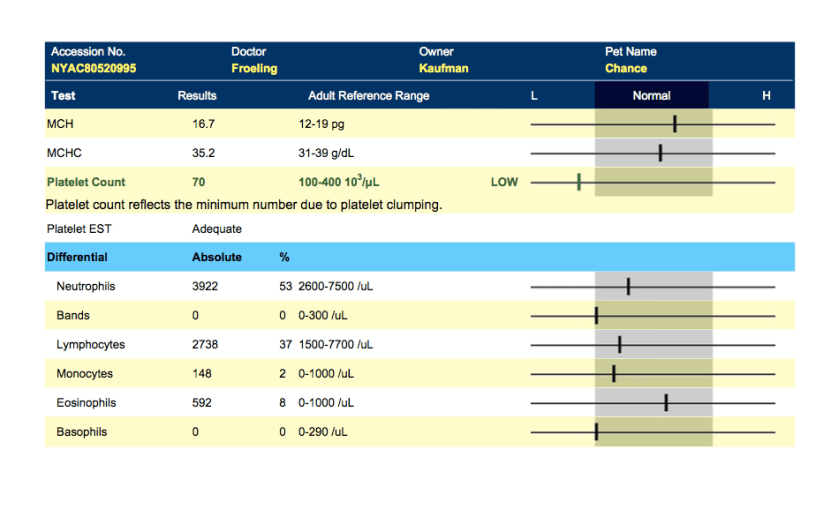
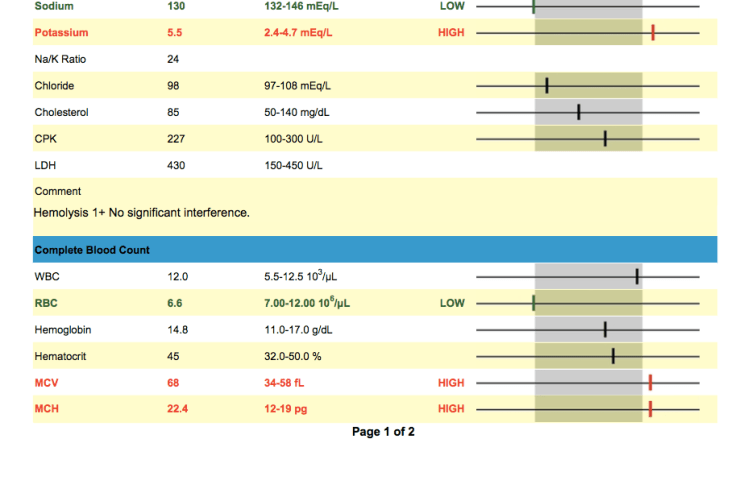
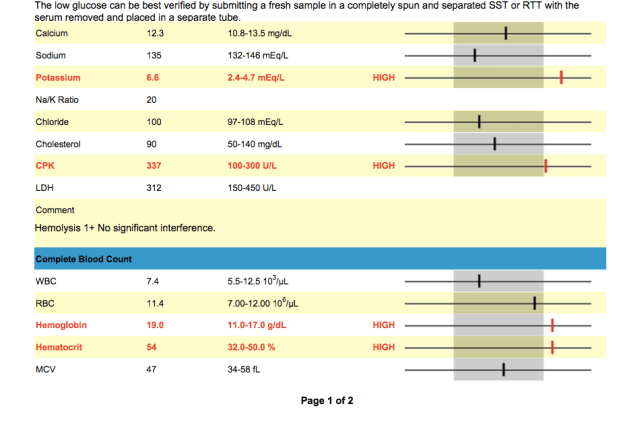
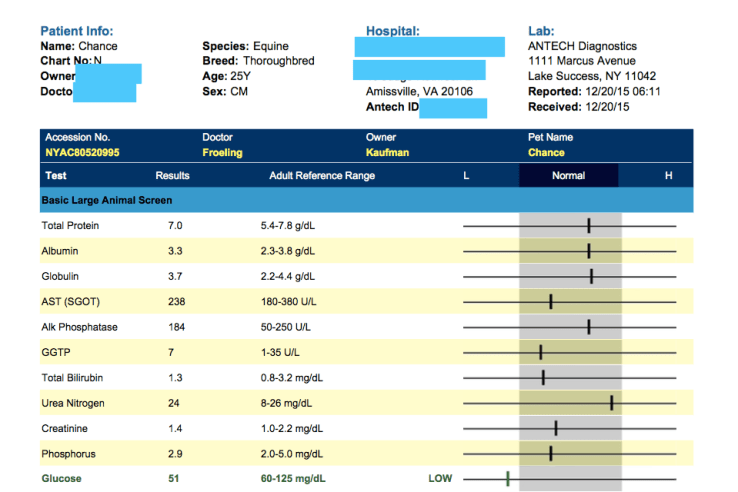
I had the vet run some blood work on Luck and Chance as a precaution, because of the “Panic Grass” in Virginia has been causing liver failure in horses, and because I like to do a full work up every 6-12 months.


Chance’s Blood Work


C 1

C 3


L 2


INTERPRETATION OF RESULTS


Elevated Potassium (6.6 mEq/L):

“Low levels indicate depletion and are often a predisposing factor, along with
dehydration, in fatigue, muscle cramps, colic, synchronous diaphragmatic flutter (“th
umps”), diarrhea and other symptoms of exhausted horse syndrome. Even seemingly normal or high-normal levels may in reality be lower, but appear higher due to concentration secondary to dehydration as measured by total protein and albumin levels.
Therefore, levels at the lower end of the normal range should be evaluated relative to concurrent dehydration” (https://www.quia.com/files/quia/users/medicinehawk/2407-Vet/labs.pdf).

Low Sodium:

“Low levels commonly indicate loss through excessive sweating, or through kidney or intestinal disease. Low levels may also be found in young foals with bladder damage. Increased sodium levels are usually a sign of dehydration” (http://www.minstervets.co.uk).

Low Platelets: 

This was the most worrisome in regards to the potential immediate issues that could ensue because of the low platelet count. 

“The platelets are the third cellular component of blood (along with red and
white blood cells). These cells contain a number of biologically active molecules that are
critical to the blood clotting process. Low levels may indicate a number of disease
processes not necessarily directly related to a bleeding disorder. Chronic or acute blood
loss, immune disease, toxemia, liver, spleen or bone marrow disease, or even critically
reduced or increased body temperatures can also cause low platelets counts. Any
significantly low platelet counts should be further investigated by a veterinarian. High
levels are generally clinically insignificant unless the condition persists, in which case it may be indicative of bone marrow neoplastic disease” (Susan Garlinghouse).

Low Glucose:

“Glucose is the source of the body’s energy. It is measured in suspected cases of equine metabolic syndrome and sometimes in cases of equine Cushing’s disease. Blood glucose may also be measured as part of a glucose tolerance test, assessing small intestinal function” (http://www.minstervets.co.uk).

Chance was tested for Cushing’s Disease within the last year and the test showed that he did NOT have Cushings. 
Elevated CPK (337 U/L):

Levels 2-3x the highest number in range are considered significant according to vetstream.com.  Levels are easily increased due to poor handling techniques as well as lab error.

According to Dr. Christine Woodford and Carla Baumgartner on vipsvet.com, “Elevations of CPK and SGOT are indictors of muscle inflammation–tying-up or rhabdomyolysis. The term “rhabdo” means muscle and “myolysis” means rupture of muscle cells. The CPK and SGOT are very sensitive indicators of skeletal muscle damage, and they rise in concentration proportionally with the amount of damage. A bit of timing is required in order to obtain the most sensitive results; CPK rises (due to its leakage from muscle cells into the blood system) approximately six to eight hours after the onset of muscle inflammation, and SGOT rises after approximately 12-14 hours. The absolute peak of CPK concentration and the time it takes to return to normal are important indicators of the severity of muscle damage and the response to therapy.”

Elevated MCV: Is the average volume of red blood cells.

  • Macrocytosis.
  • Indicates immature RBC in circulation (suggests regenerative anemia).
  • Very rare in the horse, but may observe increasing MCV within normal range as horses increase erythropoiesis.

According to Vetstream.com, “Macrocytosis (increased MCV) resulting from release of immature RBC from the bone marrow during regeneration is very rare in the horse therefore the MCV is less useful in the horse than in other species.”

Elevated MCH: Is the average amount of hemoglobin in an individual red blood cell.

  • Hemolysis, if intravascular in nature .
  • Errors can occur during processing

Low RBC:

“You may be inclined to think that red blood cell levels need to drop significantly before they cause a problem for your horse. But the truth is that even low-grade anemia – levels hovering around that 30% range on a PCV – can impact your horse physically and may indicate a health problem. This is especially true for high performance athletes. The greater your horse’s physical condition and demand, the higher on the range of normal her red blood cell counts will typically be. Therefore, a red blood cell level low on the normal range or just below may indicate a concern for a racehorse, for example, where it wouldn’t for that pasture pet.”  See more at: http://www.succeed-equine.com/succeed-blog/2014/02/05/anemia-horses-part-1-just-equine-anemia/#sthash.JJuWN5ob.dpuf


Luck’s blood work


L 1

C 2

Elevated Potassium: Potassium can become elevated for a number of reasons.

According to Vetstream.com,

  • 98% of potassium is intracellular.
  • Changes in serum or plasma potassium levels reflect fluid balance, rate of renal excretion and changes in balance between intra- and extracellular fluid.
  • Hypokalemia increases membrane potential, resulting in hyperpolarization with weakness or paralysis.
  • Hyperkalemia decreases membrane potential with resulting hyperexcitability.
Susan Garlinghouse states that, “High serum levels of potassium during an endurance ride are generally not a concern. These increases often reflect nothing more serious than a delay between blood collection (when potassium is actively sequestered inside cells) and sample measurement (after potassium has had time to “leak” from inside the cells out into the plasma or serum).”  This could also be a result of Luck and Chance running around in the heat when the vet arrived.
Increased [potassium] (hyperkalemia) can occur from;
  • Results can be false due to processing time (ie: if the lab waited too long to process blood sample)
  • Immediately after high intensity exercise.
  • In association with clinical signs in horses with hyperkalemic periodic paraysis (HYPP)    .
  • Bladder rupture (neonate)    .
  • Hypoadrenocorticism  [Pituitary: adenoma]  (rare).
  • Metabolic acidosis.
  • Acute renal failure    .
  • Extensive tissue damage (especially muscle).
  • IV potassium salts, eg potassium benzyl penicillin, potassium chloride    .
  • Phacochromocytoma (rare in the horse).
    Hypokalemia
  • Chronic diarrhea.
  • Diuretic therapy, especially potassium-losing diuretics.
  • Excess bicarbonate/lactate therapy.
  • Chronic liver disease    .
  • Acute renal failure (polyuric phase)    .
  • Recovery from severe trauma.
  • Metabolic/respiratory alkalosis.
  • Prolonged anorexia.
  • Recovery period after high intensity exercise (30-60 min after).
  • Parenteral feeding.

In combination with clinical signs and results of other tests results could signify the following;

Elevated GGTP:

* Donkeys tend to have 3x higher levels then horses.  This means that in stead of the typical equine range being 1-35 U/L a typically donkey’s range would be up to ~105 U/L.  Lucky’s test showed he had 120 U/L which is still elevated but not much.  It took sometime to get Luck from the field when the vet arrived- he ran around non stop.  The excitement and anxiety could be the cause of the elevated levels.

RBC:

Katherine Wilson, DVM, DACVIM, of the Virginia–Maryland Regional College of Veterinary Medicine (See more at: http://equusmagazine.com/article/decode-horses-bloodwork-27122#sthash.sc4J1ISJ.dpuf) explains “RBC count is probably the least helpful information because horses usually don’t have big changes in red blood cell numbers. It is not uncommon for horses to have an RBC count a little lower than normal range, however. The term we use for low RBC is anemia, but unless the count gets very low, a horse doesn’t necessarily need to be treated for that condition. A lot of diseases or any chronic long-term disease can cause mild anemia. Usually if we see mild anemia on the bloodwork and the horse has other issues, the anemia is just an indication that we need to fix/treat another problem.”

Low or Elevated Values

  • Splenic contraction.
  • Polycythemia (rare) .
  • Dehydration.
  • Consider causes of anemia
  • Blood loss    .
  • Hemolysis (i in vivo or artifact).
  • Decreased bone marrow production.
  • Poor technique at sampling.
  • Poor handling and storage of samples.
  • Poor technique in laboratory.

Low Bilirubin:

Heather Smith Thomas of Equus states,  “Another indication of liver health is a pigment called bilirubin, which is formed from the breakdown of red blood cells. Elevated levels can mean unusual loss of red cells or liver dysfunction. However, in horses, unlike other animals, elevated levels of bilirubin often isn’t serious. “This value can increase fairly rapidly when horses go off feed, and this is something that is unique to the horse,” says Wilson. “Often we get phone calls from veterinarians who don’t work on horses much or owners who see the blood work and note that the bilirubin is above normal range and are concerned about liver disease. If the horse is off feed for 24 to 48 hours, that value will increase, but this is just a temporary elevation.”

Elevated Hemoglobin (19 g/dL):

According to vetstream.com, Thoroughbred and other “hot-blooded” horses Hemoglobin range differs from other equine- the thoroughbred range = 11.0-19.0g/l.

Elevated Hematocrit (54 %):

 Elevated levels could be due to;

  • Dehydration.
  • Splenic contraction.
  • Polycythemia .

“A measurement of the relative amount of red blood cells present in a blood
sample. After blood is drawn, a small tube is filled and centrifuged to separate the heavier
blood cells from the lighter white blood cells and the even lighter fluid (plasma or serum)
portion. A higher than normal reading generally indicates dehydration (same number of
cells in less plasma volume) or may be due to splenic contraction secondary to
excitement or the demands of exercise. A low reading may indicate anemia, though not
invariably. Highly fit athletic horses may normally have a slightly lower hematocrit at
rest due to an overall more efficient cardiovascular system. Evaluation of true anemia in
horses requires several blood samples over a 24-hour period” (Susan Garlinghouse, 2000/ http://www.equinedoc.com/PrideProjectInfo.html).

It took sometime to get Luck from the field when the vet arrived- he ran around non stop.  The excitement and anxiety could be the cause of the elevated levels.

Low Sodium:

According to horseprerace.com, “Low levels indicate depletion and are often a predisposing factor, along with dehydration, in fatigue, muscle cramps, colic, synchronous diaphragmatic flutter (“thumps”), diarrhea and other symptoms of exhausted horse syndrome. Even seemingly normal or high-normal levels may in reality be lower, but appear higher due to concentration secondary to dehydration as measured by total protein and albumin levels. Therefore, levels at the lower end of the normal range should be evaluated relative to concurrent dehydration.”


More information on your horse’s blood work

Decoding your horse’s blood work

CBC and Chemistry Profile

A Better Understanding of the Results


The vet suggested that I add water to Luck’s and C’s feed in case their values are due to dehydration. She also explained that some of the values may be a result of running around in the field right before drawing them along with anxiety.  

The anxiety and running around seemed fair but I am hesitant on the dehydration portion.  Yes, I know it is winter and that horses are less likely to drink as much water.  But if it were due to dehydration then the Albumin would be low as well.  But, the blood work revealed that the Albumin was 2.8 (Luck) and 3.2 (Chance).  These values are within the normal range…. that being said, the results could also be due to lab handling especially the Potassium levels.

While speaking with my uncle Jerry (the horse whisperer), he suggested adding a salt block to the horse’s feed.  This will increase the horse’s thirst which will get them  drinking more.  I also added heated water buckets so that the water won’t freeze and in case they are less inclined to drink when the water is cold.

In order to feel comfortable about my horse and donkey being healthy, I will have more blood work done this week to make sure everything is in fact okay.