Category Archives: Obstacles

Rubber. And aluminum. And plastic. Oh My!

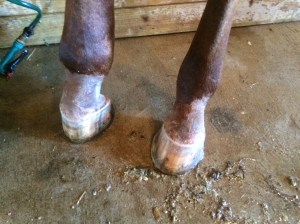
What type of shoe should I use on Chance’s back feet?

I am looking for something that is glue-on, provides support and comfort, that has good grip, while providing protection for his hoof from the rocky terrain.

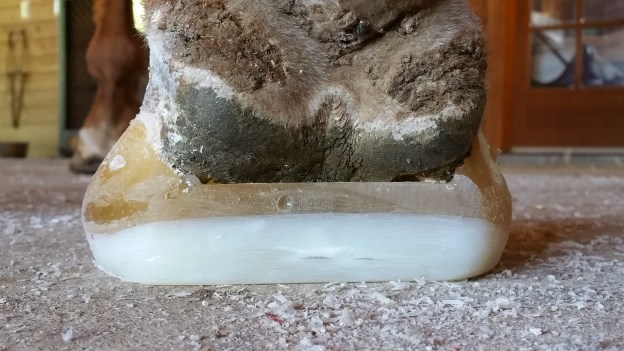
After some research, I found GluShus- a company out of England. Their shoes sound fantastic. They have an aluminum shoe set in rubber that glues onto the hoof.  Read more about these shoes by clicking the link below.

GluShu

I’ll let you know how it goes!

GRIT

A while ago, one of my good girlfriends, sent me an article about perseverance; why some are able to withstand tremendous adversity while others can’t? The article referred to this concept of an individual’s strength to endure life’s obstacles, to succeed in the face of adversity, to remain positive and continue to move forward despite what is thrown ones way, as Grit. Those who are able to endure the obstacles-have it- and those who are unable to endure- don’t.

“In a recent article published by People in Aid, Scott Breslin argues that grit, and not just resilience, is a key component for aid workers. Grit is defined ‘as perseverance and passion for long-term goals. Grit entails working strenuously toward challenges, maintaining effort and interest over years despite failure, adversity, and plateaus in progress’ (Duckworth, et al. 2007: 1087-1088). Resilience instead is the human capacity to bounce back from difficult experiences.” (See more at: http://mindfulnext.org/aid-work-is-not-a-survival-contest/#sthash.OsqxZNnG.dpuf)

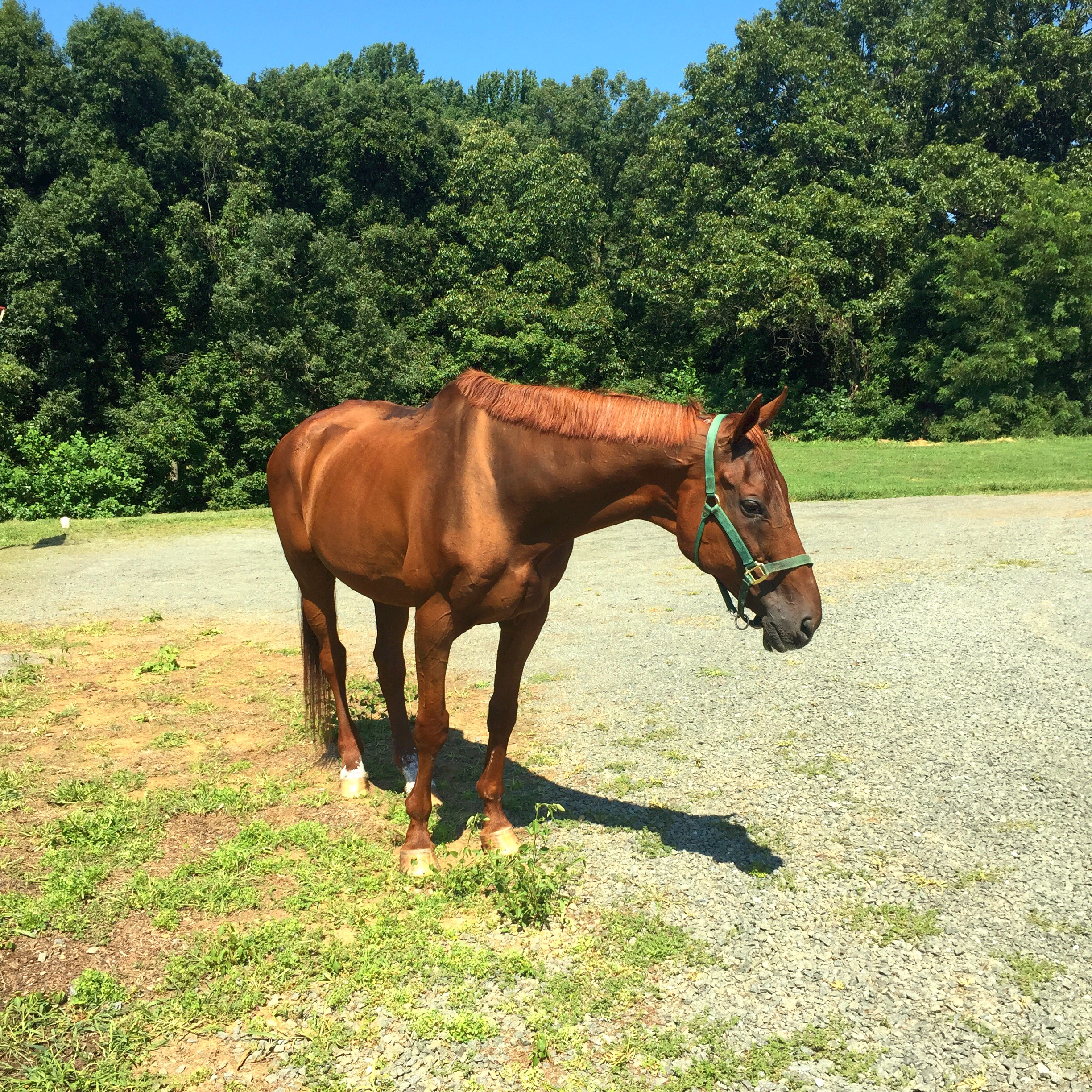
I can’t help but wonder if the concept of Grit may also apply to our four-legged friends? Because I am pretty sure that Chance has it. What makes living things able to remain positive and enthusiastic and continue to persevere despite being in tremendous pain?

I am truly humbled every time I look at Chance and I see a 25+ year old horse who has lived for years with painful flare-ups without a known cause…yet even at his absolute worse, he was still engaged in life…eating, whinnying, trying to run and play, giving kisses for treats…and now, after a year of ups and downs, triumphs and tribulations, stumbles and falls, medications and supplements, pokings and probings, needles and adjustments, samples and tests, and changes in just about every aspect of his life, he is finally in a healthy place!  (He is no longer on pain medications daily.  He maybe gets a dose a month or so. And does not have bouts of lameness or swelling).

What enables him to remain his calm and happy self despite all of the above?  How was he not biting and kicking with every prick of a needle?  How is his soul still gentle? How was he determined to walk up a small hill a year ago and now is able to run up that very same hill?  He loves every second of his life.  This may sound odd, but my old guy revels in every single second of his day.

He whinnies the moment I pull up into the driveway and greets me.  He devours every ounce of grass he can.  He often follows his friend and co-caretaker, John, to feed the chickens in the morning. He yells for his buddy, Lucky, when he can’t find him.  He runs every where he is able to including back and forth from the house to the barn- racing with Lucky.  He rolls around in the grass, the snow, or mud.  He will lay in the green grass basking in the sunshine.  He investigates everything around him.  And each and every time he stumbles, or even falls, he gets right back up and tries again.

To me, that is the essence of Grit…to keep on trucking through life with a soft heart and grateful and determined soul.

Duckworth, A. Peterson, C. Matthews, M., Kelly, D. (2007) “Grit: Perseverance and Passion for Long-Term Goals”, Journal of Personality and Social Psychology, Vol. 92(6), 1087-1101.

One Very Lucky Horse

I spoke to John- my right hand man- who said Chance was fine this am. No stiffness, swelling, or lameness! Chance went outside for a bit. When John came to let him back inside, Chance apparently was ready to go and ran up the hill to the barn!

Chance is one very lucky guy!

Lessons learned- get break away cross ties ASAP, don’t use cross ties while the farrier is working on my horse, and invest in a huge pad 😉 for Chance to stand on at all times!

The Luckiest Unlucky Day Ever

Today was not the greatest of days….but I will say that we had the luckiest unlucky day ever!  And, of course, it was a full moon tonight which means I should just stay inside.

Today we met with a new farrier.  I have been doing some research on shoes that provide comfort, support, and do not mess up Chance’s hooves like nails tend to especially when a horse is on rockier terrain.  I spoke with my vet who suggested to,   “put shoes on all 4 hooves with a 1 degree wedge pad on both hind shoes.  Set all 4 shoes back from the toe of the foot by at least a 1/4th an inch.”

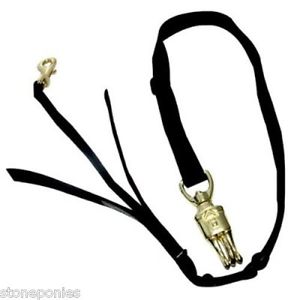
I went to the farm a bit early and gave Chance a bath, some Equinox for pain, and got ready for the farrier.  The farrier arrived and Chance was great!  He stood on the cross ties and ate hay like a champ.  For some reason I decided to lengthen the cross ties.  I am not sure why exactly but thank God I did.

My dad and the farrier were with Chance while I went to feed Lucky his dinner.  Well, after I fed Luck, I turned the corner and saw that Chance was on the ground!  Yes, you read correctly, he was on the freaking ground…all 17.1 hands of him!  The moment I saw him our eyes met- I know it sounds like the beginning of a love story- and he immediately took a deep breath and calmed down.  I walked up to him and he slowly got up and stood there right in front of me with his head resting under my arm- breathing heavily and he had the beginnings of sweat covering his body.

I stood there and just spoke to him- calmly- telling him he was okay.  Once a few minutes had passed, and he was calm, I walked him forward to make sure he was okay.  Sure enough, he was fine…aside from some surface scrapes.  I cleaned his scrapes up and walked him outside to eat some grass.  After about ten minutes, I walked him back into the aisle for the farrier to finish up.

According to both my dad and the farrier, Chance was having his back left shoe nailed in when the nail hit a nerve and he flinched.  I guess the farrier didn’t realize this because he hit the nail once more.  That was when Chance reacted and went down.  Thankfully, the farrier got out of the way & removed the nail midair (so that Chance wouldn’t go down on the foot with the nail and drive it deeper).  Think of a splinter going under your nail…and then hitting it again, deeper under your nail….ouch!

However, he landed somewhat gracefully, but due to the cross ties not being break away and the concrete not allowing Chance to gain any “grip” with his newly shod feet, he began to panic.  Upon seeing me, he calmed down, and he was able to get back up.  I can’t help but thank my lucky stars that I had lengthened the cross ties so that he had some slack, and that I came back inside when I did…had I not, he would have kept flailing.  Had I been in there when the nail hit the nerve it may not have happened because I would have said something to the farrier.  However, had I been in there when it occurred, things may have also been far worse…since my dog, Sadie, is always right by Chance’s or my side at all times.

We ended up deciding to forgo putting hind shoes on until later (a few weeks) and the farrier removed the one evil hind shoe and trimmed up the other hoof.  Chance stood quietly and allowed him to complete his job.  I was so impressed with my old guy!

I have emailed my vet to see if she is able to come check on Chance tomorrow just in case…hopefully, Chance will just be a bit sore in the morning and nothing worse….:(

Untitled 2

Keep Your Friends Close & Your Enemies Closer…?

Well, after months and months of trying to make Luck and Chance BFFs, they are now inseparable!

The other night Chance and Luck were roaming around the outside of the farm when suddenly I hear Chance running, full spreed, around the barn screaming.  I run outside and Chance is visibly upset, searching around frantically for Luck.  Suddenly, Luck comes trotting down the hill to Chance.  He settles down and I put them into their neighboring stalls for the night.  Chance continues to pace in his stall, looking down through the bars at Luck.  I decide, after about ten minutes of him circling in his stall, to put Luck into the stall with him.  As soon as Luck walked into Chance’s stall, he immediately relaxed and the two of them just stood together eating hay.

imageLooking outside together…or Chance looking outside and Luck trying to

imageKisses!

And They’re Back….Scratches, Scratches EVERYWHERE!

Over the last couple weeks the rain has been unrelenting.  And with rain comes scratches (Pastern Dermatitis).  In a previous entry I spoke about an amazing treatment for scratches that actually worked…however, when it rains like it has recently, once again the scratches got out of control.

A handful of months ago I got a skin scrape on Chance’s hind legs to determine the bacteria that was causing the scratches.  Sure enough there were three types of bacteria growing which was why I was having so much difficulty getting them under control.

Below are the results:

Version 2

As you can see above, the bacteria shows resistance or no interpretation to all but 7 antibiotics.  I spoke to my vet and she suggested beginning with Gentamicin and go from there if he does not respond to the medication.  Chance has been receiving an injection of 30 mls of Gentamicin in his muscle once a day for about a week now.  He obviously does not enjoy this, nor do I for that matter, but his scratches are showing improvements!  He is also on the topical cream, Silver Sulfadiazine, once a day.

Fingers crossed that I will get ahead of the scratches and they will go away forever!


First Time In Over A Decade….

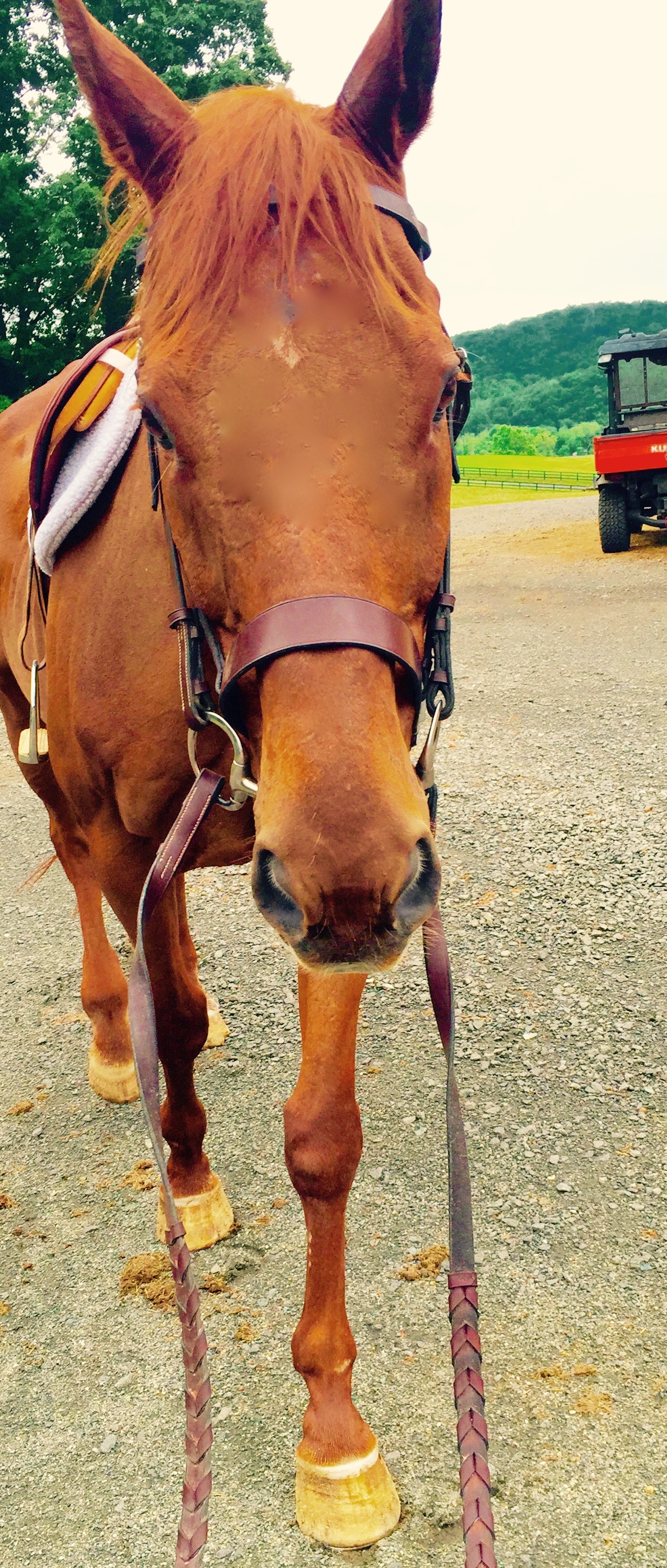
I was able to throw on a saddle and get on Chance!  He is finally strong enough for me to “ride”….and by “ride” I am referring to walking around in a ring.  We walked in circles and figure eights and over some ground poles for about 15 minutes.  It was absolute bliss!

IMG_5941

Sadie followed us around the ring the entire time...

Sadie followed us around the ring the entire time…

and Lucky stood by and watched!

and Lucky stood by and watched!

Catch Me If You Can

Chance has always loved to follow me around.  Usually he just walks behind me or next to me around the barn or in the field, and other times he prefers doing this….(the bandage on his hind leg is a treatment to get rid of pastern dermatitis or “scratches” which you can read more about in my previous posts).

What He Has Taught Me Through Our Journey

It is amazing to me that it is coming up on a year from the day that I received a phone call about Chance’s health! As I think back over the many months of diagnostics, research, hyper vigilance, wishes, decisions, stressors, and connection- I am truly amazed.

I am amazed at Chance’s strength.  He never gave up; he kept on fighting.  No matter how sore, tired, or sick Chance was there was ONE thing that remained- his gentle and determined soul.  He never seemed deterred by the obstacles in front of him whether the obstacle was a hill, walking a straight line, or walking in general; he just kept trying each and every day.  He showed kindness to the numerous vets who poked and prodded him; never once trying to bite or kick at them. Chance did not give up throughout this tiresome and seemingly, never ending journey.  He persevered.  We persevered.

Every single day I am grateful that I have been able to spend this time by Chance’s side; to reconnect and go through this journey together.  We have made up for the time lost while he was in Forest, VA. If today was Chance’s last day, I can honestly say that I would be at peace.  I wouldn’t have been able to say this a year ago.

Over the last year, while the journey was overwhelming, sad, tiresome, and at times, heart wrenching, I was able to witness Chance become a horse.  That may sound strange, but after enduring the many years of pain medications and intermittent bouts of lameness and Lymphangitis, I saw a horse that was not able to 100% enjoy his life.

And for the first time, I have seen him doing the very opposite, I have seen him enjoying life. Life as a horse. I’ve seen him running in the pastures, laying in the sunshine, rolling in the snow. I’ve seen him make friends, eat warm bran mash, and devour his hay. I’ve heard him whinny and I’ve seen the light come back into his eyes.

For that, I am truly grateful.  I can say without a shed of a doubt, I have no regrets about the decision I made a year ago, no matter how difficult it may have been.

IMG_6067

Packing On The Pounds!

image

Chance is now on 6 quarts of Nutria Senior Feed with 2 quarts of Hay Stretcher and 2 cups of Rice Bran TWICE A DAY! That is 12 quarts of feed a day and 4 quarts of Hay Stretcher plus his alfalfa mixed hay!

At night he also receives his SmartPak (Senior Flex, Immune Boost, and Vitamin C) & DuraLactin (for inflammation and swelling).  He is no longer skin and bones or on daily pain medication!

Perspectives 

Throughout this journey I have come to realize (more so than I ever have before), and appreciate, that things that are worth accomplishing do not come easy. Whether it’s graduating from school, building a life the you want, holding a relationship together, getting an animal healthy again, or whatever else one holds dear.

The things we truly want, what we are willing to fight for, in the end we appreciate them more. We know how hard we fought to get to the places we are, we remember every single day- the sweat, the tears, the long nights, the headaches and heartaches, the persistence and patience it took, and that we never gave up.

Personally speaking, my life has always required extra work; it has never been smooth sailing. Whether it was passing highschool, getting accepted into college, my masters program, or even my PhD program…I was constantly hit with road blocks…learning disabilities, ADHD, good and not so good teachers, family crises, anxiety disorders, deaths of loved ones…you name it, I had to climb over it.

This most recent obstacle with Chance’s health has been no different….the fight to make something happen, feeling alone in your quest, trying to focus on the end goal even when others are telling you to give up, spending countless hours planning, researching, and grasping at any and every lead you’re able to find that will help you to get to the finish line.

Today I’m grateful that I fought for my old guy and that a year later he is happy, healthy, and enjoying a life he deserves with me right by his side.

How To Prepare For An Equine Emergency

Be Prepared for an Equine Emergency

You don’t want to waste time in an equine emergency! The American Association of Equine Practitioners (AAEP) offers these tips to keep you organized and calm in your horse’s time of need.


If you own horses long enough, sooner or later you are likely to confront a medical emergency. From lacerations to colic to foaling difficulties, there are many emergencies that a horse owner may encounter. You must know how to recognize serious problems and respond promptly, taking appropriate action while awaiting the arrival of your veterinarian.

Preparation is vital when confronted with a medical emergency. No matter the situation you may face, mentally rehearse the steps you will take to avoid letting panic take control. Follow these guidelines from the American Association of Equine Practitioners (AAEP) to help you prepare for an equine emergency:

    1. Keep your veterinarian’s number by each phone, including how the practitioner can be reached after hours.
    1. Consult with your regular veterinarian regarding a back-up or referring veterinarian’s number in case you cannot reach your regular veterinarian quickly enough.
    1. Know in advance the most direct route to an equine surgery center in case you need to transport the horse.
    1. Post the names and phone numbers of nearby friends and neighbors who can assist you in an emergency while you wait for the veterinarian.
    1. Prepare a first aid kit and store it in a clean, dry, readily accessible place. Make sure that family members and other barn users know where the kit is. Also keep a first aid kit in your horse trailer or towing vehicle, and a pared-down version to carry on the trail.First aid kits can be simple or elaborate. Here is a short list of essential items:
        • Cotton roll
        • Cling wrap
        • Gauze pads, in assorted sizes
        • Sharp scissors
        • Cup or container
        • Rectal thermometer with string and clip attached
        • Surgical scrub and antiseptic solution
        • Latex gloves
        • Saline solution
        • Stethoscope
        • Clippers

Many accidents can be prevented by taking the time to evaluate your horse’s environment and removing potential hazards. Mentally rehearse your emergency action plan. In an emergency, time is critical. Don’t be concerned with overreacting or annoying your veterinarian. By acting quickly and promptly, you can minimize the consequences of an injury or illness.

For more information about emergency care, ask your equine veterinarian for the “Emergency Care” brochure, provided by the AAEP in partnership with Bayer Corporation, Animal Health. More information can also be obtained by visiting the AAEP’s horse health web site, www.myHorseMatters.com.

The American Association of Equine Practitioners, headquartered in Lexington, Kentucky, was founded in 1954 as a non-profit organization dedicated to the health and welfare of the horse.

– See more at: http://practicalhorsemanmag.com/article/eqemergenc2576#sthash.YFzhhSOX.dpuf

A Month Later

Luckily, after about one week of stall rest and hand walking, along with a stronger anti-inflammatory, Chance has begun to show improvements over the last couple weeks of treatment.

Chance has almost completed his first 30 days of EPM treatment and has about a day or so left of the Protazil. He is going to continue his other medications and supplements:

1. SmartPak: senior flex and immune boost
2. Vitamin E
3. MicroLactin (amazing) to help with regrowth of his cells, inflammation, and pain.

As I’m doing research, and trying to come up with a plan of action, once again I am inundated with opinions…medication, exercise, holistic, massage, acupuncture, chiropractic, organic, shoeing, etc.

I know I need to continue therapy, or start a new therapy. But which one do I choose?

Do I go the holistic approach and work with an acupuncturist, chiropractor, massage therapist, and vitamins such as Vita Royals? Do I go organic? Or do I try Marquis? Another month of Protazil? Oraquin-10? Rebalance has been linked to a number of recent deaths in the past handful of months. If I go the organic or holistic approach do I run the risk of the disease progressing? If I go with the medication do I run the risk of yet another “treatment crisis”?

I contacted Vet4 and he suggested doing another round of the Protazil or Marquis.  I decided on trying Marquis and waited for it to arrive.

Chance after a month on Protazil 

Our Regiment


IMG_1792


Chance receives the following:


AM:

1. Protazil 50mls

2. Vitamin E 4 scoops (Watch for loose stools.  This would indicate that his VitE should be cut down)

PM:

1. SmartPak: Immune Boost

2. SmartPak: Senior Flex

3. Equinyl 2 scoops first two weeks, 1 scoop after

OTHER:

If Chance’s symptoms are worse, he can receive Equinox and UlcerGuard.

CHRONIC PROGRESSIVE LYMPHEDEMA (CPL) due to Scratches

Chance has always been fighting “scratches” on his back legs.  Frustrating, painful, and never seem to completely go away.  Could scratches have caused this?  My thoughts- scratches allowed bacteria to enter the leg, the infection settled on the DDFT sheath and caused the current flare up.  Below is some research I found on possible conditions due to scratches that caused similar symptoms Chance had been experiencing.

CHRONIC PROGRESSIVE LYMPHEDEMA (CPL) due to Scratches

A condition characterized by progressive swelling, hyperkeratosis and fibrosis of distal limbs has been characterized in Shires, Clydesdales and Belgian Draft horses and unfortunately affects numerous horses within these breeds. The disease has also been recognized in Gipsy Vanners; however, only a few horses have been evaluated at this point of time. This chronic progressive disease starts at an early age, progresses throughout the life of the horse and often ends in disfigurement and disability of the legs, which inevitably leads to the horse’s premature death. The pathologic changes and clinical signs closely resemble a condition known in humans as chronic lymphedema or elephantiasis nostras verrucosa. The condition has therefore been referred to as chronic progressive lymphedema (CPL). The lower leg swelling is caused by abnormal functioning of the lymphatic system in the skin, which results in chronic lymphedema (swelling), fibrosis, decreased perfusion, a compromised immune system and subsequent secondary infections of the skin.

The clinical signs of this disease are highly variable. It is often first addressed as a marked and “therapy-resistant” pastern dermatitis (scratches). The earliest lesions, however, are characterized by skin thickening, slight crusting and possible skin folds in the pastern area. While readily palpable, these early lesions are often not appreciated visually as the heavy feathering in these breeds covers these areas. Upon clipping of the lower legs, it becomes obvious that the lesions are far more extensive than expected. Secondary infections develop very easily in these horse’s legs and usually consist of chorioptic mange and/or bacterial infections. Pigmented and non-pigmented skin of the lower legs are affected. Appropriate treatment of the infections (pastern dermatitis) is not successful as underlying poor perfusion, lymphedema and hyperkeratosis in association with the heavy feathering present perfect conditions for repetitive infections with both chorioptic mange as well as bacterial infections. Recurrent infections and inflammation will enhance the lymphedema and hence, the condition becomes more chronic. As a result, the lower leg enlargement becomes permanent and the swelling firm on palpation. More thick skin folds and large, poorly defined, firm nodules develop. The nodules may become quite large and often are described as “golf ball” or even “baseball” in size. Both skin folds and nodules first develop in the back of the pastern area. With progression, they may extend and encircle the entire lower leg. The nodules become a mechanical problem because they interfere with free movement and frequently are injured during exercise. This disease often progresses to include massive secondary infections that produce copious amounts of foul-smelling exudates, generalized illness, debilitation and even death.

TREATMENT/MANAGEMENT

Please keep in mind that none of these treatments listed below will “heal” chronic progressive lymphedema (CPL). However, a rigorous management following our suggestions below will assist you to slow down the process and even make some of the nodular lesions disappear. Your horse will need this management the rest of its life.

• Clipping of the feathers
Long and dense feathering makes management of lymphedema more difficult. We highly recommend clipping the feathers and keep them short, if horses are not presented at shows. If you have a show horse, we still recommend to clip the feathers to initiate a rigorous treatment. As the skin condition improves and the edema is reducing – you may have a better chance to keep the horse’s legs in better condition by. careful repetitive treatment, while the feathering is growing back. The feathers are usually back to their original length in about 10-12 months.

• Treatment of skin infections
Progression of lymphedema is also associated with deposition of fibrous tissue and formation of fibrotic nodules.. As a result, these horses have a poor blood circulation and immune response in the skin of their legs. They tend to built up a thick keratin layer. The long feathering further occludes the skin surface, which then remains humid. These factors provide the perfect culture environment for infectious pathogens. This explains why horses with CPL constantly battle recurrent infections with mites (Chorioptic mange) and bacterial infections (Staphylococcus, Dermatophilus).

Horses with CPL should consistently be treated against reinfestation of mites and bacteria:

Topical treatments:

• Careful washing, cleaning and drying of the legs on a routine basis is essential. Horses with long feathering may require blow-drying of their legs. We recommend using a product manufactured by HydroSurge Inc. ( http://www.hydrosurge.com ) called Apricot Sulfur Skin Treatment Shampoo.

• Frontline spray to treat chorioptic mange (do not use Frontline on pregnant and nursing mares)

• The best and most economical topical treatment is to find a source of wettable sulfur powder (“flowers of sulfur”). This can usually be found through a vineyard supply or at your local nursery (certain “rose dust” preparations). Mix this powder with mineral oil in to form a creamy paste. You can mix a moderate amount in a plastic lidded container or glass jar so that you have enough to last 2-4 weeks at a time. Apply this mixture to the ulcerated and/or affected areas of skin daily. This preparation is the best and most economical topical treatment we have found. You can use it indefinitely. Sulfur is safe to use in pregnant mares.

Systemic antiparasitic treatment: Frequent ivermectine treatment will also assist to keep the mites away.

• Exercise
Regular exercise is crucial. It will increase the circulation and the lymph drainage.

• Manual Lymph-drainage
Manual lymph-drainage is regularly used in humans with lymphedema as long as there is no inflammation present within the tissue. MLD has been successfully used in horses with more acute lymphedema, but has not been established yet in horses with progressed CPL. A massaging coldwater stream may assist a massage. It is important to dry the skin before applying anything else after massage and rinsing. If the feathers were not clipped this may take a long time and you may have to use a hair dryer. Your horse may become more compliant to this treatment as swelling reduces over time

• Bandaging and stockings
We have some limited experience with using special bandages developed for people with lymphedema. For horses, which always move around, “short-stretch” bandages should be used (example: Rosidal ®). Short stretch bandages have been successfully used in three horses with clipped feathering; but bandaging was not as successful on horses with long feathers. Of course it is crucial to have very good padding and keeping the bandages fairly tight. If tolerated, the best results will be achieved by keeping the bandages on 24/7. Of course they need to be redone at least every other day – better every day to control the legs. At first, there will be oozing from the lymphedema through the skin – so the bandages will get wet and have to be changed every day. With the reduction of the edema – this will stop. If the horse is only walked quietly the bandages can be left on for the exercise; very likely the legs have to be rewrapped after the exercise as the swelling will somewhat reduce. For more exercise it may be better to take the bandages off, use working bandages and then switch back to the short–stretch bandages after work. Again make sure the skin is dry when you rewrap.

After the edema has been reduced by using bandages – stockings are used for people to maintain avoid recurrence of lympedema. The use of such stockings in horses are currently under investigation.

It should be noted that horses suffering from CPL often are susceptible to reapeated bouts of “Thrush”. Consequently, thorough and routine foot trimming care is an essential part of the health care management for these horses.
IMG_9814