Category Archives: Treatment

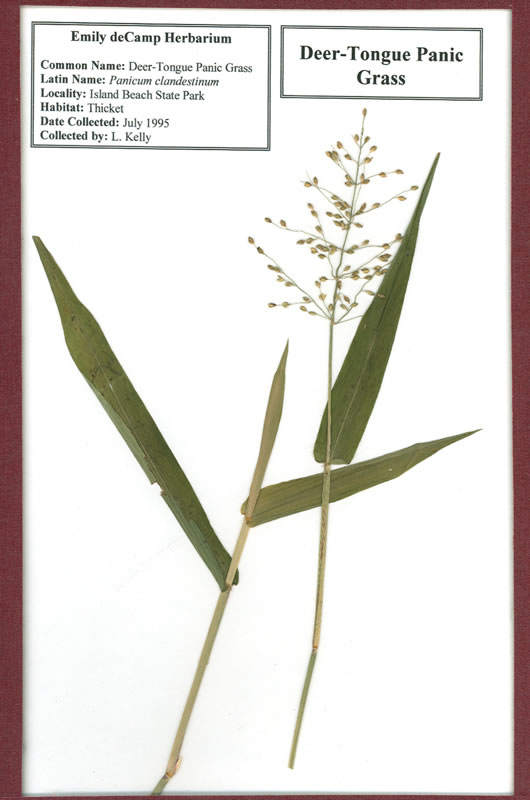
Horses in Virginia are at risk of Liver failure due to Panicgrass or Panicum.

Horses in Virginia are at risk of Liver failure due to Panicgrass or Panicum.

IMG_1763-1030x773

According to Haymarket Vet (http://haymarketvet.com/fall-panicum-grass-and-liver-disease/) Panicgrass is causing Fall Panicum Toxicosis in horses.

“In 2004, our practice was involved in documenting an important toxin for horses—fall Panicum (Panicum dichotomiflorum) grass.  This common native grass has been fed to horses in hay and in pasture probably since the Europeans first brought horses to our area.  But, while we know that it doesn’t cause illness all the time, certain growing conditions can cause it to become toxic, as it did in Nokesville, VA in 2004.  We don’t know what triggers the grass to become toxic, but we do know that it sometimes does become toxic, and the conditions are right this year. This study proved the hepatotoxicity: http://www.ncbi.nlm.nih.gov/m/pubmed/17186859/

Currently, there are several cases of liver disease in Fauquier, Clark and Loudon counties that appear to be from grazing Panicum grass in the pasture. Some signs of toxicity from eating the grasses includes: decreased appetite, lethargy, somnolence (unusual periods of sleepiness), mild colic, or neurological signs. Some horses have no symptoms at all.

If you have this plant in your pasture or if you find it in your hay cut this year, you may want to have your horses tested for liver disease; this involves a simple blood draw.”

Below is a link on more information about Liver Disease, symptoms, and treatment options.

http://www.tsln.com/agliving/equine/7614069-111/liver-horse-says-disease

Chance’s Face Lift

I brought Chance in from his turn out this evening and immediately noticed this flap of skin hanging off of his forehead.  Another emergency vet visit…yay!  Unfortunately, due to the skin flap being to the side and not hanging downward from the top, Chance needed staples…I believe it was 14 staples in the end and two cuts.

IMG_0492

IMG_0494IMG_0495

Needless to say, the vet did a phenomenal job stapling his poor forehead.

Floating Away

Lately, I have noticed that Chance is eating more on the left side of his mouth and is taking a longer time finishing his meal.  I booked an appointment with the dentist and he came out to take a look.

Chance showed discomfort while being floated on the right side of his mouth.  However, upon taking a closer look the dentist did not see or feel any loose teeth nor did he smell an odors (indicating a broken or infected tooth).  I asked if Chance could have a tooth that was cracked near the root?  The dentist explained that this could be the case and we would need to do an x-ray to know more.  He suggested that we see how he does after being floated, due to one of his teeth on the upper right side being higher than the others, and go from there.

The dentist did say that Chance’s teeth were sturdy and in good shape especially given his age! Yay!

“I Guess I’ll Eat Some Worms…”

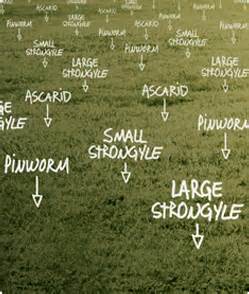
It was time for me to deworm my guys and I misplaced my “schedule”, so I decided to go online and print one.  Bad idea!  There are so many deworming schedules out there…it is easy to get overwhelmed.

I found a deworming  quiz that was incredibly helpful when deciding what schedule and dewormers are right for my horse.  The quiz  & the below information was written by Karen Hayes (an Idaho-based equine practitioner) and was published in the June 1999 issue of Horse & Rider magazine. –

See more at: http://www.equisearch.com/artic/eqdeworm321#sthash.7cTzzRGc.dpuf

QUIZ: Now see how you score on the following eight questions to determine which program is right for your horse.
1. Does your horse graze on pasture all year, increasing his chances of exposure to parasite larvae? (Yes=2. No=0.)
2. Do other horses, on different or unknown deworming programs, graze on the same pasture, increasing your horse’s chances of ingesting parasite larvae? (Yes=3. No=0.) – See more at: http://www.equisearch.com/article/eqdeworm321#sthash.7cTzzRGc.dpuf
3. Does your horse nibble grass at other stables or public horse facilities-such as show grounds, fairgrounds, campgrounds, and/or highway rest stops-increasing his chances of ingesting parasite larvae? (Yes=5. No=0.)
4. Has your horse ever shown signs of heavy worm infestation? (Symptoms include a poor haircoat, weight loss, recurrent colic, or sloppy manure; or a fecal egg count of more than 100 eggs per gram.) (Yes=4. No=0.)
5. Is the collected manure at your horse’s facility spread on the pasture as fertilizer, increasing the chance of parasite larvae in his grazing pastures? (Yes=3. No=0.)
6. Is “dropped” manure in your horse’s grazing areas spread out with a harrow at least once a year? (Yes=3. No=0.)
7. Do you have a hard time keeping track of which dewormers can be used in a rotation program-possibly disrupting a purge program?(Yes=2. No=0.)
8. Do you delay scheduling your horse’s regular-care appointments, such as farriery, dentistry, vaccinations, and deworming? (Yes=3. No=0.)
Here’s what your total score means:
0-8: Your horse’s management and general condition are good enough that a well-timed purge program probably is adequate. It’ll minimize parasite eggs in his manure, and his risk of internal damage from worm larvae picked up in the environment is probably minimal. (Exception: If you answered “yes” to questions 3, 4, and/or 5, risk of damage increases; consider a daily dewormer.)
8-15: You’re in a gray area. Although a well-timed purge program will minimize worm eggs in your horse’s manure, other factors- such as a high concentration of parasite larvae in his environment- may expose him to internal damage.
15-25: Your horse is exposed to high levels of parasite eggs and larvae in his environment. Use a daily dewormer to protect him from internal damage caused by larvae migration. – See more at: http://www.equisearch.com/article/eqdeworm321#sthash.7cTzzRGc.dpuf
Target Troublemakers
Whether you choose purge or daily deworming, you won’t kill some dangerous parasites unless you take additional steps. These troublemakers are bots, tapeworms, and encysted cyathostomes (one of the most destructive immature forms of small strongyles).

Here’s a general program to fight these parasites, but check with your vet to develop a program right for your horse and your particular area.

Bots. Ivermectin and moxidectin are the only available products effective against bots. In a purge deworming program, you can kill two birds with one stone by using one of these products on your regular late-fall and spring treatment dates. Time of year is critical, because fall’s’ first frost kills bot flies, giving you a leg up on reducing their population-especially if you follow up in the spring. Here’s what to do: After first frost, remove/kill any remaining bot eggs or larvae on your horse’s legs with a bot block or knife. Then use a purge dewormer to get rid of adult bots in his system. In spring, remove/kill any external eggs or larvae you may’ve missed in the fall, and deworm him again to zap any adult bots in his stomach before they lay eggs. Then you’ll start bot season (spring through early fall) with a clean slate.

If your horse is on a daily program, give him a dose of ivermectin or moxidectin in early spring and again in late fall, in addition to the daily dewormer.

Tapeworms. Some investigators believe daily deworming effectively controls tapeworms, but the evidence is conflicting. As an extra measure, you have three options:

1) give pyrantel pamoate (Strongid P or T), at twice the usual dose, 2 days in a row;
2) give pyrantel tartrate (daily dewormer), at 10 times the usual daily dose, 2 days in a row; or
3) use of the canine tapeworm medication prazi-quantel (Droncit), which your vet can prescribe for oral use in your horse (about $45 a dose).

You can use options one or two to replace your horse’s regular deworming treatments in spring and fall. Give Droncit in addition to the regular deworming treatment, but on a different day, to avoid possible drug interactions.

Encysted cyathostomes. Prevent encysted cyathostomes by putting your horse on a daily deworming program, or kill them by:

1) using moxidectin as a spring and/or fall treatment in your purge deworming program; or
2) replacing a regular spring and/or fall purge treatment with fenbendazole at twice the usual dose, for five days in a row.

Daily verses Purge Programs

For daily programs, it’s critical that your horse gets his daily dose daily, as missed doses will decrease the levels of dewormer in his system, rendering it less effective- See more at: http://www.equisearch.com/article/eqdeworm321#sthash.7cTzzRGc.dp

For purge programs, timing is key. If you treat too early, targeted worms will be too immature to be affected by the dewormer. If you treat too late, adult worms will have the opportunity to produce eggs, infesting your horse’s environment and raising his (and other horses’) risk of exposure.

I hope the information was as helpful for you as it has been for me.  For more information on worming and a  comparison of the products available click the link below.

PHHWV Equi Info Note – Equine Worming.

And They’re Back….Scratches, Scratches EVERYWHERE!

Over the last couple weeks the rain has been unrelenting.  And with rain comes scratches (Pastern Dermatitis).  In a previous entry I spoke about an amazing treatment for scratches that actually worked…however, when it rains like it has recently, once again the scratches got out of control.

A handful of months ago I got a skin scrape on Chance’s hind legs to determine the bacteria that was causing the scratches.  Sure enough there were three types of bacteria growing which was why I was having so much difficulty getting them under control.

Below are the results:

Version 2

As you can see above, the bacteria shows resistance or no interpretation to all but 7 antibiotics.  I spoke to my vet and she suggested beginning with Gentamicin and go from there if he does not respond to the medication.  Chance has been receiving an injection of 30 mls of Gentamicin in his muscle once a day for about a week now.  He obviously does not enjoy this, nor do I for that matter, but his scratches are showing improvements!  He is also on the topical cream, Silver Sulfadiazine, once a day.

Fingers crossed that I will get ahead of the scratches and they will go away forever!


First Time In Over A Decade….

I was able to throw on a saddle and get on Chance!  He is finally strong enough for me to “ride”….and by “ride” I am referring to walking around in a ring.  We walked in circles and figure eights and over some ground poles for about 15 minutes.  It was absolute bliss!

IMG_5941

Sadie followed us around the ring the entire time...

Sadie followed us around the ring the entire time…

and Lucky stood by and watched!

and Lucky stood by and watched!

Lucky Lucky?

Well, I hate to say it but Lucky had to get castrated….after trying to keep him from relentlessly mounting the miniature pony, there was no other choice.

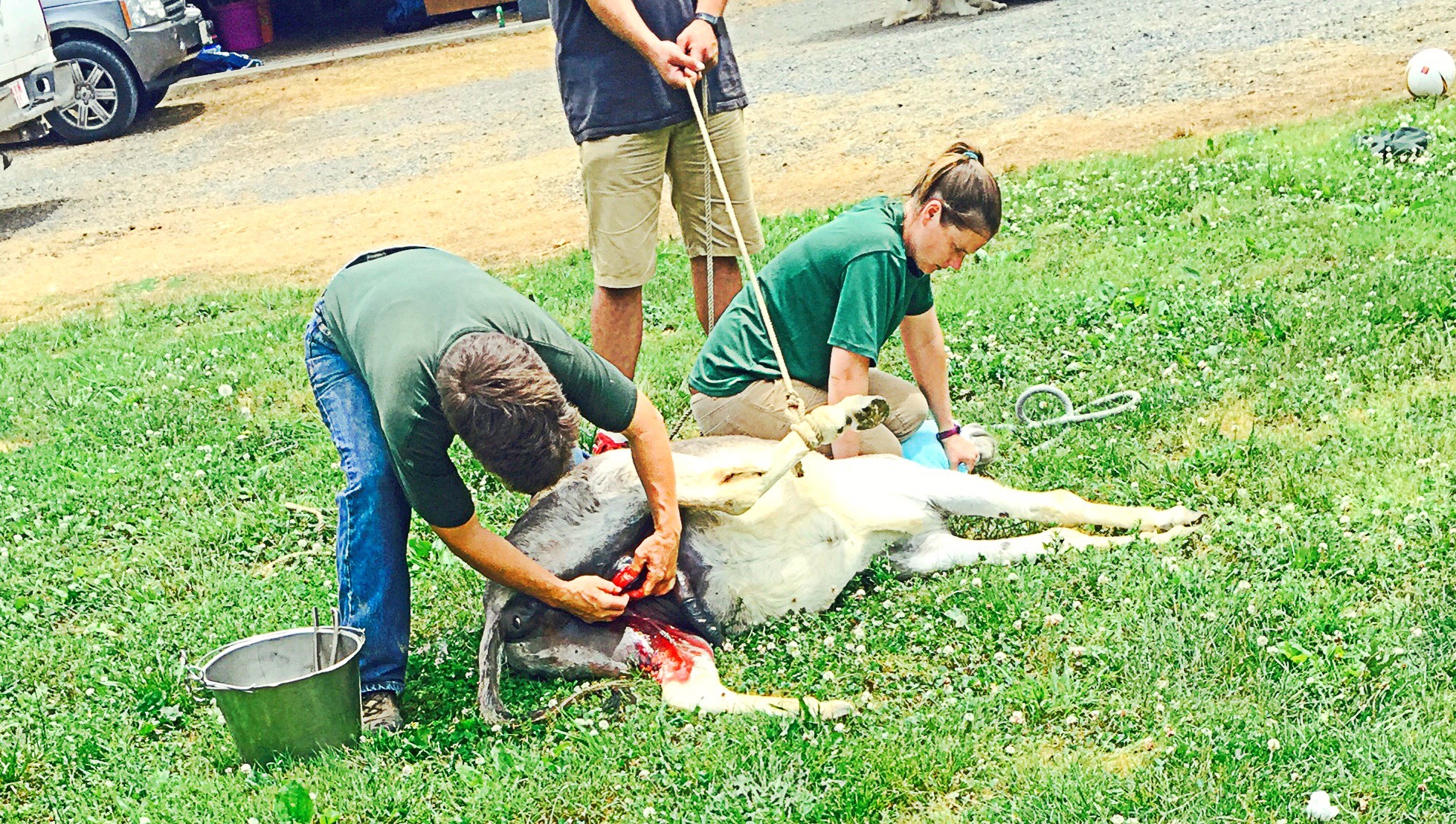
He he was a trooper through the entire ordeal. He was given the standard doses of antastesia medication and was walked outside to a soft and grassy area to lay down. He wobbled a bit and was guided down gently to avoid additional stress or injury.

Once he was laying down his face was covered and one leg was tied with a rope and someone held the rope to ensure the vet was not kicked. The castration procedure began and lasted about 20-30 minutes from start to clean up.


Once the procedure was completed the vet continued to try to keep Luck laying down and calm to aid in minimizing the bleeding. However, Lucky was ready to get up even before he was completely awake. He was hand walked until stable enough to walk around alone. The vet explained that it was better for him to walk around instead of standing in a stall.

I brought him in once to clean him up a bit more and add SWAT around the wound to keep the flies off.  This was only accomplished by me leading him in while begging for him to “just come inside for a minute” and promising he “could go right back outside.” While I was pathetically negotiating with Lucky, Chance came up behind him and kept nudging him lightly in his hind end! It was the cutest thing I have ever seen! After I got him inside and cleaned him up and applied more ointment I let him back out.

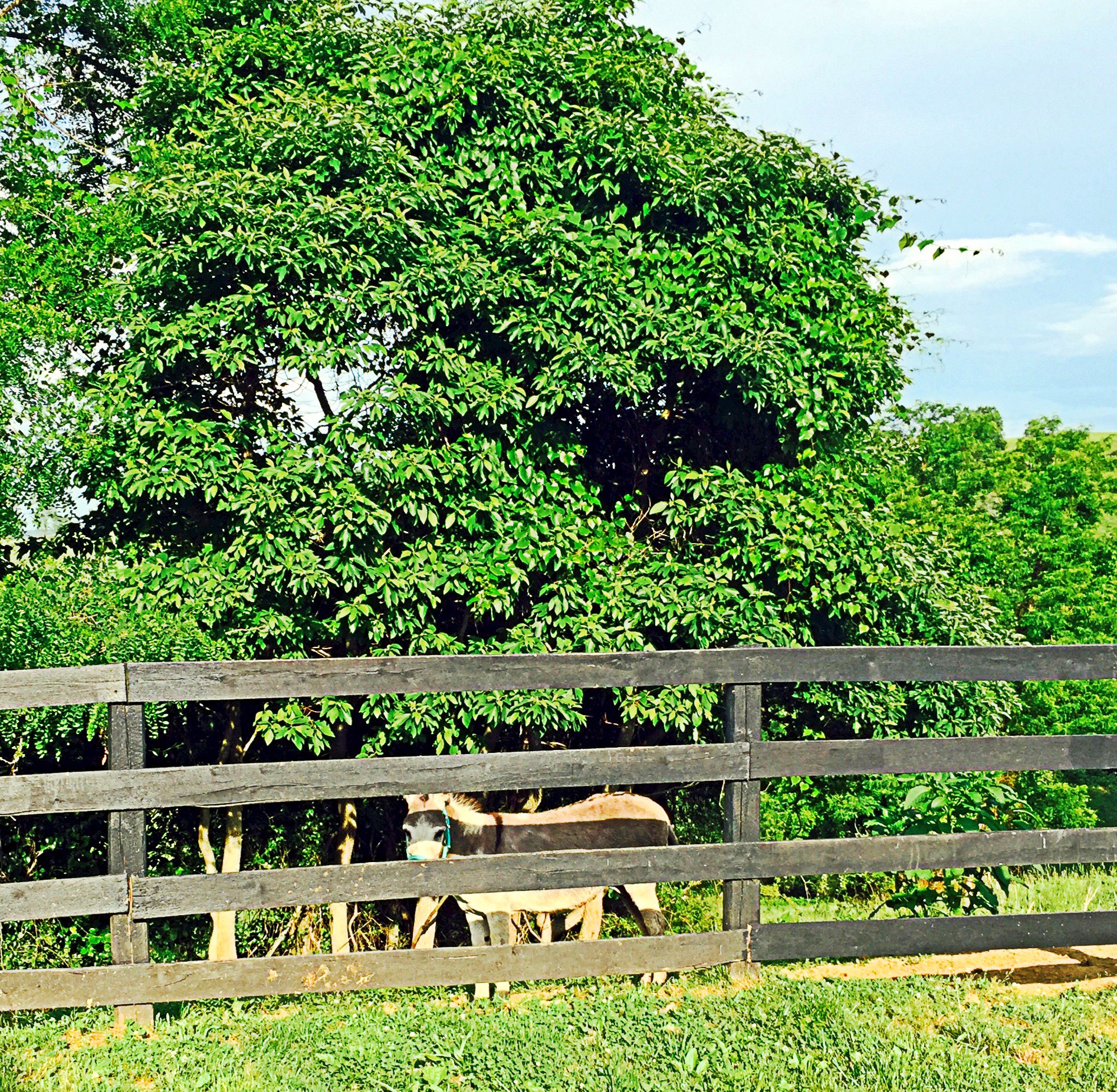
However, later around dinner time, when I tried to get Lucky to come inside again to eat he decided to get sneaky.  He decided to go into stealth mode and “hide” from me so that I wouldn’t try and bring him in. (Pictured below). He actually went into a random paddock that he isn’t familiar with and stood there quietly and barely moving. Just watching me out of the corner of his eye while I called for him.

Luck stayed out until about 10pm and when he came inside for the night SWAT was reapplied and a dose of Bute was given. He refused to eat his dinner but gladly inhaled carrots and drank some water.

This morning his feed was all gone and there was no apparent swelling or increased discharge thankfully. According to the vet it takes about a month for the testosterone to be depleted after castration. I’ll be interested to see the changes, if any, that occur as a result.

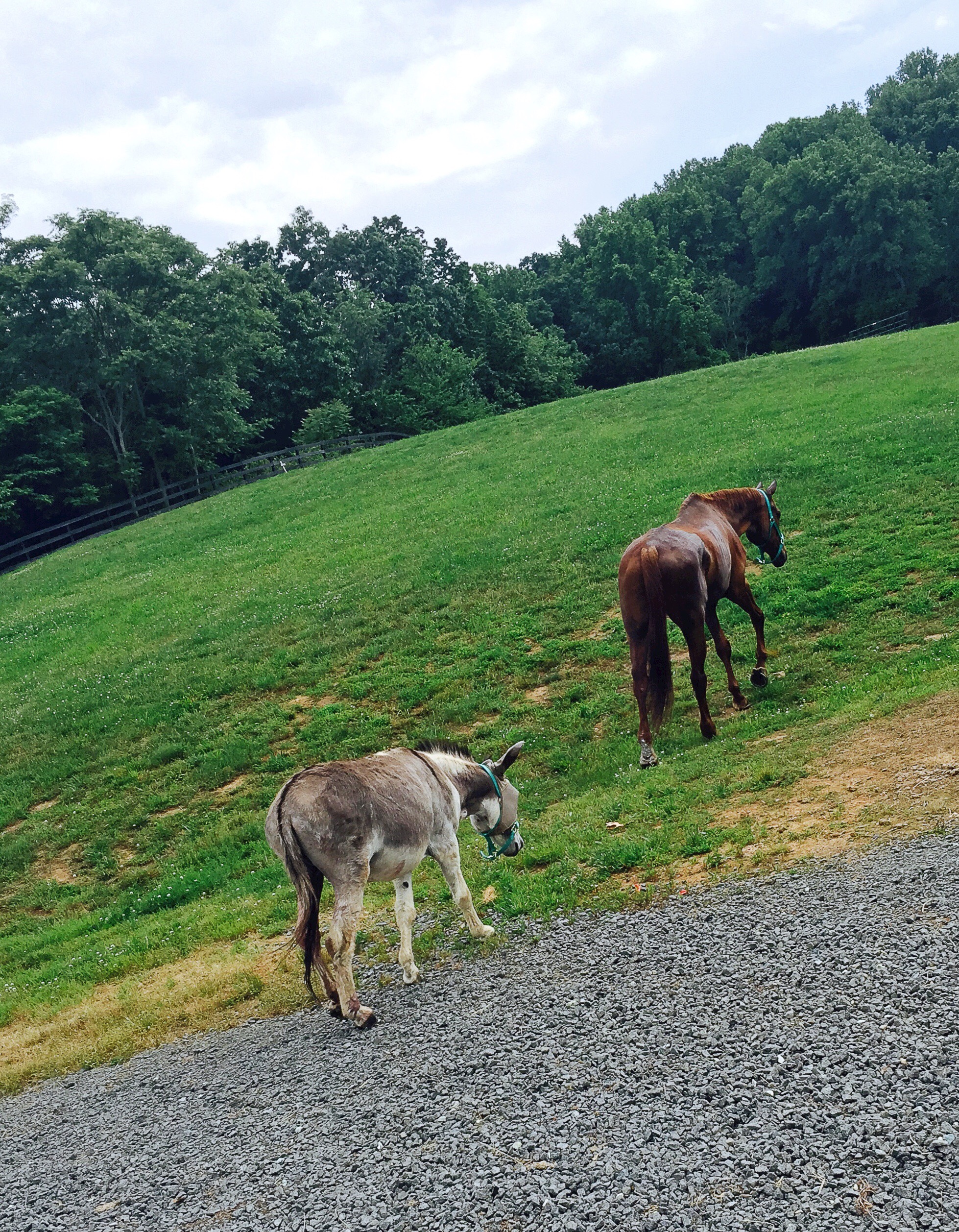
Luck following Chance in their new matching halters

When It Rains, It Pours

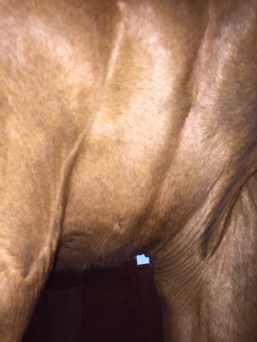
The other day I noticed that Chance’s back fetlock a were slightly swollen and he was visably stiffer then normal. I also noticed a golf ball sized lump in the middle of the his chest. It wasn’t super sensitive and looked like a tick bite reaction, except there was no tick and a tiny barely noticeable scratch. 

I put a Poltace wrap on his back right leg (which was the leg he had previously injured and received stem cell injections in) and gave him some pain medication. I also started him on Baytril and Ulcerguard as a precaution as previously advised by the vet.

I made an appointment with our vet to come ultrasound his hind right leg and she was to come out in the next two days. I was incredibly anxious to say the least.  

The vet arrived and explained that the lump on Chance’s chest was a hematoma from another horse biting him or from him hitting something. Nothing to worry about, it was just the pooling of fluids to lowest point. 

I then trotted Chance back and forth as the vet watched. After an exam and the ultrasound, the vet explained that she felt that the swelling was due to Chance’s hip pain and the Pastern dermatitis that we have been treating and we’re finally coming off. 

The ultrasound showed a tiny DDFT lesion (vet referred to as a defect that shouldn’t be causing any symptoms). The ultrasound also showed scar tissue that we need to get “stretched out” so that he can gain increased flexibility and work as a protection for Chance’s tendons and legiments. The ultrasound also showed some fluid build up as well. Chance’s Fetlock looks good as do his legiments.

The vet wants Chance to stay on Baytril and Ulcerguard until complete. She also has added a 5 day course of Benadryl and steroids to help with edema of back hind legs. 

She also provided me with a shampoo that is milder to clean off scratches and apply swat after cleaning. The vet explained that she didn’t understand why people picked the scabs from the scratches because they’re super deep and pulling the scabs off does more harm than good.  

The Vet commented on Chance’s weight gain and how great his skin looks gooded. She wants me to continue working on the scratches and continue doing physical therapy on hills to build up his hind end then get farrier out for back feet. 

All and all I feel good about how Chance is doing and feeling. He is still full of energy, eats like he hasn’t eaten in a week, and his eyes and coat are bright. He is not on daily pain medication and is only given it when he is not feeling great. Aside from a few hiccups, Chance is loving life and being spoiled!

IMG_4332

One of the Scariest Moments 


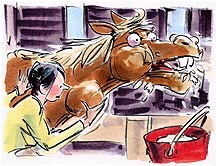
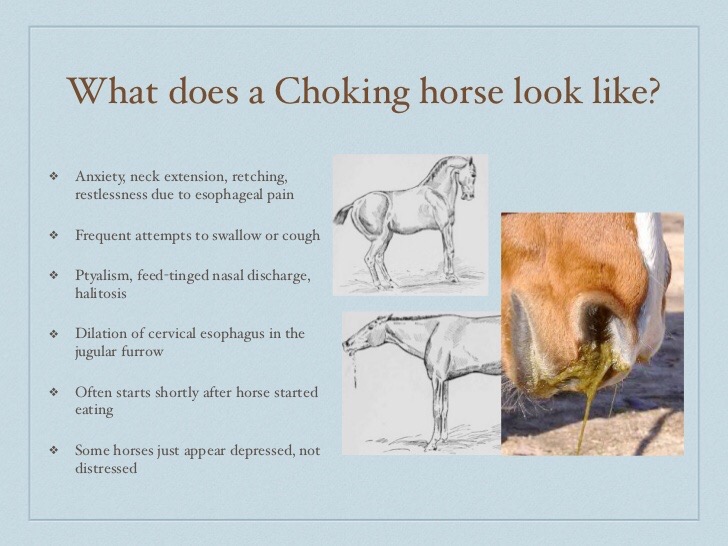
What do you do when your horse suddenly chokes?!
Well, unfortunately, I found out the hard way. Thankfully I had my emergency medical barn book and was able to quickly reference what to do.

Here are the steps an owner can take until the vet comes (if necessary):

1. Help keep your horse calm

2. Give injection Intramuscularly (IM) or Intravenously (IV) or orally (liquid only) of Banamine (10cc) to help relax the muscles

3. Rub the horse’s throat until the substance the horse is choking on comes out of the nose and mouth

4. Remove all other feed and hay

5. Call vet to ask if the horse should be put on antibiotics in case they have aspirated (the substance getting into their lungs)


Here is a link to more information on what you and/or your vet can do to help your horse- When a horse chokes

Beauty Shop

4:30am is clipping time! Chance has never been clipped but due to his unrelenting shedding and the allergic skin response, there’s no better time to try.

Chance was awesome! He stood quietly as I clipped him for over an hour and I decided to stop when I noticed he had fallen asleep. I guess not everyone is a night owl.

Save

The BEST Treatment for Scratches 

The other day the vet gave me a way to treat and get rid of my horse’s treatment- resistant, stubborn, and seemingly  IMPOSSIBLE to get rid of scratches or Pastern Dermatitis. 

She suggested mixing Betadine and Vaseline and applying it to the infected area, then wrapping it with Seren wrap and a standing wrap. Leave it on for 12 hours, remove, clean, and redo if necessary for up to 3 days. 

Well, it worked! The scabs just fell off! No more trying to pick off the scabs resulting in the discomfort of my horse or struggling to get him to let me pick at him! 

I have been fighting my horse’s scratches for about 15 years- antibiotics, ointments, MTG, baby oil to soften them, Zinc Oxide, wraps, immune boosters, etc- and nothing has worked until now! 

Lucky’s Teeth

Luck had his first ever dental floating today! It was quite the ordeal for the poor little man but, according to the vet, Luck was in desperate need of some work due to the sharp points of some of his teeth.

Thankfully he did great and was pretty laid back despite the contraption he had to wear and the big file in his mouth. But, to be on the safe side the vet gave him a little sedative.

The vet explained that an animal who receives a sedative should have all their hay and feed removed because the drugs usually make them hungry, but due to their drowsiness they are likely to choke!

Luck drugged up


Luck also got his sheath cleaned for the first time. Apparently, stallions or Jacks normally keep themselves very clean and do not require much sheath maintainace.

Now Luck is up to date on all of his vaccinations, hoof trimming, and dental care!

Check-Ups

Chance had a chiropractic adjustment, acupuncture, and electro stimulation on his cervical spine. He actually fell asleep resting his head on someone’s shoulder while receiving the stim for 20 minutes. 

I also spoke to the vet about Chance’s unrelenting scratches on his hind legs. She suggested mixing Vaseline and Betadine and applying it to the affected area, wrapping seren wrap around it, and then wrapping it with a standing wrap. After 12 hours, remove the wraps and clean area. – scratches not improving.  Once scabs have all fallen off then he can begin an Antibiotic like Baytril. 

Chance is still stiff on both sides of neck, although he can bend with better balance (when vet holds one of Chance’s front legs up while he bends to the opposite side).  He also shows Improved lateral flexibility on right side. Right base dorsal secrum and d-v flexion improved. 


Chance’s skin is having a “typical chestnut reaction” and the vet advices to discontinue transfer factor due to his immune system working too hard, and then use 1/2 of current dose. Start Tellurium 1 teaspoon a day for 5 days and then 1x a week to help with his skin. 

 Edit    

Chance in heaven while receiving stim

A Beautiful Shiny New Coat

A couple posts ago I expressed concern over Chance’s recent hair loss especially under his chest.  Yesterday, while I was giving him a medicated bath, I noticed that he had this soft new fuzz and no longer had bald patches on his chest!

YAY! Another medical mystery solved! Or rather, not needing to be solved!

Before

image

After

IMG_3617

Trust Your Instincts

Chance being lunged after many years of not being lunged due to a DDFT injury and possible EPM treatments.  He is still stiff and needs to build up the muscle in his hind end thus why he is being lunged.  In addition to his chiropractic adjustments, acupuncture, stretches and massages, and all natural pain medication (MicroLactin), he is also doing physical therapy- walking over poles, walking serpentines, and walking up and down hills.